

 en
 English
 русский
 Español
 عربى

Three rungs up the rear of a pumper, a firefighter in wet gloves misses the grab and catches the handrail instead. Whether that rail holds was decided months earlier, at the bench: by tube wall thick...
READ MORE
Professional Firefighting Crowbars for Forcible Entry and Rescue Operations
2026.10.05
Content
- 1 Why a Firefighting Crowbar Is Essential Emergency Equipment
- 2 Functional Design for Forcible Entry
- 3 Advantages Compared with Ordinary Pry Bars
- 4 Material Selection and Structural Reliability
- 5 Manufacturing Process and Quality Control
- 6 Manufacturer Strengths and Industry Experience
- 7 Use in Firefighting and Rescue Scenarios
- 8 Ergonomics, Handling, and Equipment Storage
- 9 Inspection, Maintenance, and Service Life
- 10 OEM and ODM Customization Options
- 11 How to Select the Right Firefighting Crowbar
- 12 Why Manufacturing Capability Matters to Buyers
- 13 Operational Best Practices
- 14 Frequently Asked Questions
- 14.1 What is a firefighting crowbar used for?
- 14.2 How is a professional firefighting crowbar different from a general pry bar?
- 14.3 Can the crowbar be customized?
- 14.4 Is the tool suitable for vehicle extrication?
- 14.5 How should a firefighting crowbar be maintained?
- 14.6 What should buyers confirm before placing an order?
- 14.7 Does the manufacturer support complete fire truck equipment projects?
- 14.8 Why is quality management important for this product?
- 14.9 Can a crowbar be used in every rescue situation?
- 15 Conclusion
- 16 References
- 17 Product: Firefighting Crowbar
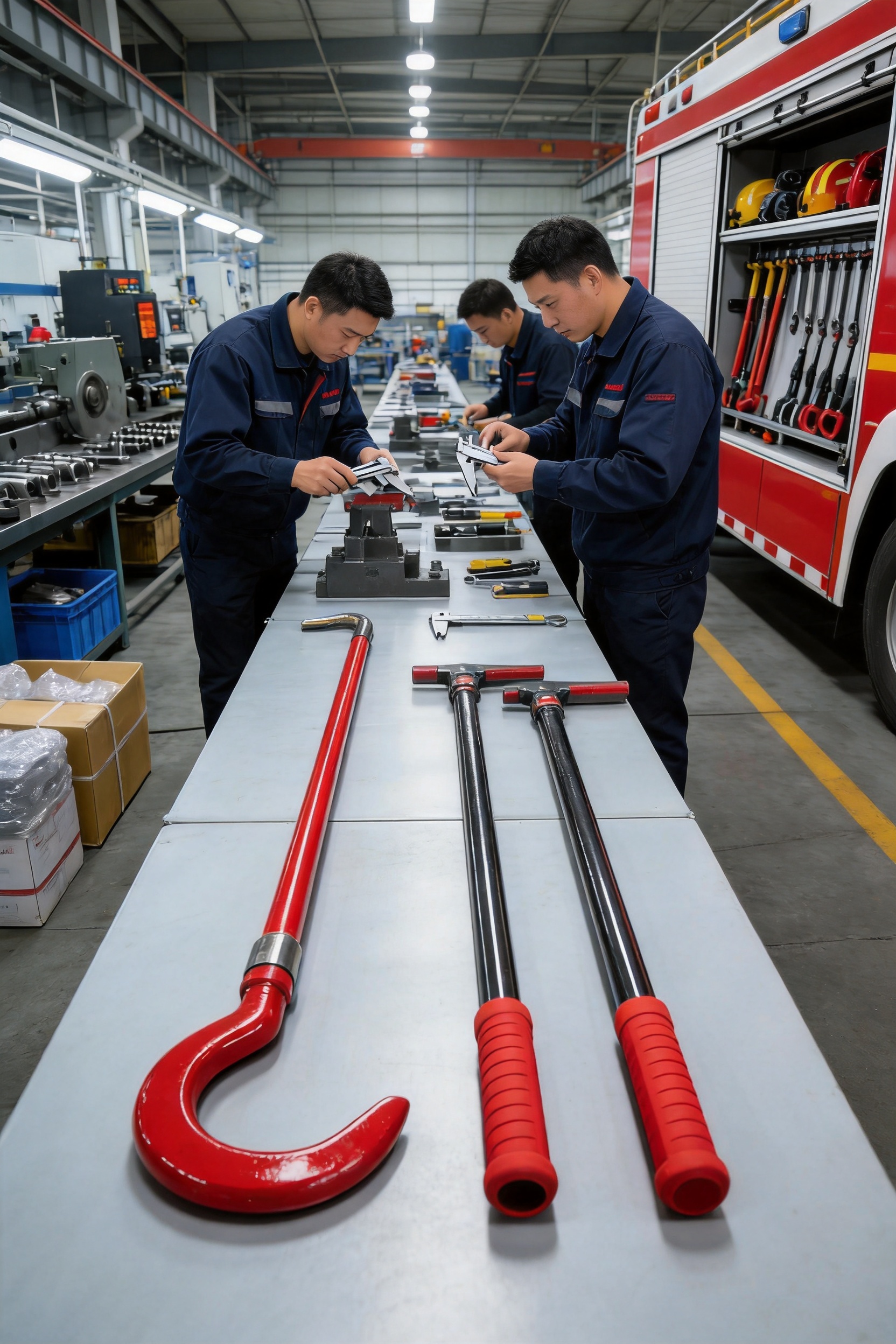
Firefighting crowbars are among the most dependable hand tools used by fire departments, rescue teams, emergency responders, and industrial safety crews. In situations where doors are locked, windows are obstructed, vehicles are damaged, or structures have become unstable, a reliable forcible entry tool can make the difference between delayed access and rapid intervention. The firefighting crowbar combines leverage, impact capability, prying strength, and practical portability in one compact piece of rescue equipment.
Modern emergency operations require more than a basic metal bar. Firefighters need tools that can withstand repeated impact, provide predictable control, support several entry techniques, and remain dependable in difficult environments. A professional firefighting crowbar must be suitable for prying, twisting, striking, puncturing, spreading, and breaching. It may be used during building fires, vehicle extrication, earthquake rescue, industrial incidents, storm response, and other emergency situations where access is restricted.
The product range described in this article includes professional-grade firefighting crowbars and Halligan-style forcible entry tools manufactured for firefighters, rescue teams, and emergency response personnel. These tools are developed for demanding service conditions and can be supplied for standard operational requirements or adapted through OEM and ODM cooperation. Their value comes not only from the shape of the tool, but also from material selection, forming, machining, finishing, inspection, manufacturing control, and the ability to respond to the practical requirements of different users.
Why a Firefighting Crowbar Is Essential Emergency Equipment
During an emergency, conventional household tools are often inadequate. A standard pry bar may not provide the correct combination of hook geometry, striking surface, nail-pulling capability, and controlled leverage. A professional firefighting crowbar is designed specifically for forcible entry and rescue work. It helps responders open, separate, lift, pull, puncture, and manipulate materials that may be difficult or impossible to handle with ordinary tools.
Firefighters frequently work under conditions that reduce visibility, limit movement, and increase physical strain. Smoke, heat, water, debris, damaged structures, traffic hazards, and unstable surfaces can all affect tool handling. A well-designed crowbar provides a strong mechanical advantage while allowing the operator to maintain a firm grip and stable working position. Its compact design also makes it easier to carry on a fire truck, store in a compartment, or combine with other entry tools.
Forcible entry is not limited to opening a locked door. The same tool may be used to remove damaged panels, separate construction components, lift obstructions, access confined areas, expose hidden spaces, or assist with rescue tasks following an earthquake or structural collapse. In vehicle extrication, it can help responders gain access to damaged compartments, manipulate parts, or clear material around trapped occupants. In industrial emergencies, it may be needed to breach light barriers, open service access points, or move damaged components.
Because a crowbar is used in many applications, versatility is one of its most important characteristics. A professional tool should support multiple actions without becoming unnecessarily complicated. The operator should be able to change from prying to striking or twisting without changing equipment. This reduces response time, simplifies tool selection, and helps crews remain focused on rescue priorities.
Functional Design for Forcible Entry
The effectiveness of a firefighting crowbar depends on the relationship between its length, cross-section, working ends, weight, and surface finish. Every part of the tool contributes to performance. The main shaft must resist bending and deformation. The working ends must maintain their functional shape during demanding operations. Striking areas must tolerate repeated contact. Angled or forked sections must deliver leverage without becoming difficult to control.
Leverage and Prying
Prying is one of the primary functions of a firefighting crowbar. The tool transfers the user’s applied force into a concentrated mechanical advantage at the contact point. This can help separate doors, frames, panels, covers, and other components. A properly shaped tip allows the operator to position the tool securely before applying force, reducing the risk of slipping or sudden movement.
Effective leverage depends on more than tool length. The shape of the end, the thickness of the working section, and the angle between the shaft and the tip all influence how force is transferred. A professional design balances leverage with maneuverability. Excessive length may provide additional force but can become difficult to use in narrow corridors, vehicle interiors, stairwells, or confined industrial spaces. A practical firefighting crowbar therefore needs to offer meaningful leverage while remaining manageable in real emergency environments.
Striking and Impact Operations
Many forcible entry tasks require impact. A firefighter may strike the tool with another implement, use a designated striking section, or apply the tool directly to a material that must be punctured or displaced. Repeated impact places significant stress on the tool. Weak materials, poor heat treatment, sharp stress concentrations, or inconsistent manufacturing can lead to deformation and premature failure.
A professional firefighting crowbar is produced with attention to impact resistance and structural continuity. The tool should be able to tolerate forceful use while maintaining its basic geometry. The striking surface should be appropriately formed, and edges should be finished to reduce unwanted chipping or irregular damage. The exact performance of any crowbar depends on its specification, material, and intended operating method, so users should select tools that match their department’s procedures and training.
Puncturing and Breaching
Some emergency situations require a pointed or narrow working end to penetrate a surface or create an initial opening. Puncturing may help responders access hidden areas, remove obstructions, or begin a larger breach. The tip must be sufficiently robust for its intended purpose and should remain controlled during contact. A carefully designed point helps concentrate force without making the tool unnecessarily fragile.
Breaching operations can involve doors, partitions, panels, light construction elements, vehicle components, and damaged structural materials. Because materials vary widely, no single tool can replace all specialized equipment. However, a versatile crowbar can serve as a valuable first-response tool and can be used together with axes, sledgehammers, hydraulic equipment, cutting tools, and other fire demolition tools.
Twisting, Pulling, and Manipulation
In addition to prying and striking, a firefighting crowbar can assist with twisting and pulling operations. These functions are useful when a responder needs to rotate a latch component, move a deformed panel, pull a material away from an opening, or manipulate an obstruction without placing hands directly into a hazardous area.
Working ends designed for controlled engagement can improve the operator’s ability to maintain contact with the target. This is especially important when the tool is used in wet, smoky, or unstable conditions. The tool should be compatible with the user’s gloves and protective equipment, and its surface should provide a practical balance between smooth movement and secure handling.
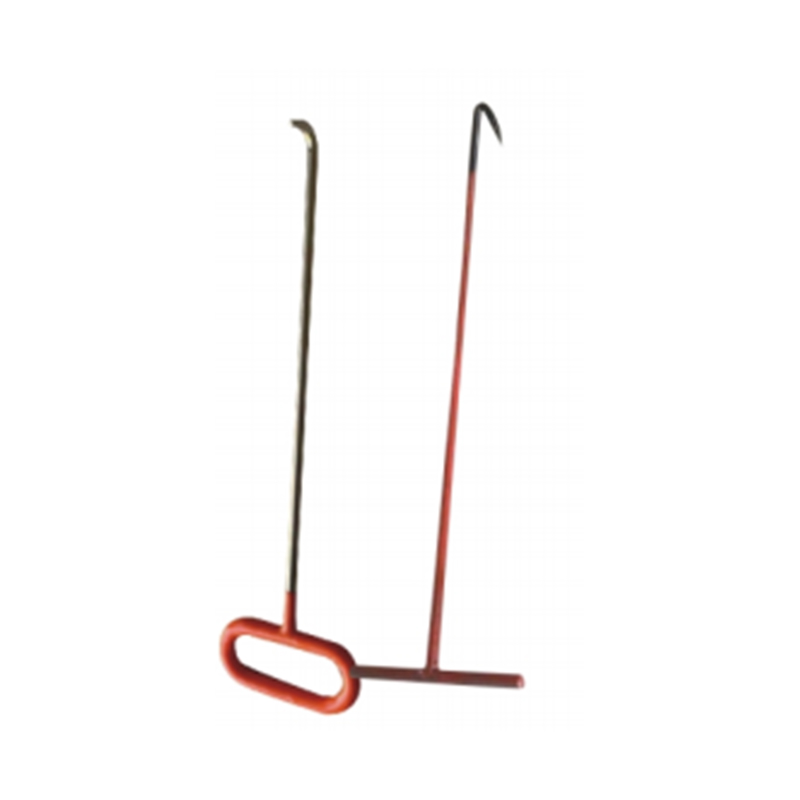
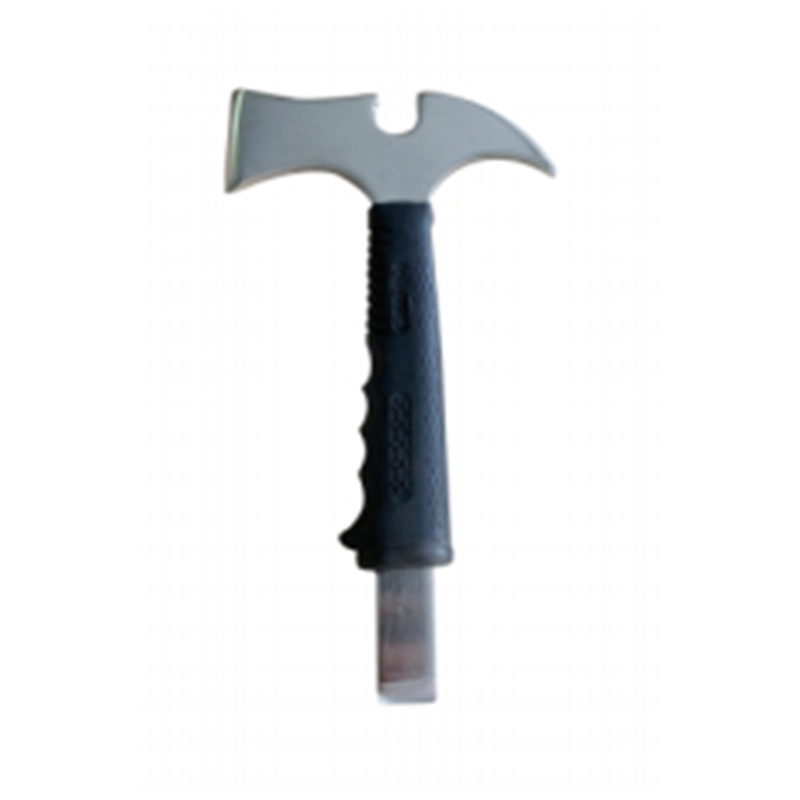
Firefighting Crowbar
Advantages Compared with Ordinary Pry Bars
Ordinary pry bars can be useful for maintenance, construction, or general utility work, but they are not always optimized for emergency response. Their geometry may support only one primary action, and their handles or ends may not be designed for striking, puncturing, or rapid forcible entry. A firefighting crowbar is intended for a broader set of high-stress tasks and is normally selected as part of a coordinated rescue tool system.
| Evaluation Area | Professional Firefighting Crowbar | Ordinary Pry Bar |
|---|---|---|
| Primary purpose | Forcible entry, rescue, breaching, and emergency manipulation | General maintenance or construction prying |
| Functional range | May support prying, twisting, striking, puncturing, pulling, and breaching | Usually focused on basic leverage or lifting |
| Emergency suitability | Designed for rapid access and demanding response conditions | May not be optimized for smoke, debris, or protective-glove use |
| Tool integration | Can be carried with axes, nozzles, hoses, ladders, and other rescue equipment | Often used as an individual general-purpose tool |
| Customization potential | Can be specified for application, length, finish, packaging, or project requirements | Usually purchased from fixed standard options |
| Manufacturing focus | Quality control directed toward professional fire and rescue applications | Quality requirements vary widely by supplier and market |
The main advantage of a professional firefighting crowbar is not simply that it is stronger than every general-purpose tool. Rather, it is designed around the working patterns of emergency personnel. Its shape, balance, and functional ends are intended to support a series of operations that may occur within minutes or seconds. A responder can select one tool with several useful capabilities instead of carrying multiple single-purpose tools for every possible task.
Another advantage is equipment standardization. Fire departments and rescue organizations often need consistent tools across vehicles and crews. Standardized equipment supports training, simplifies inspection, improves familiarity, and makes replacement easier. A manufacturer capable of supplying repeatable products can help customers maintain consistent specifications across different purchasing batches or vehicle projects.
Professional tools can also be supplied as part of a broader fire truck equipment program. A manufacturer serving the fire protection industry may coordinate crowbar requirements with equipment stowage, mounting systems, roller shutters, tool compartments, boarding ladders, ladder racks, handrails, and other vehicle accessories. This makes it easier for customers to plan a complete equipment arrangement rather than purchasing unrelated parts from multiple sources.
Material Selection and Structural Reliability
Material selection is central to the reliability of a firefighting crowbar. The material must support the required combination of strength, toughness, wear resistance, formability, and resistance to environmental exposure. Since the exact material specification may vary according to product design and customer requirements, technical documents should identify the selected grade, relevant treatment, dimensional tolerances, surface condition, and intended use.
A high-quality crowbar must resist permanent bending during normal operations. At the same time, it should not be so brittle that impact causes cracking or sudden failure. This balance is achieved through appropriate material selection and controlled processing. Forming, heating, machining, and finishing operations must be coordinated so that the final product has consistent structural properties.
Surface treatment is also important. Firefighting equipment may be exposed to water, foam residue, mud, dust, oils, smoke deposits, and fluctuating temperatures. A suitable finish can help protect the tool from corrosion and make it easier to clean after use. Surface treatment should not obscure cracks, deformation, or other signs of damage, and it should be compatible with the product’s intended inspection procedures.
The tool’s ends require particular attention. Forked, flattened, pointed, or hooked ends may experience concentrated loads. If the transition between the shaft and working end is poorly designed, stress can accumulate in that area. Professional manufacturing therefore considers geometry, radii, alignment, forming quality, and finishing consistency. These details may appear small, but they can influence tool life and user confidence during demanding operations.
Manufacturing Process and Quality Control
The production of a professional firefighting crowbar involves a sequence of controlled operations rather than a single forming step. A reliable process begins with the review of product requirements and continues through material procurement, production planning, forming, machining, finishing, assembly where applicable, inspection, packaging, and delivery.
Technical Planning and Product Development
Before production begins, the manufacturer evaluates the intended application and confirms the product specification. Important factors may include overall dimensions, working-end configuration, weight, grip requirements, surface finish, packaging, identification marks, and customer-specific requirements. For OEM and ODM projects, technical communication is especially important because the product may need to fit a particular fire truck compartment, tool rack, or rescue equipment set.
A professional research and development team can help convert field requirements into practical product features. The development process may include design review, sample production, dimensional verification, user feedback, and controlled modification. This approach reduces the risk of producing a tool that meets a drawing but is inconvenient to carry, difficult to operate, or unsuitable for the intended equipment layout.
Raw Material Procurement
Stable product quality begins with controlled raw materials. Procurement should consider supplier reliability, material documentation, consistency, and suitability for the planned production process. Incoming materials can be checked for dimensions, surface condition, identification, and other requirements established by the quality system.
Reliable material control is particularly important for tools exposed to impact and bending. Inconsistent material properties may produce differences between batches, even when the external dimensions appear identical. A disciplined manufacturer therefore connects raw material records with production batches and final inspection records whenever practical.
Forming and Shaping
The main body and working ends of a crowbar may require controlled forming, bending, forging, or other shaping operations depending on the design. The objective is to create the required geometry while preserving structural integrity and repeatability. Production equipment must be maintained and adjusted so that the tool remains aligned and consistent across batches.
Controlled forming also affects balance and handling. If the working ends are misaligned, the operator may need to compensate during use. If the shaft is not straight or the angles vary, the tool may not engage the target as intended. Dimensional checks after forming help identify these issues before the product advances to later stages.
Machining and Edge Preparation
Machining may be used to refine working ends, produce striking surfaces, create holes or grooves, and achieve specified dimensions. Edge preparation should be carefully controlled. A working edge may need to be sharp enough for its intended function but not so thin or fragile that it is easily damaged during normal use.
Machining quality also influences safety. Irregular burrs, sharp unintended edges, rough transitions, or incomplete finishing can interfere with gloves and increase the risk of cuts or snagging. Professional finishing removes such defects while preserving the functional geometry of the tool.
Heat Treatment and Process Control
Where the product specification calls for heat treatment, the process must be controlled according to the material and required performance. Heating, holding, cooling, and subsequent treatment can influence hardness, toughness, wear resistance, and dimensional stability. The correct process depends on the selected material and design, so technical parameters should be established and verified by qualified production personnel.
Heat treatment is not a substitute for good design. A tool with unsuitable geometry may still fail even if the material has been treated correctly. For this reason, manufacturing quality depends on the integration of design engineering, material control, forming accuracy, heat treatment, machining, and inspection.
Surface Finishing
Surface finishing improves appearance, cleanability, corrosion resistance, and product consistency. Depending on the specification, finishing may include polishing, coating, painting, or another protective treatment. The chosen finish should be appropriate for the tool’s environment and should not interfere with identification marks, inspection, or operation.
Consistent finishing is also valuable for fleet management. Fire departments may want tools with clear product identification, batch information, color coding, or a uniform appearance across vehicles. OEM and ODM customers can discuss these requirements with the manufacturer before production begins.
Final Inspection and Delivery Control
Final inspection may cover dimensions, alignment, surface condition, working-end geometry, weight, marking, packaging, and visible defects. Depending on the project, additional checks may be defined for strength, hardness, corrosion protection, or functional performance. Inspection records provide evidence that the product has passed the customer’s agreed requirements.
The manufacturer described in the supplied company information operates under a GB/T 19001-2016 quality certification framework. A documented quality management system supports consistent procedures across procurement, production, inspection, and delivery. Certification alone does not replace product-specific inspection, but it provides an organized foundation for process control and continual improvement.
Manufacturer Strengths and Industry Experience
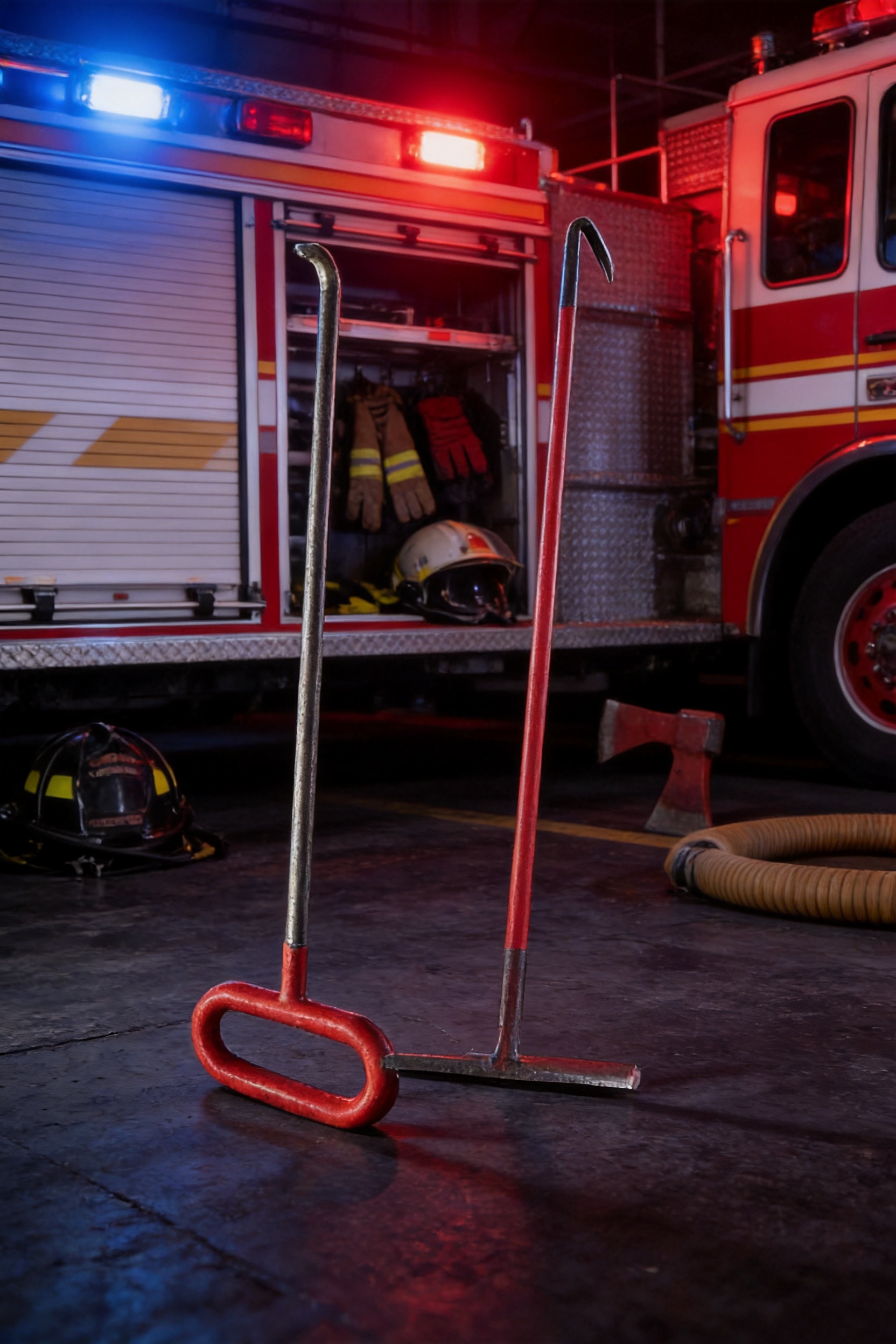
Tianchang Jinlv Fire Equipment Co., Ltd. was established in 2010 and has focused on fire protection accessories for approximately fifteen years. This industry concentration is valuable because fire equipment requires a practical understanding of vehicle integration, field use, durability expectations, storage limitations, and procurement requirements.
The company supplies products in several related categories, including specialty vehicle roller shutters, fire apparatus equipment stowage and mounting systems, fire truck boarding ladders, fire truck ladder racks, fire truck ladder handrails, firefighting nozzles, fire hose cannons, fire demolition tools, SCBA equipment, fire truck cab doors, and fire truck plastic tool components. This product breadth allows the manufacturer to understand how individual tools fit into a complete fire apparatus system.
For customers purchasing a firefighting crowbar, this broader capability can be useful. The crowbar may need to be stored in a specific compartment, mounted near a ladder, positioned beside a hose assembly, or integrated into an emergency tool arrangement. A supplier familiar with fire truck structures and equipment storage can participate more effectively in the planning process.
Research and Development Capability
The company maintains a professional research and development team with industry experience and follows changing market requirements. Research and development in this field is not limited to creating new products. It also includes improving ergonomics, simplifying production, enhancing durability, adapting products for different vehicle layouts, and supporting customer-specific designs.
OEM and ODM services are especially important for international customers, vehicle manufacturers, fire apparatus builders, distributors, and government or industrial users with defined specifications. A customized crowbar project may involve a different overall length, working-end profile, surface finish, logo or identification marking, packaging method, mounting arrangement, or combination with another tool system.
Production Facilities and Complete Manufacturing Process
The company reports that it is equipped with advanced production facilities and a complete production process. A complete process improves coordination between departments and reduces dependence on uncontrolled subcontracting or inconsistent manual adjustment. When design, material procurement, forming, finishing, inspection, and delivery are connected through documented procedures, product quality can be managed more systematically.
Efficient production also supports cost control. Fire departments and vehicle manufacturers often require reliable quality at competitive prices, particularly when purchasing equipment for multiple vehicles. Stable production planning, controlled material usage, reduced rework, and consistent inspection can help provide cost-effective products without treating low price as the only purchasing objective.
Service and Technical Support
Emergency equipment customers may need assistance before, during, and after purchasing. Before production, they may require help selecting dimensions or confirming compatibility with a vehicle compartment. During production, they may need sample approval, drawing review, or packaging confirmation. After delivery, they may require maintenance guidance, replacement planning, or technical communication for future orders.
Dedicated customer service and global technical support help reduce communication gaps, particularly for overseas buyers. Clear documentation, consistent product identification, responsive communication, and careful handling of OEM or ODM details all contribute to a smoother purchasing experience.
Use in Firefighting and Rescue Scenarios
A firefighting crowbar can support many types of emergency response, but it must always be used according to training, risk assessment, and local operating procedures. The tool should not be treated as a replacement for specialized hydraulic, cutting, lifting, or stabilization equipment when those tools are required.
Building Fires
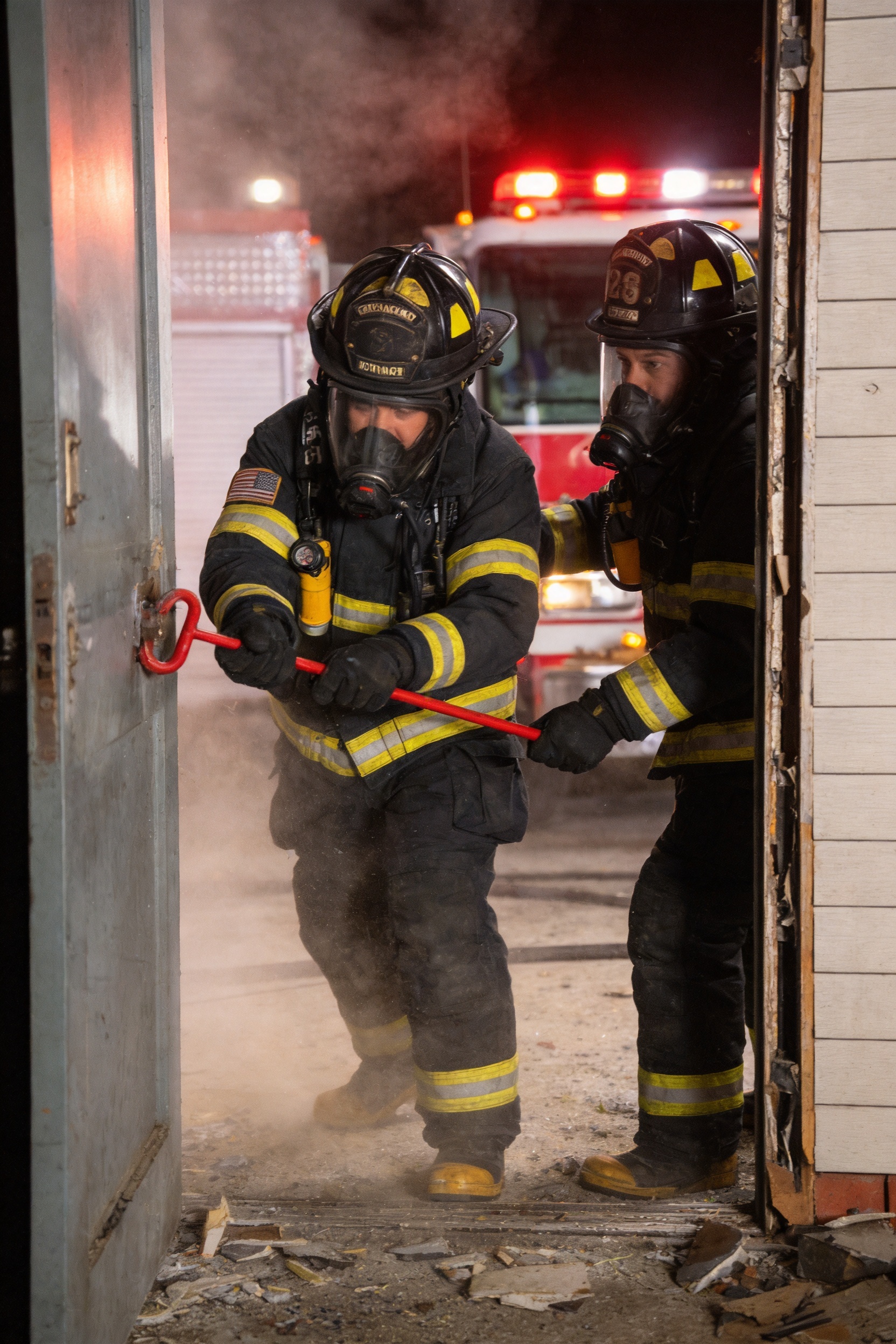
During a building fire, responders may encounter locked doors, jammed windows, damaged frames, fallen materials, and blocked access routes. A crowbar can support forcible entry and help create access for hose lines, ventilation operations, search teams, and rescue personnel. Its compact form is useful in corridors, stairwells, rooms, and other areas where larger equipment may be difficult to position.
Firefighters must evaluate the condition of the structure before applying force. Heat, smoke, fire spread, weakened floors, pressurized doors, and hidden hazards can all affect the safest entry method. The crowbar is one component of a broader operational plan that includes personal protective equipment, communication, ventilation control, team coordination, and continuous hazard assessment.
Vehicle Extrication
After a traffic collision, vehicle panels, doors, hoods, or interior components may be deformed. A crowbar can assist with initial access, removal of light obstructions, or manipulation of components while other rescue equipment is prepared. It is especially useful as a portable manual tool carried alongside hydraulic spreaders, cutters, glass management tools, and stabilization equipment.
Vehicle extrication requires awareness of airbags, fuel systems, electrical systems, sharp edges, unstable loads, and occupant injuries. A crowbar should be applied only after the team has evaluated the vehicle and selected an appropriate method. The value of the tool lies in its versatility and immediate availability, not in replacing the complete extrication system.
Earthquake and Structural Rescue
Earthquakes and structural incidents may leave doors, panels, furniture, and construction materials displaced or jammed. A firefighting crowbar can help responders move smaller obstructions, gain access to enclosed areas, and support manual rescue tasks. Its non-powered operation is useful when electricity is unavailable or when a quiet, controlled tool is preferred during search activities.
Structural rescue is highly hazardous. Unstable loads, aftershocks, dust, void spaces, and secondary collapse risks must be considered. Crowbars should be used within a coordinated rescue plan and not as a substitute for shoring, lifting systems, detection equipment, or structural engineering support.
Industrial and Commercial Emergencies
Factories, warehouses, utilities, workshops, and commercial facilities may have specialized access panels, equipment enclosures, storage barriers, and damaged doors. A professional crowbar can provide immediate manual access when keys, powered tools, or normal controls are unavailable. Its usefulness is increased when the tool is stored in a clearly marked and quickly accessible emergency equipment location.
Ergonomics, Handling, and Equipment Storage
A tool’s working strength is important, but handling characteristics also affect real-world performance. Firefighters often operate while wearing gloves, helmets, protective clothing, breathing apparatus, and other equipment. The crowbar must be easy to grasp, orient, carry, and return to storage.
Weight distribution influences fatigue. A tool that is excessively heavy may reduce endurance, while one that is too light may not provide the desired impact or leverage. The appropriate balance depends on the intended application, tool length, and user preference. For this reason, organizations should evaluate samples or confirmed specifications before placing large orders.
Storage is another important consideration. A crowbar should be secured so that it does not move during vehicle travel, yet it must be quickly removable during an emergency. Mounting systems should avoid blocking adjacent equipment and should allow inspection of the tool’s condition. Fire truck equipment stowage and mounting systems can be designed to keep forcible entry tools organized and accessible.
Clear identification is useful when several tools are stored together. Marking, color coding, labels, or dedicated mounting positions can help crews locate the tool quickly. The storage area should also protect the crowbar from unnecessary contamination, standing water, and contact with equipment that could damage its finish.
Inspection, Maintenance, and Service Life
Even a professional tool requires inspection and maintenance. After use, the crowbar should be cleaned of dirt, soot, chemical residue, oils, and moisture. It should be dried before storage and checked for bending, cracks, deep gouges, loose components, damaged points, chipped striking areas, corrosion, or other changes in condition.
Users should pay particular attention to the working ends and transitions between different sections of the tool. Deformation may indicate that the tool has been overloaded or used in a way that exceeds its intended purpose. Any tool showing serious damage should be removed from service and evaluated by a qualified person.
Maintenance records can help departments monitor tool condition and replacement needs. A simple record may include the tool identification number, vehicle assignment, inspection date, observed condition, cleaning activity, and corrective action. Consistent records support equipment readiness and help identify recurring problems in storage, handling, or application.
Service life depends on frequency of use, operating environment, maintenance, material, design, and the intensity of operations. It is not responsible to assign one universal lifespan to every crowbar. Instead, the tool should remain in service only while it meets the organization’s inspection criteria and remains suitable for its intended purpose.
OEM and ODM Customization Options
Different fire departments and vehicle manufacturers may require different tool configurations. OEM and ODM support allows customers to discuss their operational needs before the product is finalized. Customization may include overall length, shaft profile, working-end shape, finish, color, markings, packaging, documentation, and mounting compatibility.
A customized product should begin with a clear technical brief. The brief may describe the intended vehicle, available storage space, expected tasks, preferred carrying position, user gloves, target weight, required quantity, and relevant inspection criteria. Drawings, samples, photographs, and compartment dimensions can help reduce misunderstandings during development.
Customization should not compromise the tool’s essential structural or functional requirements. Changes to length, geometry, or material can affect leverage, balance, stress distribution, and handling. Any modification should therefore be reviewed by qualified technical personnel before mass production.
For distributors, customized packaging and identification can support market requirements. For fire apparatus builders, a coordinated tool specification can make it easier to design brackets, racks, and compartments. For end users, a standardized configuration can improve training and reduce confusion between vehicles.
How to Select the Right Firefighting Crowbar
Selection should begin with the tasks the tool is expected to perform. A department focused on residential forcible entry may prioritize door and window access. A rescue team may require a configuration suitable for vehicle extrication and earthquake response. An industrial emergency team may need a compact tool for equipment access and obstruction removal.
Important evaluation points include working-end configuration, overall dimensions, weight, material information, surface finish, grip compatibility, storage requirements, inspection documentation, and supplier experience. Buyers should also confirm whether the manufacturer can provide samples, technical drawings, test information, and consistent repeat production.
Price should be evaluated together with durability, usability, quality control, service, and total ownership cost. A low-cost tool that deforms early, is difficult to store, or varies from batch to batch may create greater expense over time. A properly specified professional tool can provide better operational value when it is reliable, standardized, maintainable, and supported by a capable manufacturer.
| Selection Question | Why It Matters |
|---|---|
| What tasks will the tool perform? | Determines the appropriate geometry, length, strength, and working ends. |
| Where will it be stored? | Confirms compatibility with compartments, racks, brackets, and tool boards. |
| Who will use it? | Helps evaluate weight, handling, glove compatibility, and training requirements. |
| What environmental exposure is expected? | Guides the choice of surface protection, cleaning procedures, and inspection frequency. |
| Is customization required? | Defines whether OEM or ODM design support should be included. |
| How will quality be verified? | Establishes requirements for records, dimensional checks, material documentation, and final inspection. |
Why Manufacturing Capability Matters to Buyers
A firefighting crowbar may appear to be a simple product, but the consequences of inconsistent manufacturing can be serious. Differences in dimensions, alignment, material behavior, surface finish, or working-end shape may affect usability and confidence. Buyers therefore benefit from selecting a supplier with an established production system rather than treating the tool as an anonymous commodity.
A manufacturer with professional facilities, a complete production process, an experienced technical team, and a documented quality management system can offer better control over repeat orders. This is particularly important for fire apparatus projects involving multiple vehicles or long-term procurement. Consistency allows crews to train with familiar equipment, simplifies spare parts and replacements, and supports predictable storage arrangements.
The supplier’s experience across fire truck accessories can also create practical advantages. A company that manufactures roller shutters, equipment storage systems, ladders, racks, handrails, nozzles, hose cannons, SCBA-related components, cab doors, and plastic tool components is familiar with the broader requirements of emergency vehicle integration. This knowledge can improve communication when the crowbar is part of a larger fire truck equipment package.
In addition, a company focused on honesty, innovation, quality, and customer service is more likely to treat technical communication as a continuing responsibility rather than a one-time transaction. The objective is not only to deliver a product, but also to support reliable equipment planning, customization, inspection, and future supply.
Operational Best Practices
All personnel using a firefighting crowbar should receive appropriate instruction. Training should cover tool selection, carrying methods, body positioning, leverage principles, safe striking, team communication, target assessment, and post-use inspection. The tool should be used with suitable protective equipment and in accordance with department procedures.
Responders should avoid placing hands near pinch points, unstable edges, or areas that may move suddenly. They should maintain stable footing and communicate before applying force when working as a team. The crowbar should not be used beyond its intended function, such as uncontrolled lifting of loads, striking explosive or pressurized components, or operating on materials that require specialized equipment.
After an operation, the tool should be cleaned, inspected, documented, and returned to its designated storage position. A tool that is left in a compartment covered with debris or moisture may be unavailable or unsafe during the next call. Readiness is part of product performance.
Frequently Asked Questions
What is a firefighting crowbar used for?
A firefighting crowbar is used for forcible entry, prying, twisting, striking, puncturing, pulling, breaching, and manipulating obstructions. It may support building entry, vehicle extrication, earthquake rescue, industrial response, and other emergency operations.
How is a professional firefighting crowbar different from a general pry bar?
A professional firefighting crowbar is designed for emergency response and normally offers a broader range of functions, more suitable working-end geometry, stronger process control, and better compatibility with fire apparatus storage and rescue equipment systems. A general pry bar may be suitable for maintenance but may not be optimized for repeated emergency use.
Can the crowbar be customized?
Yes. OEM and ODM projects may allow customization of dimensions, working-end configuration, surface finish, markings, packaging, and mounting compatibility. Technical review is required to ensure that customization does not compromise strength, balance, or safe operation.
Is the tool suitable for vehicle extrication?
It can support vehicle extrication by helping with initial access, obstruction removal, and manipulation of damaged components. However, it should be used as part of a complete extrication system and not as a replacement for hydraulic cutters, spreaders, stabilization equipment, or other specialized rescue tools.
How should a firefighting crowbar be maintained?
The tool should be cleaned after use, dried thoroughly, inspected for bending, cracks, corrosion, chipped areas, and damaged working ends, and stored securely. Departments should establish inspection schedules and remove damaged tools from service.
What should buyers confirm before placing an order?
Buyers should confirm the intended applications, dimensions, working-end design, material information, surface finish, weight, inspection requirements, packaging, delivery expectations, and compatibility with existing fire truck storage or mounting systems.
Does the manufacturer support complete fire truck equipment projects?
The company supplies a broad range of fire protection accessories, including vehicle roller shutters, equipment stowage and mounting systems, ladders, ladder racks, handrails, firefighting nozzles, fire hose cannons, demolition tools, SCBA equipment, cab doors, and plastic tool components. This broader capability can support customers planning coordinated fire truck equipment packages.
Why is quality management important for this product?
Quality management helps control materials, production procedures, inspection, documentation, and repeatability. The company reports compliance with GB/T 19001-2016 quality certification requirements, providing a structured basis for manufacturing control and continual improvement.
Can a crowbar be used in every rescue situation?
No. A crowbar is a versatile manual tool, but each incident requires a specific risk assessment. Some situations require hydraulic, cutting, lifting, stabilization, breathing, or specialized structural rescue equipment. The crowbar should be selected and used according to training and operational procedures.
Conclusion
A professional firefighting crowbar is a compact but highly capable component of modern fire rescue equipment. Its combination of leverage, impact capability, puncturing ability, twisting control, and portability makes it useful in building fires, vehicle extrication, earthquake rescue, industrial incidents, and other emergency operations. Compared with ordinary pry bars, it is better aligned with the varied and demanding tasks faced by firefighters and rescue personnel.
The product’s effectiveness depends on more than its visible shape. Material selection, structural design, forming, machining, heat treatment where required, surface finishing, inspection, packaging, and storage compatibility all contribute to reliable performance. A manufacturer with professional production facilities, an experienced research and development team, a complete manufacturing process, quality certification, and fire equipment industry experience can provide meaningful advantages to buyers.
Tianchang Jinlv Fire Equipment Co., Ltd. brings approximately fifteen years of experience in fire protection accessories and supplies a broad range of fire truck equipment and rescue components. Its capabilities in OEM and ODM customization, technical support, quality control, and related vehicle equipment make it a practical supplier for customers seeking dependable firefighting crowbars and coordinated fire apparatus solutions.
For fire departments, rescue organizations, vehicle manufacturers, distributors, and industrial safety teams, the right purchasing decision should consider operational performance, manufacturing consistency, service life, storage, inspection, and long-term support. When these factors are addressed together, a firefighting crowbar becomes more than a simple metal tool: it becomes a dependable part of an organized emergency response system.
References
1. International Organization for Standardization. Quality Management Systems—Requirements, ISO 9001:2015.
2. GB/T 19001-2016. Quality Management Systems—Requirements.
3. National Fire Protection Association. Standard practices and guidance for fire service forcible entry, rescue operations, and emergency response equipment.
4. National Fire Protection Association. Guidance concerning fire apparatus equipment, tool storage, maintenance, and operational readiness.
5. Occupational safety guidance for manual handling, hand tools, protective equipment, and emergency rescue operations.
6. Manufacturer-provided product and company information concerning professional firefighting crowbars, Halligan tools, fire truck equipment, OEM/ODM services, manufacturing capabilities, and quality management.
Product: Firefighting Crowbar
News
-
-
Two minutes into a working fire, a crew stands in front of a locked steel security door with a crowbar that is too short to pull with both hands. Nothing about the tool is broken. It was simply speci...
READ MORE -
Quick Answer The right fire fighting nozzle depends on three factors: the flow rate your pump can deliver, the pattern your crew needs on the fireground, and the thread standard your hose already us...
READ MORE -
When a fire apparatus rolls out of the station for a structure fire or a highway rescue, every bolt, hinge, and ladder surface is about to face heat, vibration, moisture, and rough handling. Some com...
READ MORE -
Every firefighter has opened a compartment door after a rough response only to find nozzles, webbing, and wrenches piled on top of each other. In gloves and low light, with the pump running, that is ...
READ MORE -
Two pumpers of the same model can feel like two different trucks on the same call. On the first, a firefighter reaches into a compartment, releases one latch with a gloved hand, and pulls a tray far ...
READ MORE
Hey! Interested in staying in the loop? Sign up for our updates.
WE WON'T SPAM YOU, PINKY PROMISE.

Tianchang Jinlv Fire Equipment Co., Ltd.
Copyright © Tianchang Jinlv Fire Equipment Co., Ltd. All rights reserved. Custom Fire Truck Equipment Supplier Fire Apparatus Parts Factory
