

 en
 English
 русский
 Español
 عربى

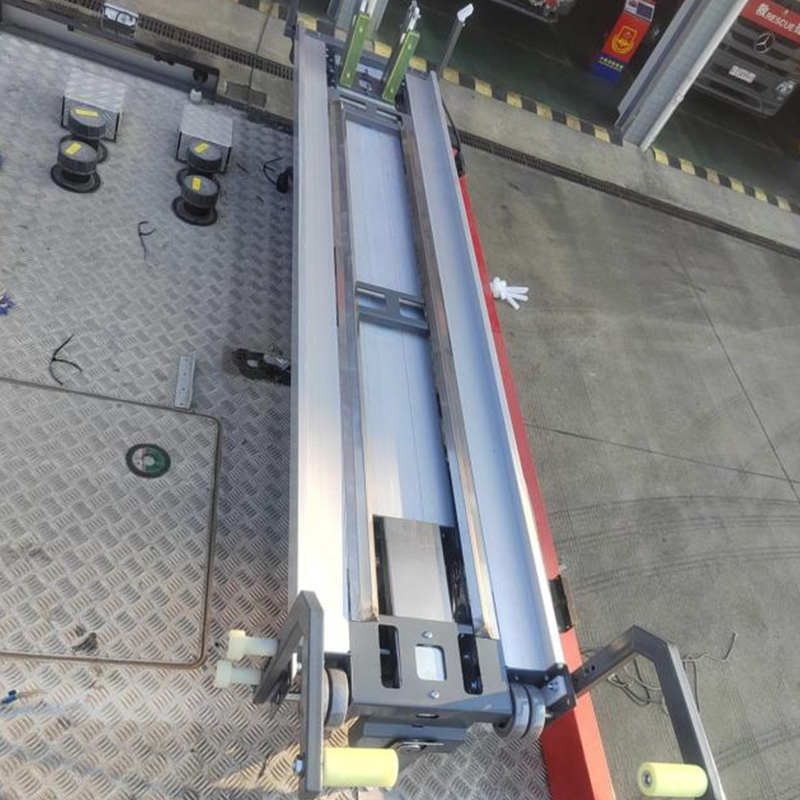
Quick Answer The right fire truck boarding ladder is a fixed, upward-folding, or rotating step assembly mounted at the rear or side of the apparatus that gives firefighters a stable, non-slip surface ...
READ MORE
304 Stainless Steel Fire Truck Boarding Ladder: Compact Access, Durable Construction, and Custom OEM/ODM Manufacturing
2026.10.19
Content
- 1 Introduction
- 2 Product Overview
- 3 Why Boarding Access Matters on Fire Trucks
- 4 Material Engineering and Structural Design
- 5 Compact Folding Design for Small Fire Trucks
- 6 Advantages Compared with Conventional Fixed or Highly Complex Ladders
- 7 Manufacturing Capabilities and Quality Management
- 8 OEM and ODM Customization Support
- 9 Integration with Other Fire Truck Equipment
- 10 Installation and Service Considerations
- 11 Safety and Responsible Use
- 12 Environmental Durability and Lifecycle Value
- 13 Why Choose a Specialized Fire Equipment Manufacturer
- 14 Applications
- 15 Purchasing and Project Evaluation Guide
- 16 Frequently Asked Questions
- 16.1 What is the main purpose of this boarding ladder?
- 16.2 What materials are used in the product?
- 16.3 Why is aluminum alloy used for the main frame?
- 16.4 Why are 304 stainless steel fasteners important?
- 16.5 Is the ladder suitable for large fire trucks?
- 16.6 Can the dimensions be customized?
- 16.7 Can the company provide OEM or ODM service?
- 16.8 Does the folding ladder require regular maintenance?
- 16.9 Can the ladder be installed beside a roller shutter or equipment compartment?
- 16.10 How should the ladder be evaluated before mass production?
- 16.11 What quality system does the manufacturer follow?
- 16.12 What information should be included in an inquiry?
- 17 Conclusion
- 18 References
- 19 Product: 304 Stainless Steel Fire Truck Boarding Ladder
Introduction
Firefighting vehicles must provide rapid access, dependable storage, and safe working platforms in environments where every second matters. A boarding ladder may appear to be a relatively small component, but it directly affects how efficiently firefighters can enter, leave, inspect, and operate around a vehicle. The ladder must be strong enough for repeated use, compact enough for installation on a limited vehicle body, resistant to corrosion, and simple enough to operate while personnel are wearing protective clothing and equipment.
The 304 Stainless Steel Fire Truck Boarding Ladder is designed to meet these practical requirements. Its main frame is manufactured from high-strength aluminum alloy profiles, while its fasteners are made from 304 stainless steel. The folding structure uses stainless steel plates to provide a compact access solution for small fire trucks and other emergency vehicles with limited installation space. The design combines structural strength, corrosion resistance, low operating complexity, and flexible customization.
Manufactured by Tianchang Jinlv Fire Equipment Co., Ltd., the product is part of a broader portfolio that includes specialty vehicle roller shutters, fire apparatus equipment stowage systems, mounting systems, fire truck ladder racks, ladder handrails, firefighting nozzles, fire hose cannons, demolition tools, SCBA equipment, cab doors, and plastic tool components. This product range allows the company to understand the relationship between individual components and the complete fire apparatus, rather than treating the boarding ladder as an isolated item.
For fire apparatus manufacturers, vehicle integrators, municipal fire departments, rescue organizations, and specialized fleet operators, the ladder provides a practical balance between durability and installation flexibility. Its dimensions can be customized according to customer requirements, allowing the product to be adapted to different vehicle layouts, access heights, mounting positions, and operational preferences.
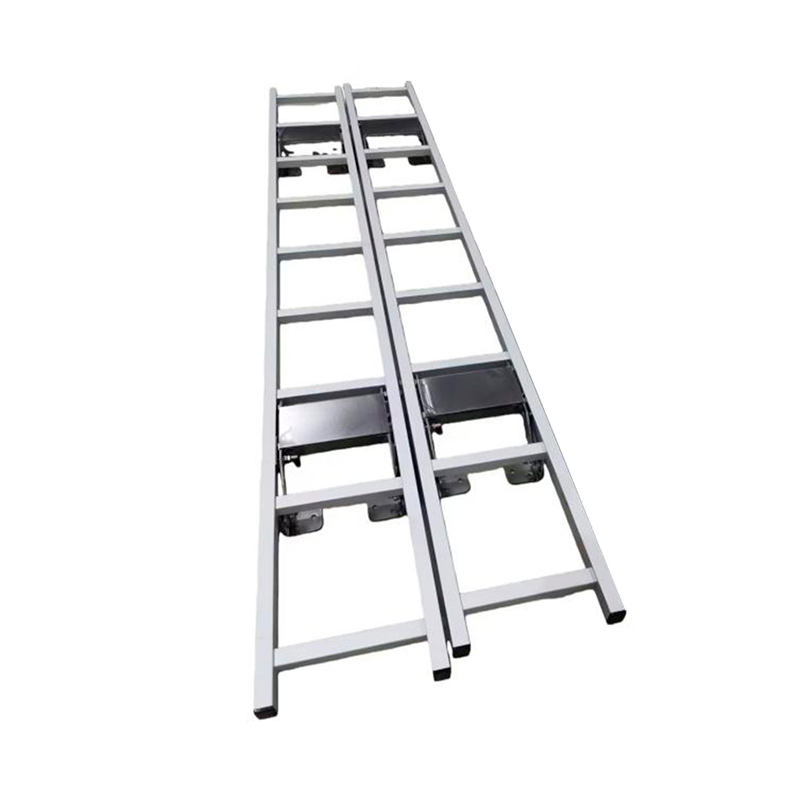
304 Stainless Steel Fire Truck Boarding Ladder
Product Overview
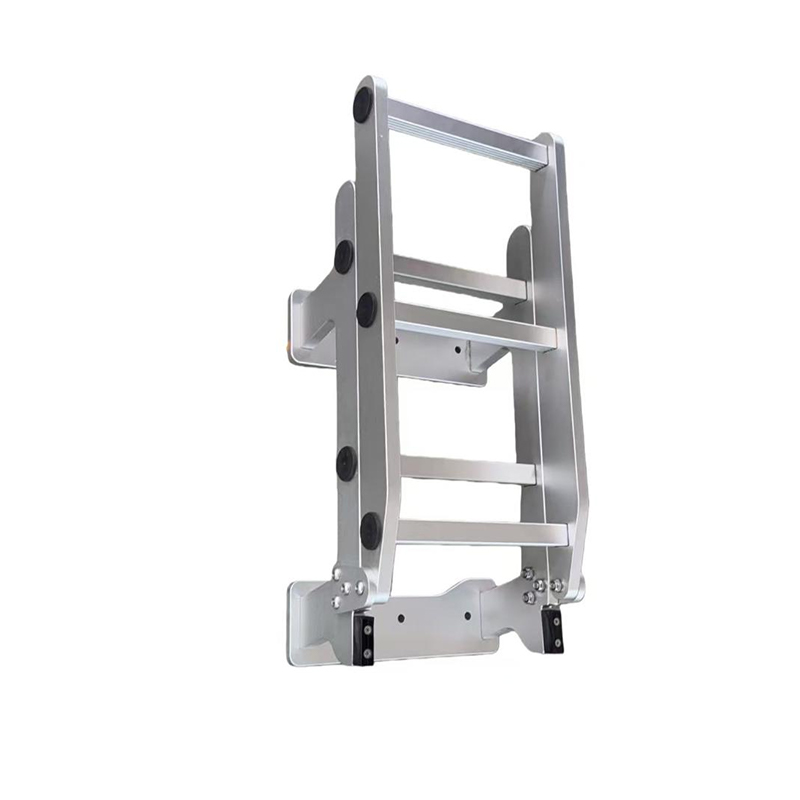
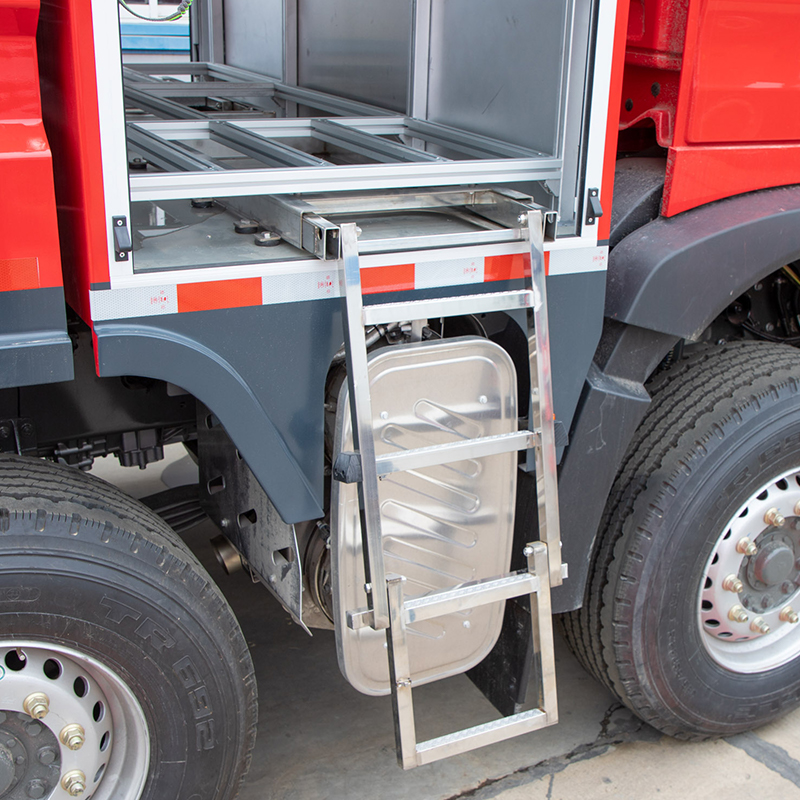
The 304 Stainless Steel Fire Truck Boarding Ladder is a folding access ladder intended primarily for small fire trucks. It is engineered for situations in which a fixed ladder would occupy too much room or interfere with equipment compartments, roller shutters, doors, hoses, or other vehicle-mounted systems.
The main frame uses high-strength aluminum alloy profiles. Aluminum alloy is widely used in specialty vehicles because it offers a favorable strength-to-weight ratio and can help reduce unnecessary vehicle mass. Lower component weight may simplify installation, reduce the load placed on vehicle structures, and preserve payload capacity for water, rescue tools, breathing apparatus, hoses, and other mission-critical equipment.
All fasteners are made from 304 stainless steel. Fasteners are essential to the long-term reliability of a folding ladder because they are exposed to vibration, moisture, cleaning water, road contaminants, and repeated loading. The use of 304 stainless steel helps provide strong corrosion resistance and supports dependable assembly throughout the product’s service life when the ladder is correctly installed and maintained.
The folding structure is made from stainless steel plates. This construction creates a straightforward operating mechanism that can be folded when the ladder is not in use and deployed when access is required. By reducing the amount of space needed during transport, the design is particularly suitable for compact fire trucks, rescue vehicles, and other specialty vehicles where every available centimeter must be carefully allocated.
All product dimensions can be customized according to customer requirements. This includes the overall height, mounting position, folded envelope, rung arrangement, connection interface, and other dimensional details agreed during the technical design stage. Customization is especially important because fire truck bodies differ in chassis, compartment layout, roof height, rear structure, side access, and equipment configuration.
Core Product Characteristics
The product’s primary characteristics can be summarized as follows:
| Feature | Product Description | Operational Value |
|---|---|---|
| Main frame | High-strength aluminum alloy profiles | Combines structural performance with reduced component weight |
| Fasteners | 304 stainless steel | Supports corrosion resistance and reliable assembly |
| Folding structure | Stainless steel plates | Allows compact storage and straightforward deployment |
| Primary application | Small fire trucks and compact emergency vehicles | Provides access where installation space is limited |
| Dimensions | Customizable according to customer requirements | Supports vehicle-specific integration |
| Manufacturing support | OEM/ODM production and technical customization | Helps customers develop application-specific solutions |
Why Boarding Access Matters on Fire Trucks
Fire trucks frequently carry equipment on the roof, upper compartments, rear platforms, side storage areas, and elevated working zones. Firefighters may need to reach these areas to retrieve hoses, inspect equipment, connect accessories, adjust roof-mounted devices, or perform maintenance after an operation. If access is difficult, personnel may have to climb on unstable surfaces or rely on temporary equipment that is not designed for vehicle access.
A dedicated boarding ladder provides a defined access route. When integrated correctly, it can support more consistent movement and reduce the need to step on sensitive vehicle components. It also helps vehicle designers organize access around compartments, pump panels, roller shutters, handrails, and other apparatus equipment.
Small fire trucks present a special design challenge. They often operate in narrow streets, industrial facilities, rural areas, tunnels, or congested urban environments. Their compact bodies improve maneuverability, but they also offer less room for fixed ladders and external accessories. A folding ladder can address this limitation by remaining close to the vehicle body when stored and providing useful access when deployed.
The ladder must also be easy to understand. Emergency equipment is often used in poor visibility, adverse weather, high noise, and stressful circumstances. A simple structure with a clear folding action can reduce unnecessary operating steps. The product’s design philosophy is therefore based on practical access rather than excessive mechanical complexity.
Material Engineering and Structural Design
High-Strength Aluminum Alloy Main Frame
The main frame is constructed from high-strength aluminum alloy profiles. The selection of aluminum alloy is significant because a boarding ladder must support working loads while remaining suitable for a vehicle that already carries substantial equipment. Excessive weight can affect installation, handling, vehicle balance, and total payload.
Aluminum alloy profiles can be formed into rigid structural sections with predictable geometry. Their profile shape can be selected to provide the required stiffness while limiting unnecessary material. The resulting frame can be designed around the available vehicle space and connected to suitable mounting points.
In addition to its weight advantage, aluminum alloy offers useful resistance to atmospheric corrosion. The material is suitable for applications exposed to rain, humidity, road spray, and routine washing. Proper surface treatment, compatible fasteners, appropriate isolation between dissimilar metals, and correct drainage remain important to achieving long-term performance.
304 Stainless Steel Fasteners
Fasteners are small components, but their performance affects the reliability of the complete ladder. During vehicle operation, fasteners may be exposed to vibration, impact, water, cleaning chemicals, dust, and temperature changes. A fastener that loosens, corrodes, or becomes difficult to service can reduce confidence in the entire access system.
304 stainless steel is widely recognized for its useful combination of corrosion resistance, mechanical performance, availability, and serviceability. In the boarding ladder, it is used for the fastening elements that secure the product’s structural and folding components. This material choice is especially appropriate for fire apparatus, which may operate in wet environments and undergo frequent cleaning after emergency response activities.
The use of stainless steel fasteners also supports a consistent product image. Customers purchasing professional emergency equipment generally expect visible hardware to withstand demanding service conditions without rapid deterioration. Although no material is maintenance-free, 304 stainless steel provides a strong foundation for long-term use when combined with suitable design and installation practices.
Stainless Steel Plate Folding Structure
The folding structure is made from stainless steel plates. Plate construction can provide a robust base for hinges, folding arms, brackets, or connection areas. Stainless steel is well suited to these locations because the folding assembly is repeatedly handled and may experience localized loads during deployment and stowage.
The structure is intentionally simple. A simple folding mechanism can offer several practical benefits: fewer individual parts, easier inspection, reduced installation complexity, and more straightforward maintenance. The objective is not to add unnecessary mechanical features, but to provide reliable access in a compact package.
In a fire truck application, the folded ladder must remain within the designated clearance envelope. It should not obstruct doors, shutters, lights, warning devices, hose connections, or other components. The customized design process allows the ladder geometry to be coordinated with the vehicle’s body and equipment arrangement.
Compact Folding Design for Small Fire Trucks
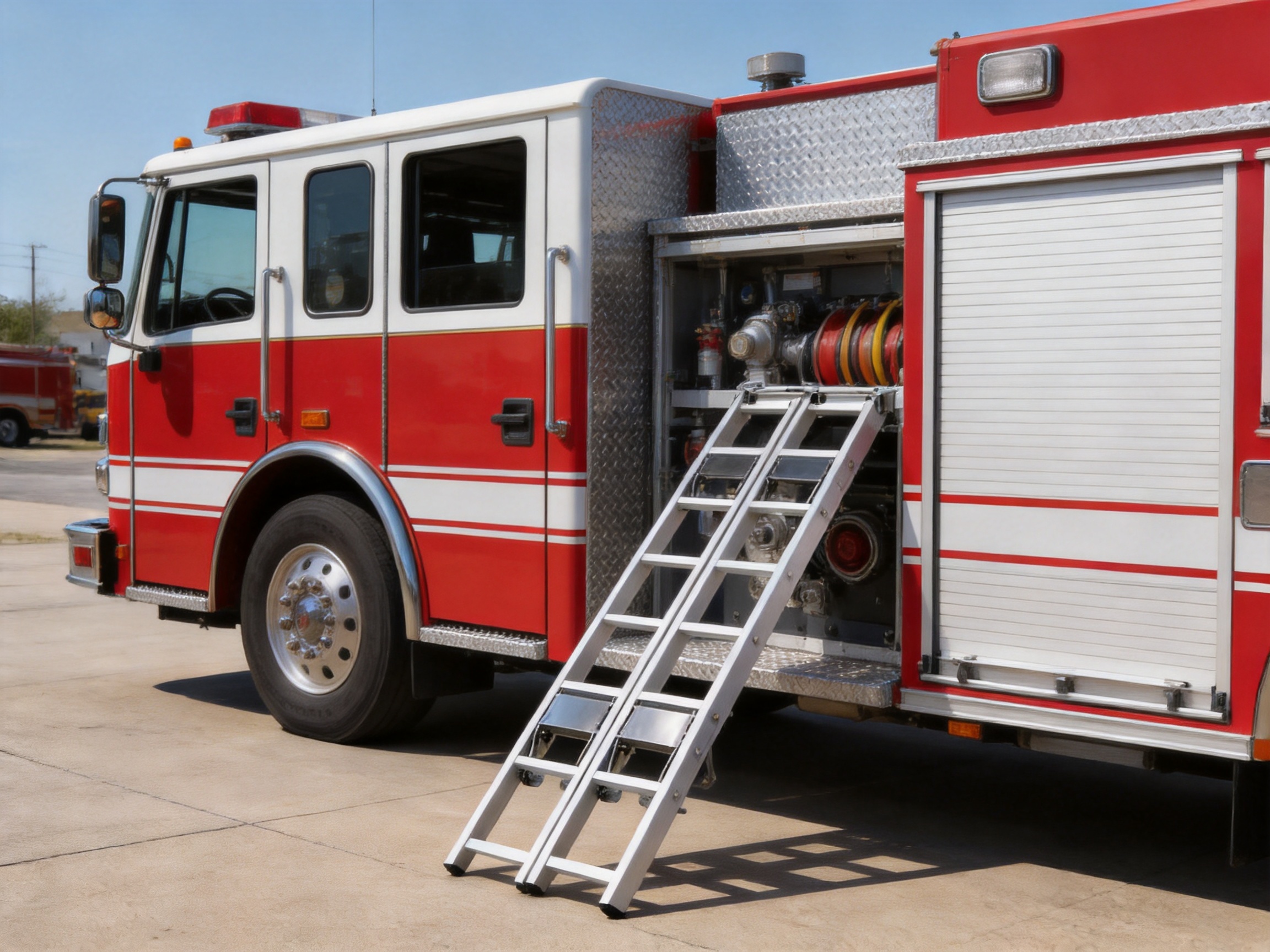
Space management is one of the most important advantages of this boarding ladder. Small fire trucks must carry a large amount of equipment on a limited chassis. Fixed access ladders can occupy valuable side or rear space, increase the vehicle width, and make it more difficult to position other components. A folding ladder helps solve this problem by reducing its stored projection.
When folded, the ladder can be positioned close to the vehicle body or within a planned storage area. When needed, it can be deployed to provide access. This configuration allows manufacturers to preserve more space for lockers, roller shutters, hose reels, pump controls, tool trays, and protective equipment.
The compact design may also help reduce the risk of accidental contact with surrounding objects during vehicle movement. Fire trucks frequently operate in tight areas where external projections can encounter walls, parked vehicles, vegetation, or structural obstacles. Keeping the ladder folded during travel supports a cleaner vehicle profile, subject to the final mounting design and applicable vehicle requirements.
Another benefit is improved configuration flexibility. Depending on the customer’s layout, the ladder may be positioned near a rear access point, beside a compartment, or in another area where roof or upper-body access is required. The customization process allows the installation concept to be developed around the actual mission of the vehicle.
Simple Operation
Emergency vehicle equipment should not require complicated procedures. The ladder’s folding structure is designed for easy operation, allowing personnel to move it between stored and deployed positions without an unnecessarily complicated sequence.
Simple operation can help reduce training requirements and support consistent use by different operators. Fire departments may have multiple shifts, temporary crews, and personnel with varying levels of familiarity with a specific vehicle. A clear and practical folding mechanism is easier to explain, inspect, and use.
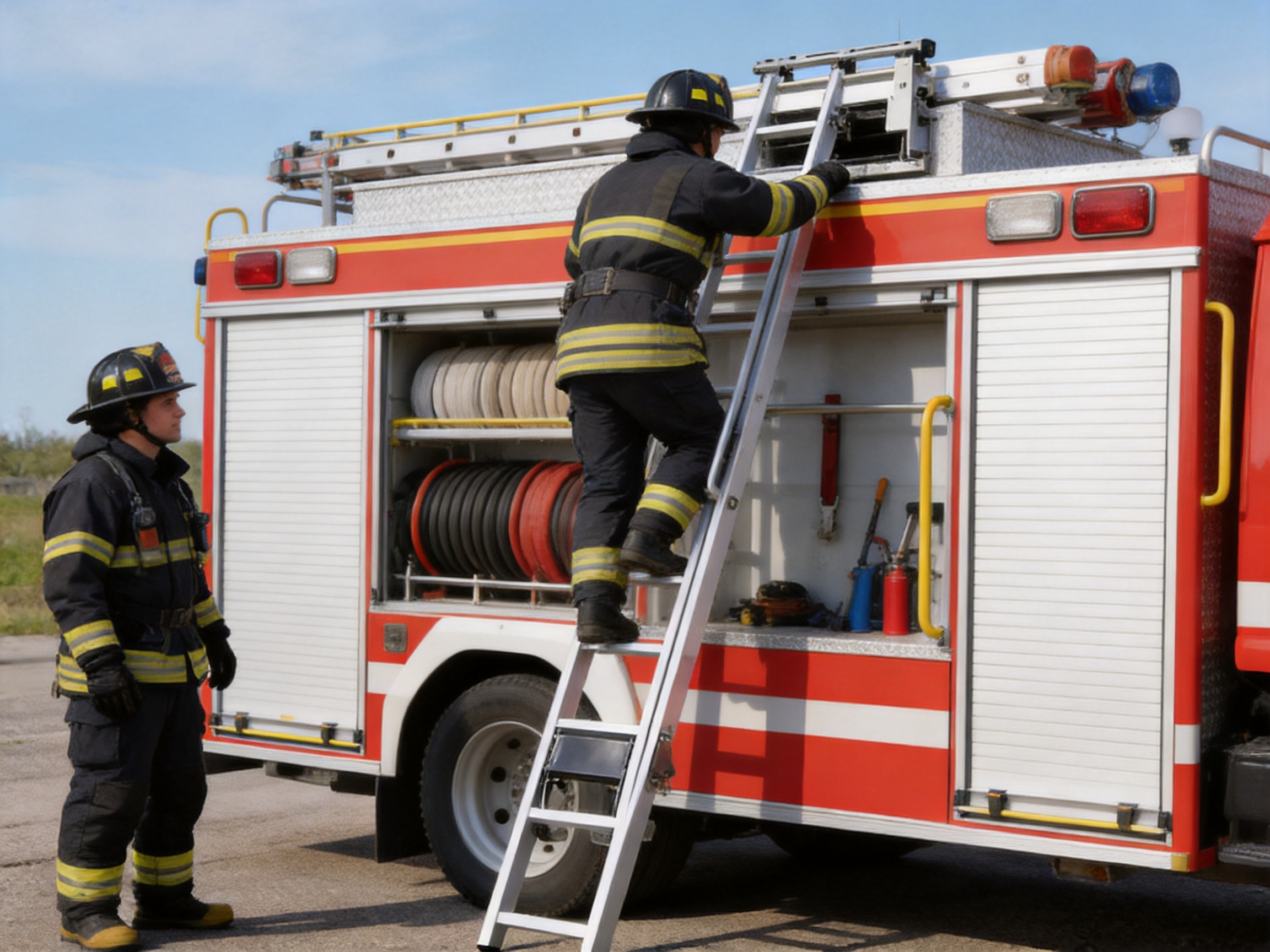
Operational simplicity does not eliminate the need for safe working procedures. Users should confirm that the ladder is fully deployed, properly positioned, and securely retained before climbing. The vehicle should be parked on a suitable surface, and the ladder should be inspected regularly for damage, loose hardware, deformation, or contamination.
Advantages Compared with Conventional Fixed or Highly Complex Ladders
Efficient Use of Vehicle Space
A conventional fixed ladder may provide permanent access, but it can occupy space even when access is not required. On a compact fire truck, this may force designers to reduce compartment width, relocate equipment, or increase the external envelope of the vehicle. The folding boarding ladder offers a more space-conscious alternative.
Compared with bulky access assemblies, the product’s folding configuration is better suited to vehicles that require a balance between accessibility and compactness. Its stored position can be considered during the earliest stage of body design, enabling the ladder to become part of the complete equipment arrangement rather than an afterthought.
Balanced Strength and Weight
Some heavy-duty access systems may provide substantial structural capacity but add more mass than necessary for the vehicle application. The aluminum alloy main frame helps create a balance between strength and weight. The stainless steel folding plates and fasteners add durability where repeated movement and connection integrity are important.
This material combination allows the product to serve as a practical component for smaller vehicles. It avoids the assumption that a boarding ladder must be made entirely from heavy steel in order to be reliable. Instead, each material is used according to its functional role.
Corrosion-Conscious Construction
Fire trucks are exposed to water, foam residues, road salt, mud, dust, and frequent cleaning. A ladder that deteriorates quickly can become unattractive, difficult to operate, or costly to repair. The use of 304 stainless steel in the fasteners and folding structure provides a corrosion-conscious construction approach.
The aluminum frame further supports the product’s suitability for outdoor use. Proper maintenance is still necessary, especially at joints, contact points, mounting areas, and surfaces where dirt or moisture may collect. However, the selected materials provide a strong starting point for service in demanding conditions.
Customization Rather Than One-Size-Fits-All Design
Fire trucks are not built to one universal layout. Chassis dimensions, body widths, access heights, compartment locations, roof equipment, and operating requirements vary from project to project. A standard ladder may require compromises or additional modification during installation.
The product’s customizable dimensions allow the manufacturer and customer to establish a more suitable design before production. Customization can help reduce field alteration, improve visual integration, and ensure that the folded ladder does not interfere with adjacent systems.
Practical Maintenance
A simple mechanism is generally easier to inspect than a highly complex assembly. Maintenance personnel can check visible fasteners, hinges, folding plates, frame sections, and mounting brackets without needing specialized diagnostic equipment. This is valuable for fleets that require quick routine inspections and predictable servicing.
Replacement components and repair procedures can also be planned more easily when the structure is straightforward. The final maintenance plan should be based on the delivered configuration, operating environment, frequency of use, and the vehicle manufacturer’s recommendations.
Manufacturing Capabilities and Quality Management
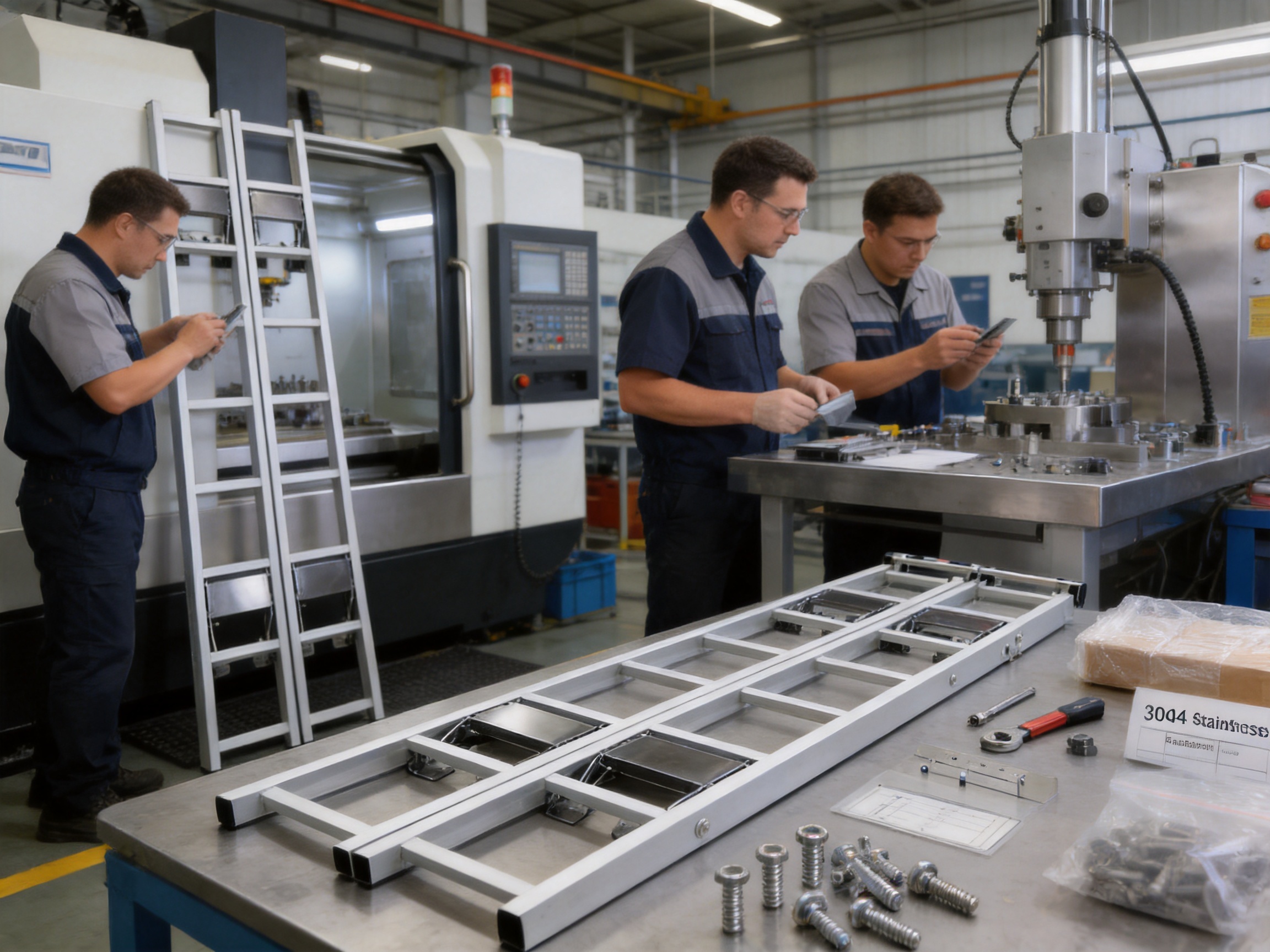
The performance of a fire truck boarding ladder depends not only on its material selection but also on how consistently it is produced. Dimensional accuracy, profile preparation, plate forming, hole positioning, fastening, surface treatment, inspection, and packaging all influence the final product.
Tianchang Jinlv Fire Equipment Co., Ltd. was established in 2010 and has focused on fire protection accessories for 15 years. The company operates with advanced production facilities and a complete production process. This experience is relevant to customers seeking more than a single component because fire apparatus equipment must be manufactured with an understanding of field requirements, vehicle integration, and repeatable quality.
The company has passed GB/T 19001-2016 quality certification. A quality management system provides a structured framework for controlling processes, documenting requirements, managing production stages, and improving consistency. Certification alone does not replace product evaluation, but it demonstrates that the company has established formal quality procedures rather than relying only on informal workshop practices.
Raw Material Control
Material control begins with the selection and verification of aluminum alloy profiles, stainless steel plates, stainless steel fasteners, and other components. Correct material identification helps ensure that the finished product matches the intended design requirements.
For a boarding ladder, material control may include checking dimensions, surface condition, profile geometry, plate thickness, fastener specifications, and supplier documentation. Managing these details at the beginning of production helps reduce the risk of inconsistent performance later in the process.
Precision Processing
Aluminum profiles and stainless steel plates must be cut, drilled, formed, and assembled according to the approved design. Dimensional precision is particularly important when the ladder is customized for a specific fire truck body. Small deviations can affect mounting alignment, folding clearance, or the relationship between the ladder and adjacent equipment.
A complete production process enables the manufacturer to coordinate material preparation, mechanical processing, assembly, and inspection. This can improve production efficiency while maintaining control over the final configuration.
Assembly and Functional Inspection
During assembly, technicians must ensure that the frame, folding structure, fasteners, mounting interfaces, and operating elements are correctly fitted. The folding movement should be checked for smoothness and adequate clearance. Fasteners should be appropriately installed, and the completed ladder should be examined for visible damage, sharp edges, misalignment, or unfinished surfaces.
Functional inspection is especially important for a folding product. A ladder may appear dimensionally correct but still require adjustment if the mechanism binds, does not fold fully, or contacts surrounding parts. Checking both the stored and deployed positions helps confirm that the product is ready for vehicle integration.
Process Traceability and Delivery Control
Professional manufacturing also includes order review, production planning, configuration confirmation, packaging, and delivery control. For customized products, the approved dimensions and technical information should be clearly recorded before production begins.
Packaging must protect the ladder from scratches, deformation, moisture, and impact during transport. This is particularly important when the product is shipped internationally or delivered to a vehicle assembly facility. Clear identification of the product configuration can help customers match the ladder with the correct vehicle project.
OEM and ODM Customization Support
Customization is one of the product’s most important commercial advantages. OEM customers may require the ladder to be manufactured according to an existing vehicle design, drawing, or specification. ODM customers may request assistance in developing a suitable access solution based on operational requirements and available installation space.
The customization process should begin with a clear exchange of technical information. Customers may provide vehicle drawings, photographs, compartment layouts, mounting locations, access heights, folded clearance requirements, preferred materials, and expected operating conditions. The manufacturer can then review the information and determine the appropriate frame dimensions and folding arrangement.
Typical Customization Considerations
Important design considerations may include the following:
| Design Item | Questions for Project Review |
|---|---|
| Installation location | Will the ladder be mounted at the rear, side, or another access area? |
| Vehicle dimensions | What are the body width, access height, and available mounting points? |
| Folded clearance | Will the stored ladder interfere with doors, shutters, lights, hoses, or tools? |
| Deployed access | Does the ladder provide a practical route to the required upper area? |
| Operating conditions | Will the vehicle work in coastal, humid, cold, dusty, industrial, or urban environments? |
| Integration requirements | Does the ladder need to match other equipment or vehicle body features? |
| Quantity and schedule | Is the project for prototype development, small-batch production, or regular supply? |
Early technical coordination can reduce redesign and installation delays. It also allows the customer to evaluate the ladder in the context of the complete vehicle rather than making decisions based only on a standalone product photograph.
Integration with Other Fire Truck Equipment
A boarding ladder must coexist with many other systems. Fire truck bodies commonly include roller shutters, equipment compartments, handrails, pump panels, hose reels, roof access devices, lighting systems, warning equipment, SCBA storage, and tool mounting components. The ladder should be positioned so that it improves access without reducing the usability of these systems.
The company’s experience in related fire apparatus accessories supports this integration approach. Its product range includes roller shutters and equipment stowage systems, ladder racks, ladder handrails, nozzles, hose cannons, demolition tools, SCBA equipment, cab doors, and plastic tool components. Familiarity with these products can help the manufacturer understand practical clearance, mounting, and service requirements.
For example, a ladder installed beside a roller shutter must not block the shutter’s travel or reduce the operator’s ability to reach stored equipment. A ladder mounted near a hose reel must preserve hose deployment space. A rear-mounted ladder must be coordinated with warning lights, towing equipment, access doors, and visibility requirements.
Integration also includes the human factor. Firefighters may climb while wearing helmets, gloves, boots, breathing apparatus, or other protective equipment. The position of the ladder should support a stable approach and should not force users to make awkward movements around sharp corners or unrelated vehicle components.
Installation and Service Considerations
Final installation should be carried out by qualified personnel familiar with fire apparatus construction and vehicle body systems. The mounting structure must be suitable for the expected loads and should distribute forces appropriately into the vehicle body or designated support members.
Before installation, the customer should confirm the approved dimensions, mounting points, clearance zones, and operating direction. The ladder should be test-fitted in both folded and deployed positions. Particular attention should be paid to nearby doors, roller shutters, compartment handles, lights, hoses, roof equipment, and body edges.
After installation, the ladder should be checked for secure attachment, smooth folding movement, adequate retention in the stored position, and stable deployment. Any protective caps, locking devices, or safety features included in the final configuration should be verified before the vehicle enters service.
Routine Inspection
Routine inspection should include the following general checks:
Inspect the aluminum alloy frame for bending, cracks, deep scratches, impact damage, or unusual deformation.
Inspect stainless steel plates for distortion, loose connections, sharp edges, or signs of mechanical damage.
Check 304 stainless steel fasteners for looseness, missing components, thread damage, or abnormal corrosion.
Operate the folding structure to confirm that it moves smoothly and reaches the intended stored and deployed positions.
Check mounting brackets and connection points for movement, cracking, or damage to the surrounding vehicle body.
Remove dirt, salt, chemical residue, and debris that may collect around hinges, contact surfaces, and drainage areas.
Any defect that could affect safe access should be corrected before the ladder is returned to service. Maintenance intervals should be adjusted according to the frequency of use and the environmental conditions experienced by the vehicle.
Safety and Responsible Use
The boarding ladder is an access component and should be used only in accordance with the final installation instructions and applicable vehicle procedures. Users should not exceed the designed working capacity, modify structural members without approval, or use the ladder as a lifting point unless the product has been specifically designed for that purpose.
The vehicle should be positioned securely before climbing. Where necessary, the parking brake, wheel chocks, stabilizers, or other vehicle safety measures should be used. The ladder should be fully deployed and confirmed secure before personnel place their weight on it.
Users should maintain three-point contact where practical and avoid carrying bulky items in a way that prevents them from holding the ladder securely. Equipment should be transferred using suitable procedures rather than carried in a manner that creates an unstable climb.
These principles apply to all vehicle access equipment. The ladder’s materials and construction support reliable service, but safe operation also depends on correct installation, inspection, training, and disciplined use.
Environmental Durability and Lifecycle Value
Fire apparatus often operates in environments that are harder on equipment than ordinary road vehicles. Water, foam, dust, smoke residue, deicing chemicals, coastal air, and industrial contaminants may all affect exposed components. The selection of aluminum alloy and 304 stainless steel addresses important aspects of this environment.
The product’s lifecycle value comes from more than its initial purchase price. A well-designed ladder can reduce installation complications, limit unnecessary vehicle weight, simplify inspection, and support long-term usability. The folding structure can also reduce the need for additional space or a larger body design.
Lifecycle performance depends on several factors: material quality, manufacturing consistency, installation accuracy, operating discipline, cleaning practices, and maintenance response. Customers should evaluate the product as part of the overall vehicle lifecycle rather than as a standalone accessory.
For fleet operators, standardizing the ladder configuration across multiple vehicles may also simplify training and spare-part planning. For vehicle manufacturers, a repeatable customized design can improve production efficiency once the first model has been validated.
Why Choose a Specialized Fire Equipment Manufacturer
A general metalworking supplier may be able to produce a ladder-shaped structure, but fire apparatus components require a broader understanding of vehicle use. The product must fit into a working emergency platform, tolerate repeated handling, and cooperate with other equipment.
A specialized fire equipment manufacturer can contribute knowledge of fire truck compartments, access systems, storage requirements, mounting methods, and operational conditions. This experience can help identify potential conflicts earlier in the design process and support a more practical final solution.
Tianchang Jinlv Fire Equipment Co., Ltd. has dedicated its business to fire protection accessories since 2010. Its professional research and development team follows market trends, invests in product development, and works on efficient and environmentally responsible fire protection equipment for different application scenarios.
The company’s manufacturing strengths include advanced production facilities, a complete production process, formal quality management, OEM/ODM customization, and technical support. Its product range covers multiple categories of fire truck equipment, which can be valuable for customers seeking coordinated supply rather than unrelated components from multiple vendors.
The company also emphasizes honesty, innovation, quality, and gratitude as its corporate philosophy. For international customers, communication, specification confirmation, delivery coordination, and after-sales support are important parts of the purchasing decision. A supplier’s ability to provide dedicated customer service can be as important as the physical product itself.
Applications
The primary application for the 304 Stainless Steel Fire Truck Boarding Ladder is small fire trucks. It may also be considered for compact rescue vehicles, municipal emergency vehicles, specialized service trucks, and other platforms requiring a folding access solution.
Potential applications include access to upper equipment compartments, roof-mounted tools, elevated storage areas, rear vehicle structures, and other locations where a permanent ladder would consume too much space. The suitability of a specific installation should be confirmed through dimensional review and vehicle testing.
The ladder may be especially useful for projects involving customized vehicle bodies. When a vehicle is designed for a particular city, industrial facility, airport, port, forest region, or rescue mission, standard components may not fit the available layout. Custom dimensions can help align the ladder with the actual mission profile.
Purchasing and Project Evaluation Guide
Customers evaluating this product should begin by identifying the access problem they need to solve. The key question is not simply whether a ladder can be mounted, but whether it will improve access without obstructing other equipment or creating additional operational problems.
The next step is to collect accurate vehicle information. Photographs alone may not be sufficient for final engineering. Dimensional drawings, access heights, mounting surfaces, body material, nearby components, and folded clearance should be reviewed together.
Customers should also define the intended quantity and production stage. A prototype may require more design discussion and testing, while a repeat order may use an approved configuration. For fleet projects, consistent dimensions and installation procedures may help simplify production and operator training.
Environmental conditions should be discussed in advance. Coastal fleets, industrial vehicles, and units operating in areas with heavy road salt may have additional corrosion-control requirements. The manufacturer can review the intended application and recommend an appropriate configuration within the product’s design scope.
Finally, customers should clarify documentation, packaging, delivery, inspection, and technical support expectations. A professional project is easier to manage when product dimensions, materials, tolerances, mounting details, and acceptance criteria are confirmed before production.
Frequently Asked Questions
What is the main purpose of this boarding ladder?
The ladder provides practical access to upper or elevated areas of a fire truck. Its folding design allows it to be stored compactly when not in use and deployed when personnel need to climb onto an upper vehicle area or reach elevated equipment.
What materials are used in the product?
The main frame is made from high-strength aluminum alloy profiles. The folding structure is made from stainless steel plates, and all fasteners are made from 304 stainless steel.
Why is aluminum alloy used for the main frame?
Aluminum alloy offers a useful balance of structural strength and low weight. This can help reduce unnecessary vehicle mass while providing a suitable frame material for a compact fire truck access ladder.
Why are 304 stainless steel fasteners important?
Fasteners are exposed to vibration, moisture, cleaning water, and outdoor conditions. 304 stainless steel provides useful corrosion resistance and supports reliable assembly when the ladder is correctly installed and maintained.
Is the ladder suitable for large fire trucks?
The product is mainly used for small fire trucks, particularly where space is limited. It may be adapted for other vehicles if the dimensions, mounting structure, access requirements, and operating conditions are technically suitable.
Can the dimensions be customized?
Yes. All product dimensions can be customized according to customer requirements. Customers should provide vehicle drawings, photographs, measurements, and information about nearby equipment so that the final configuration can be reviewed accurately.
Can the company provide OEM or ODM service?
Yes. Tianchang Jinlv Fire Equipment Co., Ltd. provides OEM/ODM customization and technical support for fire truck equipment and related accessories. The project can be based on customer drawings or developed through technical communication with the manufacturer.
Does the folding ladder require regular maintenance?
Yes. Users should inspect the frame, stainless steel plates, fasteners, mounting points, and folding movement regularly. Dirt and chemical residue should be removed, and any loose, damaged, or deformed component should be repaired or replaced before continued use.
Can the ladder be installed beside a roller shutter or equipment compartment?
It may be possible, but the final arrangement must be reviewed carefully. The ladder should not obstruct roller shutter travel, compartment access, hose deployment, lighting, warning devices, or other vehicle functions.
How should the ladder be evaluated before mass production?
A prototype or sample should be checked on the intended vehicle or a representative body structure. Both folded and deployed positions should be inspected, including access clearance, mounting strength, operating movement, and interaction with nearby equipment.
What quality system does the manufacturer follow?
The company has passed GB/T 19001-2016 quality certification and maintains a complete production process covering material procurement, processing, assembly, inspection, and delivery control.
What information should be included in an inquiry?
An inquiry should include the vehicle type, installation location, required dimensions, available mounting points, folded clearance, operating environment, estimated quantity, drawings or photographs, and any special integration requirements.
Conclusion
The 304 Stainless Steel Fire Truck Boarding Ladder is a compact and practical access solution designed primarily for small fire trucks. Its high-strength aluminum alloy main frame helps balance durability and weight, while the stainless steel folding structure and 304 stainless steel fasteners provide a corrosion-conscious construction for demanding vehicle environments.
Its greatest functional advantage is the combination of folding compactness and customizable dimensions. The ladder can be developed around the actual layout of a fire truck, helping preserve space for compartments, roller shutters, hoses, tools, lights, and other emergency equipment. The simple operating structure supports practical deployment and straightforward inspection.
Behind the product is a specialized manufacturer with experience in fire protection accessories, advanced production facilities, a complete manufacturing process, GB/T 19001-2016 quality certification, research and development capabilities, and OEM/ODM support. These strengths are important for customers who require more than a generic metal component and need a ladder that integrates properly into a complete fire apparatus.
For fire truck manufacturers, fleet operators, rescue organizations, and vehicle integrators, the product offers a useful combination of material performance, space efficiency, customization, and manufacturing support. With appropriate technical review, professional installation, routine maintenance, and safe operating procedures, it can provide dependable boarding access throughout the working life of a compact emergency vehicle.
References
1. Tianchang Jinlv Fire Equipment Co., Ltd. Product information for the 304 Stainless Steel Fire Truck Boarding Ladder.
2. Tianchang Jinlv Fire Equipment Co., Ltd. Corporate manufacturing and quality management information.
3. GB/T 19001-2016, Quality Management Systems—Requirements.
4. General engineering principles for aluminum alloy structures used in specialty vehicles.
5. General material guidance for 304 stainless steel components in outdoor equipment.
6. Fire apparatus design and equipment integration practices for emergency response vehicles.
7. General inspection and maintenance principles for vehicle-mounted access equipment.
Product: 304 Stainless Steel Fire Truck Boarding Ladder
News
-
-
Key Takeaway The right fire truck boarding ladder comes down to matching the mounting style, ground clearance, and material to your truck class: fixed ladders suit trucks with no clearance limits, f...
READ MORE -
Fire truck ladder racks are roof-mounted storage and deployment systems that hold ground ladders securely in transit and let firefighters lower them to the side or rear of the apparatus in seconds. ...
READ MORE -
Two minutes into a working fire, a crew stands in front of a locked steel security door with a crowbar that is too short to pull with both hands. Nothing about the tool is broken. It was simply speci...
READ MORE -
Three rungs up the rear of a pumper, a firefighter in wet gloves misses the grab and catches the handrail instead. Whether that rail holds was decided months earlier, at the bench: by tube wall thick...
READ MORE -
It is 02:40, the truck is backed into the bay, and the rear compartment shutter stops about thirty centimetres up and will not move. Inside are the rescue tools for the next call. That is the moment ...
READ MORE
Hey! Interested in staying in the loop? Sign up for our updates.
WE WON'T SPAM YOU, PINKY PROMISE.

Tianchang Jinlv Fire Equipment Co., Ltd.
Copyright © Tianchang Jinlv Fire Equipment Co., Ltd. All rights reserved. Custom Fire Truck Equipment Supplier Fire Apparatus Parts Factory
