

 en
 English
 русский
 Español
 عربى

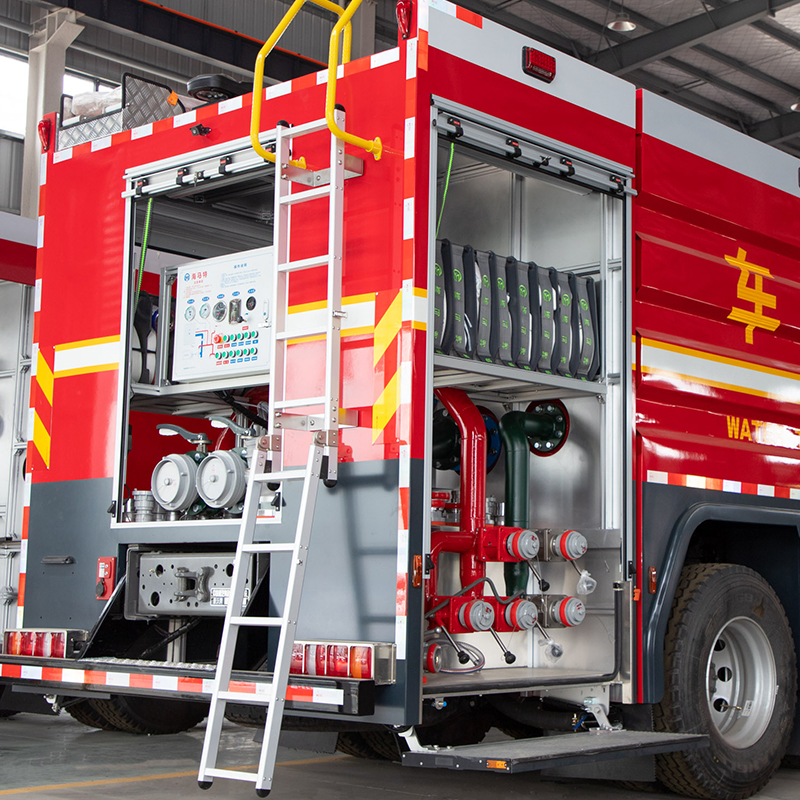
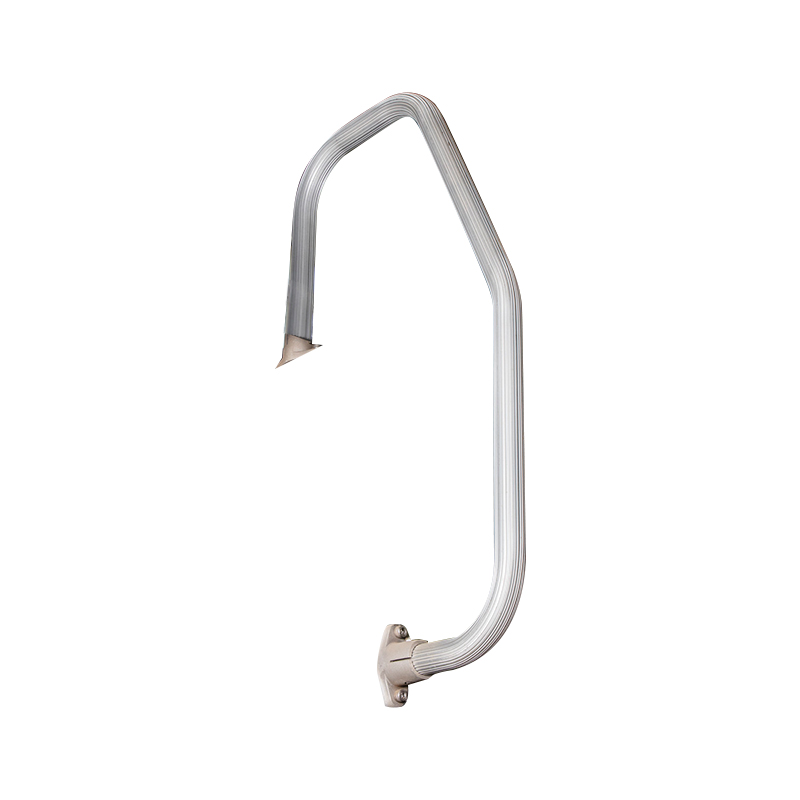
Specification meetings usually park the ladder rack near the bottom of the option sheet, a few lines above the license plate bracket. That is also why ladder racks become the complaint in year three:...
READ MORE
Foldable Boarding Ladder for Fire Trucks: Durable, Customizable Access Equipment for Emergency Operations
2026.10.09
Content
- 1 Why Boarding Access Matters on Emergency Vehicles
- 2 Product Construction and Material Advantages
- 3 Key Advantages Compared with Basic Boarding Ladders
- 4 Product Information and Customization Parameters
- 5 Applications on Fire and Rescue Vehicles
- 6 Manufacturing Strength and Quality Management
- 7 Engineering Considerations Before Ordering
- 8 Installation, Operation, and Maintenance Guidance
- 9 Purchasing Benefits for OEM and Fleet Customers
- 10 Questions and Answers
- 10.1 What is the Foldable Boarding Ladder used for?
- 10.2 What materials are used in the main structure?
- 10.3 Can the ladder be customized?
- 10.4 Why is aluminum used for the frame and steps?
- 10.5 Why are 304 stainless steel fasteners important?
- 10.6 What is the purpose of the gas springs?
- 10.7 Is the ladder suitable for wet conditions?
- 10.8 Can the ladder be installed on any fire truck?
- 10.9 How should the anti-slip steps be maintained?
- 10.10 What information should be provided for a quotation?
- 10.11 Does the manufacturer provide OEM/ODM services?
- 10.12 What quality system supports production?
- 10.13 How long has the company worked in this field?
- 11 Conclusion
- 12 References
- 13 Product: Foldable Boarding Ladder
Fire trucks are designed to carry personnel, rescue tools, hoses, breathing apparatus, ladders, and other mission-critical equipment in a compact and highly organized vehicle body. Every component must support rapid deployment, safe movement, and dependable operation under demanding conditions. A boarding ladder is one of the most frequently used access components on a fire apparatus, helping firefighters enter the cab, reach equipment compartments, access elevated work areas, and move safely around the vehicle.
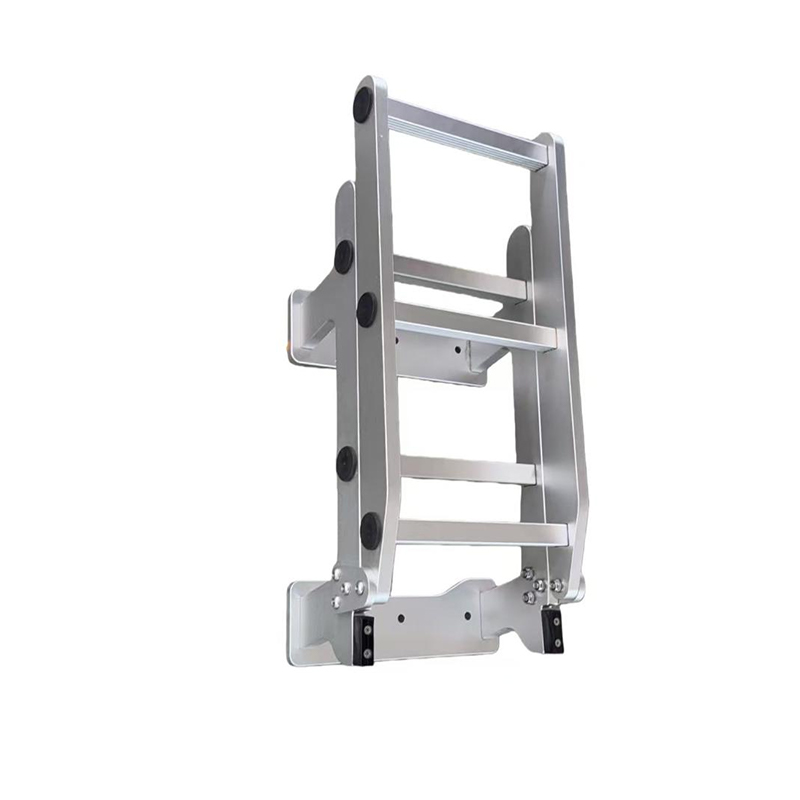
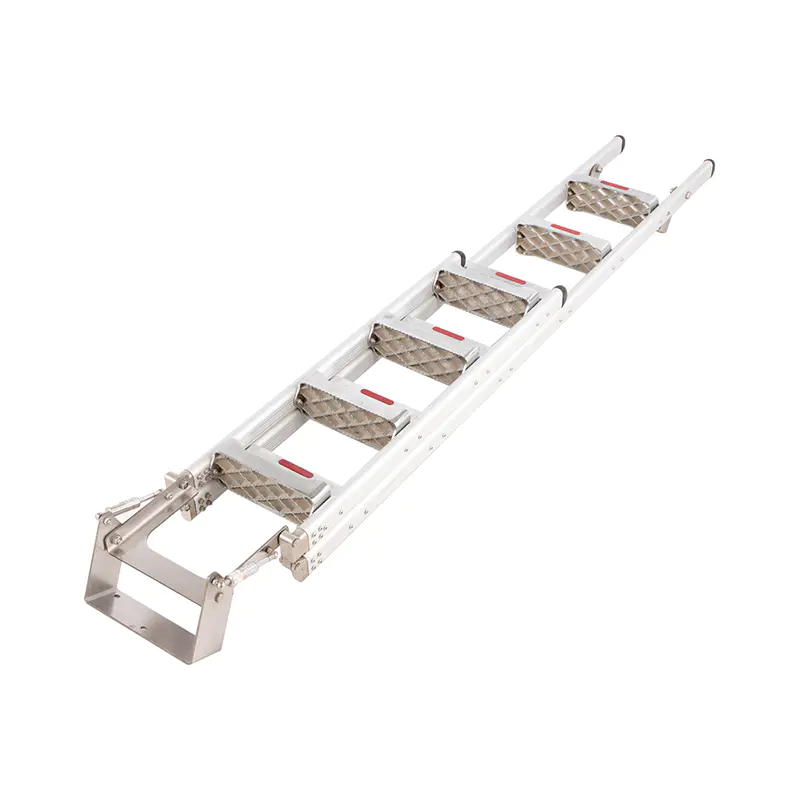
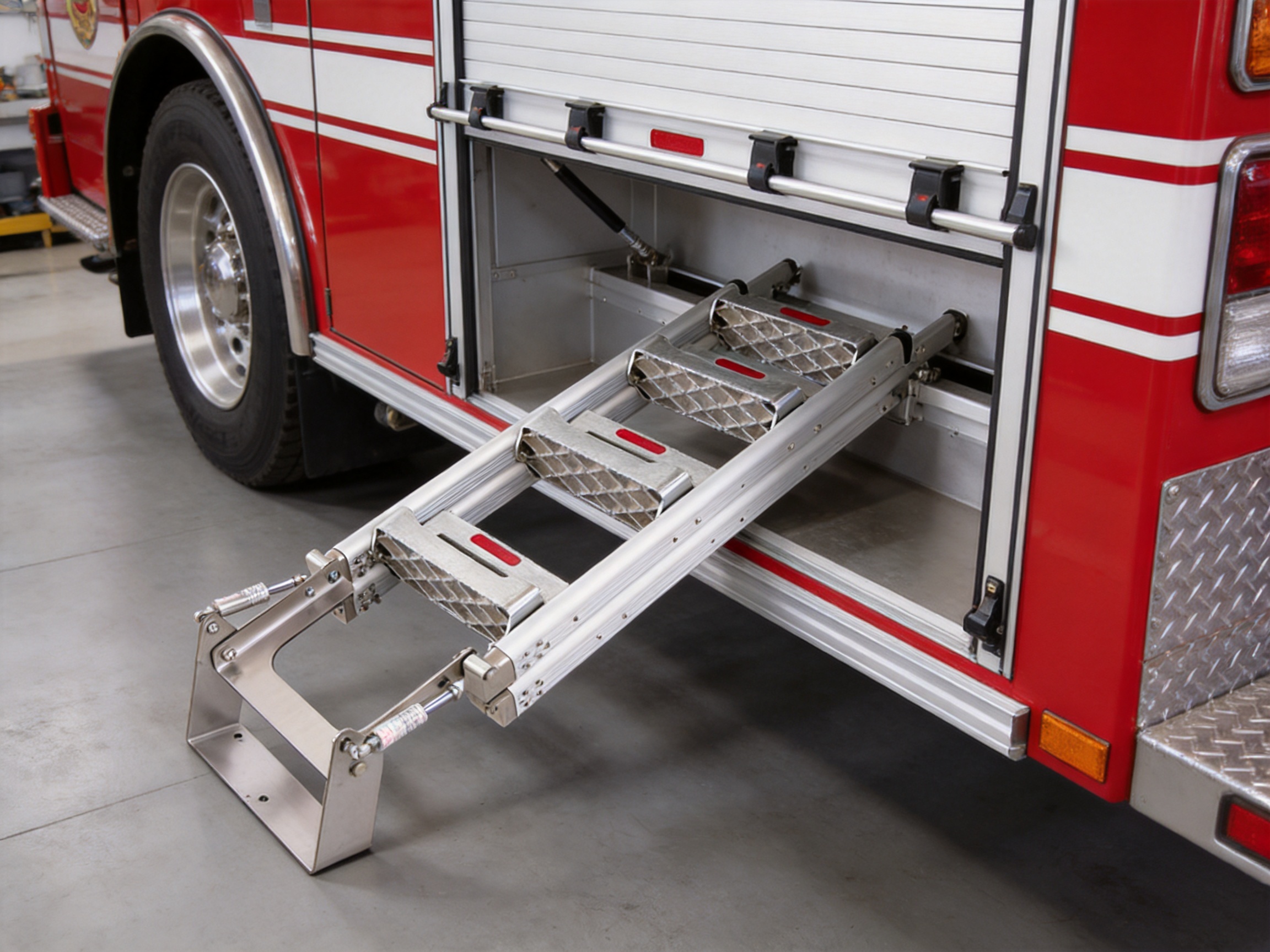
The Foldable Boarding Ladder is engineered as a practical access solution for modern fire trucks and other specialty emergency vehicles. Its structure combines high-strength aluminum alloy profiles, 304 stainless steel fasteners, cast aluminum steps, and stainless steel gas springs. This combination provides a balance of low weight, corrosion resistance, strength, stability, and ease of use. The folding design also allows the ladder to remain compact when not in service, helping preserve vehicle clearance and reducing interference with surrounding equipment.
Manufactured by Tianchang Jinlv Fire Equipment Co., Ltd., the ladder is intended for customers seeking reliable fire truck equipment, rescue vehicle components, and OEM/ODM solutions. The product can be customized in key dimensions, including L1, L2, H, and H1, allowing it to be adapted to different vehicle bodies, compartment layouts, access heights, and installation requirements.
Why Boarding Access Matters on Emergency Vehicles
Firefighters often work under severe time pressure. They may need to enter and leave the vehicle repeatedly while wearing protective clothing, gloves, helmets, and self-contained breathing apparatus. The access equipment fitted to the truck must therefore be intuitive, stable, and easy to operate. A poorly designed step or ladder can slow down deployment, create unnecessary fatigue, or increase the risk of slips and falls.
Unlike general-purpose ladders, a fire truck boarding ladder must function as part of a complete vehicle system. It must fit the available installation area, avoid conflict with roller shutters and compartment doors, withstand frequent use, and remain secure during driving. It should also be compatible with the vehicle’s appearance and operating workflow.
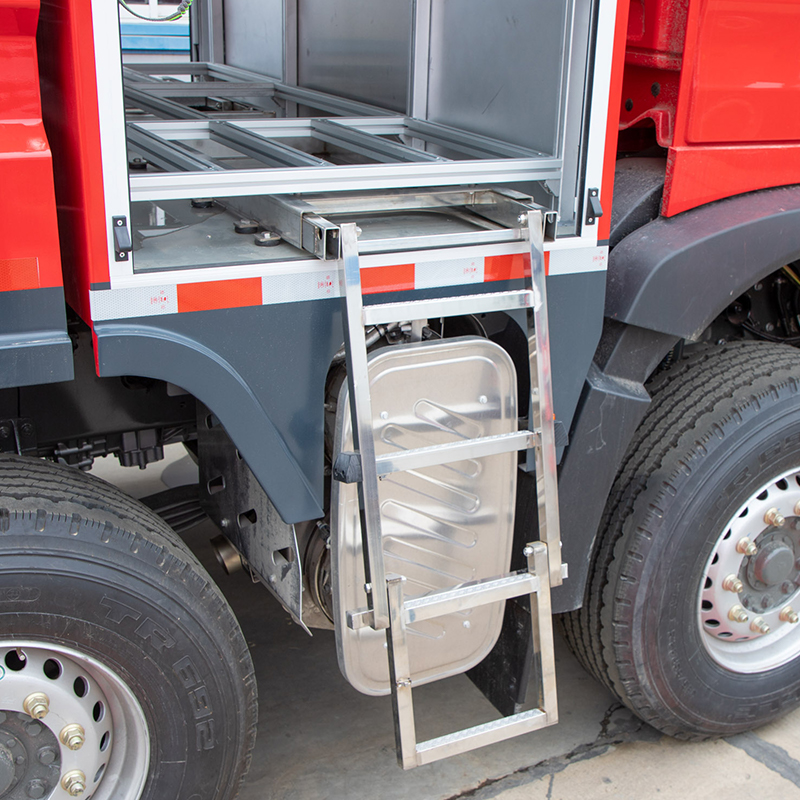
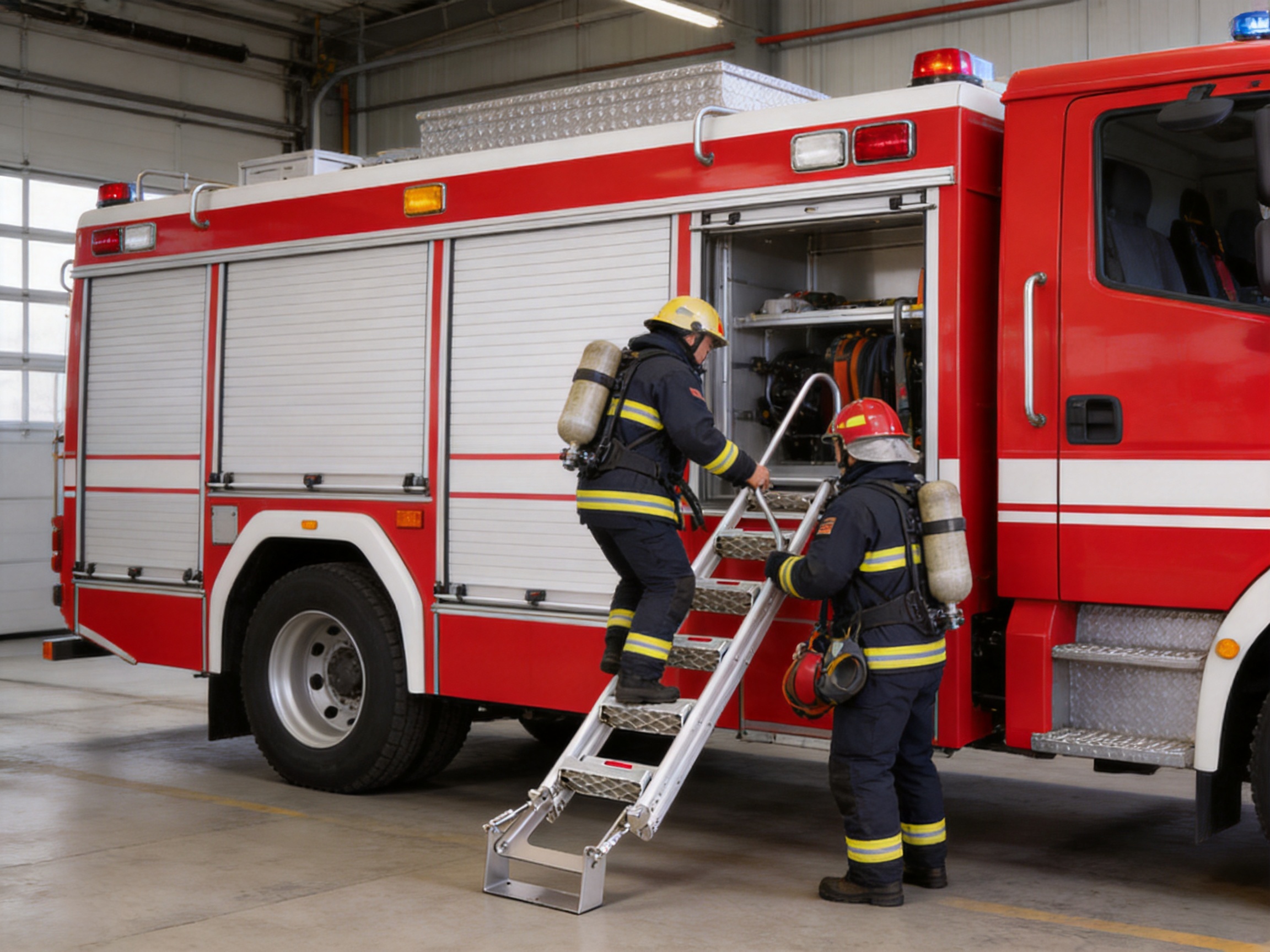
The Foldable Boarding Ladder addresses these requirements through a compact folding structure and a robust material selection. When deployed, it provides a stable stepping route. When folded, it occupies less space and can be positioned close to the vehicle body. This makes it suitable for fire apparatus where storage space is limited and every exterior component must be carefully integrated.
The design is particularly relevant for fire engines, rescue trucks, airport fire vehicles, municipal emergency vehicles, industrial fire apparatus, and other specialty vehicles that require dependable elevated access. It may be installed near equipment compartments, rear platforms, side access areas, or other locations where personnel need a secure step-up solution.
Product Construction and Material Advantages
High-Strength Aluminum Alloy Main Frame
The main frame is manufactured from high-strength aluminum alloy profiles. Aluminum is widely used in specialty vehicle equipment because it provides useful structural strength without the mass associated with many conventional steel constructions. Lower component weight can help reduce the overall load placed on the vehicle and may support more efficient installation and handling.
For a boarding ladder, the frame must remain rigid during repeated loading. Firefighters may step onto the ladder while carrying tools, hoses, breathing equipment, or other protective gear. The use of structural aluminum profiles provides a dependable framework while maintaining a practical weight for vehicle integration.
Aluminum alloy also offers good resistance to corrosion when exposed to outdoor environments. Fire trucks may operate in rain, snow, humid conditions, industrial areas, coastal locations, and environments containing water, foam, dust, or road contaminants. A corrosion-resistant frame can help preserve the ladder’s appearance and operating performance over a longer service period.
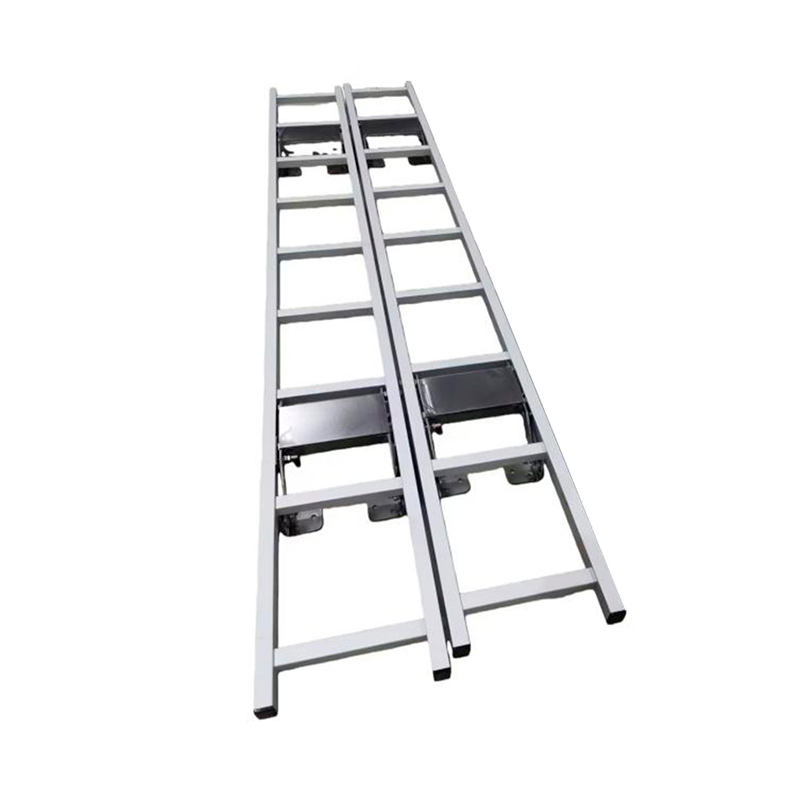
The aluminum profile construction also supports customization. Profiles can be engineered and assembled for different ladder lengths, mounting arrangements, and vehicle structures. This is important because fire apparatus manufacturers often use different body designs, compartment dimensions, chassis configurations, and access heights.
304 Stainless Steel Fasteners
All fasteners used in the product are made of 304 stainless steel. Fasteners may be small compared with the main frame, but they are essential to the ladder’s structural integrity. They secure the frame, steps, folding mechanism, brackets, and related components. If fasteners corrode, loosen, or become difficult to service, the performance of the complete ladder may be affected.
304 stainless steel is a practical choice for equipment exposed to moisture and outdoor use. It offers good corrosion resistance and supports long-term reliability in demanding service environments. The use of stainless steel fasteners also creates a consistent material strategy with the stainless steel gas springs and other metal components.
Compared with basic ladders assembled with ordinary plated hardware, the stainless steel fastener configuration offers a stronger defense against rust-related maintenance problems. This is especially valuable for emergency vehicles that are washed frequently or operated in areas with high humidity, road salt, or industrial pollution.
Cast Aluminum Anti-Slip Steps
The ladder steps are made of cast aluminum. This construction provides a combination of strength, visual quality, and functional performance. Cast aluminum can be formed into a step profile with useful surface geometry, allowing the component to provide strong anti-slip performance when properly designed and maintained.
Slip resistance is one of the most important characteristics of any boarding ladder. Firefighters may approach the ladder with wet boots, mud, snow, foam residue, or water from firefighting operations. The steps must offer a secure contact surface and provide confidence during ascent and descent.
The high load-bearing capacity of cast aluminum steps supports repeated operational use. A ladder on a fire truck is not merely a decorative accessory; it is a working component used by personnel wearing heavy protective equipment. The steps must therefore be capable of handling routine loads while maintaining their shape and attachment to the frame.
The appearance of cast aluminum also contributes to a clean and professional vehicle installation. Fire apparatus often represents a public safety organization, industrial facility, airport, or municipal department. Equipment that combines a functional design with an attractive appearance can support the overall quality of the finished vehicle.
Stainless Steel Gas Spring Folding Mechanism
The folding structure uses stainless steel gas springs. Gas springs assist the movement of the ladder, helping it open and fold with controlled motion. This is beneficial for firefighters who may need to deploy the ladder quickly while wearing gloves or carrying equipment.
The gas spring system is designed for noiseless operation. Quiet movement can be useful in emergency service environments where unnecessary noise may interfere with communication or alert personnel in nearby areas. A controlled, low-noise folding action also contributes to a more refined user experience.
Stable performance is another advantage of the gas spring configuration. The mechanism helps control the movement of the ladder rather than allowing it to drop, swing, or close abruptly. Controlled operation may reduce impact on the frame and mounting points while improving user confidence.
Stainless steel construction further supports durability in outdoor applications. Because the folding mechanism is exposed to environmental conditions, corrosion resistance is important for maintaining smooth operation and reducing the likelihood of premature deterioration.
Foldable Boarding Ladder
Key Advantages Compared with Basic Boarding Ladders
The Foldable Boarding Ladder offers several advantages over simple fixed steps, lightweight utility ladders, or products assembled with less durable materials. These benefits are related to structural design, material selection, operational convenience, and customization.
Compact Folding Design
A fixed ladder may extend outward from the vehicle even when it is not being used. This can increase the risk of contact with nearby objects, create clearance concerns, and interfere with the movement of personnel or equipment. The folding configuration allows the ladder to be positioned more compactly when folded.
Compact storage is particularly important on fire trucks because exterior space is limited. Roller shutters, hose reels, suction hose mounts, tool compartments, warning lights, handrails, and other fittings may all compete for available space. A foldable ladder can be integrated into the vehicle layout with less interference than a permanently extended structure.
The compact format may also help reduce the possibility of accidental impact during vehicle movement. Final clearance and installation safety must always be confirmed by the vehicle manufacturer or qualified installer, but the folding concept offers a useful foundation for efficient body design.
Strong and Lightweight Structural Balance
Some traditional ladders rely on heavy steel construction to achieve strength. Although steel can provide substantial load capacity, excessive weight may complicate installation and add to the vehicle’s overall mass. The aluminum alloy frame and cast aluminum steps help create a more balanced solution.
The objective is not simply to make the ladder as light as possible. A fire truck access component must remain rigid and dependable. The product instead focuses on a practical balance between low structural weight and sufficient strength for repeated personnel access.
This balance can be valuable for fire apparatus manufacturers and vehicle integrators working to control total vehicle weight. Weight savings in individual components may contribute to greater flexibility when allocating capacity for water, foam, rescue tools, breathing equipment, hose, and other operational payloads.
Improved Corrosion Resistance
Outdoor emergency equipment is regularly exposed to water and contaminants. A ladder may be affected by rain during normal parking, spray during vehicle washing, water during fire suppression, and moisture in storage environments. The aluminum frame, cast aluminum steps, and stainless steel hardware are selected to support resistance to these conditions.
Corrosion resistance can reduce the frequency of repairs and help retain the ladder’s appearance. It may also support smoother maintenance because fasteners and folding components are less likely to become seized or heavily degraded when appropriate care is provided.
No metal component is completely maintenance-free. Cleaning, inspection, lubrication where appropriate, and correct installation remain necessary. However, a corrosion-conscious material selection is a meaningful advantage over low-cost assemblies that use ordinary steel hardware or finishes not intended for repeated outdoor exposure.
Secure Step Performance
The cast aluminum steps are designed to provide strong anti-slip performance. This is a major distinction between a purpose-built fire truck ladder and a simple access platform. Fire service personnel need a positive stepping surface when working in wet, dirty, or low-visibility conditions.
The step design can support safer movement when users are wearing heavy boots and protective clothing. The structural form also helps the ladder present a stable route to the vehicle or elevated equipment area. Users should still maintain three points of contact where possible and follow the operating procedures established by their organization.
Controlled and Quiet Operation
The stainless steel gas spring system supports smooth folding movement. Compared with a basic hinged ladder that may drop under its own weight, a gas-assisted design can provide more controlled handling. This can make deployment easier and help protect the ladder from sudden mechanical impact.
Quiet operation is another practical advantage. A ladder that opens and closes without excessive noise is more comfortable for daily use and may be less disruptive during nighttime operations, training, inspection, or vehicle preparation.
OEM and ODM Customization
Fire apparatus configurations vary widely. A standard off-the-shelf ladder may not match the available mounting area or the access requirements of a particular vehicle. The product’s dimensions and specifications can be customized according to customer requirements.
The listed product information identifies L1, L2, H, and H1 as customizable dimensions. These dimensions may be adapted to the customer’s technical drawings, installation space, access height, step position, and surrounding equipment. Exact definitions and tolerances should be confirmed during engineering communication.
Customization helps manufacturers and fleet operators avoid unnecessary compromises. It can support better alignment with vehicle body lines, compartment doors, roller shutters, handrails, platforms, and other fire truck components. It also enables the ladder to be considered during the early design stage instead of being added after the vehicle structure is already fixed.
Product Information and Customization Parameters
The following table summarizes the available dimensional information for the Foldable Boarding Ladder. Because the product is designed for OEM/ODM applications, final dimensions should be confirmed through drawings, samples, technical specifications, and installation reviews.
| Parameter | Availability | Typical Engineering Consideration |
|---|---|---|
| L1 | Customizable | Primary length or mounting-related dimension confirmed according to vehicle layout |
| L2 | Customizable | Secondary length or spacing dimension adjusted for installation requirements |
| H | Customizable | Overall height or access-related dimension selected for the vehicle body |
| H1 | Customizable | Secondary height or step-position dimension confirmed during design review |
| Main frame | High-strength aluminum alloy profiles | Selected for structural performance, weight control, and corrosion resistance |
| Fasteners | 304 stainless steel | Used to support durable assembly in outdoor operating conditions |
| Steps | Cast aluminum | Designed for anti-slip performance, load-bearing capacity, and appearance |
| Folding assistance | Stainless steel gas springs | Provides controlled, quiet, and stable folding movement |
Customers should provide vehicle drawings, available mounting dimensions, intended access height, expected operating conditions, required finish, and any relevant safety or fleet standards. This information allows the engineering team to confirm the most appropriate configuration.
Applications on Fire and Rescue Vehicles
Fire Engines
Fire engines often include multiple equipment compartments and elevated storage areas. A boarding ladder can provide access to side or rear zones where firefighters need to retrieve equipment or inspect vehicle systems. The foldable design can be located near a compartment without permanently obstructing the working area.
On a conventional pumper or municipal fire engine, the ladder may support access to storage modules, roof areas, hose beds, or elevated platforms. The exact application depends on the body builder’s design and the operating procedures of the department.
Rescue Trucks
Rescue vehicles may carry hydraulic rescue tools, generators, lighting systems, medical supplies, ropes, lifting equipment, and technical rescue gear. These vehicles frequently use tall compartments to maximize storage capacity. A secure access ladder can help personnel reach equipment safely and organize the vehicle more effectively.
Because rescue truck configurations differ significantly, customization is especially valuable. The ladder can be designed around compartment doors, tool trays, drawer systems, roof access, and other equipment interfaces.
Airport Fire Vehicles
Airport rescue and firefighting vehicles are often large and highly specialized. Operators may need to access elevated equipment, inspection points, roof-mounted systems, or vehicle service areas. A corrosion-resistant, compact boarding ladder can be considered for locations where routine personnel access is required.
Airport environments may also involve weather exposure, frequent washing, and demanding operational schedules. Material durability and controlled folding movement are therefore important considerations.
Industrial and Petrochemical Fire Apparatus
Industrial fire vehicles may operate at factories, energy facilities, chemical plants, warehouses, ports, and other locations where specialized response equipment is required. The vehicles can include additional pumps, foam systems, monitoring equipment, and large storage compartments.
In these environments, equipment may be exposed to moisture, dust, industrial residue, and frequent cleaning. The aluminum and stainless steel material combination can support the need for durable exterior components, subject to the specific environmental and compliance requirements of the project.
Municipal and Utility Vehicles
Municipal emergency vehicles and utility response trucks may also benefit from a foldable access ladder. These vehicles often need a combination of storage efficiency, safe personnel movement, and a professional appearance. A customizable ladder can be integrated into different body structures while maintaining the vehicle’s functional layout.
Manufacturing Strength and Quality Management
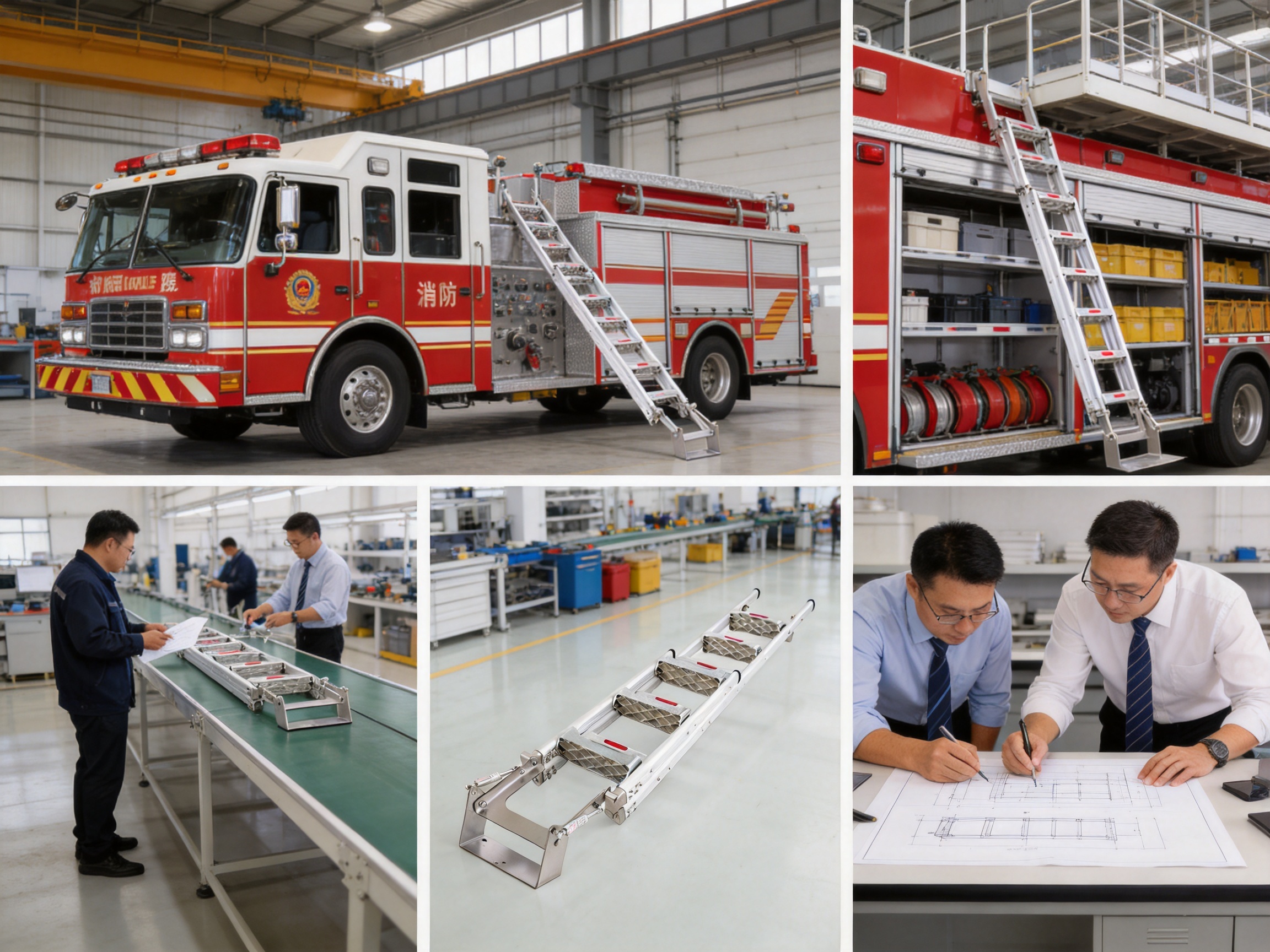
The performance of a fire truck component depends not only on its design but also on how consistently it is manufactured. Tianchang Jinlv Fire Equipment Co., Ltd. was established in 2010 and has focused on fire protection accessories for 15 years. Its experience covers fire truck roller shutters, equipment storage systems, ladders, mounting systems, nozzles, cannons, demolition tools, SCBA-related equipment, cab doors, and plastic tool components.
This product range gives the company an understanding of how individual components interact within a complete fire apparatus. A boarding ladder may be installed next to a roller shutter, storage compartment, handrail, platform, or other access system. Experience across several categories can support more practical product coordination during customization and vehicle integration.
Advanced Production Facilities
The company is equipped with advanced production facilities and a complete production process. A complete manufacturing process is important for products that combine metal profiles, cast components, fasteners, folding hardware, and customized dimensions. Each stage must be coordinated to achieve accurate fit, stable operation, and consistent appearance.
For the Foldable Boarding Ladder, the production process may include material preparation, profile cutting, component forming, step production, surface treatment, drilling, assembly, gas spring installation, dimensional inspection, and final quality checking. The exact internal process may vary according to the customer’s design and order requirements, but systematic production control is essential for repeatable results.
Advanced equipment can improve manufacturing efficiency and support better consistency between batches. It can also help the company produce customized components without sacrificing process discipline. For OEM and ODM customers, this combination of flexibility and repeatability is particularly important.
Quality Certification and Process Control
Tianchang Jinlv Fire Equipment Co., Ltd. has passed GB/T 19001-2016 quality certification. A quality management system provides a structured framework for controlling documents, processes, responsibilities, inspections, corrective actions, and customer requirements.
Quality control begins with raw material procurement. Aluminum profiles, cast aluminum components, stainless steel fasteners, and gas springs must meet the specified material and performance requirements. Incoming materials should be reviewed and managed before they enter production.
Process control continues through fabrication and assembly. Important checks may include profile dimensions, hole positions, joint alignment, fastener installation, step attachment, folding movement, and overall appearance. For customized products, inspection should be based on approved drawings and technical specifications rather than general assumptions.
Final product delivery is another important control point. The completed ladder should be checked for correct configuration, appropriate dimensions, smooth folding action, secure hardware, and packaging suitable for transport. A disciplined process helps reduce variation and gives customers greater confidence in the finished product.
Research and Development Capability
The company has a professional research and development team with extensive industry experience. Fire apparatus equipment must evolve with changes in vehicle design, safety expectations, storage requirements, and operational practices. Research and development helps manufacturers respond to these changes with practical improvements.
For a foldable ladder, development work may involve optimizing the frame profile, step geometry, folding angle, gas spring force, mounting brackets, clearances, and overall appearance. The aim is to provide a product that is not only structurally sound but also convenient to install and operate.
Continuous development can also support environmentally conscious manufacturing. Long-lasting components may reduce replacement frequency and material waste. Efficient production processes may help control energy consumption and reduce unnecessary manufacturing costs. The company states that it invests continuously in research and development and develops efficient and environmentally friendly fire protection equipment for different application scenarios.
Engineering Considerations Before Ordering
Successful customization begins with accurate information. Customers should identify where the ladder will be installed, how it will be used, and what other components surround the installation location. This prevents interference and helps ensure that the final product supports the intended workflow.
Vehicle Mounting Location
The mounting location should be reviewed for available width, height, depth, and clearance. The ladder should not obstruct roller shutters, hinged doors, hose connections, warning lights, access panels, handrails, or other equipment. It should also be positioned so users can approach it naturally and maintain a safe stance while climbing.
Deployment and Folding Clearance
Both the deployed and folded positions must be evaluated. The ladder requires sufficient space to open fully and enough room for the steps to be used comfortably. When folded, it should remain within the intended vehicle envelope and avoid contact with adjacent components.
Clearance should be checked with the vehicle at rest and, where appropriate, under realistic operating conditions. Vibrations, body movement, suspension travel, and equipment loading may affect the available space. Vehicle manufacturers and qualified installers should conduct the final engineering assessment.
Load and Usage Conditions
Customers should define the expected use of the ladder. Relevant factors may include the number of daily cycles, expected user loads, protective clothing, carried equipment, environmental exposure, and cleaning practices. These details help determine the appropriate design and validation approach.
The ladder should not be used beyond its approved application or treated as a substitute for a different type of access equipment. If the vehicle requires roof access, rescue climbing, or heavy equipment lifting, those functions should be reviewed separately during the design process.
Surface Finish and Appearance
The visible finish should be considered alongside the overall vehicle design. Fire apparatus often uses consistent colors, reflective markings, polished metal, and durable coatings. The customer should communicate appearance requirements early so that the ladder can be coordinated with the vehicle body and adjacent components.
Appearance is not only a matter of style. A clean, well-finished product can make inspection easier and help personnel identify damage, contamination, or loose hardware during routine checks.
Installation, Operation, and Maintenance Guidance
Proper installation is essential for the performance of any boarding ladder. The ladder should be installed according to approved engineering drawings and secured using the specified hardware and mounting method. The supporting vehicle structure must be capable of handling the loads and forces generated during use.
Installation
Before installation, inspect the ladder for transport damage, missing parts, deformation, or surface defects. Confirm that the supplied configuration matches the approved order and vehicle drawings. Check the mounting surface for flatness, strength, and adequate clearance.
Fasteners should be installed and tightened according to the approved technical requirements. Over-tightening can damage components, while insufficient tightening may result in movement or noise. If the vehicle body uses different materials, suitable isolation or corrosion-control practices should be considered by the installer.
After installation, operate the ladder several times. Confirm that it deploys fully, folds smoothly, remains stable, and does not contact surrounding equipment. Inspect the gas springs, hinges, brackets, and step attachments before placing the vehicle into service.
Routine Operation
Users should deploy the ladder fully before stepping onto it. The steps should be clean and free from oil, mud, ice, foam residue, or other substances that could reduce traction. Personnel should face the ladder where practical and use available handholds or other approved support points.
Do not force the ladder beyond its intended folding direction. Do not stand on the ladder while it is partially folded or moving. If resistance, unusual noise, looseness, or instability is noticed, remove the ladder from service until it has been inspected by qualified personnel.
Maintenance
Routine maintenance should include checking the step surfaces, frame, fasteners, folding joints, gas springs, mounting brackets, and surrounding vehicle structure. Look for cracks, deformation, corrosion, loose hardware, gas spring leakage, or changes in folding resistance.
The ladder should be cleaned after exposure to firefighting foam, salt water, mud, chemicals, or other contaminants. Cleaning methods should be compatible with the materials and finishes. Abrasive tools or aggressive chemicals should not be used unless they have been confirmed as suitable.
Lubrication requirements depend on the specific hinge and assembly design. If lubrication is necessary, use a product approved for the component and environmental conditions. Excess lubricant can attract dust and should be removed from step surfaces to preserve anti-slip performance.
Any damaged or worn component should be replaced with an approved part. Unauthorized modification can affect structural strength, folding behavior, clearances, and warranty conditions. Maintenance records can be useful for fleet operators managing multiple emergency vehicles.
Purchasing Benefits for OEM and Fleet Customers
For fire apparatus manufacturers, a customizable boarding ladder can simplify integration during vehicle development. Instead of adapting the vehicle around a rigid standard product, the customer can communicate the required dimensions and installation conditions during the engineering stage.
For fleet operators, the product offers a durable access solution that can be specified for new vehicles, refurbishment projects, or replacement programs. Standardizing a suitable ladder across a fleet may simplify training, inspection, spare parts management, and maintenance procedures.
For distributors and equipment integrators, the broad product range of the manufacturer provides opportunities to source related fire truck components from one experienced supplier. Roller shutters, storage systems, ladders, handrails, nozzles, cannons, demolition tools, SCBA equipment, cab doors, and plastic tool components may be coordinated according to the customer’s project requirements.
The company also provides OEM/ODM customization, global technical support, and dedicated customer service. These capabilities are useful when a customer needs design communication, dimensional confirmation, production coordination, inspection support, or assistance with a special vehicle application.
Questions and Answers
What is the Foldable Boarding Ladder used for?
It is designed to provide personnel access on fire trucks and other specialty emergency vehicles. It can be used near equipment compartments, platforms, elevated storage areas, rear access zones, and other locations where a secure step-up route is required.
What materials are used in the main structure?
The main frame uses high-strength aluminum alloy profiles. The steps are made of cast aluminum, and the fasteners are made of 304 stainless steel. The folding structure uses stainless steel gas springs.
Can the ladder be customized?
Yes. The product dimensions and specifications can be customized according to customer requirements. The listed parameters L1, L2, H, and H1 are identified as customizable. Customers should provide vehicle drawings and installation details for engineering confirmation.
Why is aluminum used for the frame and steps?
Aluminum provides a useful balance of structural strength and low weight. It also offers good corrosion resistance for outdoor vehicle applications. Cast aluminum steps can provide high load-bearing capacity, anti-slip performance, and an attractive appearance.
Why are 304 stainless steel fasteners important?
Fasteners are exposed to moisture and environmental contamination, just like other exterior components. 304 stainless steel offers good corrosion resistance and helps support durable assembly over repeated service cycles.
What is the purpose of the gas springs?
The stainless steel gas springs assist the opening and folding movement of the ladder. They support controlled, stable, and quiet operation instead of allowing the ladder to move abruptly under its own weight.
Is the ladder suitable for wet conditions?
The material selection is intended for outdoor emergency vehicle use and includes corrosion-resistant aluminum and stainless steel components. However, the ladder must still be cleaned, inspected, and maintained after exposure to water, foam, salt, chemicals, or dirt.
Can the ladder be installed on any fire truck?
Installation suitability depends on the vehicle structure, available space, access height, surrounding equipment, and customer requirements. A qualified vehicle manufacturer or installer should confirm the design, mounting method, clearances, and final application.
How should the anti-slip steps be maintained?
Keep the steps free from oil, mud, ice, foam, and other contaminants. Inspect them for damage or deformation and replace any component that no longer provides the required surface condition. Cleaning products should be compatible with the aluminum and finish.
What information should be provided for a quotation?
Customers should provide the vehicle model or body design, installation location, required dimensions, technical drawings, expected load and usage conditions, desired finish, quantity, delivery requirements, and any applicable standards or inspection requirements.
Does the manufacturer provide OEM/ODM services?
Yes. Tianchang Jinlv Fire Equipment Co., Ltd. provides OEM/ODM customization for fire truck equipment and related fire protection accessories. Its technical team can work with customers on dimensions, product configurations, and application requirements.
What quality system supports production?
The company has passed GB/T 19001-2016 quality certification. It states that quality is controlled from raw material procurement through production and final delivery, supported by advanced facilities and a complete manufacturing process.
How long has the company worked in this field?
The company was established in 2010 and has focused on fire protection accessories for 15 years. Its product scope includes vehicle access components, storage systems, roller shutters, rescue equipment, and other fire truck accessories.
Conclusion
The Foldable Boarding Ladder is a purpose-built access component for fire trucks and specialty emergency vehicles. Its high-strength aluminum alloy frame provides a practical balance of weight and structural performance. Cast aluminum steps offer anti-slip characteristics, load-bearing capacity, and a clean appearance. 304 stainless steel fasteners and stainless steel gas springs support corrosion resistance and dependable operation in demanding outdoor environments.
The folding structure helps conserve space and reduce interference with surrounding vehicle equipment. Its quiet and stable gas-assisted movement improves handling, while the customizable L1, L2, H, and H1 dimensions allow the product to be adapted to different fire apparatus designs.
Beyond the product itself, the manufacturing capabilities of Tianchang Jinlv Fire Equipment Co., Ltd. support the needs of OEMs, vehicle integrators, distributors, and fleet operators. The company combines industry experience since 2010, advanced production facilities, a complete production process, GB/T 19001-2016 quality certification, professional research and development, and global technical support.
For customers evaluating fire truck equipment, the most important considerations are safe access, durable materials, reliable operation, installation compatibility, and long-term service support. By addressing these requirements in one customizable design, the Foldable Boarding Ladder can contribute to a more practical, organized, and dependable emergency vehicle.
References
1. Tianchang Jinlv Fire Equipment Co., Ltd., Foldable Boarding Ladder Product Information and Technical Description.
2. Tianchang Jinlv Fire Equipment Co., Ltd., Corporate Information and Manufacturing Capability Profile.
3. GB/T 19001-2016, Quality Management Systems—Requirements.
4. General principles of fire apparatus design, emergency vehicle equipment integration, and personnel access safety.
5. General engineering guidance for aluminum alloy structures, stainless steel fasteners, cast metal components, and gas spring mechanisms in outdoor equipment.
Product: Foldable Boarding Ladder
News
-
-
Two minutes into a working fire, a crew stands in front of a locked steel security door with a crowbar that is too short to pull with both hands. Nothing about the tool is broken. It was simply speci...
READ MORE -
When a fire apparatus rolls out of the station for a structure fire or a highway rescue, every bolt, hinge, and ladder surface is about to face heat, vibration, moisture, and rough handling. Some com...
READ MORE -
Quick Answer The right fire truck boarding ladder is a fixed, upward-folding, or rotating step assembly mounted at the rear or side of the apparatus that gives firefighters a stable, non-slip surface ...
READ MORE -
Three rungs up the rear of a pumper, a firefighter in wet gloves misses the grab and catches the handrail instead. Whether that rail holds was decided months earlier, at the bench: by tube wall thick...
READ MORE -
Key Takeaway The right fire truck boarding ladder comes down to matching the mounting style, ground clearance, and material to your truck class: fixed ladders suit trucks with no clearance limits, f...
READ MORE
Hey! Interested in staying in the loop? Sign up for our updates.
WE WON'T SPAM YOU, PINKY PROMISE.

Tianchang Jinlv Fire Equipment Co., Ltd.
Copyright © Tianchang Jinlv Fire Equipment Co., Ltd. All rights reserved. Custom Fire Truck Equipment Supplier Fire Apparatus Parts Factory
