

 en
 English
 русский
 Español
 عربى

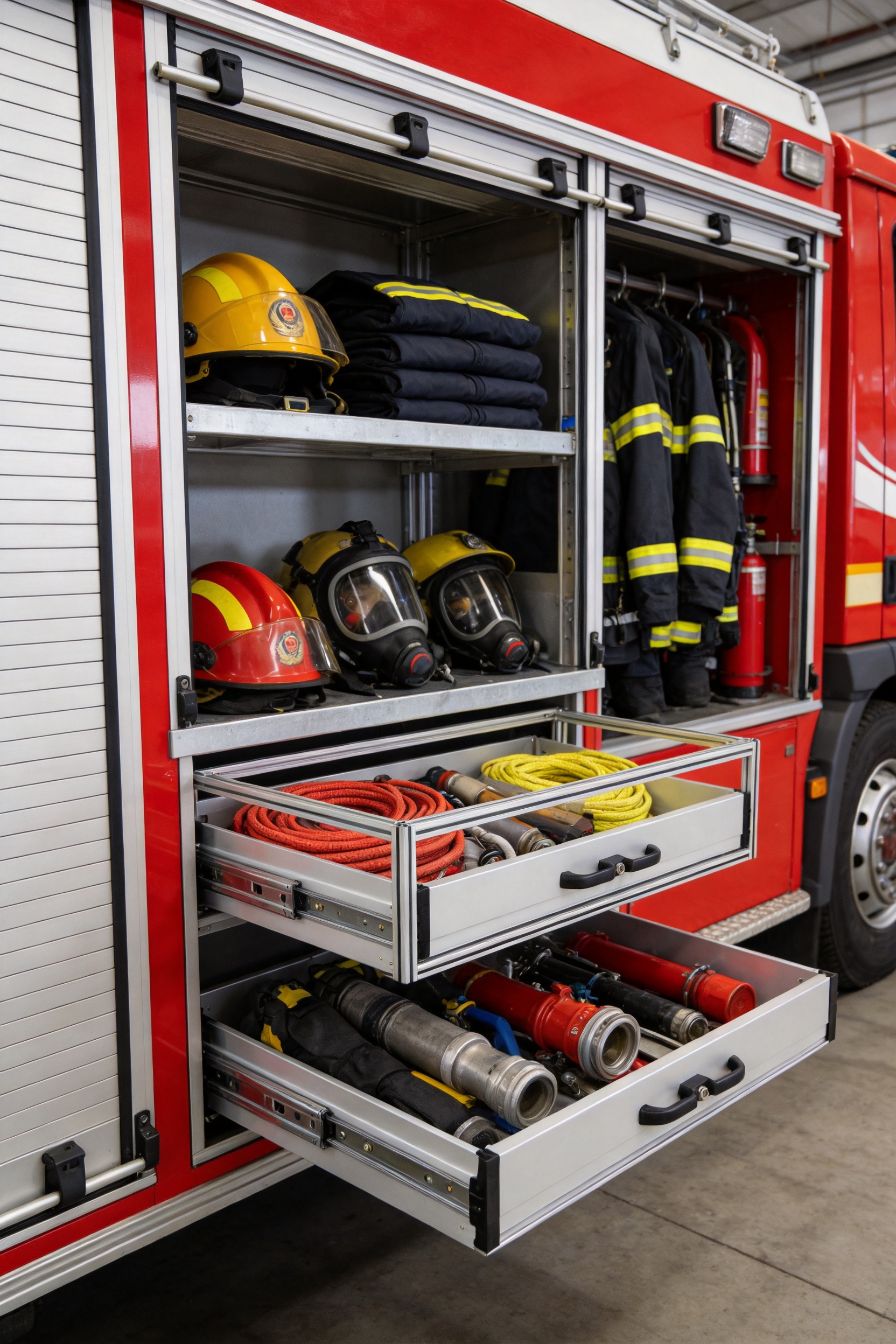
A firefighter opens a compartment door after a long working fire. Inside, the thermal imaging camera has slid under a halligan bar, the hose line is twisted into a knot, and a 20 kg SCBA cylinder is ...
READ MORE
Fire Truck Drawer Storage Systems: Engineering Safer, More Efficient Fire Apparatus
2026.09.27
Content
- 1 The Role of Storage Drawers in Fire Apparatus Design
- 2 Product Configuration and Structural Design
- 3 High-Strength Aluminum Alloy Profile Construction
- 4 304 Stainless Steel Fasteners
- 5 Silent Bearing Guide Rails for Smooth Operation
- 6 Silicone Rubber Buffer Blocks
- 7 Integrated Limit Button and Ergonomic Handle
- 8 Equipment Compatibility and Storage Applications
- 9 Customization According to Vehicle Requirements
- 10 Advantages Compared with Basic Storage Solutions
- 11 Manufacturing and Quality Management Strengths
- 12 Research, Development, and Product Improvement
- 13 Installation Planning for Fire Truck Drawers
- 14 Maintenance and Service Considerations
- 15 Use in Different Fire and Rescue Scenarios
- 16 Procurement Considerations for Fleet Operators
- 17 OEM and ODM Cooperation
- 18 Why Product Details Matter in Emergency Equipment
- 19 Frequently Asked Questions
- 19.1 What types of drawers are available?
- 19.2 What materials are used in the main structure?
- 19.3 Are the fasteners corrosion resistant?
- 19.4 How does the drawer reduce operating noise?
- 19.5 Can the drawer be operated with one hand?
- 19.6 What equipment can be stored in the drawer?
- 19.7 Can the dimensions be customized?
- 19.8 Is the drawer suitable for OEM and ODM projects?
- 19.9 What should be checked before installation?
- 19.10 How should the drawer be maintained?
- 19.11 Who manufactures this fire truck drawer?
- 20 Conclusion
- 21 References
- 22 Product: Fire Truck Drawer
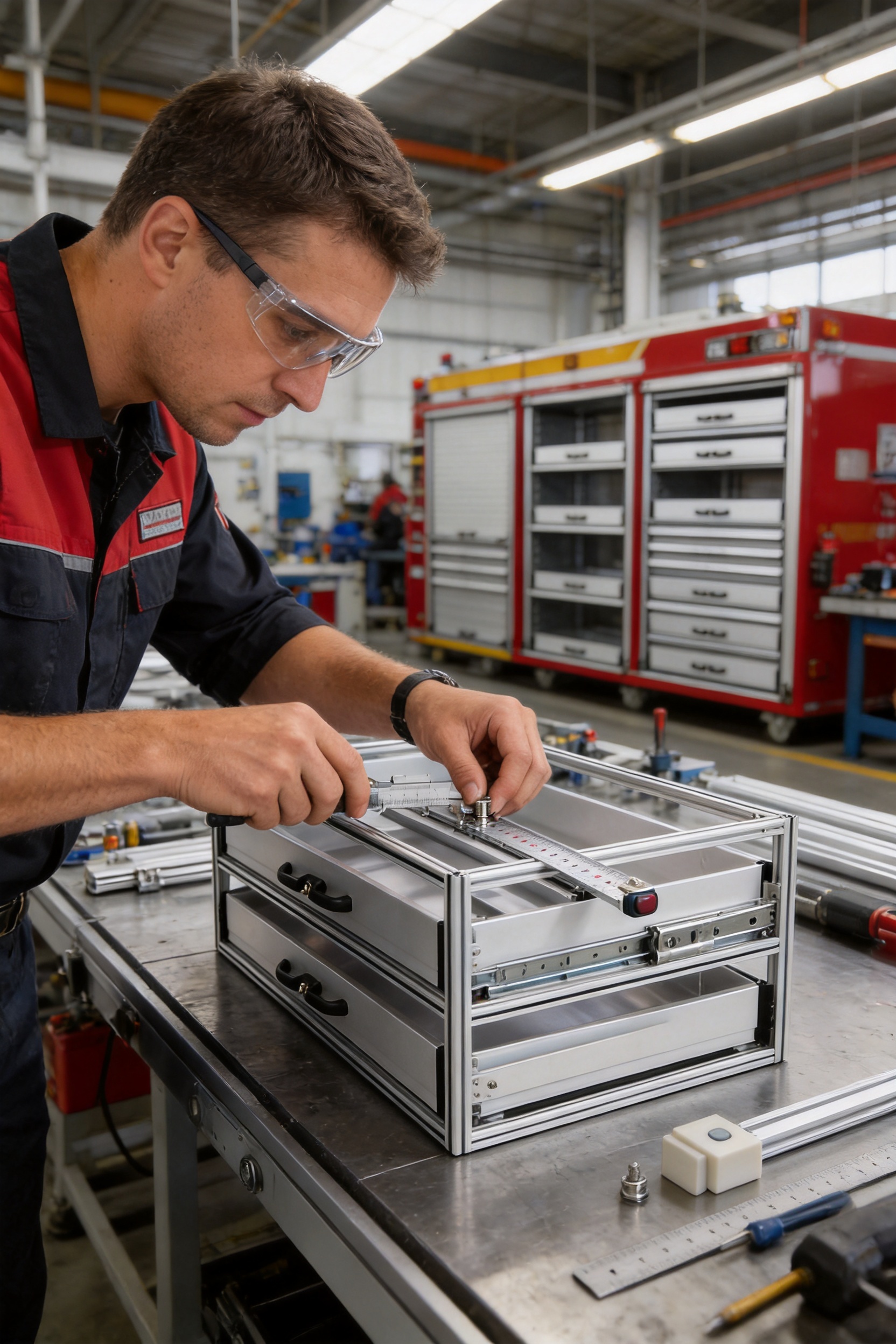
Fire Truck Drawer Storage Systems: Engineering Safer, More Efficient Fire Apparatus
Modern fire trucks are highly specialized emergency vehicles. They must carry a large quantity of equipment while remaining organized, accessible, durable, and safe in demanding operating environments. Firefighters may need to locate breathing apparatus, helmets, fire suits, lifelines, gas masks, nozzles, hand tools, and rescue accessories within seconds. Every item must have a designated location, and every storage component must withstand vibration, weather exposure, repeated loading, and intensive daily use.
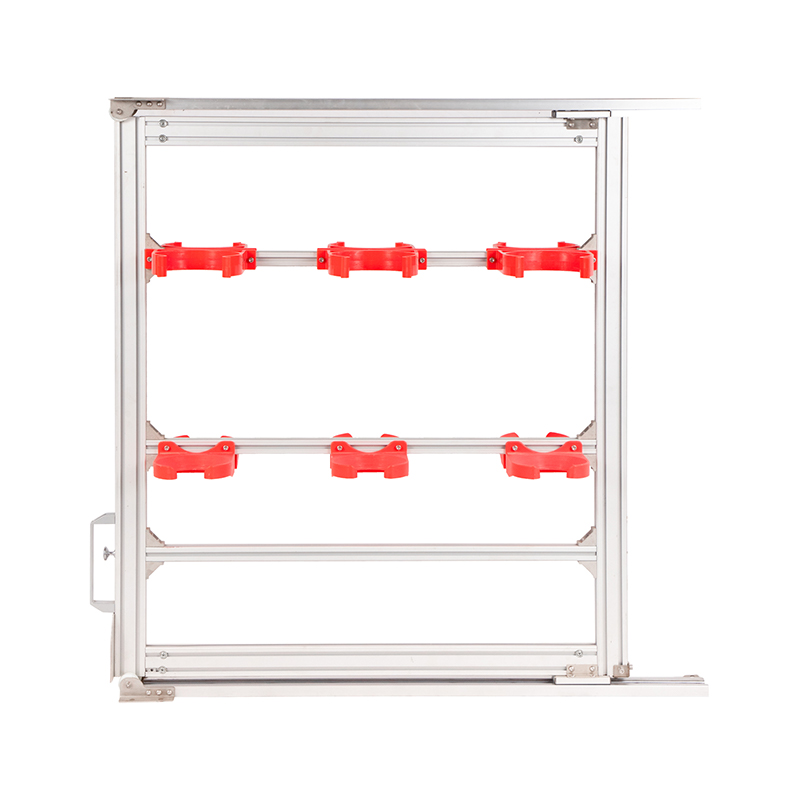
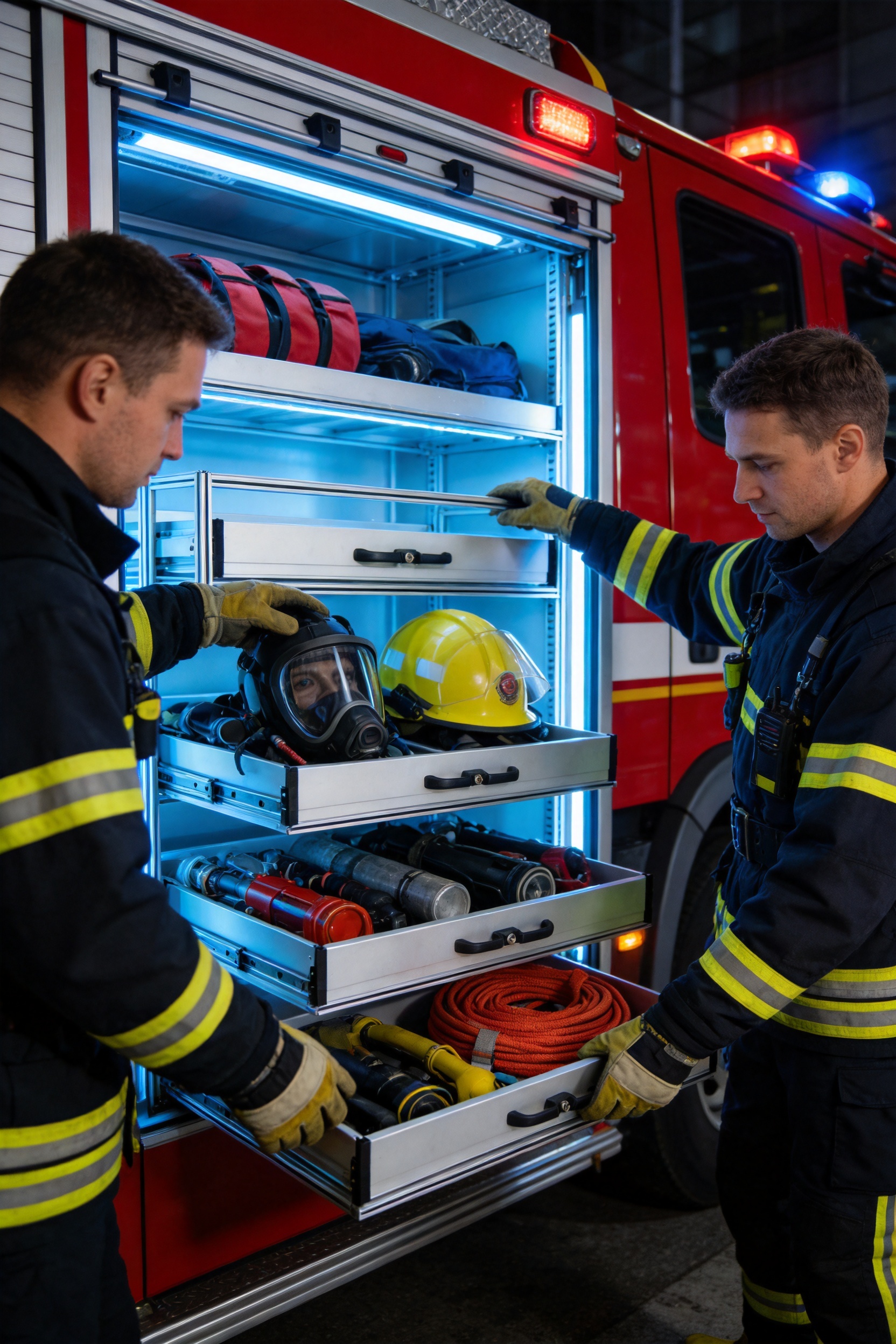
A well-designed fire truck drawer is one of the most practical solutions for achieving this level of organization. Unlike loose compartments or basic shelves, a dedicated drawer system provides controlled storage, smooth access, better equipment separation, and improved use of limited vehicle space. The drawer can be configured in single-layer, double-layer, or multi-layer arrangements, allowing fire apparatus manufacturers and fleet operators to select a layout that matches the vehicle body, compartment dimensions, and equipment requirements.
The fire truck drawer developed by Tianchang Jinlv Fire Equipment Co., Ltd. is designed specifically for fire apparatus equipment stowage and mounting systems. It combines high-strength aluminum alloy profiles, 304 stainless steel fasteners, silent bearing guide rails, silicone rubber buffer blocks, and an ergonomic integrated handle and limit-button design. Its length, width, height, and related dimensions can be customized to meet different customer requirements.
This article examines the structure, advantages, applications, manufacturing strengths, customization options, and operational value of this type of fire truck storage drawer. It also explains why material selection, guide-rail performance, noise reduction, ergonomic design, production control, and quality management are important when selecting storage equipment for emergency vehicles.
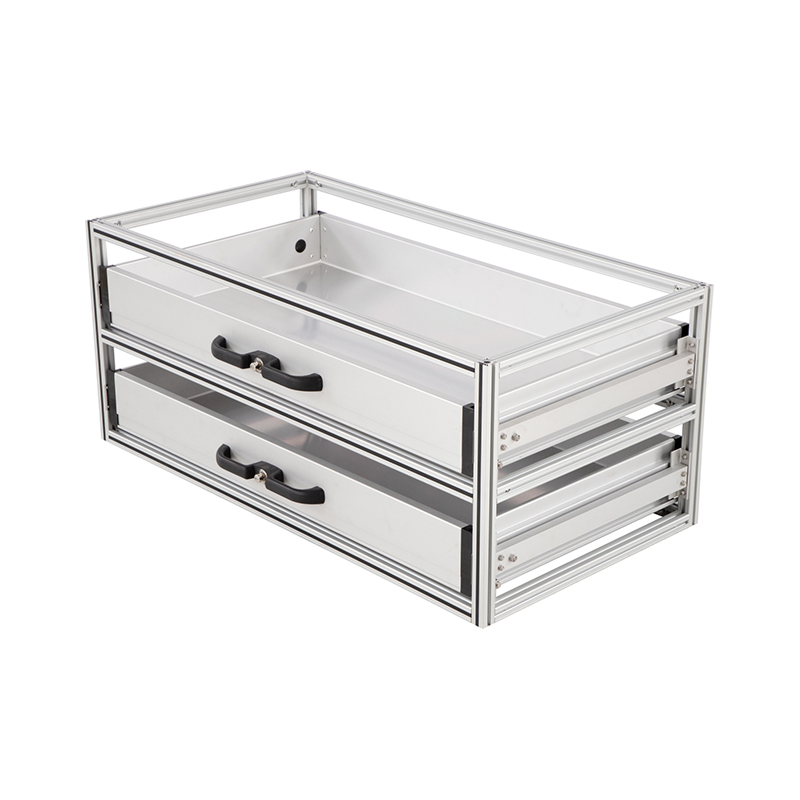
Fire Truck Drawer
The Role of Storage Drawers in Fire Apparatus Design
Fire apparatus must balance several competing requirements. A vehicle needs to carry extensive firefighting and rescue equipment, but it cannot be overloaded or arranged in a way that slows down deployment. Compartments must use space efficiently without making equipment difficult to reach. Components must be strong enough for years of service, yet light enough to limit unnecessary vehicle weight. Storage systems must also be compatible with the vehicle body, compartment doors, structural supports, and operational procedures.
Traditional open shelves can provide basic storage, but they often have limitations. Equipment may move during driving, smaller components can become difficult to identify, and the available compartment height may not be used efficiently. Shelves can also require firefighters to reach deeply into a compartment, which may be inconvenient when the vehicle is parked close to a wall, another vehicle, or an obstacle.
Drawer systems address many of these challenges by bringing stored equipment outward toward the operator. A firefighter can pull out the drawer, inspect the contents, and access equipment from a more convenient position. When multiple drawers are stacked vertically, the arrangement creates a clear separation between equipment categories. For example, a lower drawer may hold heavy accessories, a middle drawer may store helmets and protective clothing, and an upper drawer may contain smaller tools or medical and communication accessories.
Organized drawers also support standardized equipment placement. Once every item has an assigned location, crews can check equipment more quickly before and after an operation. Missing or misplaced items become easier to identify. This contributes to better readiness, more efficient maintenance, and improved accountability.
In emergency response, accessibility is not a minor convenience. It can influence the speed at which firefighters prepare for entry, rescue, suppression, traffic control, technical rescue, or hazardous-material response. A reliable drawer system therefore forms part of the overall operational design of the fire truck rather than serving merely as a cabinet accessory.
Product Configuration and Structural Design
Single-Layer Drawers
A single-layer drawer is suitable when a compartment requires one large, easily accessible storage level. This configuration can be used for bulky equipment, longer accessories, protective clothing, or a combination of items that need to remain together. The open drawer format allows the operator to view a broad area of equipment without removing other storage trays.
Single-layer designs are also useful when the compartment has limited vertical height or when the customer prefers maximum internal clearance. They can be adapted to a wide range of compartment widths and depths, depending on the available vehicle structure and the required load arrangement.
Double-Layer Drawers
Double-layer drawers provide two independent storage levels within the same general compartment area. This configuration increases usable storage density while keeping items separated. It can be particularly valuable for fire trucks carrying different equipment categories that must be accessed independently.
For example, one drawer may be assigned to personal protective equipment while another is reserved for rescue tools, breathing apparatus accessories, or hose-related components. Independent layers reduce the need to remove one group of equipment to reach another group, improving efficiency during preparation and equipment checks.
Multi-Layer Drawers
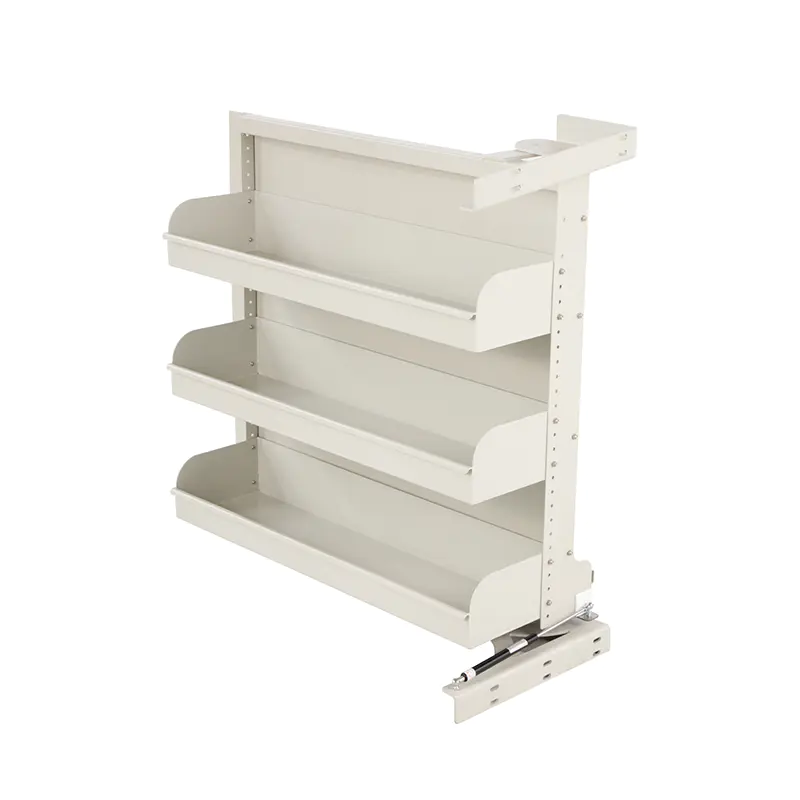
Multi-layer drawer systems are intended for applications where compartment volume must be used as efficiently as possible. Several storage levels can be arranged vertically, provided that the available height, loading requirements, and access conditions are suitable. Multi-layer systems are often helpful on specialized rescue vehicles, airport fire trucks, industrial firefighting vehicles, and municipal apparatus carrying a broad range of equipment.
A multi-layer configuration can create an organized equipment hierarchy. Frequently used items may be placed at the most convenient level, while reserve equipment or less frequently used accessories can be stored in other layers. The exact layout can be determined according to the vehicle design, crew procedures, and equipment list.
| Configuration | Typical Storage Benefit | Potential Application |
|---|---|---|
| Single-layer drawer | Large unobstructed storage area and simple access | Bulky protective equipment, long accessories, general compartment storage |
| Double-layer drawer | Improved separation and increased compartment organization | Personal protective equipment, rescue accessories, tools, and breathing equipment |
| Multi-layer drawer | High storage density and clear equipment classification | Specialized rescue vehicles, industrial fire trucks, and high-capacity apparatus |
High-Strength Aluminum Alloy Profile Construction
The main frame of the fire truck drawer is constructed from high-strength aluminum alloy profiles. This material choice supports the important balance between structural performance and vehicle weight. Fire apparatus designers must pay close attention to the mass of every installed component because excessive weight can influence payload, fuel consumption, handling, braking, and the distribution of loads across the vehicle.
Aluminum alloy profiles offer a practical solution because they can provide useful rigidity with a lower mass than many conventional steel structures. The profile-based construction also supports modular manufacturing and customization. Profiles can be cut and assembled according to the required length, width, height, and compartment arrangement. This makes the system suitable for different fire truck bodies and equipment modules.
High-strength profiles can help the drawer frame maintain its shape during repeated opening, closing, loading, and vehicle movement. The frame must support the drawer structure while remaining aligned with the guide rails. If the frame twists or loses alignment, the drawer may become difficult to operate or may experience uneven wear. A properly designed aluminum profile structure helps establish a stable foundation for the complete assembly.
The use of aluminum also supports corrosion-conscious vehicle design. Fire trucks are frequently exposed to water, foam, humidity, road salt, dirt, and cleaning chemicals. Material selection does not eliminate the need for proper surface treatment, inspection, or maintenance, but a suitable aluminum structure can contribute to a durable storage system when manufactured and installed correctly.
Profile construction also makes it easier to integrate the drawer with surrounding equipment. Fire apparatus compartments often contain irregular spaces, structural reinforcements, electrical components, piping, or other storage modules. A customizable profile frame can be adapted around these constraints more readily than a fixed-size cabinet.
304 Stainless Steel Fasteners
All fasteners used in the product are made of 304 stainless steel. Fasteners are small components, but they play a major role in the long-term integrity of a drawer system. Screws, bolts, nuts, and related hardware are exposed to vibration, moisture, temperature changes, and repeated mechanical loading. If fasteners corrode or loosen, the stability of the entire storage assembly may be affected.
304 stainless steel is widely used in equipment exposed to moisture and general atmospheric corrosion. Its use helps provide dependable connection performance in the demanding environment of a fire truck. It is especially appropriate for assemblies that may encounter water during firefighting operations, vehicle washing, rain, or humid storage conditions.
Stainless steel fasteners also support maintenance and serviceability. When a component must be adjusted or replaced, corrosion-resistant hardware is less likely to be seized or damaged during disassembly. This can simplify inspection and repair work over the service life of the vehicle.
Fastener quality must be considered together with correct assembly procedures. Appropriate tightening, alignment, thread engagement, and periodic inspection remain important. The combination of corrosion-resistant hardware and controlled manufacturing provides a stronger basis for reliable field performance than the use of ordinary untreated fasteners.
Silent Bearing Guide Rails for Smooth Operation
The guide rail is one of the most important functional components in any drawer system. It controls the drawer’s movement, supports the load, and influences the operator’s impression of quality. The fire truck drawer uses silent bearings in the guide rails to provide a smooth operating feel and minimal noise.
Fire apparatus often operates in environments where noise matters. During an emergency response, unnecessary rattling or impact noise can make communication more difficult. In a fire station, quiet drawer operation can reduce disturbance during equipment preparation and maintenance. A low-noise drawer also gives the crew a clear indication that the system is operating correctly rather than binding, scraping, or striking the frame.
Silent bearing guide rails can reduce friction and provide more consistent movement than basic sliding surfaces. Smooth travel allows the drawer to be opened and closed with less effort, even when it carries protective clothing, helmets, lifelines, gas masks, or other equipment. Consistent movement is particularly valuable for multi-layer systems, where repeated access to several drawers is part of normal crew operations.
Guide-rail performance depends on correct installation and load distribution. The drawer should be aligned with the frame, and equipment should be distributed in a way that avoids unnecessary imbalance. The use of a quality guide-rail system gives the customer a dependable foundation, while proper installation and maintenance help preserve its performance.
Compared with low-cost drawer slides that may produce significant noise or irregular movement, silent bearing guide rails offer a more refined operational experience. They can help reduce vibration transfer, minimize operating resistance, and support repeated use throughout the service life of the fire apparatus.
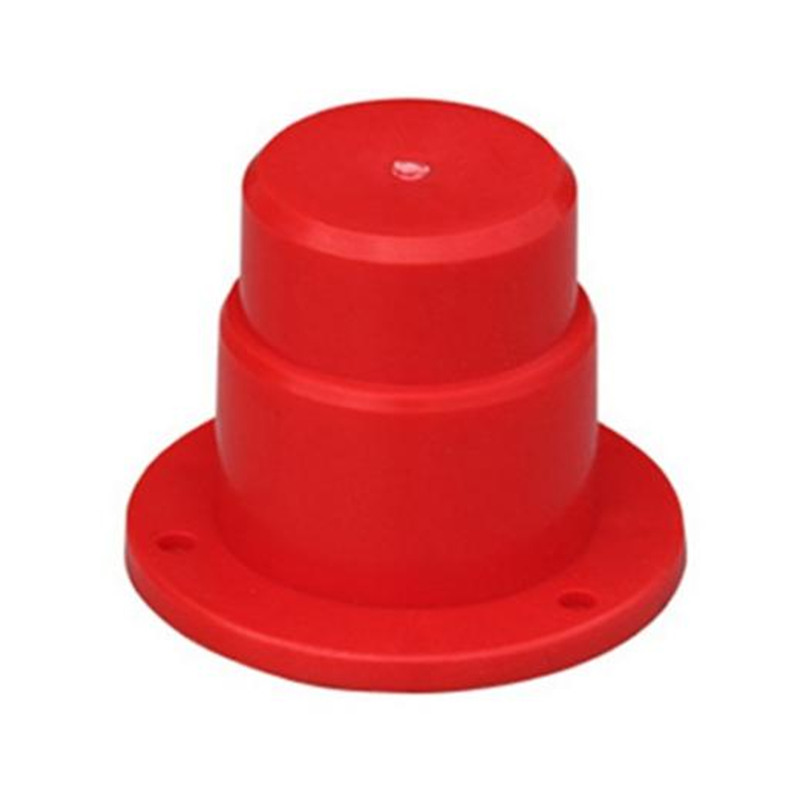
Silicone Rubber Buffer Blocks
Repeated impact is a common source of damage in vehicle storage systems. A drawer may be closed quickly during an emergency, or vibration may cause components to move against each other while the vehicle is traveling. Without an appropriate cushioning element, the drawer could strike the frame directly, producing noise and gradually damaging contact surfaces.
The fire truck drawer uses silicone rubber buffer blocks to prevent direct impact between the drawer and the frame. Silicone rubber provides elasticity and resilience, allowing it to absorb part of the closing force. This helps protect the metal structure and reduces harsh impact noise.
Buffer blocks also contribute to a more controlled closing action. Instead of the drawer ending its movement through a hard metal-to-metal contact, the rubber element provides a softer stopping point. This can improve user comfort and reduce stress on the frame, guide rails, fasteners, and surrounding compartment structure.
The use of a dedicated buffer demonstrates the importance of small details in emergency vehicle equipment. A drawer may appear simple, but its performance depends on the interaction of many components. The frame, guide rails, fasteners, handle, limit button, and buffer blocks must work together to create a reliable and predictable system.
Silicone rubber is also useful in environments where temperature changes and repeated use are expected. As with all components, service condition, exposure, and maintenance should be considered, but the material is well suited to cushioning applications where resilience and noise reduction are required.
Integrated Limit Button and Ergonomic Handle
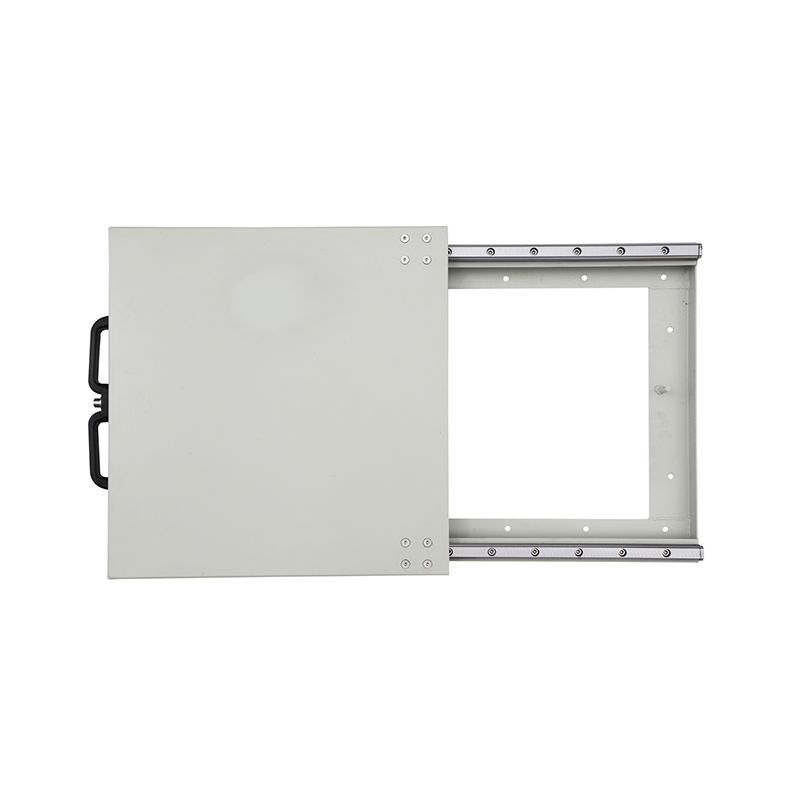
The limit button and handle are integrated into one piece. This design combines two functions in a compact assembly and supports one-hand operation. For firefighters wearing gloves or carrying another item, a simple and intuitive control is highly valuable.
Separate controls can require additional movement or coordination. An integrated handle and limit button can reduce the number of steps needed to release and operate the drawer. The user can grasp the handle and operate the release mechanism as part of the same motion, improving convenience during equipment deployment.
Ergonomics are especially important in emergency vehicles because operators may work under stress, in low light, in confined spaces, or while wearing bulky protective clothing. A handle should be easy to locate, comfortable to grip, and positioned in a way that does not obstruct neighboring equipment. The integrated design supports a clean front appearance and can simplify the operator’s interaction with the drawer.
The limit function helps control drawer movement and reduces the risk of unintended movement during vehicle operation or equipment handling. A properly designed retention and release mechanism helps keep the drawer in its intended position while allowing quick access when required.
One-hand operation can also improve workflow. A firefighter may use one hand to stabilize a helmet, hose accessory, tool, or breathing apparatus component while using the other hand to open the drawer. Reducing the effort and complexity of access allows the crew to focus on the task rather than the storage hardware.
Equipment Compatibility and Storage Applications
The drawer is suitable for storing fire suits, helmets, lifelines, gas masks, and various firefighting accessories. Its flexible configuration makes it possible to adapt storage to different fire protection scenarios. The exact arrangement can be defined according to the vehicle’s mission, crew size, equipment inventory, and compartment dimensions.
Protective Clothing and Helmets
Fire suits and helmets require storage that protects them from unnecessary compression, contamination, and damage. A drawer can provide a dedicated area for protective clothing while keeping it separate from tools or wet equipment. Helmet storage can also be organized to prevent helmets from being buried beneath other items.
Protective equipment should be arranged so that it can be inspected quickly. A drawer that extends outward allows the operator to see more of the contents than a deep fixed cabinet. This supports pre-departure checks and helps identify whether equipment is present, clean, dry, and ready for use.
Lifelines and Rescue Accessories
Lifelines and rescue accessories often need to remain organized to prevent tangling or accidental damage. A correctly sized drawer can provide a dedicated space for rope-related equipment, connectors, harness accessories, and other items used during rescue operations.
Separating rescue equipment from general firefighting tools improves retrieval. In a technical rescue situation, crews may need to prepare multiple components in a particular order. Organized drawers support that preparation process and reduce unnecessary searching.
Gas Masks and Breathing Equipment Accessories
Gas masks and related accessories should be protected from crushing, contamination, and disorganized storage. A drawer provides a defined location where these items can be positioned consistently. Depending on the drawer dimensions, protective cases or internal organizers may be incorporated by the vehicle builder or end user.
For breathing apparatus support equipment, accessibility is essential. The storage system should allow operators to identify the required accessory quickly and remove it without disturbing unrelated equipment. A single-layer or double-layer design can be selected according to the volume and shape of the equipment.
Firefighting Tools and General Accessories
Fire trucks often carry a wide variety of smaller accessories, including nozzles, couplings, adapters, hand tools, lighting equipment, and protective accessories. These items can be difficult to manage in a large open compartment. Drawers provide a practical method for categorizing them.
Smaller items can be assigned to an upper drawer, while heavier or less frequently used equipment can be stored in a lower drawer. This arrangement improves visibility and helps prevent lightweight components from becoming hidden under larger tools.
Customization According to Vehicle Requirements
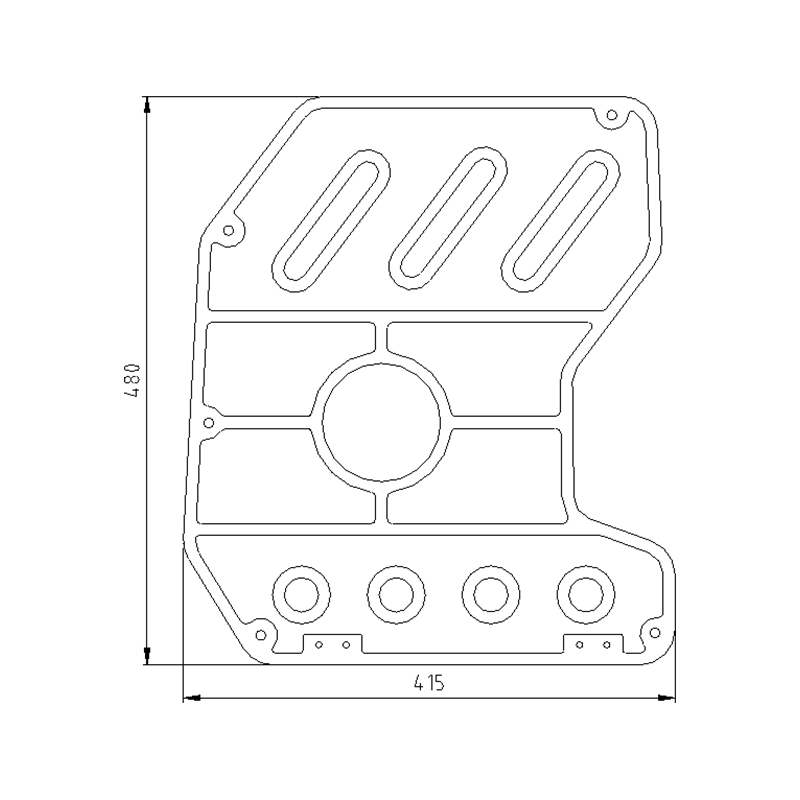
The product length L, width W, and height H can be customized according to customer requirements. The listed information also identifies L1 as customizable. This dimensional flexibility is essential because fire trucks differ significantly in body design, compartment layout, chassis size, mission profile, and equipment capacity.
A storage drawer should not be selected only by nominal external dimensions. The customer and manufacturer must consider the available opening, internal compartment depth, neighboring equipment, mounting points, door movement, center of gravity, drawer travel, and operator access. Custom engineering allows the drawer to become part of the vehicle system rather than an improvised addition.
Customization can also support different loading strategies. A customer may require a wide drawer for clothing and helmets, a deep drawer for specialized equipment, or several narrow drawers for categorized accessories. The final design can be coordinated with the equipment list and the vehicle manufacturer’s compartment drawings.
Dimension customization is also helpful when replacing older storage hardware. Existing fire trucks may have irregular compartment layouts or legacy mounting arrangements. A new drawer can be designed to make better use of the available space while retaining compatibility with the vehicle structure.
| Dimension | Customization Status | Design Considerations |
|---|---|---|
| W | Customizable | Compartment opening, equipment width, neighboring modules, and operator reach |
| H | Customizable | Number of storage layers, vehicle clearance, and vertical equipment arrangement |
| L | Customizable | Compartment depth, guide-rail travel, load distribution, and access requirements |
| L1 | Customizable | Mounting geometry and relationship between drawer components and vehicle structure |
Before production, customers should provide accurate dimensional information, equipment drawings, photographs, or vehicle compartment samples whenever possible. This helps reduce installation risks and allows the manufacturer to confirm the intended structure before fabrication.
Advantages Compared with Basic Storage Solutions
Improved Accessibility
A drawer brings equipment toward the operator. This is a major advantage over deep shelves, where items at the rear may be difficult to reach. Better accessibility can reduce the time required to prepare equipment and lower the chance that a crew member will overlook an item.
Better Space Organization
Single-layer, double-layer, and multi-layer arrangements allow the available compartment volume to be divided according to actual use. This creates a more orderly storage environment than a single open cavity. Equipment categories can be separated, and frequently used items can be positioned in the most accessible locations.
Lower Operating Noise
Silent bearing guide rails and silicone rubber buffer blocks work together to reduce operating noise. This can be beneficial during station preparation, nighttime response, and emergency deployment when clear communication is important.
Improved Material Durability
The combination of high-strength aluminum alloy profiles and 304 stainless steel fasteners is designed for a demanding vehicle environment. The aluminum frame supports structural efficiency, while stainless steel connection hardware helps resist corrosion associated with moisture and repeated washing.
Ergonomic One-Hand Use
The integrated handle and limit button simplify operation. This is particularly valuable when users wear gloves or need to keep one hand available for another task. An ergonomic control can also reduce unnecessary strain during repeated opening and closing.
Flexible OEM and ODM Potential
Because the dimensions and configurations can be customized, the product is suitable for original equipment manufacturing and original design manufacturing projects. Fire truck builders, emergency vehicle integrators, municipal fleets, and specialist equipment suppliers can specify a drawer that aligns with their own vehicle platform and storage strategy.
Manufacturing and Quality Management Strengths
Tianchang Jinlv Fire Equipment Co., Ltd. was established in 2010 and has focused on fire protection accessories for 15 years. This period of specialization has allowed the company to develop experience in fire truck roller shutters, equipment storage systems, ladders, rescue components, and related products.
The company operates with advanced production facilities and a complete production process. A complete process is important for a storage drawer because performance depends on more than individual material quality. Profile preparation, dimensional control, assembly, hardware installation, guide-rail alignment, handle fitting, buffer placement, and final inspection all influence the finished product.
The company has passed GB/T 19001-2016 quality certification and states that it controls each stage from raw material procurement to final product delivery. A documented quality-management approach can help establish repeatable processes and improve traceability. For fire apparatus customers, consistency is particularly important because storage equipment may be installed across multiple vehicles in a fleet.
Raw material control is the first stage of reliable manufacturing. Aluminum profiles, stainless steel fasteners, bearing components, silicone buffers, and other parts should match the required specifications. Proper incoming inspection can help prevent unsuitable materials from entering production.
Fabrication and assembly control are equally important. The drawer frame must be dimensionally accurate, and the guide rails must be aligned so that the drawer operates smoothly. Fasteners must be correctly installed, and the integrated handle and limit button must function as intended. A complete production process helps coordinate these operations rather than treating them as isolated tasks.
Final inspection should evaluate appearance, dimensions, operating movement, hardware installation, and overall assembly quality. Depending on the project, customers may also require sample approval, inspection records, packaging standards, or installation guidance. A professional manufacturer can coordinate these requirements as part of an OEM or ODM project.
Research, Development, and Product Improvement
The company maintains a professional research and development team with industry experience. In the field of fire apparatus equipment, research and development should focus on practical improvements that benefit crews, vehicle manufacturers, and fleet operators.
Product development may involve improving space efficiency, simplifying installation, reducing operating noise, strengthening structural components, improving corrosion resistance, or adapting the drawer to new vehicle layouts. The use of an aluminum profile structure and customizable dimensions reflects the importance of flexible product engineering.
Research and development should also consider changing customer requirements. Fire departments and vehicle manufacturers may request different storage capacities, alternative mounting arrangements, additional retention features, or specialized internal organization. A manufacturer that understands the application can help transform these requirements into a workable product design.
The company’s stated focus on efficient and environmentally friendly fire protection equipment also supports long-term product development. Lightweight materials can contribute to efficient vehicle design, while durable components may reduce replacement frequency and resource consumption. Environmental performance must always be evaluated across the product life cycle, including material sourcing, manufacturing, maintenance, and end-of-life handling.
Continuous improvement is particularly valuable for emergency equipment because field feedback can reveal practical requirements that are difficult to identify in a drawing alone. Information from vehicle builders, firefighters, maintenance teams, and fleet managers can help improve handle placement, drawer dimensions, guide-rail behavior, equipment access, and installation methods.
Installation Planning for Fire Truck Drawers
Correct installation is necessary to obtain the full benefit of a high-quality drawer system. Before installation, the vehicle builder should confirm the compartment structure, available mounting surfaces, door clearances, neighboring components, and expected drawer load.
The mounting surface should be sufficiently rigid to support the drawer frame and its contents. If the vehicle structure flexes excessively, the drawer may become misaligned or difficult to operate. The installation team should also verify that the drawer does not interfere with roller shutters, hinged doors, lighting, wiring, hoses, pumps, or other equipment.
Clearance should be checked throughout the complete movement of the drawer. The drawer should open fully enough to provide practical access while remaining within the vehicle’s intended envelope. When several layers are installed, each drawer should be capable of independent operation without striking the handle or front panel of another drawer.
Load distribution should be considered during installation and equipment organization. Heavy items should not be concentrated in a way that creates excessive imbalance or places unnecessary stress on one side of the guide system. The final arrangement should reflect the guide-rail capacity, vehicle body design, and customer operating requirements.
After installation, the operator should test each drawer under realistic conditions. The test should include opening and closing, limit-button operation, handle grip, guide-rail movement, buffer contact, and clearance from surrounding components. Any binding, unusual noise, looseness, or interference should be corrected before the vehicle enters service.
Maintenance and Service Considerations
Fire truck storage drawers are designed for repeated use, but regular inspection helps preserve their performance. Maintenance personnel should inspect the drawer frame, fasteners, guide rails, buffer blocks, handle, and limit mechanism at suitable intervals.
The drawer should be kept free from excessive dirt, grit, and chemical residue. Contamination can increase friction and affect guide-rail movement. Cleaning procedures should be compatible with the materials and should avoid damaging protective finishes or lubricating elements.
Fasteners should be checked for looseness, especially after extended vehicle operation over rough roads. Vibration can gradually affect mechanical connections, and early detection can prevent more serious damage. Any missing, damaged, or corroded hardware should be replaced with suitable parts.
The guide rails should be checked for smooth movement. If a drawer begins to bind, tilt, produce unusual noise, or require excessive force, the cause should be investigated. Possible causes may include uneven loading, misalignment, contamination, damaged bearing components, or changes in the mounting structure.
Silicone rubber buffer blocks should also be inspected. If a buffer becomes cracked, displaced, excessively compressed, or missing, the drawer may begin to strike the frame directly. Replacing the buffer promptly helps preserve quiet operation and reduce impact stress.
The integrated handle and limit button should be tested during routine equipment checks. The release action should be positive, and the drawer should remain secure when closed. Any unusual looseness or failure to retain the drawer should be addressed before continued service.
Use in Different Fire and Rescue Scenarios
Municipal Fire Engines
Municipal fire engines typically carry a broad mixture of protective clothing, hose accessories, hand tools, breathing equipment, and rescue items. Drawer systems can help organize these supplies according to crew responsibilities and deployment sequence.
Industrial Fire Trucks
Industrial fire trucks may operate in factories, warehouses, refineries, chemical facilities, ports, or power plants. Their equipment requirements can be specialized, and storage layouts may need to accommodate unusual accessories. Customizable drawer dimensions allow the system to be matched to the vehicle and the industrial response plan.
Airport Rescue and Firefighting Vehicles
Airport rescue and firefighting vehicles must be prepared for rapid response and may carry equipment for aircraft incidents, medical support, rescue access, and fire suppression. Clear equipment organization can help crews identify and retrieve items quickly in a high-pressure environment.
Technical Rescue Vehicles
Technical rescue vehicles often carry ropes, harnesses, helmets, gas masks, cutting tools, lifting equipment, and specialized accessories. Multi-layer drawers can provide a useful method for separating equipment by rescue discipline while retaining rapid access.
Emergency Support Vehicles
Emergency support vehicles may carry protective equipment, first-response supplies, lighting devices, communication accessories, and general tools. A drawer system can be customized to support these mixed inventories and maintain a consistent storage arrangement.
Procurement Considerations for Fleet Operators
When selecting a fire truck drawer, fleet operators should evaluate more than the purchase price. The total value of the system includes accessibility, expected service life, maintenance requirements, installation compatibility, equipment protection, and the effect on crew efficiency.
Material quality should be reviewed carefully. High-strength aluminum alloy profiles can help control weight while supporting structural performance. 304 stainless steel fasteners are beneficial in wet and corrosive environments. The guide rails, buffer blocks, and handle system should also be evaluated because these components influence daily usability.
Customers should confirm whether the manufacturer can provide the required dimensions and configuration. A drawer that is slightly too deep, too wide, or too tall may create installation problems or interfere with other equipment. Customization capability is therefore an important part of the procurement decision.
Manufacturing experience should also be considered. A supplier specializing in fire protection accessories is more likely to understand the operational requirements of emergency vehicles than a general-purpose cabinet manufacturer. Experience with roller shutters, ladders, storage systems, and other fire truck components can support better coordination with the wider apparatus design.
Quality certification and process control provide additional confidence. Customers may request information about material specifications, inspection procedures, sample approval, packaging, installation instructions, and after-sales support. These requirements are especially relevant for OEM and ODM projects involving multiple vehicles or export markets.
OEM and ODM Cooperation
The customizable nature of the fire truck drawer makes it suitable for OEM and ODM cooperation. Under an OEM arrangement, the product can be manufactured according to the customer’s established design, dimensions, specifications, or vehicle integration requirements. Under an ODM arrangement, the manufacturer can contribute engineering experience and help develop a suitable storage solution from the customer’s operational objectives.
Successful cooperation begins with clear technical communication. The customer should provide compartment drawings, equipment dimensions, expected load, preferred drawer configuration, mounting requirements, surface-treatment expectations, and operating conditions. The manufacturer can then review the information, identify potential conflicts, and recommend a suitable structure.
Prototype evaluation can be useful for complex projects. A sample drawer or test assembly allows the customer to confirm access, handle position, guide-rail travel, layer spacing, and compatibility with the vehicle body. Adjustments can be completed before mass production.
For fleet projects, standardization is another important advantage. Once an approved drawer design has been developed, the same or similar configuration can be applied across multiple vehicles. This simplifies crew training, equipment checks, spare-parts planning, and maintenance procedures.
Why Product Details Matter in Emergency Equipment
Emergency equipment must perform reliably when time is limited and conditions are difficult. A drawer that operates smoothly, closes quietly, and remains structurally stable can support a better working environment for firefighters. These benefits come from the combined effect of many design details rather than from a single feature.
The aluminum alloy frame contributes structural efficiency and customizable construction. Stainless steel fasteners support durable connections. Silent bearing guide rails improve movement. Silicone rubber buffers reduce direct impact. The integrated handle and limit button simplify operation. Custom dimensions help the product fit the vehicle. Quality-management processes help ensure that these features are assembled consistently.
Compared with a basic storage box or an improvised shelf, a purpose-designed fire truck drawer offers a more complete solution. It is designed around the realities of emergency vehicle use: repeated opening, vibration, moisture, limited space, protective gloves, urgent access, and the need for clear equipment organization.
For fire apparatus manufacturers and fleet operators, these advantages can translate into more efficient compartment layouts and improved daily readiness. For firefighters, they can make equipment easier to locate and handle. For vehicle integrators, customizable dimensions can simplify the process of matching storage to the vehicle body.
Frequently Asked Questions
What types of drawers are available?
The product is available in single-layer, double-layer, and multi-layer configurations. The appropriate type depends on the available compartment height, equipment volume, required separation, and access strategy.
What materials are used in the main structure?
The main frame is constructed from high-strength aluminum alloy profiles. This helps provide structural performance while supporting a comparatively lightweight vehicle storage solution.
Are the fasteners corrosion resistant?
All fasteners are made of 304 stainless steel. This material is suitable for applications exposed to moisture, vehicle washing, humidity, and general atmospheric corrosion.
How does the drawer reduce operating noise?
Silent bearings are used in the guide rails to support smooth, low-noise movement. Silicone rubber buffer blocks also prevent direct impact between the drawer and the frame when the drawer is closed.
Can the drawer be operated with one hand?
Yes. The limit button and handle are integrated into one piece and designed for ergonomic one-hand operation. This can be useful when firefighters are wearing gloves or holding another item.
What equipment can be stored in the drawer?
The drawer is suitable for fire suits, helmets, lifelines, gas masks, and various firefighting accessories. The final arrangement should be selected according to the equipment dimensions and the vehicle’s operational requirements.
Can the dimensions be customized?
Yes. The length L, width W, height H, and the listed L1 dimension can be customized according to customer requirements. Custom engineering should be based on accurate vehicle compartment measurements and equipment information.
Is the drawer suitable for OEM and ODM projects?
Yes. Its customizable structure and the manufacturer’s experience in fire protection accessories make it suitable for OEM and ODM cooperation. Customers can provide drawings, dimensions, equipment lists, and installation requirements for technical review.
What should be checked before installation?
Customers should check compartment dimensions, mounting surfaces, drawer clearances, neighboring equipment, expected load, door movement, and access requirements. After installation, each drawer should be tested for smooth movement, secure retention, proper release, and interference-free operation.
How should the drawer be maintained?
Routine maintenance should include cleaning, fastener inspection, guide-rail inspection, buffer-block inspection, and testing of the integrated handle and limit button. Any abnormal noise, binding, looseness, or damage should be investigated promptly.
Who manufactures this fire truck drawer?
The product is manufactured by Tianchang Jinlv Fire Equipment Co., Ltd., a Chinese fire protection equipment company established in 2010. The company supplies fire truck storage systems and related fire apparatus accessories, with OEM/ODM customization and technical support.
Conclusion
A fire truck drawer is a critical component of efficient apparatus storage. It helps transform limited compartment space into an organized, accessible, and serviceable equipment system. The availability of single-layer, double-layer, and multi-layer configurations allows the product to support different vehicle types and mission requirements.
The design combines high-strength aluminum alloy profiles, 304 stainless steel fasteners, silent bearing guide rails, silicone rubber buffer blocks, and an integrated ergonomic handle and limit button. Together, these features support low-noise operation, controlled movement, corrosion-conscious construction, reduced impact, and convenient one-hand access.
Customization is another major advantage. Adjustable length, width, height, and related dimensions allow the drawer to be adapted to different fire truck compartments and equipment inventories. This flexibility is valuable for municipal fire engines, industrial vehicles, airport rescue and firefighting vehicles, technical rescue units, and emergency support platforms.
The manufacturer’s experience since 2010, advanced production facilities, complete manufacturing process, GB/T 19001-2016 quality certification, research and development capabilities, and focus on fire protection accessories provide a strong foundation for OEM and ODM cooperation. By combining application knowledge with controlled production, Tianchang Jinlv Fire Equipment Co., Ltd. can support customers seeking dependable storage and mounting solutions for modern fire apparatus.
For fire truck builders and fleet operators, the right drawer system can improve equipment organization, simplify inspection, support faster access, and contribute to a more professional emergency response vehicle. Selecting a storage drawer with appropriate materials, ergonomic operation, quiet movement, customizable dimensions, and reliable manufacturing is therefore an investment in both vehicle performance and firefighter readiness.
References
1. ISO 9001:2015, Quality Management Systems — Requirements.
2. GB/T 19001-2016, Quality Management Systems — Requirements.
3. NFPA 1900, Standard for Aircraft Rescue and Firefighting Vehicles, Automotive Fire Apparatus, Wildland Fire Apparatus, and Automotive Ambulances.
4. NFPA 1851, Standard on Selection, Care, and Maintenance of Protective Ensembles for Structural Fire Fighting and Proximity Fire Fighting.
5. Aluminum Association, Aluminum Standards and Data.
6. ASM International, Properties and Selection: Nonferrous Alloys and Special-Purpose Materials.
7. International Organization for Standardization, Ergonomics of Human-System Interaction.
8. General technical principles for emergency vehicle equipment storage, mounting, inspection, and maintenance.
9. Manufacturer-provided product information for fire truck drawer storage systems, including configuration, materials, dimensions, and operating features.
Product: Fire Truck Drawer
News
-
-
Every firefighter has opened a compartment door after a rough response only to find nozzles, webbing, and wrenches piled on top of each other. In gloves and low light, with the pump running, that is ...
READ MORE -
Two pumpers of the same model can feel like two different trucks on the same call. On the first, a firefighter reaches into a compartment, releases one latch with a gloved hand, and pulls a tray far ...
READ MORE -
Quick Answer The right fire truck boarding ladder is a fixed, upward-folding, or rotating step assembly mounted at the rear or side of the apparatus that gives firefighters a stable, non-slip surface ...
READ MORE -
Fire truck ladder racks are roof-mounted storage and deployment systems that hold ground ladders securely in transit and let firefighters lower them to the side or rear of the apparatus in seconds. ...
READ MORE -
Specification meetings usually park the ladder rack near the bottom of the option sheet, a few lines above the license plate bracket. That is also why ladder racks become the complaint in year three:...
READ MORE
Hey! Interested in staying in the loop? Sign up for our updates.
WE WON'T SPAM YOU, PINKY PROMISE.

Tianchang Jinlv Fire Equipment Co., Ltd.
Copyright © Tianchang Jinlv Fire Equipment Co., Ltd. All rights reserved. Custom Fire Truck Equipment Supplier Fire Apparatus Parts Factory
