

 en
 English
 русский
 Español
 عربى

A builder fitting out a pumper asks one question before ordering anything: fixed deck monitor or portable cannon? The answer should follow the attack, not the catalog. A fire hose cannon earns its p...
READ MORE
Firefighter Wrenches for Reliable Hydrant, Hose, and Emergency Operations
2026.10.13
Content
- 1 The Role of a Firefighter Wrench in Emergency Response
- 2 Product Range for Different Fire Service Applications
- 3 Design Advantages Compared with General-Purpose Tools
- 4 Material Selection and Durability Considerations
- 5 Advanced Manufacturing Process
- 6 Quality Management and Manufacturing Strength
- 7 OEM and ODM Customization Options
- 8 Applications Across Fire and Industrial Response
- 9 Selection Guide for Buyers
- 10 Inspection, Maintenance, and Safe Use
- 11 Why Supplier Capability Matters
- 12 Comparison with Low-Cost Generic Alternatives
- 13 Procurement and Project Support
- 14 Frequently Asked Questions
- 14.1 What is a firefighter wrench used for?
- 14.2 What types of firefighter wrenches are available?
- 14.3 Can one wrench operate every hydrant?
- 14.4 Are firefighter wrenches suitable for fire trucks?
- 14.5 What is the advantage of a suction hose wrench?
- 14.6 Are aluminum wrenches strong enough for emergency use?
- 14.7 Can the wrench be customized?
- 14.8 How should firefighter wrenches be stored?
- 14.9 How often should a firefighter wrench be inspected?
- 14.10 What should be checked during inspection?
- 14.11 Can these tools be supplied with other fire truck equipment?
- 14.12 Why is quality certification important?
- 14.13 What information should be included in an inquiry?
- 15 Conclusion
- 16 References
- 17 Product: Firefighter Wrench
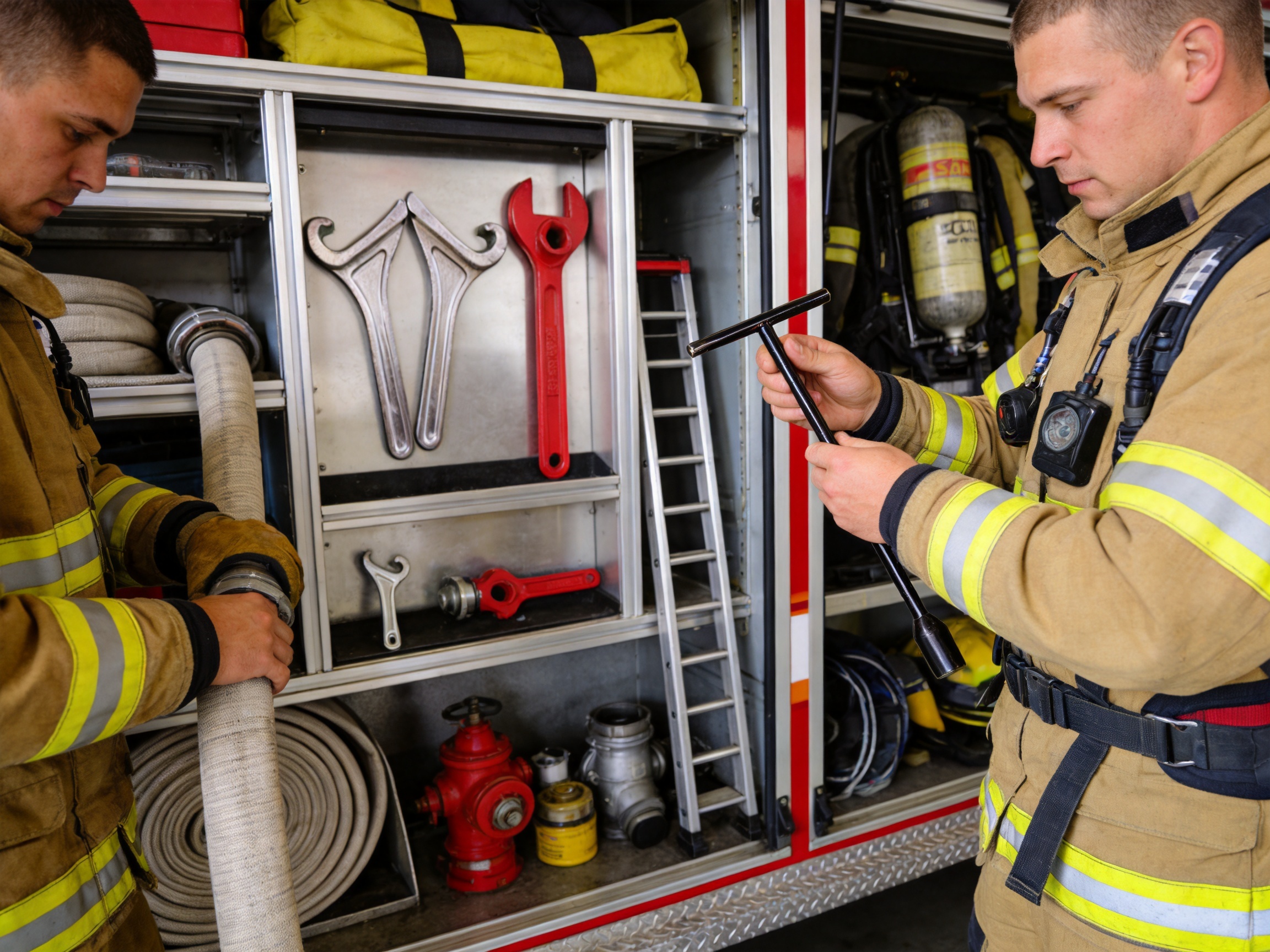
Firefighter wrenches are compact but essential tools in fire rescue equipment systems. During a fire response, crews may need to open hydrant caps, operate hydrant valves, tighten or loosen hose connections, manage suction hose couplings, stop water leakage, or handle equipment that cannot be operated with ordinary hand tools. A dependable wrench gives firefighters the mechanical advantage and practical versatility required to complete these tasks quickly and safely.
The product range described in this article includes above-ground hydrant wrenches, underground hydrant wrenches, suction hose wrenches, water-stopping clamps, and small aluminum wrenches. These tools are developed for fire trucks, municipal fire departments, industrial emergency response teams, utility operators, and other organizations responsible for water supply and emergency equipment management.
Manufactured by Tianchang Jinlv Fire Equipment Co., Ltd., the firefighter wrench range reflects a broader focus on fire truck equipment and rescue components. The company has specialized in fire protection accessories since 2010 and supports OEM and ODM requirements for customers seeking dependable, application-specific products. Its manufacturing capabilities, quality management practices, product variety, and technical service allow buyers to source multiple emergency tools from one experienced supplier.
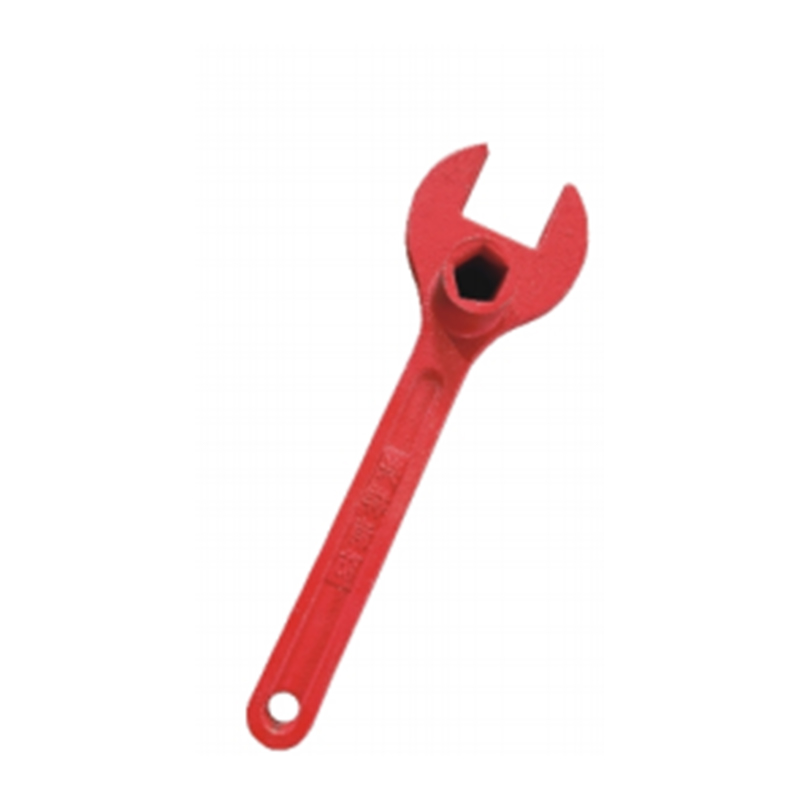
Firefighter Wrench
The Role of a Firefighter Wrench in Emergency Response
Firefighting operations are highly time-sensitive. A fire crew may arrive at a location where the available water source is not immediately ready for connection. Hydrant caps may be tightly secured, valve operating nuts may have different profiles, and hose couplings may require additional torque because of pressure, contamination, weather, or long periods without use. A standard adjustable wrench may not provide the correct shape, reach, or grip for these situations.
A firefighter wrench is designed around the practical requirements of emergency water supply equipment. Its working surfaces, openings, handles, and profiles are intended to match common fire service fittings and operating points. Depending on the model, one tool may perform several functions, reducing the number of separate tools that firefighters must carry on a vehicle or at a hydrant location.
The main benefits of a specialized wrench include:
Fast operation when seconds matter.
Compatibility with common fire hydrant and hose fittings.
A more secure grip on components that may be wet, dirty, painted, or corroded.
Convenient storage in fire truck compartments and equipment cabinets.
Reduced dependence on improvised tools.
Improved readiness for municipal, industrial, and vehicle-based emergency response.
In practice, the wrench is part of a complete water supply system. Its value is not measured only by its size or weight. The more important considerations are whether it is available when needed, whether it fits the equipment in service, whether it withstands repeated use, and whether its design supports efficient work while firefighters are wearing gloves and protective clothing.
Product Range for Different Fire Service Applications
Above-Ground Hydrant Wrenches
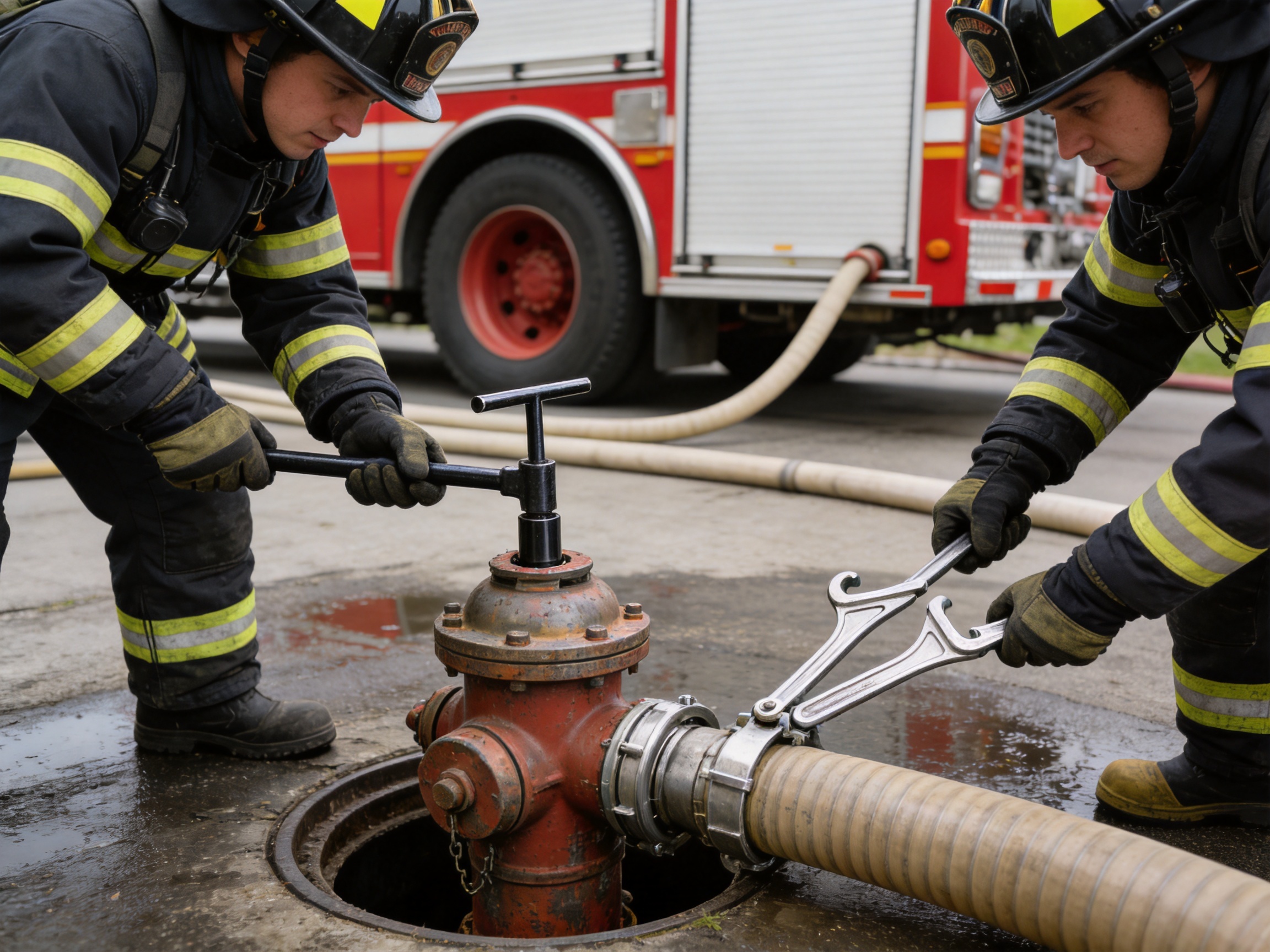
Above-ground hydrants are common in municipal water distribution systems, industrial facilities, commercial properties, and public infrastructure. The operating components may be exposed to weather, road dust, mud, impact, and accidental damage. An above-ground hydrant wrench is used to open hydrant caps, operate valves, or perform related connection work according to the configuration of the hydrant.
The main advantage of a dedicated above-ground hydrant wrench is that it is designed for field use rather than general maintenance. Its profile can be adapted to the operating features encountered on fire hydrants. The handle provides leverage, while the working end is shaped to engage the fitting securely. This reduces the risk of slipping and helps the operator apply force in a controlled manner.
For fire departments, a hydrant wrench can be stored with hose packs, hydrant connection equipment, or pump accessories. For industrial users, it may be placed at emergency water points, fire pump rooms, or response vehicles. Where a site uses more than one hydrant standard, customers can discuss the required interface and request suitable OEM or ODM configurations.
Underground Hydrant Wrenches
Underground hydrants and flush hydrant systems often present different access and operating conditions. The operating nut or valve may be positioned below a cover, within a recessed chamber, or at a location that requires additional reach. An underground hydrant wrench is developed to help personnel reach and turn the relevant operating component without relying on unsuitable makeshift tools.
Access conditions can vary significantly from one municipal or industrial installation to another. For this reason, buyers should confirm the required working profile, opening size, handle arrangement, reach, and operating direction before ordering. A professional manufacturer can assist with product selection and can evaluate drawings, samples, or dimensional information for customized production.
In emergency response, the ability to access an underground valve quickly can make a meaningful difference. A tool that is too short, too flexible, or poorly matched to the valve may delay water supply establishment. A properly selected underground hydrant wrench supports more predictable operation and can form part of a standardized equipment package for hydrant inspection and emergency deployment.
Suction Hose Wrenches
Suction hose connections are important in pump-based firefighting systems. Large-diameter suction hoses must be connected securely to the fire pump and water source, and the coupling must be tightened sufficiently for dependable service. Manual tightening may be difficult when the coupling is large, wet, or contaminated.
A suction hose wrench provides a practical way to apply controlled force to the coupling. Its design helps distribute pressure across the fitting and gives the operator a better grip than bare hands alone. This is particularly useful when crews are working quickly around a fire truck, drafting from an open water source, or preparing a pump system under difficult environmental conditions.
Because suction hose couplings can differ by standard, material, and design, compatibility is essential. The correct wrench should be selected based on the coupling type used by the fire department or equipment manufacturer. Tianchang Jinlv Fire Equipment Co., Ltd. can support customers requiring product matching, private labeling, or custom tooling for specific hose and coupling applications.
Water-Stopping Clamps
Water-stopping clamps are used to control leakage from certain hose or water-supply conditions. They are not a replacement for correct hose selection, proper coupling, or permanent repair, but they can be valuable temporary response tools when water must be controlled while operations continue.
A suitable water-stopping clamp should be easy to position, capable of exerting appropriate pressure, and sufficiently robust for repeated emergency use. Its operation should be understandable to trained personnel wearing gloves. The design must also be selected according to the hose diameter, material, and expected application.
For fire departments and industrial response teams, including water-stopping equipment in a tool package can improve preparedness for damaged hose lines, minor leakage events, and maintenance situations. The final application should always follow the organization’s operating procedures and safety requirements.
Small Aluminum Wrenches
Small aluminum wrenches are useful when a lightweight tool is required for routine fire service tasks. Aluminum construction can reduce carrying weight while providing practical resistance to corrosion in many service environments. A compact aluminum wrench may be stored in a cab compartment, portable equipment case, hose kit, or technician’s tool bag.
The lightweight format is especially valuable when equipment must be carried over distance, lifted onto a fire truck, or organized in a restricted compartment. A small wrench can also serve as a supplementary tool for secondary fittings and smaller operating components.
Lightweight tools must still be matched to their intended use. The selected wrench should not be used beyond its designed application or subjected to force greater than the material and structure can safely support. Product selection should take into account the operating torque, fitting dimensions, frequency of use, and environmental conditions.
Design Advantages Compared with General-Purpose Tools
Ordinary tools may be available in a maintenance workshop, but emergency fire service work places special demands on equipment. A general-purpose wrench may not fit a hydrant operating nut, may offer insufficient leverage, or may be difficult to use with gloves. A specialized firefighter wrench addresses these practical limitations.
Application-Specific Profiles
The most important advantage of a firefighter wrench is its relationship to the equipment being operated. Hydrants, hose couplings, and water control components often have distinctive shapes. A wrench designed for these profiles can engage more effectively than an adjustable tool that depends on manual positioning and clamping.
Correct engagement helps reduce slipping, protects the edges of the fitting, and allows force to be transferred more efficiently. It also makes the task more repeatable for different operators. This is important for fire departments that train multiple crews and need equipment to behave consistently during drills and real incidents.
Improved Operational Speed
Emergency teams cannot always spend time searching for a compatible tool. A dedicated wrench stored in a known location allows the operator to begin work immediately. If a fire truck carries a coordinated set of hydrant and hose tools, the crew can select the appropriate item without experimenting with unrelated equipment.
Speed is supported not only by the shape of the tool but also by its visibility, portability, and storage convenience. Compact tools can be placed in clearly labeled compartments, mounted near the pump panel, or included in standardized hydrant kits.
Better Handling in Wet Conditions
Water, mud, oil, foam residue, and outdoor contamination can make metal surfaces difficult to handle. Firefighter wrenches are intended for environments where clean, dry workshop conditions cannot be assumed. The handle and working surfaces should support controlled use, while the overall structure should withstand normal field handling.
Users should maintain tools properly, remove contamination after operations, and inspect them for damage. Even a well-designed wrench performs best when stored dry, checked regularly, and replaced if the working profile becomes deformed or cracked.
Compact Storage
Fire trucks carry a large amount of equipment in limited space. Every tool must justify its storage footprint. Firefighter wrenches are generally compact and can be placed in drawers, side compartments, pump panels, hose lockers, or portable response cases.
A coordinated product range also simplifies storage planning. A department can assign one location for hydrant tools, another for suction hose accessories, and another for emergency repair equipment. This supports faster inventory checks and reduces the possibility of a missing tool during dispatch.
Suitability for Standardized Procurement
Fire departments and industrial organizations often prefer standardized equipment because it simplifies training, inspection, replenishment, and fleet management. A supplier offering multiple types of firefighter wrenches can help customers develop a consistent tool package for different vehicles and stations.
Standardization does not mean every department must use the same model. Instead, it means each organization can define a controlled set of approved tools based on its hydrant types, hose systems, operating procedures, and vehicle layouts. OEM and ODM support makes it possible to adapt the product to these specific requirements.
Material Selection and Durability Considerations
The material used for a firefighter wrench influences its weight, strength, corrosion behavior, surface condition, and service life. Different applications may call for different material solutions. Heavy-duty hydrant and coupling tools may require a robust metal construction, while compact supplementary tools may benefit from lightweight aluminum.
Material selection should be based on the intended operating force and environment. A tool used outdoors may be exposed to rain, standing water, road salt, mud, and temperature changes. A tool stored on a fire truck may also experience vibration and repeated impact from equipment movement.
Good manufacturing practice begins with controlled raw material procurement. The manufacturer must identify appropriate material specifications, inspect incoming materials, and maintain traceability where required by the customer or quality system. Correct material selection helps establish a stable foundation for dimensional accuracy and mechanical performance.
Surface treatment and finishing may also contribute to service suitability. A smooth, properly finished surface can improve handling, reduce the retention of dirt, and support routine cleaning. The appropriate finish depends on the material and product design. Customers should communicate requirements related to corrosion resistance, appearance, identification marks, private labels, and packaging before production begins.
Durability does not mean that a tool is indestructible. Firefighter wrenches should be used only for the fittings and operating tasks for which they are intended. They should not be used as hammers, pry bars, or impact tools unless specifically designed and approved for those purposes. Correct training and maintenance are as important as material quality.
Advanced Manufacturing Process
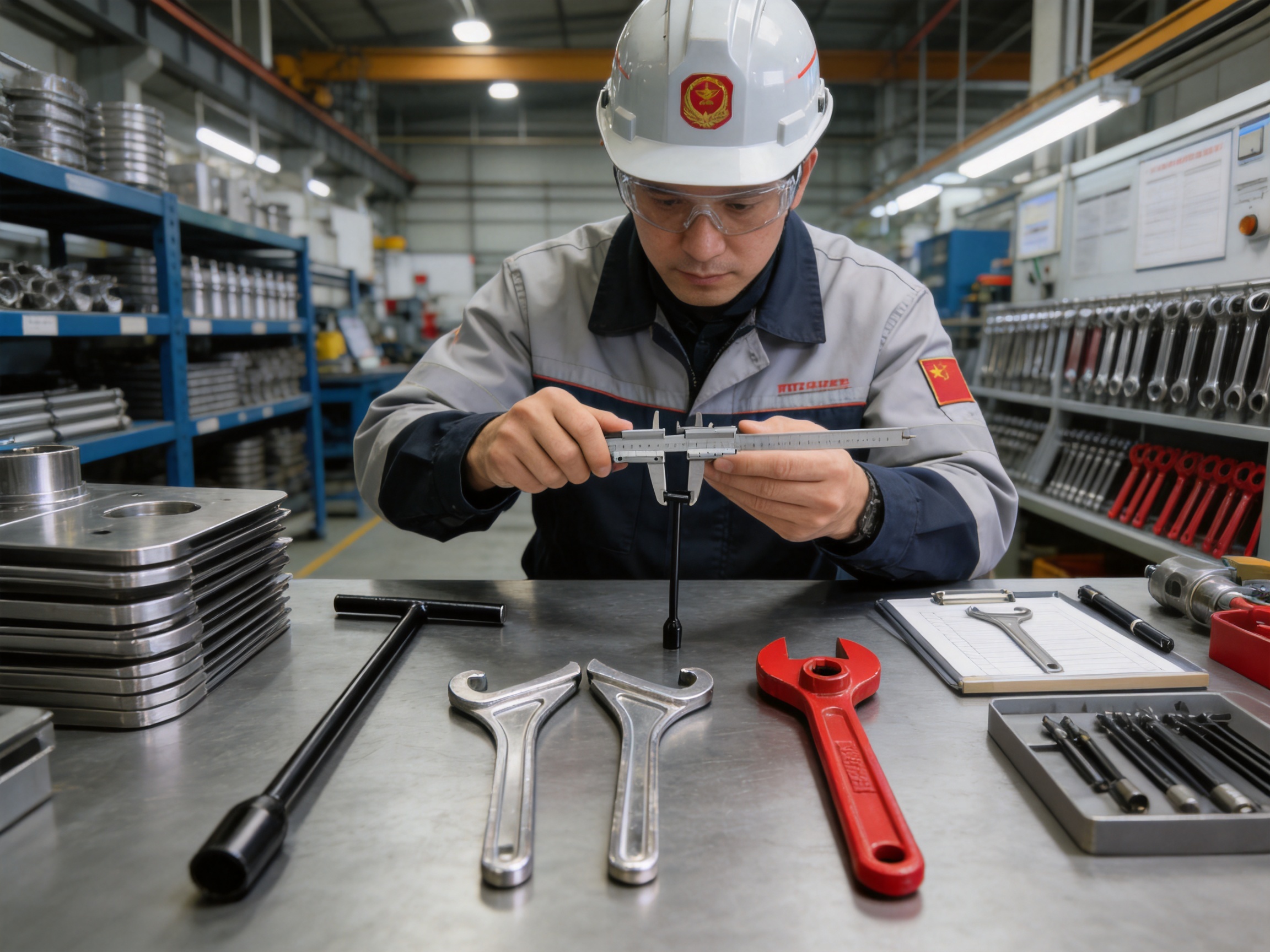
The performance of an emergency tool is closely connected to manufacturing consistency. A wrench that appears simple may still require careful control of raw materials, forming or machining, dimensional accuracy, edge quality, surface treatment, inspection, and packaging. Tianchang Jinlv Fire Equipment Co., Ltd. operates with a complete production process designed to control these stages from material procurement through final delivery.
Product Requirement Confirmation
Production begins with a clear understanding of the intended application. The manufacturer and customer may review drawings, samples, fitting dimensions, material preferences, operating conditions, packaging requirements, and labeling information. This step is particularly important for OEM and ODM projects because the product may need to match a customer’s existing fire truck equipment or hydrant system.
Requirement confirmation reduces the risk of producing a tool that is dimensionally correct in isolation but unsuitable for the customer’s actual fittings. It also establishes a reference for later inspection and approval. For repeat orders, the confirmed specification can become a controlled production standard.
Engineering and Development
A professional research and development team evaluates the relationship between tool geometry and practical use. Important design factors can include the working opening, handle length, thickness, weight, balance, access angle, storage dimensions, and compatibility with protective gloves.
Where a product is customized, engineering personnel can refine the design according to customer feedback or sample testing. The objective is not simply to produce a visually different tool, but to create a functional product that improves access, handling, and reliability in the intended emergency environment.
Controlled Material Procurement
Raw material quality affects every later manufacturing stage. The company’s quality approach includes control from raw material procurement to finished product delivery. Materials should be selected according to the approved product specification and checked for conformity before entering production.
For customers with special requirements, material documentation, inspection records, or defined grades may be incorporated into the purchasing process. Clear communication at this stage helps support stable production across repeat orders.
Forming, Machining, and Component Processing
Depending on the product type, manufacturing may include forming, cutting, drilling, machining, deburring, surface preparation, and other processing steps. Each operation must preserve the required dimensions and maintain the structural integrity of the tool.
The working end is especially important. If an opening is too large, the tool may slip. If it is too small, the tool may not fit or may be difficult to position. If edges are poorly finished, they may damage fittings or create a handling hazard. Controlled processing and inspection help ensure that the tool performs consistently.
For aluminum products, production planning must consider the properties of the material and the need to balance light weight with sufficient strength for the intended application. For heavier-duty tools, the manufacturing process must support the required structural robustness without creating unnecessary bulk.
Dimensional and Visual Inspection
Inspection verifies that the finished product matches the approved requirements. Typical checks may include overall dimensions, opening size, thickness, alignment, surface condition, edge finishing, marking, and appearance. The specific inspection plan depends on the product and customer specification.
Visual inspection can identify scratches, burrs, cracks, deformation, incomplete finishing, or other conditions that could affect handling or appearance. Dimensional inspection helps confirm compatibility with the intended hydrant, hose, or valve component.
Quality control is most effective when it is integrated throughout production rather than performed only at the final stage. Monitoring material receipt, processing, assembly where applicable, finishing, and packing creates multiple opportunities to identify and correct deviations.
Final Assembly and Packaging
After inspection, products are prepared for delivery. Packaging should protect the wrench from impact, moisture, contamination, and surface damage during storage and transportation. It should also support convenient counting and identification for the customer’s warehouse or fire equipment department.
OEM customers may require custom labels, cartons, instruction sheets, barcodes, or package quantities. These details can be confirmed during the order process. Proper packaging is particularly important for international shipments and for customers building complete fire truck equipment packages.
Quality Management and Manufacturing Strength
Tianchang Jinlv Fire Equipment Co., Ltd. was established in 2010 and has developed experience in fire protection accessories over more than a decade. The company has passed GB/T 19001-2016 quality certification and applies a structured approach to production management. Quality certification does not eliminate the need for product-specific inspection, but it demonstrates that the company has established documented processes for managing quality-related activities.
The company’s manufacturing strengths can be summarized in several areas:
Experience in fire protection accessories and fire truck equipment.
A complete production process covering procurement, manufacturing, inspection, and delivery.
Professional research and development capabilities.
Support for OEM and ODM projects.
Product diversity across tools, storage components, ladders, roller shutters, and related fire equipment.
Technical support for customers in different application scenarios.
A service philosophy based on honesty, innovation, quality, and gratitude.
This combination is valuable to buyers who need more than a single low-cost tool. Fire departments, vehicle manufacturers, distributors, and industrial customers often require technical communication, stable repeat production, dependable packaging, and responsive after-sales support. A supplier capable of coordinating these requirements can reduce purchasing complexity and improve product consistency across a fleet or project.
OEM and ODM Customization Options
Fire truck equipment is rarely completely universal. Vehicle compartments differ in size, pump layouts vary, and local hydrant standards may require specific wrench profiles. For this reason, OEM and ODM services are important advantages for professional buyers.
OEM production may involve manufacturing a customer’s established design with specified dimensions, materials, markings, and packaging. ODM development may involve adapting an existing product or creating a solution based on an application requirement. In either case, the customer should provide as much information as possible, including:
Hydrant or coupling type.
Required working dimensions.
Available storage space.
Preferred material and surface finish.
Expected operating environment.
Target quantity and order schedule.
Branding, logo, or identification requirements.
Packaging and documentation requirements.
Samples, drawings, photographs, or dimensional measurements can help the manufacturer understand the application. Before mass production, customers may request a sample or pre-production approval to verify fit and handling.
Customization can provide advantages over generic imported tools. A product that fits a specific fleet or hydrant system reduces operator adjustment and simplifies training. It can also support a professional and consistent appearance across a fire department’s equipment inventory.
Applications Across Fire and Industrial Response
Municipal Fire Departments
Municipal fire departments depend on accessible hydrants and reliable water supply procedures. Firefighter wrenches can be assigned to engines, support vehicles, station equipment rooms, and hydrant maintenance teams. They may also be included in inspection kits for checking hydrant accessibility and operating condition.
A department can create different tool packages based on the local hydrant network. Standardized storage locations and inspection schedules help ensure that the required wrench is present and ready for dispatch.
Fire Truck Manufacturers and Vehicle Integrators
Fire truck manufacturers and vehicle integrators often need to equip vehicles with tools that fit defined compartments and support specific pump systems. Compact dimensions, product labeling, and customized packaging may be important considerations.
Working directly with a fire equipment manufacturer allows the vehicle integrator to coordinate the wrench with other components, including roller shutters, storage systems, ladders, handrails, hose equipment, and pump accessories. This supports a more complete vehicle equipment solution rather than a collection of unrelated products.
Industrial Emergency Response Teams
Industrial facilities may maintain private hydrant networks, fire pumps, process water systems, chemical response equipment, and emergency vehicles. Their operating conditions can differ from municipal systems, especially where corrosive atmospheres, heavy industry, restricted access, or long equipment distances are involved.
A customized wrench package can be developed around the facility’s actual valves, hydrants, hose couplings, and storage locations. Industrial users should establish inspection and replacement procedures so that tools remain available and functional during an emergency.
Utility and Infrastructure Operators
Water utilities, transportation facilities, ports, airports, campuses, and large commercial properties may operate or maintain fire water infrastructure. A reliable wrench can support scheduled inspections as well as emergency response. The ability to purchase multiple tool types from one supplier can simplify inventory and procurement.
Selection Guide for Buyers
Choosing the right firefighter wrench requires more than selecting a product by name. Buyers should identify the exact equipment to be operated and confirm the interface before placing an order.
| Selection Factor | Questions to Confirm | Why It Matters |
|---|---|---|
| Application | Will the wrench be used on an above-ground hydrant, underground hydrant, suction hose, or water-stopping device? | Different applications require different working profiles and handling arrangements. |
| Compatibility | What are the fitting dimensions, operating nut shape, and coupling standard? | A correct match improves engagement and reduces slipping. |
| Material | Is a heavy-duty metal tool or lightweight aluminum tool more suitable? | Material affects strength, weight, corrosion behavior, and portability. |
| Storage | Where will the tool be stored on the fire truck or at the facility? | Storage dimensions influence accessibility and fleet organization. |
| Environment | Will the tool be exposed to water, mud, chemicals, salt, heat, or vibration? | Environmental conditions influence material and finish requirements. |
| Customization | Are special dimensions, markings, labels, or packaging required? | OEM and ODM details should be confirmed before production. |
| Maintenance | How often will the wrench be inspected, cleaned, and replaced? | A maintenance plan supports long-term readiness. |
Buyers should also consider the number of tools required, the number of vehicles or stations to be equipped, spare tool requirements, and expected replenishment schedules. A supplier that can support repeat production and consistent specifications is often preferable for fleet-wide procurement.
Inspection, Maintenance, and Safe Use
Even a high-quality firefighter wrench requires routine care. Fire departments and industrial users should establish inspection procedures that match the frequency and severity of use.
Before use, the operator should check the working opening for deformation, cracks, severe wear, or contamination. The handle should be inspected for damage, sharp edges, or conditions that could affect grip. If the wrench has been exposed to corrosive substances, it should be cleaned according to the organization’s procedures and checked for surface deterioration.
After use, the tool should be rinsed or cleaned when appropriate, dried, and returned to its designated storage location. It should not be left buried under wet hose, standing in pooled water, or exposed unnecessarily to chemical residue. Tools carried on vehicles should be secured to prevent movement and impact during travel.
Operators should use the wrench only on compatible fittings. Excessive force, extensions, striking, or use as a pry bar can damage both the tool and the equipment being operated. If a fitting cannot be moved, the crew should follow its established escalation procedure rather than applying uncontrolled force.
Training should include tool location, correct orientation, fitting engagement, safe body position, communication between crew members, and post-use inspection. These practices help convert the mechanical advantage of the wrench into safe and efficient emergency work.
Why Supplier Capability Matters
Firefighter wrenches are relatively compact products, but procurement decisions can affect the reliability of a much larger emergency response system. A tool that does not fit the local hydrant, arrives with inconsistent dimensions, or lacks appropriate packaging can create avoidable problems.
An experienced supplier provides value through product knowledge, manufacturing coordination, quality control, and communication. Tianchang Jinlv Fire Equipment Co., Ltd. focuses on fire protection accessories and related fire truck equipment, allowing it to understand the relationship between a hand tool and the broader vehicle or emergency system.
The company’s wider product range includes specialty vehicle roller shutters, fire apparatus equipment stowage and mounting systems, fire truck boarding ladders, fire truck ladder racks, fire truck ladder handrails, firefighting nozzles, fire hose cannons, demolition tools, SCBA equipment, fire truck cab doors, and plastic tool components. This product breadth can be useful for customers seeking coordinated fire truck equipment from a single manufacturing partner.
Its research and development team follows market requirements and works toward efficient, environmentally responsible fire protection products. Combined with a complete production process and quality management system, this provides a foundation for stable production and customized solutions.
Comparison with Low-Cost Generic Alternatives
Price is an important procurement consideration, but the lowest initial price does not always represent the lowest total cost. Generic tools may appear suitable while lacking the exact dimensions, finishing quality, packaging protection, or repeat-order consistency required for professional fire service use.
A specialized manufacturer can provide several advantages:
Better application matching through technical review.
More consistent production based on controlled specifications.
Access to multiple product categories for coordinated procurement.
Options for custom dimensions and private labeling.
More organized quality inspection and documentation.
Improved communication for repeat orders and fleet projects.
Technical support before and after delivery.
These advantages are particularly relevant when tools are purchased for an entire fleet, distributed across multiple stations, or integrated into a vehicle manufacturing project. Consistency reduces confusion for users and simplifies replacement planning.
A generic wrench may still be suitable for a basic application if its dimensions and material are verified. The important point is that professional buyers should evaluate fit, function, durability, and supplier reliability rather than comparing price alone.
Procurement and Project Support
For a successful order, customers should begin with application information rather than a general product name. The supplier can then recommend a suitable model or review the possibility of customization. For large projects, the process may include technical clarification, sample confirmation, production planning, inspection, packaging approval, and shipment coordination.
Customers may also need support with product sets. For example, a fire department could request a package containing above-ground hydrant wrenches, underground hydrant wrenches, suction hose wrenches, water-stopping clamps, and small aluminum wrenches. A fire truck manufacturer could request a quantity matched to the number of vehicles, along with labels and compartment-specific packaging.
Clear communication is especially important for international orders. Customers should confirm shipping marks, carton quantities, documentation, inspection expectations, and delivery schedules. The manufacturer’s contact team can assist with product selection and order coordination.
For inquiries, buyers can contact Tianchang Jinlv Fire Equipment Co., Ltd. through the supplied sales channels. The company contact is Amy, with email at 18098391199@163.com and telephone or WhatsApp contact at +86 180 9839 1199. The company is located at No. 26, Jingwu Road, High-tech Industrial Zone, Tianchang City, Anhui Province.
Frequently Asked Questions
What is a firefighter wrench used for?
A firefighter wrench is used to operate fire hydrants, hose couplings, suction hose fittings, water control components, and related emergency equipment. The exact function depends on the wrench design and the fitting it is intended to match.
What types of firefighter wrenches are available?
The product range includes above-ground hydrant wrenches, underground hydrant wrenches, suction hose wrenches, water-stopping clamps, and small aluminum wrenches. Customers should select the type according to the hydrant, hose, or emergency equipment used at their site.
Can one wrench operate every hydrant?
Not necessarily. Hydrant designs, operating nuts, valve arrangements, and local standards can vary. Buyers should confirm the required dimensions and fitting profile before ordering. A supplier can review drawings, photographs, measurements, or samples to assist with selection.
Are firefighter wrenches suitable for fire trucks?
Yes. These tools are intended for applications involving fire trucks, municipal fire departments, industrial emergency response, and related fire protection systems. Their compact form also makes them suitable for storage in fire truck compartments and equipment cabinets.
What is the advantage of a suction hose wrench?
A suction hose wrench helps personnel tighten or loosen large hose couplings with better control and leverage than manual handling alone. It can be particularly useful when couplings are wet, contaminated, or difficult to turn.
Are aluminum wrenches strong enough for emergency use?
Small aluminum wrenches can be suitable for their intended applications while offering reduced weight. However, the tool must be selected according to the required operating force and should not be used beyond its specified purpose. Heavy-duty applications may require a different material or design.
Can the wrench be customized?
OEM and ODM customization may be available for dimensions, material, surface finish, product marking, logo, packaging, and other requirements. Customers should provide application details and confirm the design before mass production.
How should firefighter wrenches be stored?
They should be stored in a clean, dry, accessible location where they are protected from unnecessary impact and contamination. On a fire truck, the tool should be secured in its designated compartment and clearly identified for rapid retrieval.
How often should a firefighter wrench be inspected?
Inspection frequency should be based on the organization’s operating procedures, usage level, and environmental conditions. The tool should be checked before and after use, during routine vehicle inspections, and whenever it has been subjected to unusual force or impact.
What should be checked during inspection?
Users should check the working profile, opening size, edges, handle, surface condition, cracks, deformation, corrosion, and contamination. A damaged or severely worn wrench should be removed from service and evaluated for replacement.
Can these tools be supplied with other fire truck equipment?
Yes. The manufacturer also supplies various fire protection accessories and fire truck equipment, including storage systems, roller shutters, ladders, handrails, nozzles, hose cannons, SCBA-related equipment, cab doors, and plastic tool components. This allows customers to discuss broader equipment projects with one supplier.
Why is quality certification important?
Quality certification indicates that the manufacturer has established documented management processes. Tianchang Jinlv Fire Equipment Co., Ltd. has passed GB/T 19001-2016 quality certification. Product-specific requirements, inspections, and customer approvals remain important for confirming suitability.
What information should be included in an inquiry?
Customers should provide the application, fitting or coupling type, dimensions, material preference, quantity, storage limitations, environmental conditions, branding requirements, packaging needs, and delivery expectations. Drawings, samples, or photographs can make technical communication more accurate.
Conclusion
Firefighter wrenches are small tools with a significant role in emergency water supply and fire equipment operation. Above-ground hydrant wrenches, underground hydrant wrenches, suction hose wrenches, water-stopping clamps, and small aluminum wrenches help crews handle common operational challenges with greater speed, control, and reliability.
The main advantages over general-purpose tools are application-specific profiles, improved fitting engagement, compact storage, practical handling, and compatibility with standardized fire service procedures. When properly selected and maintained, these tools support municipal fire departments, fire truck manufacturers, industrial emergency teams, utilities, and facility operators.
Tianchang Jinlv Fire Equipment Co., Ltd. combines experience in fire protection accessories with a complete manufacturing process, GB/T 19001-2016 quality certification, research and development capabilities, OEM/ODM support, and a broad fire truck equipment portfolio. Its approach covers the product lifecycle from material procurement and engineering to processing, inspection, packaging, and customer service.
For buyers, the best results come from confirming the exact application and fitting requirements before production. A well-matched firefighter wrench is not merely an inexpensive accessory. It is a practical part of a prepared, organized, and dependable fire rescue equipment system.
References
1. International Association of Fire Chiefs. Fire Service Water Supply and Hydrant Operations Guidance.
2. National Fire Protection Association. Standards and Recommended Practices for Fire Hose, Hydrant Systems, and Fire Department Operations.
3. International Organization for Standardization. ISO 9001 Quality Management Systems—Requirements.
4. GB/T 19001-2016. Quality Management Systems—Requirements.
5. National Fire Protection Association. Fire Apparatus and Emergency Vehicle Equipment Practices.
6. Firefighting Equipment Manufacturers’ Technical Guidance. Hydrant Tools, Hose Couplings, and Emergency Water Supply Accessories.
7. Industrial Emergency Response Equipment Inspection and Maintenance Practices.
Product: Firefighter Wrench
News
-
-
Two minutes into a working fire, a crew stands in front of a locked steel security door with a crowbar that is too short to pull with both hands. Nothing about the tool is broken. It was simply speci...
READ MORE -
Three rungs up the rear of a pumper, a firefighter in wet gloves misses the grab and catches the handrail instead. Whether that rail holds was decided months earlier, at the bench: by tube wall thick...
READ MORE -
Quick Answer The right fire fighting nozzle depends on three factors: the flow rate your pump can deliver, the pattern your crew needs on the fireground, and the thread standard your hose already us...
READ MORE -
When a fire apparatus rolls out of the station for a structure fire or a highway rescue, every bolt, hinge, and ladder surface is about to face heat, vibration, moisture, and rough handling. Some com...
READ MORE -
Every firefighter has opened a compartment door after a rough response only to find nozzles, webbing, and wrenches piled on top of each other. In gloves and low light, with the pump running, that is ...
READ MORE
Hey! Interested in staying in the loop? Sign up for our updates.
WE WON'T SPAM YOU, PINKY PROMISE.

Tianchang Jinlv Fire Equipment Co., Ltd.
Copyright © Tianchang Jinlv Fire Equipment Co., Ltd. All rights reserved. Custom Fire Truck Equipment Supplier Fire Apparatus Parts Factory
