

 en
 English
 русский
 Español
 عربى

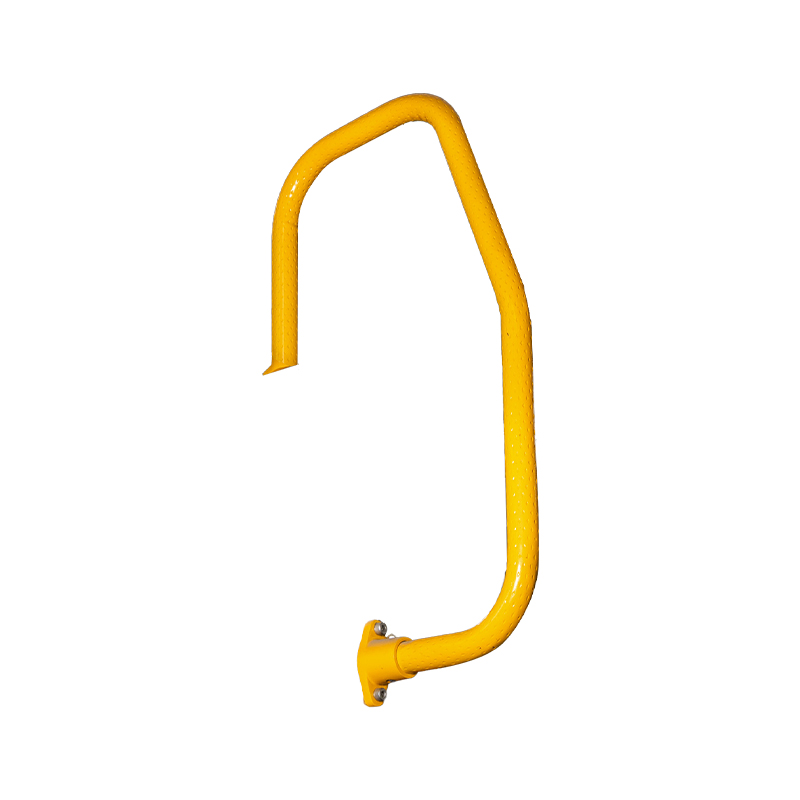
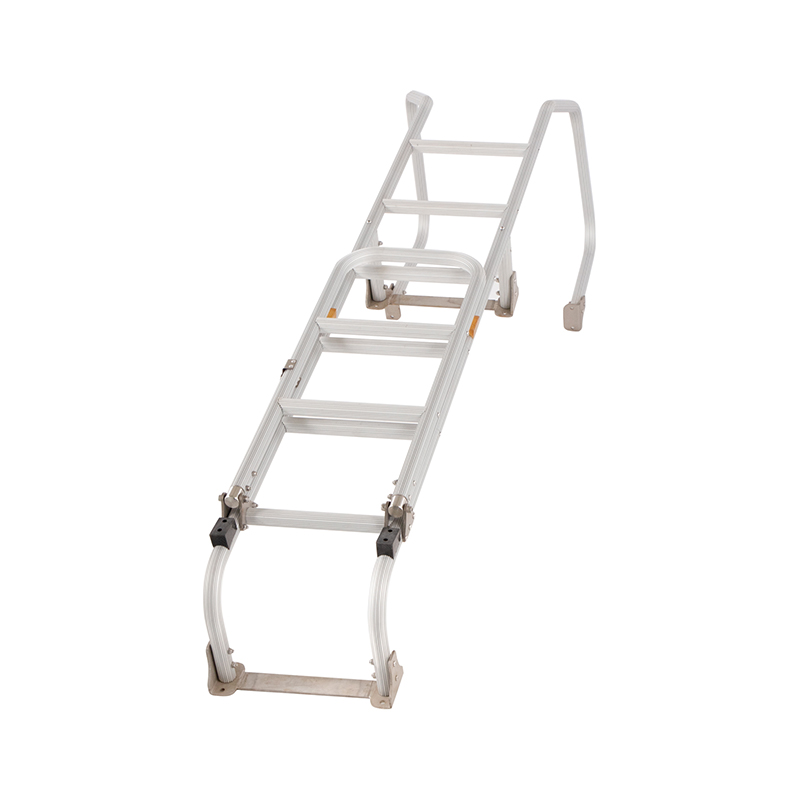
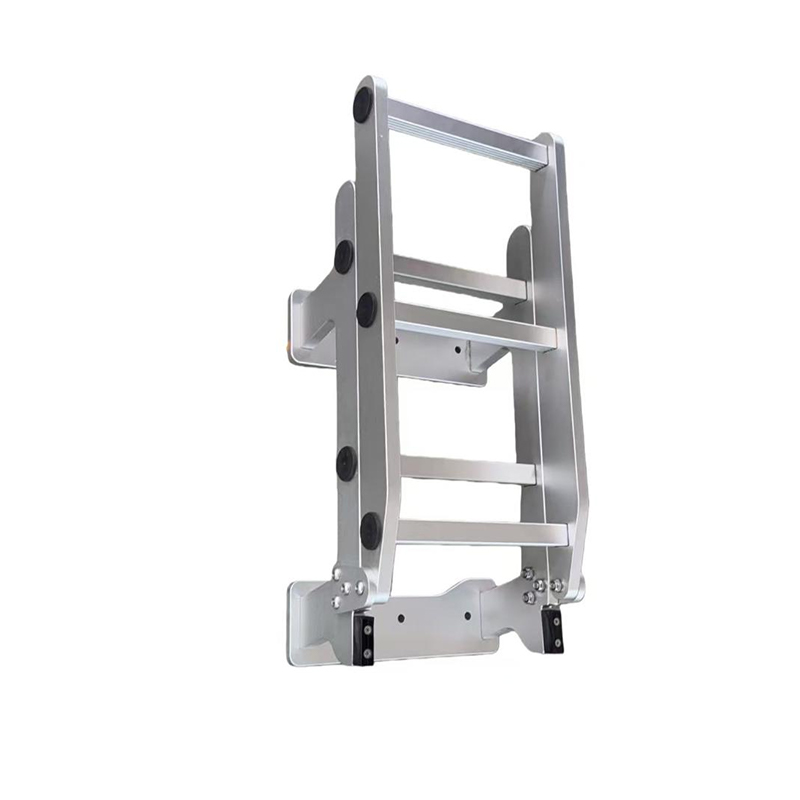
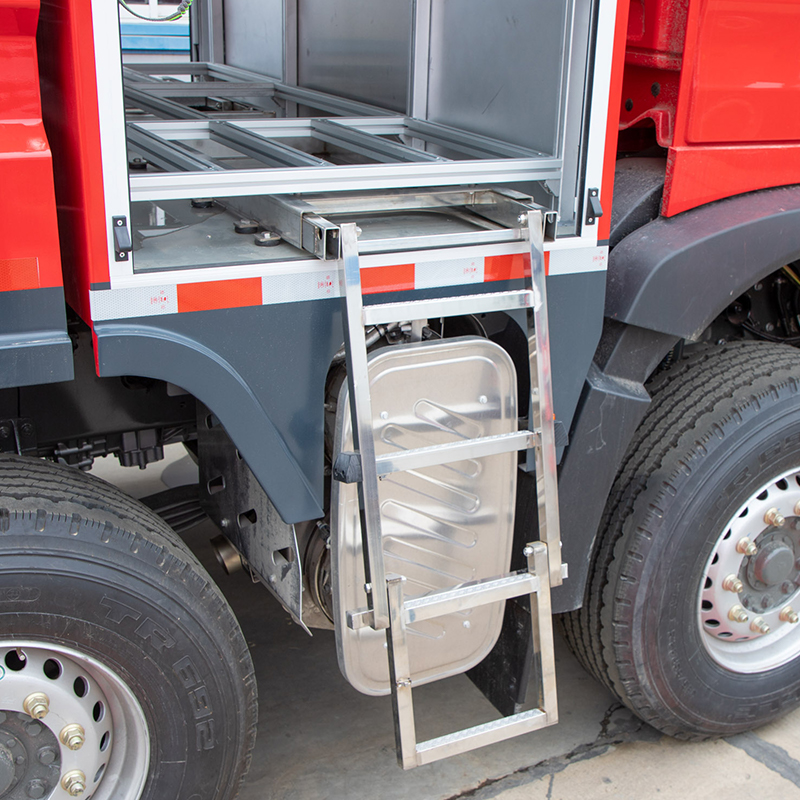
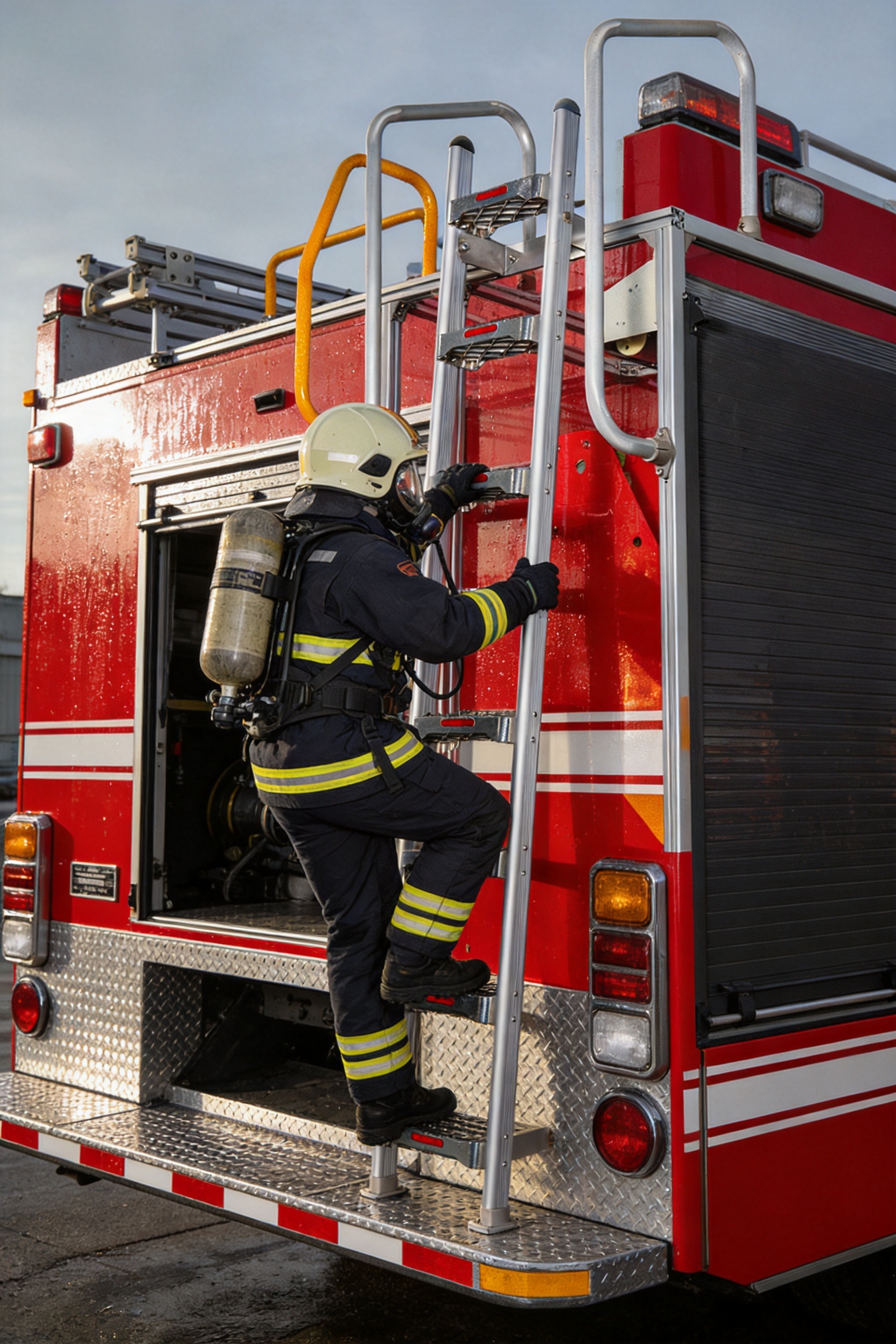
Three rungs up the rear of a pumper, a firefighter in wet gloves misses the grab and catches the handrail instead. Whether that rail holds was decided months earlier, at the bench: by tube wall thick...
READ MORE
Fire Truck Aluminum Ladder Handrails: Safety, Performance, and OEM Customization
2026.10.11
Content
- 1 1. The Role of a Ladder Handrail on a Fire Truck
- 2 2. Why Aluminum Alloy Is Suitable for Fire Truck Handrails
- 3 3. Product Structure and Main Design Considerations
- 4 4. Advantages Compared with Conventional Alternatives
- 5 5. Customization for Different Fire Truck Configurations
- 6 6. Manufacturing Process and Quality Control
- 7 7. Manufacturing Strengths of an Experienced Fire Equipment Supplier
- 8 8. Installation and Maintenance Recommendations
- 9 9. How to Select the Right Supplier
- 10 10. Applications in Different Emergency Vehicle Projects
- 11 11. Frequently Asked Questions
- 11.1 Q1: What is the primary purpose of a fire truck aluminum ladder handrail?
- 11.2 Q2: Why is aluminum commonly used for this product?
- 11.3 Q3: Can the handrail be customized for a specific fire truck?
- 11.4 Q4: What information should a customer provide for customization?
- 11.5 Q5: Is an aluminum handrail suitable for outdoor fire truck use?
- 11.6 Q6: Does a lightweight handrail provide reliable support?
- 11.7 Q7: Can the handrail be supplied as part of a larger fire truck equipment order?
- 11.8 Q8: What quality controls should buyers request?
- 11.9 Q9: How should the handrail be maintained?
- 11.10 Q10: Can an overseas customer order an OEM or ODM product?
- 12 12. Conclusion
- 13 References
- 14 Product: Fire Truck Aluminum Ladder Handrail
Fire truck ladder handrails are essential safety components for modern emergency vehicles. Although they are relatively simple in appearance, their design, material quality, installation accuracy, and long-term durability have a direct effect on firefighter safety. During emergency response operations, firefighters may need to climb onto a vehicle quickly while wearing heavy protective clothing, carrying breathing apparatus, handling hoses, or transporting other rescue equipment. A secure handrail provides essential support and helps reduce the risk of slips, falls, and loss of balance.
The fire truck aluminum ladder handrail is designed for installation on both sides of a rear ladder or boarding ladder. It assists firefighters when getting onto or off the vehicle and offers additional stability during elevated operations. Made from aluminum alloy, the handrail combines low weight, corrosion resistance, a clean appearance, and suitability for customized vehicle applications.
For fire apparatus manufacturers, fleet operators, emergency service departments, and specialty vehicle integrators, selecting the right handrail is not only a matter of purchasing a metal tube or support bar. The product must be compatible with the vehicle structure, ladder geometry, working environment, equipment layout, and daily maintenance requirements. It must also be manufactured with reliable processes so that the finished part can withstand repeated use, outdoor exposure, vibration, and demanding emergency conditions.
This article explains the construction, advantages, applications, customization options, production strengths, quality considerations, and purchasing factors associated with aluminum ladder handrails for fire trucks. It also describes how an experienced fire protection equipment manufacturer can support OEM and ODM projects from design confirmation through production and delivery.
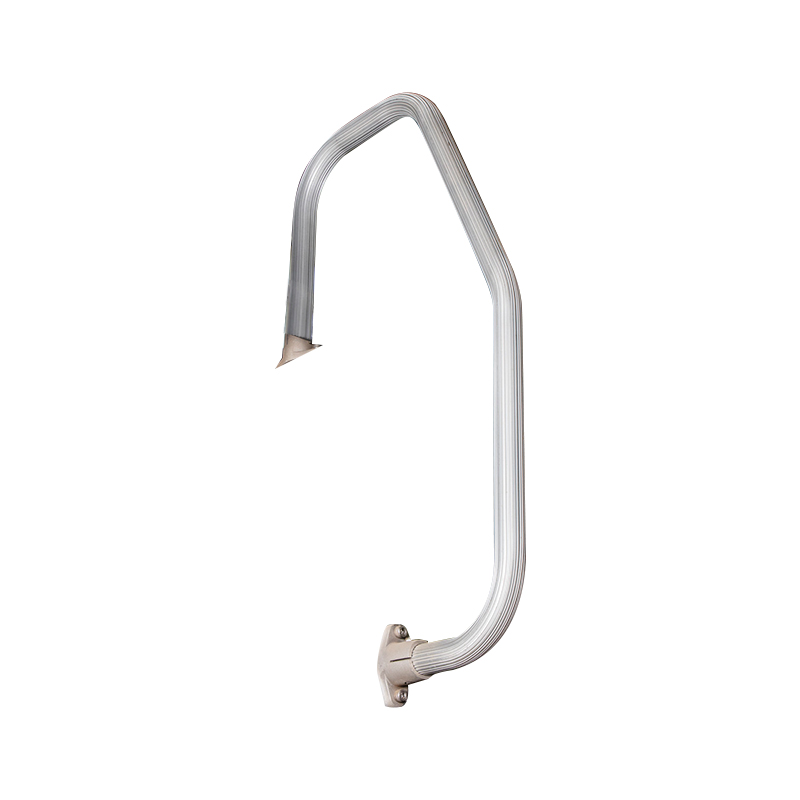
Fire Truck Aluminum Ladder Handrail
1. The Role of a Ladder Handrail on a Fire Truck
A fire truck is a complex mobile platform that combines firefighting, rescue, transportation, and equipment storage functions. Access to the roof, rear platform, hose storage area, ladder assembly, or elevated working position must be fast and safe. In many situations, firefighters work under pressure, in low visibility, on wet surfaces, and while wearing gloves. A properly designed handrail creates a stable gripping point that supports controlled movement.
The handrail is commonly installed on both sides of a rear access ladder or boarding ladder. Depending on the vehicle configuration, it may extend vertically, follow a curved ladder profile, or combine straight and bent sections. The shape is selected according to the ladder angle, the number and position of steps, the available mounting space, and the height of the vehicle body.
Its main functions include:
• Providing a secure gripping surface while climbing.
• Supporting firefighters when stepping onto or down from the truck.
• Helping users maintain balance while carrying tools or equipment.
• Improving access to roof-mounted or rear-mounted equipment.
• Increasing confidence during operations in wet, dark, smoky, or unstable conditions.
• Creating a finished and professional appearance for the vehicle body.
In addition to supporting human movement, the handrail forms part of the vehicle’s overall ergonomic design. The position should be convenient for users of different heights and should not interfere with ladder steps, hose connections, doors, warning lights, storage compartments, or other rescue equipment. This is why a standardized, one-size-fits-all product may not be suitable for every fire truck. A customized handrail is often the better choice for specialized vehicles.
2. Why Aluminum Alloy Is Suitable for Fire Truck Handrails
Material selection has a major influence on the service life and performance of a ladder handrail. Aluminum alloy is widely used for fire truck equipment because it offers a valuable balance between strength, weight, corrosion resistance, appearance, and processing flexibility.
2.1 Lightweight Construction
Fire trucks carry large quantities of water, foam, hoses, ladders, breathing equipment, rescue tools, and other apparatus. Every component contributes to the total vehicle weight. Reducing unnecessary weight can help vehicle manufacturers and operators manage payload, fuel consumption, handling, and equipment distribution.
Compared with many steel alternatives, aluminum alloy provides a lighter solution for access handrails. The lower weight can simplify installation and reduce the load placed on ladder supports and vehicle panels. It can also make replacement and maintenance work easier for service personnel.
Lightweight construction does not mean that the product is unsuitable for demanding environments. When the alloy specification, tube dimensions, bending method, mounting structure, and surface treatment are correctly selected, an aluminum handrail can provide reliable support for repeated daily use.
2.2 Permanent Rust Resistance in Normal Service Conditions
Fire trucks operate outdoors and are frequently exposed to rain, humidity, road spray, firefighting water, foam residue, dust, and changing temperatures. Steel components may require painting, coating, or regular inspection to prevent corrosion. Aluminum naturally forms a protective oxide layer, giving it strong resistance to rust in normal service conditions.
This corrosion resistance is especially valuable for ladder handrails because the part is exposed to the environment and is regularly touched by users wearing wet gloves or contaminated protective equipment. A durable aluminum surface can reduce maintenance demands and help preserve the appearance of the vehicle over time.
Material selection should still consider the complete environment. Contact with dissimilar metals, trapped moisture, aggressive chemicals, and damaged surface finishes should be managed through appropriate fasteners, spacing, drainage, and installation practices. A professional manufacturer can recommend suitable material combinations and mounting details for the intended application.
2.3 Attractive and Professional Appearance
Emergency vehicles represent the capability and readiness of a fire department. Their exterior components must perform reliably while also presenting a clean, organized, and professional appearance. Aluminum offers a bright, modern appearance and can be processed to match the visual design of the fire truck.
A well-finished handrail complements aluminum ladders, roller shutters, equipment compartments, steps, platforms, and other rescue components. Consistent curves, smooth surfaces, neat mounting points, and accurate alignment contribute to the overall quality of the vehicle.
2.4 Flexible Processing and Customization
Aluminum alloy can be cut, bent, drilled, assembled, and finished according to specific vehicle requirements. This flexibility allows manufacturers to produce handrails with different lengths, radii, angles, mounting positions, and end treatments.
Customization is important because fire trucks vary significantly in body width, ladder height, rear overhang, equipment arrangement, step configuration, and access requirements. The handrail can be adapted to the structure rather than forcing the vehicle design to accommodate a fixed component.
3. Product Structure and Main Design Considerations
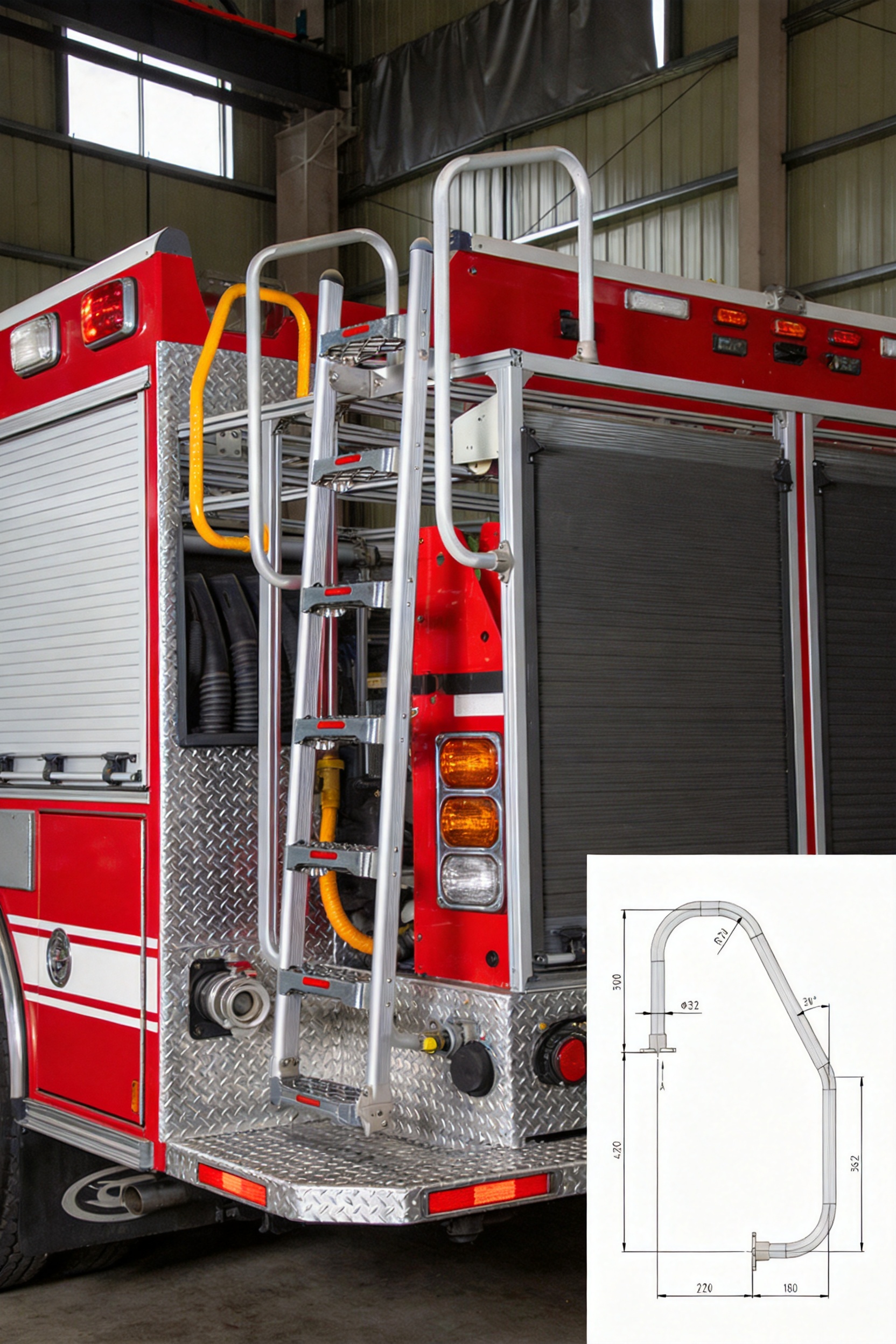
A fire truck aluminum ladder handrail generally consists of a main gripping section, mounting brackets or supports, end connections, and fastening hardware. The exact construction depends on the ladder design and the vehicle body. While the handrail may appear straightforward, each part should be considered as part of an integrated access system.
3.1 Main Handrail Tube or Profile
The main tube or profile provides the gripping surface. Its diameter, wall thickness, shape, and surface condition affect comfort, rigidity, appearance, and durability. The gripping area should be easy to hold while wearing firefighting gloves. Sharp edges, rough welds, incomplete finishing, or irregular bends can reduce usability and may create safety hazards.
The selected profile should offer sufficient rigidity for normal climbing and stabilizing forces. The design must also account for the distance between mounting points. A longer unsupported span may require a larger profile, an additional bracket, or a modified curvature to limit movement.
3.2 Curved and Straight Sections
Some fire truck ladders require a straight vertical handrail, while others need a curved or angled design. The curve may follow the ladder side, guide the user toward the vehicle platform, or provide clearance around bodywork and equipment.
Accurate bending is important. An inconsistent radius can cause misalignment at the mounting points or reduce the visual quality of the finished product. Professional bending equipment and controlled forming procedures help produce repeatable results across multiple units.
3.3 Mounting Brackets
Mounting brackets connect the handrail to the ladder, vehicle frame, platform, or supporting structure. The bracket design must provide stability without obstructing the steps or reducing usable clearance.
Important bracket considerations include:
• Connection strength and load distribution.
• Compatibility with the ladder frame or vehicle body.
• Resistance to vibration and repeated movement.
• Ease of installation and future replacement.
• Protection against water accumulation and corrosion.
• Clearance from doors, compartments, lights, hoses, and tools.
In some applications, the brackets are welded or integrated into the assembly. In others, bolted connections are preferred to simplify installation and maintenance. The correct method depends on the customer’s vehicle design and manufacturing process.
3.4 Ends and Transition Areas
The ends of a handrail should be finished carefully. Exposed ends may be capped, rounded, connected to a bracket, or integrated into another part of the ladder assembly. A smooth transition improves safety and appearance.
End treatment is particularly important in areas where firefighters may place their hands while stepping onto the vehicle. Any protruding edge, sharp corner, or unfinished opening could damage gloves or create an injury risk.
3.5 Position and Ergonomics
The best handrail is not necessarily the largest or strongest one. It must be positioned so that users can grip it naturally while climbing. The distance from the steps, the vertical height, the angle, and the shape of the transition into the platform all influence usability.
Designers should consider the use of gloves, breathing apparatus, helmets, tools, and other protective equipment. A firefighter carrying a hose or rescue tool may have limited freedom of movement. The handrail should provide support without creating an obstruction or forcing an awkward body position.
4. Advantages Compared with Conventional Alternatives
Fire apparatus manufacturers may consider steel handrails, painted metal tubes, fixed universal rails, or locally fabricated components. Each option may have a place in certain applications, but a purpose-designed aluminum handrail provides several advantages.
4.1 Lower Weight than Many Steel Solutions
Aluminum reduces component weight while maintaining a practical level of structural performance. This is useful for vehicles with strict payload limits or complex equipment layouts. Lighter parts are also easier for workers to handle during assembly, retrofit, repair, and replacement.
4.2 Improved Resistance to Outdoor Exposure
Unlike ordinary unprotected steel, aluminum does not develop red rust under normal atmospheric exposure. This makes it suitable for the exterior environment of a fire truck. Reduced corrosion risk can help minimize repainting, replacement, and cosmetic repairs.
4.3 Better Integration with Aluminum Vehicle Components
Many modern fire trucks use aluminum compartments, ladders, platforms, roller shutters, and panels. An aluminum handrail can visually and functionally integrate with these components. This creates a coordinated appearance and may simplify material planning for the vehicle manufacturer.
4.4 More Convenient Customization
A handrail can be made according to the actual vehicle dimensions rather than selected from a limited catalog. Custom length and curvature help achieve better access, cleaner alignment, and improved clearance around the ladder structure.
4.5 Lower Long-Term Maintenance Requirements
Because aluminum resists rust and generally maintains its appearance with routine cleaning, it may require less maintenance than painted steel. This does not eliminate the need for inspection. Fasteners, brackets, joints, and mounting points should still be checked regularly, especially on vehicles used frequently or in corrosive environments.
4.6 Professional Appearance for OEM Projects
Vehicle manufacturers and fleet owners often require consistent appearance across an entire product line. A manufacturer capable of controlling cutting, bending, finishing, and assembly can supply handrails with repeatable dimensions and a uniform appearance. This supports the quality image of the completed fire apparatus.
| Evaluation Item | Aluminum Ladder Handrail | Conventional Painted Steel Handrail | Universal Fixed-Size Rail |
|---|---|---|---|
| Weight | Generally lightweight and suitable for weight-sensitive vehicles | Usually heavier | Depends on material and design |
| Rust resistance | Strong natural resistance in normal service conditions | Relies on paint or protective coating | Varies according to material and finish |
| Customization | Length, curvature, brackets, and configuration can be customized | Can be customized but may require more finishing work | Often limited to standard dimensions |
| Appearance | Clean aluminum appearance with consistent finishing options | Depends on coating condition and maintenance | May not match the vehicle structure |
| Maintenance | Routine cleaning and connection inspection | May require coating repair and corrosion control | Depends on material and installation quality |
| OEM suitability | Well suited to vehicle-specific production | Suitable when weight and corrosion are managed | Better for simple standardized applications |
The comparison shows why aluminum is an attractive material for fire truck ladder access systems. However, performance depends on the quality of design and production. Poorly bent tubing, weak brackets, inaccurate dimensions, or incomplete inspection can reduce the benefits of any material. Supplier capability is therefore as important as the material choice itself.
5. Customization for Different Fire Truck Configurations
Fire trucks are built for different missions and operating environments. A municipal pumper, airport rescue vehicle, industrial foam truck, water tanker, technical rescue vehicle, and special emergency response truck may all require different access arrangements.
5.1 Length Customization
The handrail length can be adjusted according to the height and structure of the rear ladder. A longer vehicle or elevated platform may require extended support, while a compact emergency vehicle may need a shorter handrail to avoid interference with doors and equipment.
Length should not be selected independently of mounting positions. The manufacturer should review the distance between connection points, the ladder step layout, the required hand clearance, and the transition between the ladder and platform.
5.2 Curvature Customization
Curvature is one of the most important customization features. The handrail may need to follow a smooth radius, include a change of direction, or connect a vertical ladder to a horizontal platform. The correct curve helps maintain a natural grip path and prevents interference with the vehicle body.
Customers can provide drawings, samples, three-dimensional data, or dimensional measurements. When a complete drawing is not available, photographs and key dimensions may help the engineering team develop a suitable proposal. Final production should normally proceed only after the design has been reviewed and approved.
5.3 Mounting Configuration
Mounting points can be adapted to the ladder frame or the vehicle body. The manufacturer may need to consider threaded holes, through-bolts, welded supports, existing brackets, or limited-access installation areas.
The mounting configuration should allow the handrail to remain secure under repeated use. It should also enable technicians to inspect and tighten the connections during scheduled vehicle maintenance.
5.4 Surface and Finish Options
Aluminum handrails may be supplied with a natural metal appearance or a specified surface treatment, depending on the vehicle design. The finish should be consistent, smooth, and appropriate for outdoor exposure. Where the product is installed near other metals, the design should help reduce galvanic corrosion risks.
5.5 Adaptation to Equipment Layout
Fire truck rear sections often contain hose reels, suction hoses, nozzles, toolboxes, warning lights, water connections, communication equipment, and storage compartments. The handrail must provide access without blocking these components.
During design confirmation, customers should identify all nearby equipment and the required service clearances. A properly customized handrail supports access while keeping the rear of the vehicle organized and functional.
6. Manufacturing Process and Quality Control
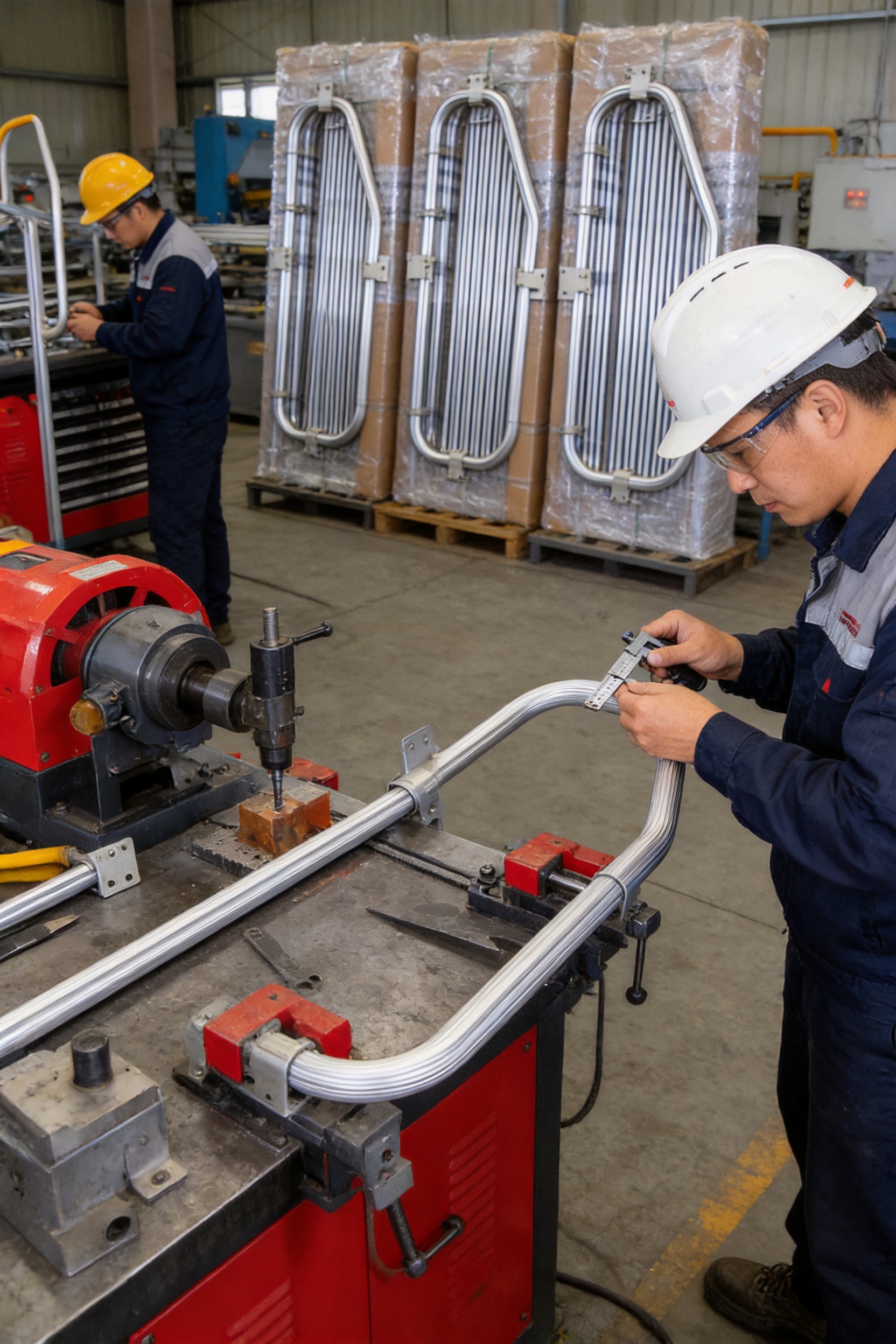
The reliability of a fire truck handrail depends heavily on the manufacturing process. A professional production system should control material procurement, cutting, forming, drilling, joining, surface treatment, assembly, inspection, and packaging.
6.1 Raw Material Procurement
Production begins with the selection and purchase of suitable aluminum alloy material. The material should meet the required dimensions and application conditions. Incoming materials should be checked for profile size, surface condition, straightness, and visible defects.
Reliable raw material control helps maintain consistent bending behavior, appearance, and finished dimensions. It also supports traceability and stable production for repeat OEM orders.
6.2 Engineering Review
Before manufacturing begins, the engineering team reviews the customer’s drawings, samples, dimensions, or vehicle requirements. This stage identifies potential conflicts with ladder steps, vehicle panels, doors, equipment compartments, and mounting structures.
The engineering review may include:
• Confirmation of overall length and curvature.
• Review of mounting point positions.
• Assessment of clearance around the ladder and vehicle body.
• Selection of suitable profile dimensions.
• Confirmation of surface and assembly requirements.
• Preparation of production drawings or process instructions.
This early review reduces the risk of dimensional errors and helps the customer confirm that the handrail will fit the intended vehicle before mass production.
6.3 Precision Cutting
Aluminum sections are cut according to the approved design. Accurate cutting is necessary for correct overall dimensions and clean connections. The ends should be prepared properly to avoid burrs, deformation, or uneven joints.
Production equipment and inspection tools should be selected according to the required accuracy and order volume. Repeatable cutting improves consistency among multiple handrails supplied for the same vehicle model.
6.4 Controlled Bending
Bending is a critical step for curved handrails. The process must control the radius, angle, alignment, and surface condition. Excessive force or unsuitable tooling may cause flattening, wrinkling, cracking, or visible marks on the profile.
Experienced technicians select suitable forming methods and tooling for the material and geometry. Trial samples may be produced for complex shapes. The sample can be checked against the approved drawing or vehicle structure before regular production proceeds.
6.5 Drilling and Bracket Processing
Mounting holes and bracket features must be positioned accurately. Incorrect hole spacing can make installation difficult and may force technicians to modify the vehicle on site. Controlled drilling and fixture use improve repeatability and reduce assembly problems.
Bracket edges should be finished to remove sharp burrs. The final structure should distribute loads effectively and maintain adequate clearance from the ladder and surrounding components.
6.6 Assembly and Joining
Where the design includes several components, assembly must follow defined procedures. Joining methods may include mechanical fastening, bracket connection, or other approved techniques. The assembly should be aligned before final tightening or joining.
Consistent assembly is essential for paired handrails. The left and right sides should have matching geometry when the vehicle design requires symmetrical access. The finished components should be checked for twist, uneven spacing, and misalignment.
6.7 Surface Finishing
Surface finishing improves appearance and helps protect the product during service. The finish should be uniform and free from obvious scratches, contamination, sharp transitions, or incomplete treatment.
For fire truck equipment, the surface should also be practical to clean. Smooth surfaces reduce the accumulation of dirt, oil, dust, and firefighting residue. A cleanable finish supports vehicle appearance and routine maintenance.
6.8 Final Inspection
Final inspection should verify the product against the approved specifications. Typical inspection points include:
• Overall length and key dimensions.
• Bend angle and radius.
• Hole position and bracket alignment.
• Surface quality and edge condition.
• Assembly tightness and structural appearance.
• Compatibility with the customer’s installation requirements.
• Packaging protection for transportation.
Quality certification and process control provide additional confidence for customers purchasing fire truck equipment. The manufacturer described in the supplied company information has passed GB/T 19001-2016 quality certification and applies control from raw material procurement through final delivery. This type of quality management approach is valuable for OEM and ODM customers requiring repeatable supply.
7. Manufacturing Strengths of an Experienced Fire Equipment Supplier
For a fire truck builder or distributor, supplier capability extends beyond the individual product. A reliable partner should understand vehicle integration, respond efficiently to technical questions, maintain consistent quality, and support customization.
7.1 Experience in Fire Protection Accessories
A manufacturer focused on fire protection accessories is more likely to understand the practical requirements of emergency vehicles. Relevant experience may include roller shutters, equipment stowage systems, ladder components, boarding systems, nozzles, hose cannons, demolition tools, breathing apparatus components, cab doors, and plastic tool parts.
This broader product knowledge helps the supplier consider how a ladder handrail interacts with other fire truck equipment. It also makes it easier for customers to coordinate multiple components through one experienced source.
7.2 Complete Production Process
A complete production process reduces dependence on uncontrolled outsourcing and improves coordination between engineering, manufacturing, inspection, and delivery. It allows the supplier to manage product consistency more effectively.
For custom handrails, production control is especially important because the product may have unique dimensions and cannot simply be replaced with a standard catalog item. Process ownership helps ensure that the approved design is transferred accurately into the final product.
7.3 Professional Research and Development
A professional research and development team can support more than simple dimensional changes. It can help optimize structural layout, improve mounting arrangements, solve clearance problems, and adapt products to changing customer needs.
Continuous research and development also supports improvements in manufacturing efficiency, environmental performance, material utilization, and product functionality. For international customers, the ability to develop solutions for different application scenarios is an important advantage.
7.4 OEM and ODM Support
OEM customers may require a product manufactured according to their own drawings, brand standards, vehicle models, or assembly procedures. ODM customers may need engineering assistance to develop a product based on a general performance requirement.
A capable supplier can support both approaches by offering design review, sample development, drawing confirmation, production, inspection, and technical communication. This flexibility reduces the workload for vehicle manufacturers and allows products to be integrated into different fire apparatus programs.
7.5 Stable Supply and Cost Control
Stable production planning and scientific manufacturing processes can help reduce waste, delays, and unnecessary rework. Efficient production may also improve cost performance, which is important for fleet projects and repeated vehicle orders.
Competitive pricing should not be achieved by reducing material quality or eliminating inspection. The better approach is to improve process efficiency, standardize repeat operations, optimize material use, and maintain effective quality control.
7.6 Technical Support and Communication
Custom vehicle components require clear communication. The supplier should be able to discuss dimensions, drawings, mounting methods, application conditions, and delivery requirements. Responsive communication helps identify problems before production begins.
Dedicated customer service is particularly valuable for overseas buyers who may need assistance with technical confirmation, packaging, documentation, and installation coordination. Global technical support can make the purchasing process more efficient and reduce misunderstandings.
8. Installation and Maintenance Recommendations
Correct installation is essential for achieving the intended performance of an aluminum ladder handrail. Even a well-manufactured product may not function properly if it is installed at the wrong height, connected to a weak structure, or forced into position.
8.1 Confirm the Installation Area
Before installation, the technician should verify the ladder dimensions, step position, mounting points, vehicle body clearance, and nearby equipment. The handrail should be placed according to the approved drawing or installation instructions.
8.2 Avoid Forced Alignment
The handrail should fit naturally at the designated mounting points. Excessive force, bending during installation, or drilling unapproved holes may create stress and reduce the quality of the assembly. If the part does not fit, the cause should be investigated before modification.
8.3 Use Suitable Fasteners
Fasteners should be compatible with the handrail material and the vehicle structure. Where different metals are connected, suitable isolation or corrosion-control measures may be required. Fasteners should be tightened according to the vehicle manufacturer’s procedures.
8.4 Inspect Before Vehicle Delivery
After installation, the handrail should be checked for movement, alignment, clearance, sharp edges, and connection security. Firefighters or operators should be able to grip the rail comfortably while climbing the ladder in normal protective equipment.
8.5 Clean Regularly
Routine cleaning removes dust, road salt, firefighting residue, oil, and other contaminants. A mild cleaning method is generally preferable. Abrasive tools or unsuitable chemicals should be avoided if they may damage the surface finish.
8.6 Inspect During Vehicle Maintenance
Maintenance personnel should inspect the handrail and its brackets during scheduled vehicle servicing. Particular attention should be paid to loose fasteners, deformation, scratches, cracks, unusual movement, and contact with other vehicle components.
Any damaged or severely deformed part should be evaluated before continued use. Replacing a worn or damaged handrail is a straightforward way to preserve safe access to the vehicle.
9. How to Select the Right Supplier
Purchasers should evaluate more than price when selecting a supplier for fire truck ladder handrails. The product is part of a safety-related access system, and supplier reliability can influence the schedule and quality of the entire vehicle project.
9.1 Confirm Product Experience
Ask whether the supplier has experience with fire truck equipment, access ladders, storage systems, or other specialty vehicle components. Experience in related products indicates a better understanding of vehicle integration and field requirements.
9.2 Review Customization Capability
Confirm whether the supplier can customize length, curvature, brackets, hole positions, surface finish, and packaging. A supplier that only offers fixed standard sizes may not be suitable for a project involving specialized vehicle dimensions.
9.3 Evaluate Production and Inspection
Purchasers should understand how the supplier controls raw materials, bending, assembly, finishing, and final inspection. Quality certification, documented procedures, and clear inspection standards can provide additional confidence.
9.4 Consider Communication and Technical Service
Effective technical communication can prevent costly mistakes. The supplier should be able to review drawings, identify possible interference, provide samples where necessary, and respond to installation questions.
9.5 Assess Delivery and Packaging
Long or curved handrails must be packaged carefully to prevent bending, scratching, or deformation during transportation. The supplier should understand export packaging and provide adequate protection for the customer’s shipping method.
9.6 Look for Long-Term Cooperation
Fire truck manufacturers often require repeated orders for the same vehicle platform. A supplier capable of maintaining dimensions, process records, and production consistency can support long-term cooperation more effectively than a short-term fabricator.
10. Applications in Different Emergency Vehicle Projects
The aluminum ladder handrail is suitable for many fire and rescue vehicle configurations. Its final design should always be adapted to the vehicle and the intended operation.
10.1 Municipal Fire Engines
Municipal fire engines require fast access to hoses, pumps, ladders, tools, and roof-mounted equipment. A secure rear handrail supports routine operations and emergency deployment in urban environments.
10.2 Airport Rescue and Firefighting Vehicles
Airport rescue vehicles are large, equipment-intensive platforms that may require access to elevated compartments and roof areas. Aluminum handrails can help provide lightweight access support while resisting outdoor exposure.
10.3 Industrial Fire Trucks
Industrial fire trucks may operate near chemical plants, warehouses, energy facilities, and manufacturing sites. Their equipment arrangement is often customized, making vehicle-specific handrail dimensions especially important.
10.4 Foam and Water Tender Vehicles
Foam and water tender vehicles carry large tanks and extensive pumping equipment. A customized handrail can improve access to upper platforms, tank inspection areas, and rear equipment zones without adding unnecessary weight.
10.5 Technical Rescue Vehicles
Technical rescue vehicles carry specialized tools and may have complex external storage layouts. The handrail must be positioned carefully so that it improves access without blocking compartments or rescue equipment.
10.6 Special-Purpose Emergency Platforms
Some emergency vehicles are developed for unusual industrial, environmental, or disaster-response missions. OEM and ODM customization allows the ladder handrail to be adapted to unique body shapes, platform heights, and access routes.
11. Frequently Asked Questions
Q1: What is the primary purpose of a fire truck aluminum ladder handrail?
The primary purpose is to provide a secure gripping point on both sides of a rear ladder or boarding ladder. It helps firefighters climb onto and down from the vehicle safely, especially while wearing protective clothing or carrying equipment.
Q2: Why is aluminum commonly used for this product?
Aluminum offers lightweight construction, natural resistance to rust in normal service conditions, a clean appearance, and good flexibility for cutting and bending. These characteristics make it suitable for exterior fire truck access equipment.
Q3: Can the handrail be customized for a specific fire truck?
Yes. The length, curvature, mounting position, bracket arrangement, hole position, and other details can be customized according to the truck’s dimensions, ladder structure, step location, and surrounding equipment.
Q4: What information should a customer provide for customization?
Useful information includes a technical drawing, vehicle model, ladder dimensions, step positions, overall height, mounting hole locations, photographs, required curvature, surface finish, and the available clearance around the installation area. Samples or three-dimensional data may also assist the design process.
Q5: Is an aluminum handrail suitable for outdoor fire truck use?
Yes. Aluminum is well suited to outdoor applications because it has strong resistance to atmospheric corrosion and does not develop red rust like ordinary unprotected steel. Proper installation and routine inspection are still necessary.
Q6: Does a lightweight handrail provide reliable support?
A properly designed and manufactured aluminum handrail can provide reliable support for normal climbing and stabilization. Performance depends on the selected alloy, profile, bracket design, mounting structure, connection method, and inspection quality.
Q7: Can the handrail be supplied as part of a larger fire truck equipment order?
Yes. A manufacturer with a broader fire protection equipment range may coordinate the handrail with roller shutters, equipment storage systems, ladders, nozzles, hose cannons, rescue tools, cab doors, and other vehicle components.
Q8: What quality controls should buyers request?
Buyers should request confirmation of material specifications, dimensional inspection, bend accuracy, surface quality, bracket alignment, connection inspection, packaging protection, and any applicable quality management certification. Clear inspection requirements should be agreed before production.
Q9: How should the handrail be maintained?
Maintenance generally includes regular cleaning, inspection of mounting points and fasteners, checking for deformation or cracks, and confirming that the handrail remains secure and unobstructed. Damaged components should be repaired or replaced promptly.
Q10: Can an overseas customer order an OEM or ODM product?
Yes. OEM and ODM services can support international fire truck manufacturers, distributors, and fleet projects. The process normally includes technical communication, drawing review, sample or prototype confirmation, production, inspection, packaging, and delivery coordination.
12. Conclusion
The fire truck aluminum ladder handrail is a small but important component of a safe and functional emergency vehicle. Installed on both sides of a rear or boarding ladder, it supports firefighters during rapid access, equipment handling, and elevated operations. Its performance depends on more than material selection. Correct dimensions, smooth curvature, secure mounting, suitable surface finishing, accurate production, and careful inspection are all essential.
Aluminum alloy provides a strong combination of low weight, rust resistance, attractive appearance, and customization flexibility. Compared with many conventional steel or universal fixed-size alternatives, it can better support weight-sensitive vehicle designs, reduce corrosion-related maintenance, and integrate with modern fire truck structures.
The product can be customized according to vehicle length, height, ladder step position, mounting arrangement, surrounding equipment, and access requirements. This makes it suitable for municipal fire engines, airport rescue vehicles, industrial fire trucks, foam tenders, water tankers, technical rescue vehicles, and other specialty emergency platforms.
For purchasers, the most important consideration is to select a manufacturer with relevant fire equipment experience, complete production capabilities, engineering support, reliable quality control, and responsive OEM or ODM service. A supplier with professional technical expertise, advanced production facilities, a complete manufacturing process, GB/T 19001-2016 quality certification, and a wider range of fire truck components can provide more than a single product. It can become a dependable partner for vehicle integration and long-term project supply.
With proper design, manufacturing, installation, and maintenance, an aluminum ladder handrail can provide durable support and contribute to safer, more efficient fire truck operations for many years.
References
1. General principles of fire apparatus design, access systems, and operator safety.
2. Aluminum alloy selection and corrosion-resistance practices for outdoor equipment.
3. Quality management principles based on GB/T 19001-2016.
4. Firefighting vehicle equipment integration and emergency access design guidance.
5. Industrial metal forming, tube bending, cutting, and assembly process practices.
6. Occupational safety considerations for ladder use and elevated access operations.
7. Manufacturer-provided technical information for aluminum fire truck ladder handrails and related fire protection equipment.
Product: Fire Truck Aluminum Ladder Handrail
News
-
-
Quick Answer The right fire truck boarding ladder is a fixed, upward-folding, or rotating step assembly mounted at the rear or side of the apparatus that gives firefighters a stable, non-slip surface ...
READ MORE -
Fire truck ladder racks are roof-mounted storage and deployment systems that hold ground ladders securely in transit and let firefighters lower them to the side or rear of the apparatus in seconds. ...
READ MORE -
Two minutes into a working fire, a crew stands in front of a locked steel security door with a crowbar that is too short to pull with both hands. Nothing about the tool is broken. It was simply speci...
READ MORE -
It is 02:40, the truck is backed into the bay, and the rear compartment shutter stops about thirty centimetres up and will not move. Inside are the rescue tools for the next call. That is the moment ...
READ MORE -
Key Takeaway The right fire truck boarding ladder comes down to matching the mounting style, ground clearance, and material to your truck class: fixed ladders suit trucks with no clearance limits, f...
READ MORE
Hey! Interested in staying in the loop? Sign up for our updates.
WE WON'T SPAM YOU, PINKY PROMISE.

Tianchang Jinlv Fire Equipment Co., Ltd.
Copyright © Tianchang Jinlv Fire Equipment Co., Ltd. All rights reserved. Custom Fire Truck Equipment Supplier Fire Apparatus Parts Factory
