

 en
 English
 русский
 Español
 عربى

Specification meetings usually park the ladder rack near the bottom of the option sheet, a few lines above the license plate bracket. That is also why ladder racks become the complaint in year three:...
READ MORE
Reinforced Electric Specialty Vehicle Roller Shutters: Advanced Access, Protection, and Storage for Fire Apparatus
2026.09.13
Content
- 1 1. The Role of Roller Shutters in Specialty Vehicle Design
- 2 2. High-Strength Aluminum Alloy Door Panels
- 3 3. Corrosion-Resistant Surface Protection
- 4 4. Smooth and Agile Electric Operation
- 5 5. Electrical System Compatibility
- 6 6. Customizable Dimensions and Structural Combinations
- 7 7. Advantages Compared with Basic Roller Shutter Designs
- 8 8. Manufacturing Quality and Process Control
- 9 9. Design Considerations for Fire Truck Applications
- 10 10. Installation and Maintenance Guidance
- 11 11. Applications Beyond Fire Trucks
- 12 12. OEM and ODM Cooperation
- 13 13. Why Manufacturing Experience Matters
- 14 14. Selection Checklist for Buyers
- 15 15. Frequently Asked Questions
- 15.1 Q1: What materials are used for the roller shutter panels?
- 15.2 Q2: Can the shutter dimensions be customized?
- 15.3 Q3: Which motor voltages are available?
- 15.4 Q4: Are lighting and sensors available?
- 15.5 Q5: How does the shutter resist outdoor conditions?
- 15.6 Q6: Is the product suitable for fire truck equipment compartments?
- 15.7 Q7: Does the shutter require significant side clearance?
- 15.8 Q8: What helps reduce operating noise?
- 15.9 Q9: Can customers choose the color?
- 15.10 Q10: What information should be submitted for a quotation?
- 15.11 Q11: Can the product be used for OEM or ODM projects?
- 15.12 Q12: What is the recommended maintenance approach?
- 16 16. Conclusion
- 17 References
- 18 Product: Reinforced Electric Specialty Vehicle Roller Shutters
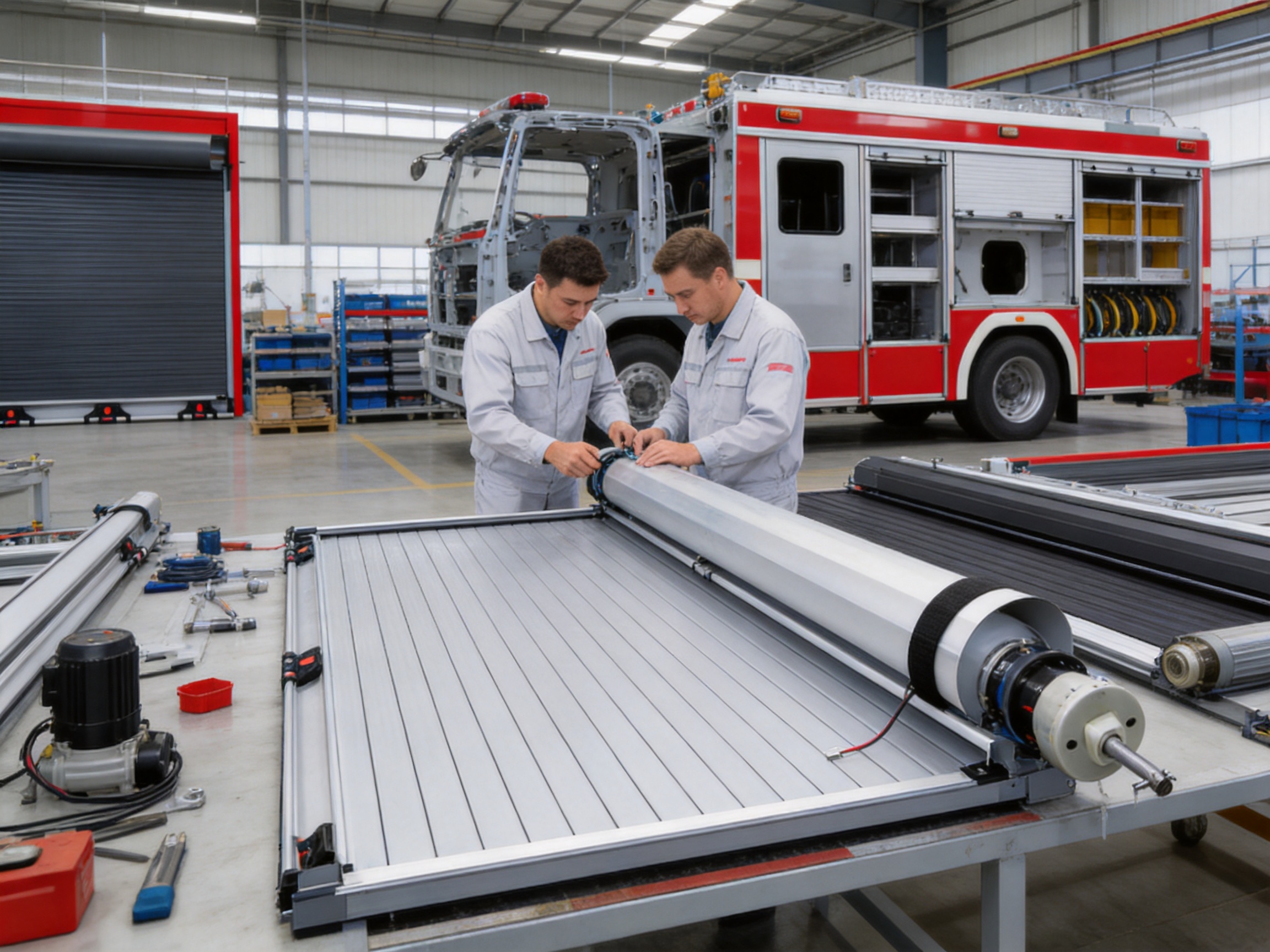
Specialty vehicles require access systems that perform reliably under demanding conditions. Fire trucks, rescue vehicles, emergency response units, mobile command vehicles, and other service platforms frequently operate in rain, dust, heat, vibration, confined spaces, and high-pressure situations. Their equipment compartments must remain secure during travel while also allowing firefighters and operators to retrieve tools quickly and safely. A roller shutter is therefore much more than a simple door. It is an important structural, protective, and operational component of the vehicle.
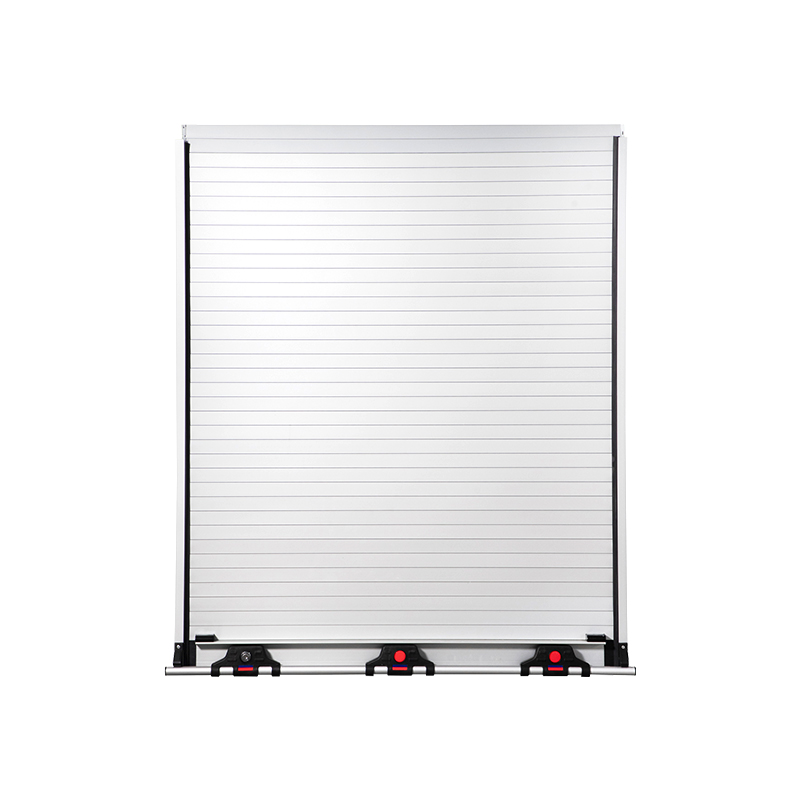
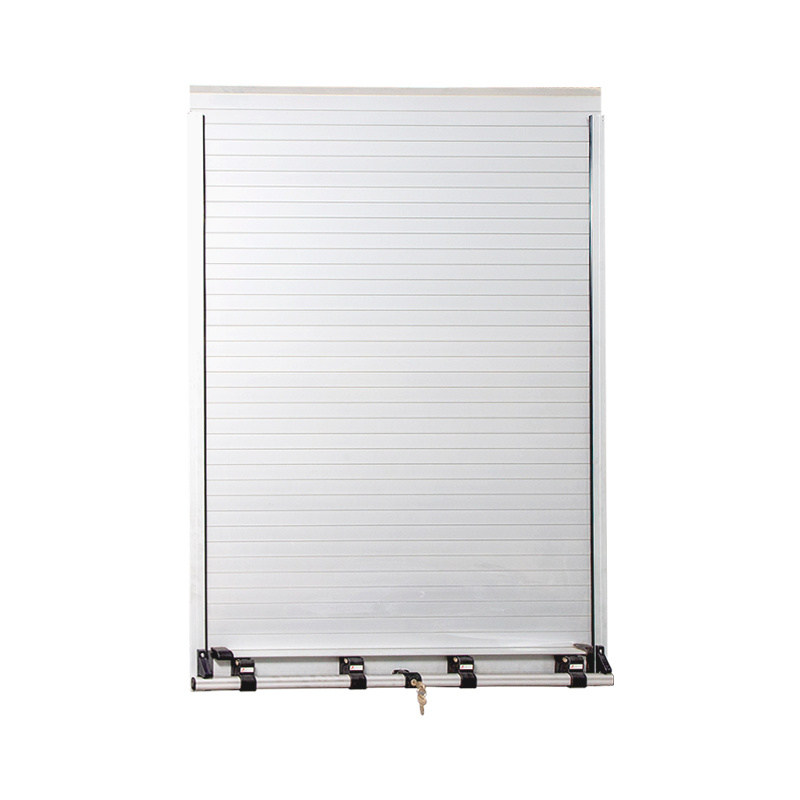
Reinforced electric specialty vehicle roller shutters are designed to meet these requirements through a combination of high-strength aluminum alloy construction, corrosion-resistant surface treatment, dependable electric drive systems, precision-finished tracks, flexible rollers, and customizable structural configurations. The product described in this article is developed for specialty vehicle applications where durability, smooth operation, compact installation, and appearance are all important.
Unlike a conventional hinged door, a roller shutter moves vertically and stores in a compact roll above or near the equipment opening. This configuration preserves valuable side-wall space, reduces the clearance required beside the vehicle, and supports efficient compartment organization. When equipped with an electric motor, the shutter can be operated smoothly with reduced manual effort, which is particularly valuable when personnel are wearing protective clothing or carrying equipment.
The product can be configured according to the customer’s opening width, height, compartment layout, electrical system, and operating environment. Door panel styles, door heads, tracks, rain gutters, sliders, connection methods, and control-related components can be selected according to project requirements. This flexibility makes the roller shutter suitable for both new vehicle production and replacement or upgrade projects.
1. The Role of Roller Shutters in Specialty Vehicle Design
Fire apparatus and rescue vehicles are mobile workstations. Every external compartment must perform several functions at the same time. It must protect valuable equipment, maintain a clean and organized appearance, resist environmental exposure, and allow fast access during emergency operations. The door system must also occupy as little space as possible and avoid creating hazards around the vehicle.
Roller shutters are well suited to these requirements because their panels travel along dedicated tracks and coil into a compact assembly. In comparison with outward-swinging doors, they do not require a large open area beside the vehicle. This is useful at accident scenes, narrow streets, industrial facilities, parking areas, and other locations where space is limited.
In a fire truck equipment compartment, the shutter may be opened and closed many times during training, inspection, maintenance, and emergency response. Repeated operation places stress on the door panels, rollers, tracks, balancing system, drive mechanism, and bearings. A robust design must therefore combine strength with controlled movement. A door that is strong but difficult to operate can slow down personnel, while a door that is easy to move but poorly protected may have a short service life.
The reinforced electric design addresses both concerns. High-toughness aluminum alloy blades provide a durable barrier, while the electric drive system and balancing structure support smooth movement. The result is an access solution that combines mechanical protection with operational convenience.
2. High-Strength Aluminum Alloy Door Panels
The door panels are manufactured from high-strength, high-toughness, corrosion-resistant aluminum alloy. Depending on the application, the construction may use a double-layer or single-layer blade configuration. This allows the product to be matched to different requirements for strength, weight, appearance, and compartment use.
Aluminum alloy is particularly suitable for specialty vehicle roller shutters because it offers a favorable balance between structural performance and weight. A heavy door can increase vehicle load and place additional stress on mounting structures. A properly engineered aluminum panel helps reduce unnecessary weight while maintaining the rigidity required for routine use and transport conditions.
The reinforced panel structure is designed to resist common forms of damage encountered by emergency vehicles. These include accidental impacts from equipment, contact with nearby objects, scratches caused by tools, and exposure to water and road contaminants. The product description specifically emphasizes resistance to impact, scratching, and water penetration, making it suitable for external vehicle compartments that must remain protected in changing environments.
High toughness is also important because fire apparatus may be used in demanding locations where the door is exposed to vibration, temperature changes, and repeated handling. Toughness helps the panel tolerate operational stress without becoming excessively brittle. It contributes to a more dependable service life when the shutter is correctly installed, adjusted, and maintained.
The use of aluminum alloy also supports a clean and professional appearance. The available finishes and colors include aluminum, red, and carbon gray. These options allow the roller shutter to coordinate with the vehicle body, emergency-service graphics, compartment trim, and overall fleet identity.
Double-Layer and Single-Layer Options
Different vehicle applications have different priorities. A double-layer blade may be selected when the project requires an enhanced reinforced structure or a particular appearance. A single-layer blade may be suitable when weight, available installation space, or a specific compartment design is the primary consideration.
The ability to select between structural configurations is an advantage over one-style-only products. Instead of forcing every vehicle to use the same panel design, the system can be adapted to the dimensions and conditions specified by the customer. This is especially useful for manufacturers and integrators that build several vehicle models or equipment layouts.
Selection should consider the compartment opening, expected usage frequency, equipment weight, mounting arrangement, environmental exposure, and electrical system. The final configuration can be confirmed through technical communication and dimensional review before production.
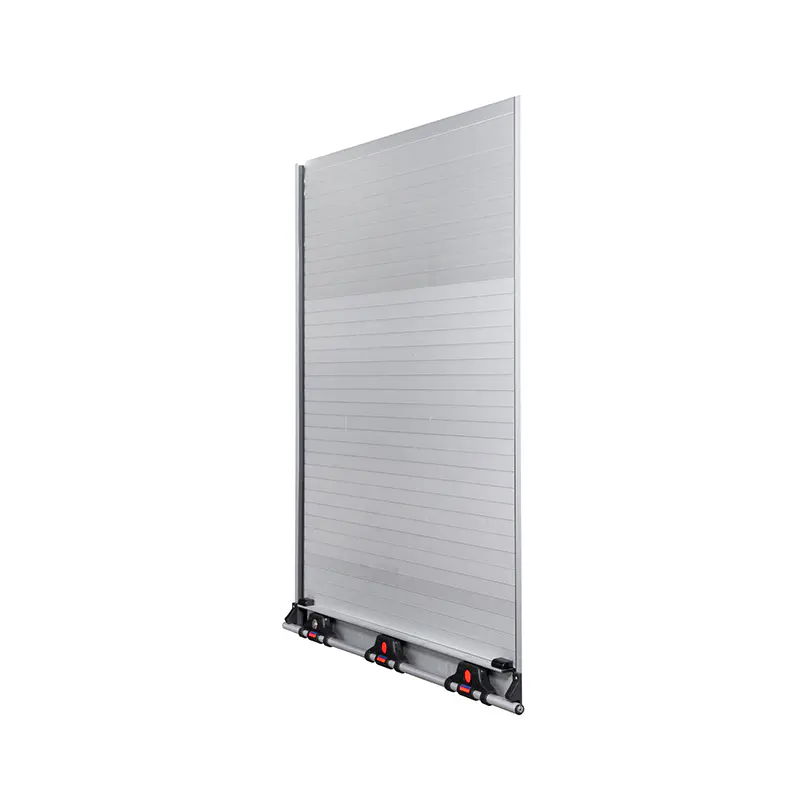
Reinforced Electric Specialty Vehicle Roller Shutters
3. Corrosion-Resistant Surface Protection
Specialty vehicle roller shutters are frequently exposed to rain, humidity, road spray, dust, cleaning agents, sunlight, and temperature variation. A durable base material is important, but surface treatment also has a major effect on long-term appearance and protection.
The product can undergo processes such as electrophoresis, oxidation, and spraying. These processes are intended to improve weather resistance, anti-aging performance, rain resistance, and corrosion resistance. Together, they help the shutter maintain its functional and visual qualities during long-term outdoor service.
Electrophoresis
Electrophoresis is a controlled coating process used to create a consistent protective layer on a metal surface. When properly applied, it can provide uniform coverage and help protect areas that may be difficult to coat evenly through simpler methods. Uniformity is valuable for roller shutter blades, tracks, and related components because the system contains multiple surfaces, edges, and contact areas.
A consistent protective coating can also support a more stable appearance across a large number of door panels. This is important for fire truck manufacturers, fleet operators, and public-service organizations that require a professional and consistent finish.
Oxidation Treatment
Oxidation treatment can improve the surface properties of aluminum components. It may contribute to increased surface durability and improved resistance against environmental exposure. The treatment is especially relevant for aluminum alloy components used on vehicle exteriors, where the surface must withstand regular cleaning and contact with moisture.
Spraying and Color Selection
Spraying provides additional flexibility for appearance and project matching. The available colors include aluminum, red, and carbon gray. Color selection may be based on the vehicle body, customer preference, fleet standards, or the visual identification requirements of an emergency-service organization.
The combination of surface treatment processes is an important advantage over untreated or minimally protected components. Basic shutters may function when new but can lose appearance or develop surface problems more quickly when continuously exposed to outdoor conditions. A treated aluminum alloy shutter is better positioned to support a long service life, provided that the installation and maintenance procedures are appropriate.
4. Smooth and Agile Electric Operation
Fast and controlled access is essential in emergency equipment compartments. Personnel may need to open a shutter while wearing gloves, carrying other tools, or working under time pressure. An electric operating system reduces the physical effort needed to raise and lower the door and provides a more consistent movement pattern than irregular manual handling.
The roller shutter uses a reliable balancing system, a powerful drive mechanism, finely crafted tracks, and flexible rollers. These components work together to guide the door panel through its operating path. The balancing system helps distribute the panel load, while the drive mechanism supplies the force required for movement. Tracks guide the shutter and maintain alignment, and rollers support flexible travel through the curved and straight sections of the system.
When these elements are correctly matched, the shutter can open and close smoothly and agilely. Smooth movement helps reduce sudden loads on the vehicle structure and minimizes the risk of the panel catching or shifting during operation. It can also improve user confidence because operators can control the door with less effort.
Precision Bearings and Noise Reduction
Noise can be an overlooked issue in vehicle equipment systems. Excessive rattling or grinding may indicate poor alignment, insufficiently precise components, or excessive friction. It can also make the vehicle less comfortable for operators and may be undesirable in residential areas, public facilities, or nighttime response operations.
The product uses precision bearings to minimize operating noise. Lower noise is supported by the complete mechanical system, including the bearings, tracks, rollers, balancing structure, and drive mechanism. Precision components help maintain controlled rotation and reduce unnecessary friction during repeated use.
Noise reduction is not only a comfort feature. It may also help operators notice abnormal sounds more easily. If a normally smooth shutter begins to produce unusual noise, maintenance personnel can investigate the track, rollers, fasteners, or drive system before a small issue becomes a major operational problem.
5. Electrical System Compatibility
The roller shutter is available with DC 12V, DC 24V, or AC 220V electric motor options. This range supports different specialty vehicle platforms and installation environments. Many emergency vehicles use low-voltage electrical systems, while certain workshop, industrial, or stationary applications may use an AC power supply.
The selection of motor voltage should be based on the vehicle’s existing electrical architecture, available power supply, control equipment, installation space, and project safety requirements. A properly matched motor supports reliable operation and reduces the risk of electrical incompatibility.
Light strips and sensors are available in 12V or 24V configurations. Lighting can improve visibility inside equipment compartments, especially during night operations or low-light emergency scenes. Sensors may support operational monitoring or integration with vehicle control arrangements, depending on the selected configuration and customer requirements.
Because emergency vehicle layouts vary considerably, the electrical arrangement should be confirmed during the technical design stage. Important considerations include cable routing, protection from moisture, switch location, control access, motor mounting, power capacity, and service accessibility. Integrating these details early helps create a cleaner and more reliable final installation.
| Item | Available Specification | Application Consideration |
|---|---|---|
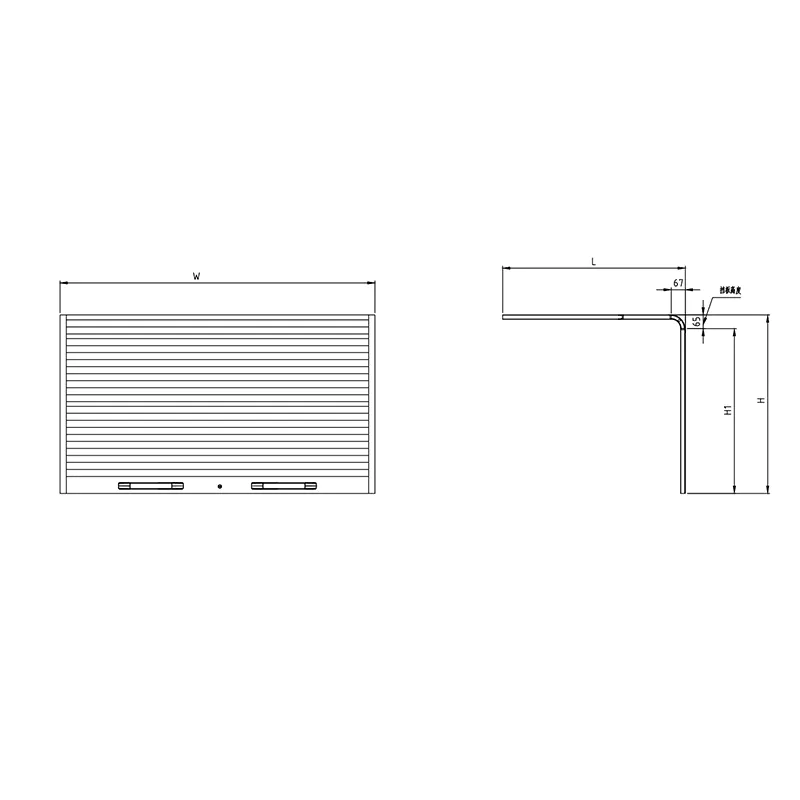
| Opening width W | Customizable | Determined by the vehicle compartment and equipment layout |
| Opening height H | Customizable | Matched to the available vertical installation space |
| Light strips and sensors | 12V or 24V | Selected according to the vehicle electrical system |
| Door panel width | 35 mm | Supports a compact and practical panel arrangement |
| Electric motor | DC 12V, DC 24V, or AC 220V | Selected according to the power supply and application |
| Color | Aluminum, red, or carbon gray | Coordinated with vehicle appearance and project requirements |
6. Customizable Dimensions and Structural Combinations
One of the most important features of a specialty vehicle roller shutter is the ability to fit the actual compartment opening. The width W and height H are customizable according to customer-provided dimensions. This is essential because fire trucks and rescue vehicles are not built around a single universal compartment size.
Vehicle manufacturers may require different opening proportions for hose storage, breathing apparatus, hydraulic rescue tools, ladders, nozzles, extinguishers, medical supplies, or command equipment. A shutter that is too narrow may restrict access, while a shutter that is too large may interfere with vehicle structure, roof equipment, lighting, or adjacent compartments.
The company offers different blades, door heads, tracks, rain gutters, sliders, and connection methods with different performance characteristics. These options allow the system to be configured around the specific geometry of the vehicle. The customer can select a suitable combination based on available space, required protection, operation frequency, appearance, and installation method.
Customization also supports OEM and ODM projects. Vehicle manufacturers and equipment integrators may need a shutter that matches their own body design, control arrangement, mounting method, or production sequence. By confirming dimensions and application conditions in advance, the supplier can develop a configuration that is more compatible with the customer’s overall vehicle system.
Door Heads and Tracks
The door head is an important part of the upper shutter assembly. It may house or support the rolled panel, drive system, balancing components, and related structural parts. Its dimensions and arrangement must be considered alongside the available space above the compartment opening.
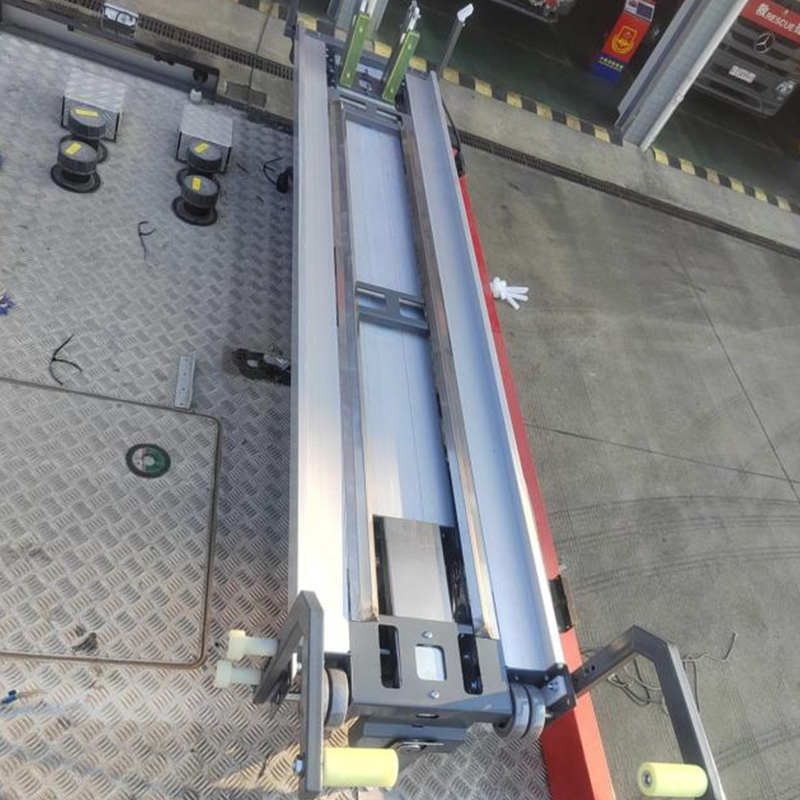
Tracks guide the door panel and help maintain stable movement. Correct track selection and installation are essential for reducing friction, preventing misalignment, and supporting a consistent seal or closure. Tracks must be positioned accurately so that the left and right sides of the door move evenly.
Rain Gutters and Water Management
Outdoor vehicle compartments require attention to water management. Rain gutters and related structural elements can help direct water away from the opening and reduce the possibility of water entering the equipment compartment. The exact design depends on the vehicle body, roofline, surrounding panels, and installation position.
Water resistance is particularly important for compartments storing electrical equipment, rescue tools, textiles, medical items, and other materials that should remain dry. The roller shutter’s protective design and selected rain-management components should be considered as part of the complete compartment system rather than as isolated features.
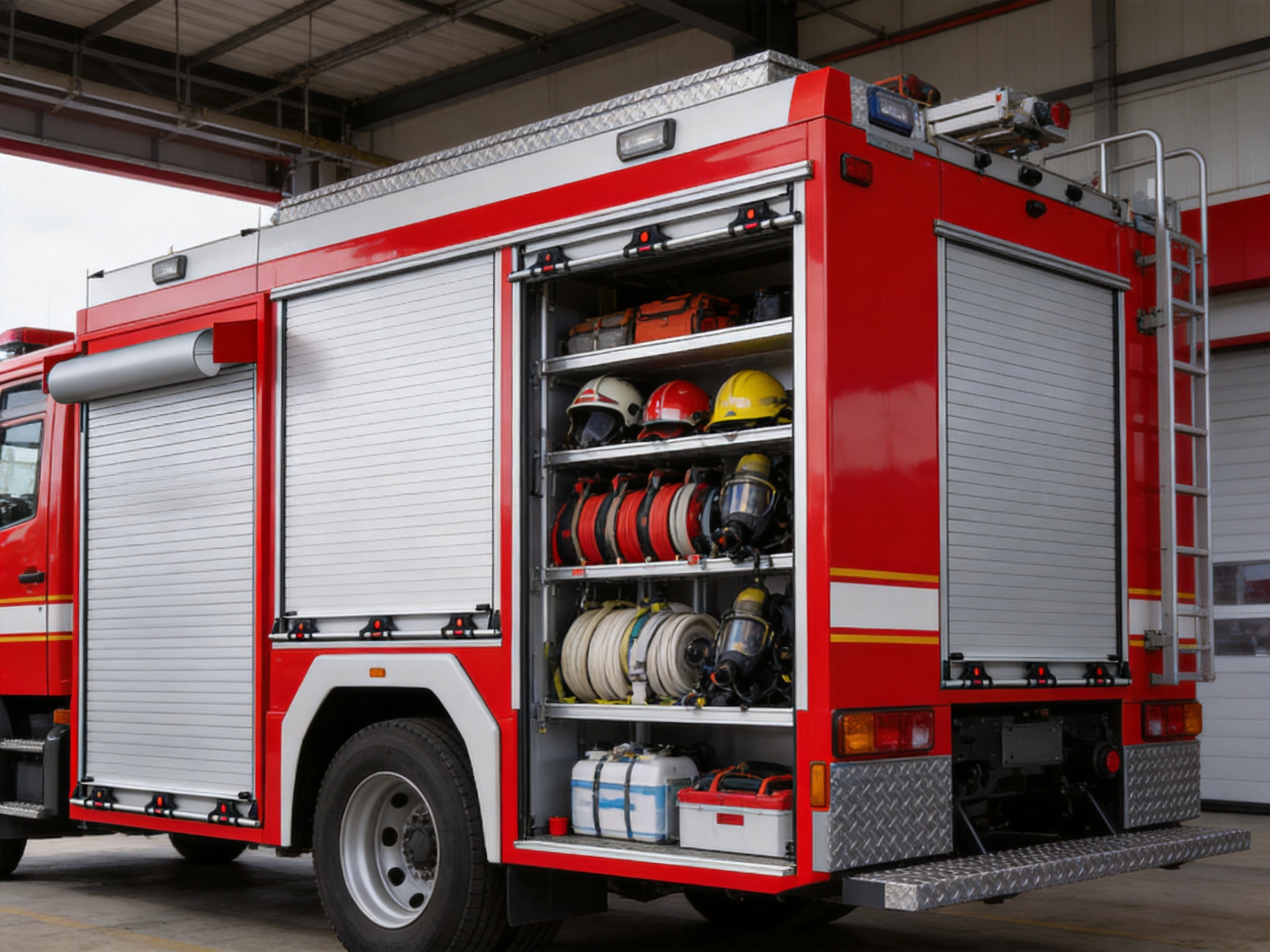
7. Advantages Compared with Basic Roller Shutter Designs
Many roller shutters may appear similar from a distance, but their performance can differ significantly according to materials, surface treatment, drive components, dimensional accuracy, and manufacturing control. Reinforced electric specialty vehicle roller shutters provide several practical advantages over basic systems.
Improved Structural Protection
The use of high-strength, high-toughness aluminum alloy blades provides a stronger and more durable barrier than lightweight panels designed only for low-demand applications. Resistance to impact and scratching helps the shutter withstand the routine contact associated with emergency equipment storage.
Better Environmental Resistance
Electrophoresis, oxidation, and spraying provide a multilayer approach to surface protection. This is more suitable for outdoor vehicle use than an untreated surface or a finish not designed for continuous exposure to moisture and sunlight.
Reduced Manual Effort
An electric motor assists with opening and closing, reducing the physical effort required from firefighters and operators. This can be particularly helpful when the user is wearing gloves, protective clothing, or breathing apparatus.
More Controlled Movement
The balancing system, drive mechanism, tracks, rollers, and bearings are designed to work as a complete operating system. This supports smoother travel than a door that depends on loosely coordinated or low-precision components.
Lower Operating Noise
Precision bearings and carefully manufactured tracks help minimize friction and unwanted noise. A quieter shutter contributes to a more professional vehicle environment and may support better maintenance awareness.
Greater Configuration Flexibility
Customizable W and H dimensions, multiple motor voltage options, different panel structures, and several colors allow the product to serve more vehicle designs. This flexibility is important for OEMs and body builders that need more than a standard catalog size.
Efficient Use of Vehicle Space
The vertical rolling action avoids the side clearance required by many hinged doors. Equipment can be accessed even when another vehicle, wall, barrier, or object is close to the side of the truck. This improves practical access at crowded emergency scenes.
8. Manufacturing Quality and Process Control
A reliable roller shutter depends not only on its design but also on how consistently it is manufactured. Small deviations in panel dimensions, track alignment, bearing installation, coating quality, or motor fitting can affect the final operating performance. For this reason, advanced production facilities and complete process control are important advantages for a specialty vehicle equipment supplier.
Tianchang Jinlv Fire Equipment Co., Ltd. was established in 2010 and has focused on fire protection accessories for approximately fifteen years. The company has developed technical experience in fire truck roller shutters, storage systems, ladders, equipment supports, nozzles, rescue components, and related products.
The company reports that it has advanced production facilities and a complete manufacturing process. Production management covers stages from raw material procurement to final product delivery. This process-based approach is important because the final shutter includes multiple components that must operate together. Consistent material selection, controlled processing, accurate assembly, and final inspection all contribute to product reliability.
Material Procurement
Material selection is the foundation of product quality. Aluminum alloy panels and related components must meet the requirements of the intended application. Materials should be checked for dimensions, surface condition, mechanical suitability, and compatibility with the selected treatment process.
Reliable procurement helps reduce variation between production batches. This is especially important for OEM projects where multiple vehicles may use the same shutter configuration over an extended production period.
Component Processing
Panel forming, track preparation, component machining, and other production steps must be carried out with attention to dimensional accuracy. The tracks and rollers need to match the panel geometry, while the door head must accommodate the selected drive and balancing arrangement.
Accurate processing helps reduce friction and simplifies installation. It can also improve interchangeability between replacement parts and support more predictable maintenance throughout the product’s service life.
Surface Treatment
Electrophoresis, oxidation, and spraying are selected according to the material and finish requirements. Surface preparation, treatment consistency, curing or drying conditions, and final appearance inspection are all important parts of the process.
Proper surface treatment supports resistance to weather, aging, rain, and corrosion. It also helps produce a consistent visual finish across the vehicle’s compartments.
Assembly and Adjustment
Assembly is more than simply connecting individual parts. The balance system, drive mechanism, tracks, rollers, and bearings must be installed in a coordinated manner. The panel must move evenly, the motor must operate within its intended load range, and the shutter must reach the correct open and closed positions.
Adjustment after assembly can help identify issues such as uneven track spacing, excessive friction, loose fasteners, or incorrect balance. These checks are important before the product is packaged and delivered to the customer.
Quality Certification
The company has passed GB/T 19001-2016 quality certification. A quality management system provides a structured framework for production control, documentation, process review, corrective action, and continual improvement. Certification does not replace application-specific testing, but it demonstrates a formal commitment to organized quality management.
For buyers, a controlled management system can make communication and procurement more reliable. It supports clearer procedures for specifications, production records, inspection, delivery, and after-sales service.
9. Design Considerations for Fire Truck Applications
When specifying a reinforced electric roller shutter for a fire truck, the first step is to define the compartment’s function. A compartment for hose reels may have different requirements from a compartment for SCBA equipment, hydraulic tools, medical supplies, or portable lighting.
The customer should provide the opening width and height, surrounding structure, available space above the opening, desired opening direction, power supply, preferred color, and expected operating frequency. It is also helpful to provide photographs, drawings, or vehicle body information when available.
The internal equipment layout should be reviewed together with the external shutter design. Shelves, pull-out trays, brackets, hose storage, and tool mounts must not interfere with the panel’s travel path. The shutter should open far enough to provide practical access while remaining clear of roof equipment, warning lights, ladders, and handrails.
Emergency personnel often work in wet or low-light conditions. The use of light strips and sensors may improve visibility and operational convenience. Their voltage must match the vehicle system, and their placement should avoid damage from stored equipment or routine cleaning.
Installation should also consider vehicle movement. Fire apparatus is exposed to vibration, acceleration, braking, uneven roads, and sometimes off-road conditions. The shutter frame must be secured to a suitable structural area, and fasteners should be selected and tightened according to the installation requirements.
10. Installation and Maintenance Guidance
Professional installation is recommended for electric specialty vehicle roller shutters. The mounting opening should be checked for dimensional accuracy, squareness, and structural strength before installation. Any irregularity can affect track alignment and panel movement.
The tracks should be installed parallel to each other and positioned according to the product’s technical requirements. Misalignment may cause rubbing, uneven movement, noise, or premature wear. The door head and motor assembly should be mounted securely, with adequate clearance for operation and service.
Electrical wiring should be protected from abrasion, water, heat, and accidental contact with stored equipment. Connections must be appropriate for the vehicle’s voltage and control system. Where sensors or light strips are installed, their cables should be routed so that they remain accessible for inspection but protected during normal compartment use.
Routine maintenance should include visual inspection of the door panels, tracks, rollers, bearings, fasteners, rain gutters, and electrical connections. Dirt, grit, or foreign objects should be removed before they interfere with the track or roller system. Unusual noise, irregular movement, delayed response, or incomplete closure should be investigated promptly.
Cleaning should use methods and materials compatible with the aluminum alloy and surface treatment. Harsh chemicals or abrasive tools may damage the finish. After operation in salty, muddy, or heavily contaminated environments, appropriate cleaning can help reduce the risk of surface deterioration.
Maintenance intervals should be adjusted according to operating frequency and environmental exposure. A shutter used daily in a busy emergency fleet may require more frequent inspection than one installed on a vehicle with occasional use. Keeping maintenance records can help identify recurring issues and support preventive replacement of wear components.
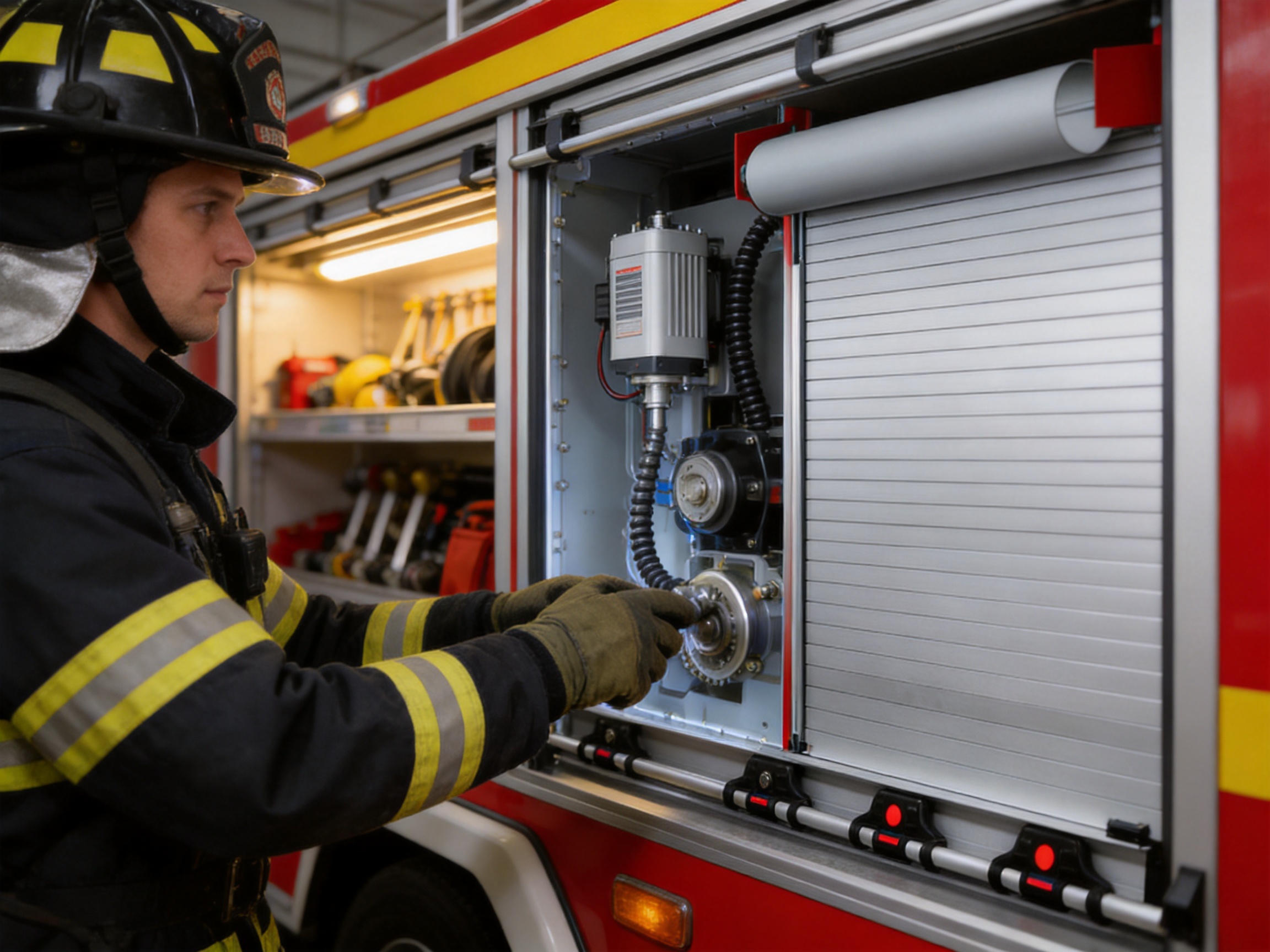
11. Applications Beyond Fire Trucks
Although fire apparatus is a primary application, reinforced electric specialty vehicle roller shutters can also be considered for other mobile or semi-mobile platforms. Rescue vehicles, emergency command vehicles, utility service trucks, airport rescue vehicles, industrial response units, municipal maintenance vehicles, and specialized transport platforms may all benefit from compact, protected access systems.
In rescue vehicles, the shutters can protect hydraulic rescue tools, cutting equipment, stabilization devices, medical supplies, and lighting systems. In mobile command vehicles, they can provide access to communications equipment, power systems, and field-support materials.
Airport rescue and industrial emergency vehicles often require durable equipment compartments that can withstand frequent cleaning and outdoor exposure. Corrosion-resistant surface treatment and customizable dimensions can help these vehicles integrate suitable storage access into their body design.
Utility and municipal service vehicles may use roller shutters to protect tools, spare parts, inspection equipment, and electrical components. The electric drive system can improve convenience for operators who open multiple compartments during a workday.
12. OEM and ODM Cooperation
Specialty vehicle manufacturers often need more than a standard product. They may require a particular width, height, panel style, motor voltage, color, track arrangement, rain gutter, or connection method. OEM and ODM cooperation allows the roller shutter to be adapted to the customer’s production requirements.
For OEM projects, the supplier should receive accurate technical data, including drawings, target dimensions, vehicle model information, electrical specifications, finish requirements, and expected quantity. Early confirmation of these details helps reduce changes during production and improves compatibility with the vehicle assembly process.
For ODM projects, the supplier’s technical team may assist with selecting a suitable structural combination. The customer can discuss the operating environment, equipment compartment purpose, expected load, access frequency, appearance, and installation limitations. The final solution can then be developed around the project’s actual needs.
The company’s research and development team has experience in the fire protection equipment field and follows changing market requirements. Continuous development is valuable because specialty vehicles increasingly require lighter materials, better organization, improved access, enhanced appearance, and more integrated electrical functions.
Global customers may also benefit from technical support and dedicated customer service during specification, production, installation, and after-sales stages. Clear communication is especially important when projects involve different vehicle standards, electrical systems, languages, or delivery schedules.
13. Why Manufacturing Experience Matters
A supplier’s experience affects both product development and practical problem solving. Since its establishment in 2010, Tianchang Jinlv Fire Equipment Co., Ltd. has focused on fire protection accessories and has developed a product range that includes roller shutters, equipment storage and mounting systems, boarding ladders, ladder racks, handrails, firefighting nozzles, fire hose cannons, demolition tools, SCBA equipment, cab doors, and plastic tool components.
This broader product knowledge can be useful when designing a complete fire truck compartment. A roller shutter does not operate independently from the rest of the vehicle. It must coexist with ladders, handrails, equipment brackets, hose systems, tools, and storage structures. Understanding related components can help support more practical compartment integration.
The company’s stated philosophy is based on honesty, innovation, quality, and gratitude. In a technical supply relationship, these principles are reflected through accurate specifications, stable product quality, responsive communication, and attention to customer requirements.
Manufacturing strength also supports cost effectiveness. Efficient production processes can reduce unnecessary waste, improve consistency, and help control the total procurement cost without reducing the required performance. For fleet projects and OEM production, predictable quality and delivery are often as important as the initial unit price.
14. Selection Checklist for Buyers
Before ordering a reinforced electric roller shutter, buyers should confirm the following technical points.
Required opening width W and height H.
Single-layer or double-layer door panel preference.
Vehicle power supply and required motor voltage.
Whether light strips or sensors are required.
Available installation depth and space above the compartment.
Desired color and surface finish.
Required rain gutters or water-management components.
Track, slider, door head, and connection requirements.
Expected operating frequency and environmental exposure.
Compatibility with shelves, drawers, brackets, and stored equipment.
Required documentation, packaging, and delivery conditions.
Providing complete information at the beginning of the project helps the supplier recommend a more suitable structural combination. It also reduces the possibility of dimensional changes after production has started.
15. Frequently Asked Questions
Q1: What materials are used for the roller shutter panels?
The panels are made from high-strength, high-toughness, corrosion-resistant aluminum alloy. They may be supplied in single-layer or double-layer blade configurations according to the application.
Q2: Can the shutter dimensions be customized?
Yes. The width W and height H are customizable according to the customer’s compartment dimensions and vehicle design. Technical drawings or accurate measurements should be provided for confirmation.
Q3: Which motor voltages are available?
The electric motor can be configured for DC 12V, DC 24V, or AC 220V. The correct option depends on the vehicle or installation power supply.
Q4: Are lighting and sensors available?
Yes. Light strips and sensors are available in 12V or 24V configurations. Their use and placement should be confirmed during the electrical and structural design stage.
Q5: How does the shutter resist outdoor conditions?
The aluminum alloy construction is combined with surface processes such as electrophoresis, oxidation, and spraying. These treatments support weather resistance, anti-aging performance, rain resistance, and corrosion resistance.
Q6: Is the product suitable for fire truck equipment compartments?
Yes. The product is designed for specialty vehicle applications, including fire truck equipment storage compartments. Its compact rolling structure, electric operation, customizable dimensions, and protective aluminum panels are suitable for many emergency vehicle layouts.
Q7: Does the shutter require significant side clearance?
No. Because the door rolls vertically rather than swinging outward, it can preserve side clearance and support access in confined areas. The vehicle must still provide sufficient space for the tracks and upper door-head assembly.
Q8: What helps reduce operating noise?
Precision bearings, finely crafted tracks, flexible rollers, and coordinated assembly help reduce friction and operating noise. Correct installation and regular maintenance are also important.
Q9: Can customers choose the color?
Available colors include aluminum, red, and carbon gray. Other project requirements should be discussed during the quotation and technical confirmation stages.
Q10: What information should be submitted for a quotation?
Customers should provide the opening width and height, vehicle type, compartment purpose, motor voltage, preferred panel structure, color, installation conditions, light or sensor requirements, quantity, and any available drawings or photographs.
Q11: Can the product be used for OEM or ODM projects?
Yes. The company provides OEM/ODM customization. Different blades, door heads, tracks, rain gutters, sliders, and connection methods can be considered according to the customer’s design and application scenario.
Q12: What is the recommended maintenance approach?
Inspect the panels, tracks, rollers, bearings, fasteners, rain gutters, motor, and electrical connections regularly. Keep the tracks clean, address unusual noise or movement promptly, and use cleaning products that are compatible with the treated aluminum surfaces.
16. Conclusion
Reinforced electric specialty vehicle roller shutters provide a practical access and protection solution for fire trucks, rescue vehicles, and other demanding specialty platforms. Their value comes from the interaction of several features: high-strength aluminum alloy panels, single-layer or double-layer construction, corrosion-resistant surface treatment, electric drive options, reliable balancing, precision bearings, flexible rollers, carefully finished tracks, and customizable dimensions.
Compared with basic roller shutter designs, this product offers stronger protection, better environmental resistance, smoother operation, lower manual effort, reduced noise, and greater integration flexibility. The vertical rolling structure also helps conserve valuable vehicle space and maintain access when side clearance is limited.
The manufacturing process is supported by advanced production facilities, process control from raw material procurement through delivery, quality management certification, technical experience, and research and development capability. These strengths are important for customers that require stable quality, customized dimensions, OEM/ODM cooperation, and long-term technical support.
For a successful project, the shutter should be selected as part of the complete vehicle system. Compartment purpose, opening dimensions, power supply, stored equipment, water management, installation structure, and maintenance access should all be considered together. When these factors are properly matched, the reinforced electric roller shutter can become a dependable part of a professional fire and rescue vehicle.
References
1. Product information supplied for reinforced electric specialty vehicle roller shutters, including dimensions, materials, finishes, electrical options, and available colors.
2. Company information supplied for Tianchang Jinlv Fire Equipment Co., Ltd., including manufacturing history, product scope, quality management, research and development, and OEM/ODM services.
3. General engineering principles for aluminum alloy components used in specialty vehicle body systems.
4. General guidance on vehicle equipment compartment design, corrosion protection, electrical integration, and preventive maintenance.
5. GB/T 19001-2016 quality management system information as identified in the supplied company materials.
Product: Reinforced Electric Specialty Vehicle Roller Shutters
News
-
-
Most roller shutter problems on fire trucks and specialty vehicles are written into the specification, not worn into the slats. A manual shutter fitted to a compartment the crew opens fifty times a s...
READ MORE -
Every firefighter has opened a compartment door after a rough response only to find nozzles, webbing, and wrenches piled on top of each other. In gloves and low light, with the pump running, that is ...
READ MORE -
A firefighter opens a compartment door after a long working fire. Inside, the thermal imaging camera has slid under a halligan bar, the hose line is twisted into a knot, and a 20 kg SCBA cylinder is ...
READ MORE -
Two pumpers of the same model can feel like two different trucks on the same call. On the first, a firefighter reaches into a compartment, releases one latch with a gloved hand, and pulls a tray far ...
READ MORE -
Two minutes into a working fire, a crew stands in front of a locked steel security door with a crowbar that is too short to pull with both hands. Nothing about the tool is broken. It was simply speci...
READ MORE
Hey! Interested in staying in the loop? Sign up for our updates.
WE WON'T SPAM YOU, PINKY PROMISE.

Tianchang Jinlv Fire Equipment Co., Ltd.
Copyright © Tianchang Jinlv Fire Equipment Co., Ltd. All rights reserved. Custom Fire Truck Equipment Supplier Fire Apparatus Parts Factory
