

 en
 English
 русский
 Español
 عربى

A builder fitting out a pumper asks one question before ordering anything: fixed deck monitor or portable cannon? The answer should follow the attack, not the catalog. A fire hose cannon earns its p...
READ MORE
Fixed Fire Cannon Systems for High-Performance Fire Protection
2026.09.17
Content
- 1 What Is a Fixed Fire Cannon?
- 2 Product Overview
- 3 Key Performance Advantages
- 4 Advantages Compared with Conventional Firefighting Nozzles
- 5 Applications in Fire Trucks and Fireboats
- 6 Industrial and Commercial Applications
- 7 Engineering and Manufacturing Strengths
- 8 Customization and OEM/ODM Support
- 9 Installation Considerations
- 10 Operation and Maintenance
- 11 How to Select the Correct Model
- 12 Why Manufacturer Experience Matters
- 13 Safety and Compliance Considerations
- 14 Q&A: Fixed Fire Cannon Selection and Use
- 14.1 What is the main purpose of a fixed fire cannon?
- 14.2 What is the difference between the PSKD10/100WB and PS10-50W-D?
- 14.3 Can the fixed fire cannon spray water mist?
- 14.4 Why is aluminum alloy used for the cannon body?
- 14.5 Can the equipment be installed on a fire truck?
- 14.6 Can it be used in petrochemical facilities?
- 14.7 Is the PS10-50W-D suitable for a small emergency vehicle?
- 14.8 What should be checked before installation?
- 14.9 Does the cannon require regular maintenance?
- 14.10 Can the manufacturer provide OEM or ODM support?
- 14.11 How should a customer choose between straight stream and spray mode?
- 14.12 What information should be included in an inquiry?
- 15 Conclusion
- 16 References
- 17 Product: Fixed Fire Cannon
Fire protection equipment must deliver dependable performance when fire conditions change rapidly, visibility is limited, and operators need to control a dangerous incident from a safe distance. Among the most practical solutions for industrial facilities, emergency vehicles, fireboats, warehouses, petrochemical sites, airports, and large public buildings is the fixed fire cannon. Designed to discharge a controlled stream of water or water mist over a substantial distance, a fixed fire cannon provides a combination of reach, flow control, directional flexibility, and operator protection that ordinary hand-held nozzles cannot match.
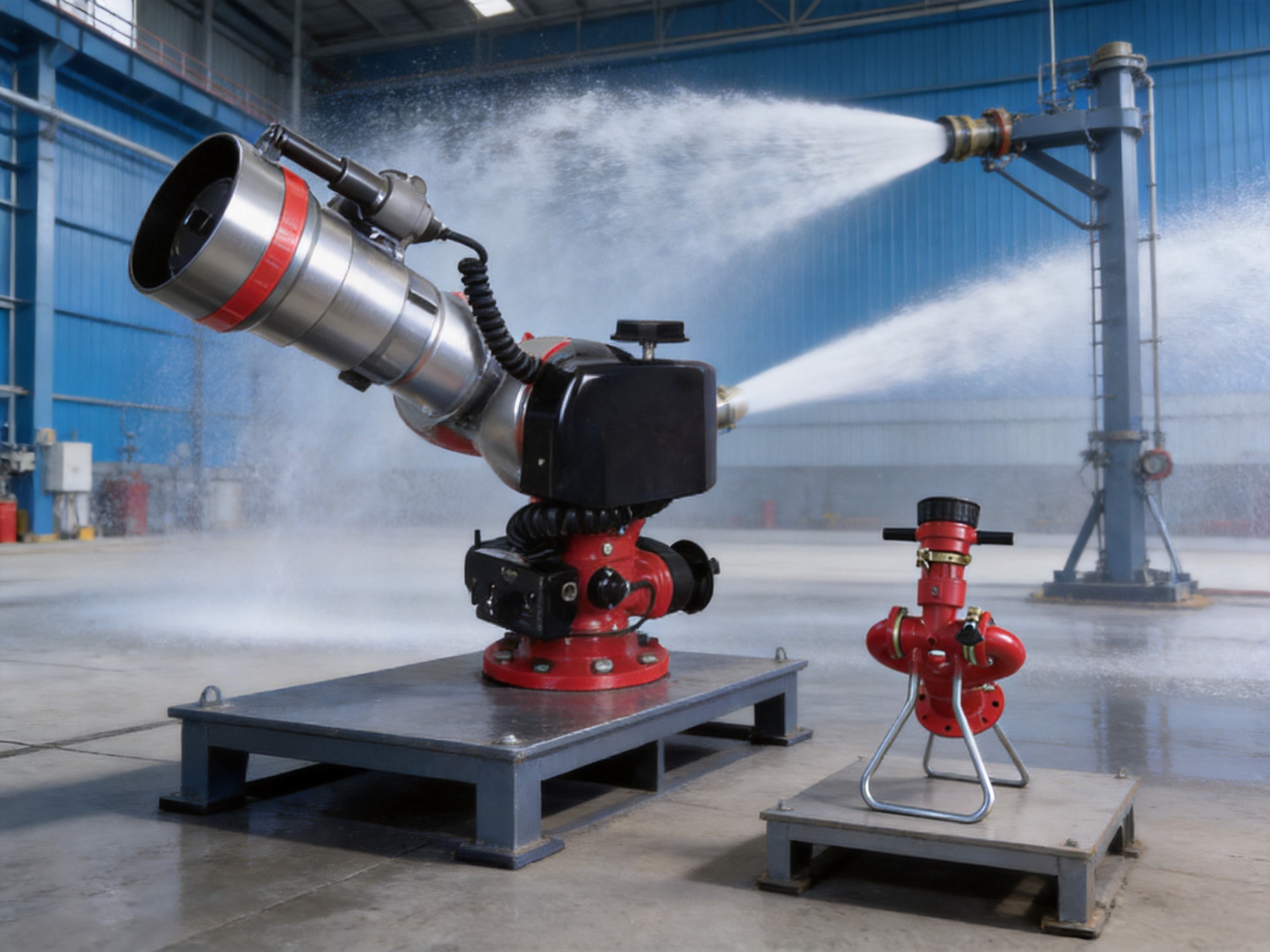
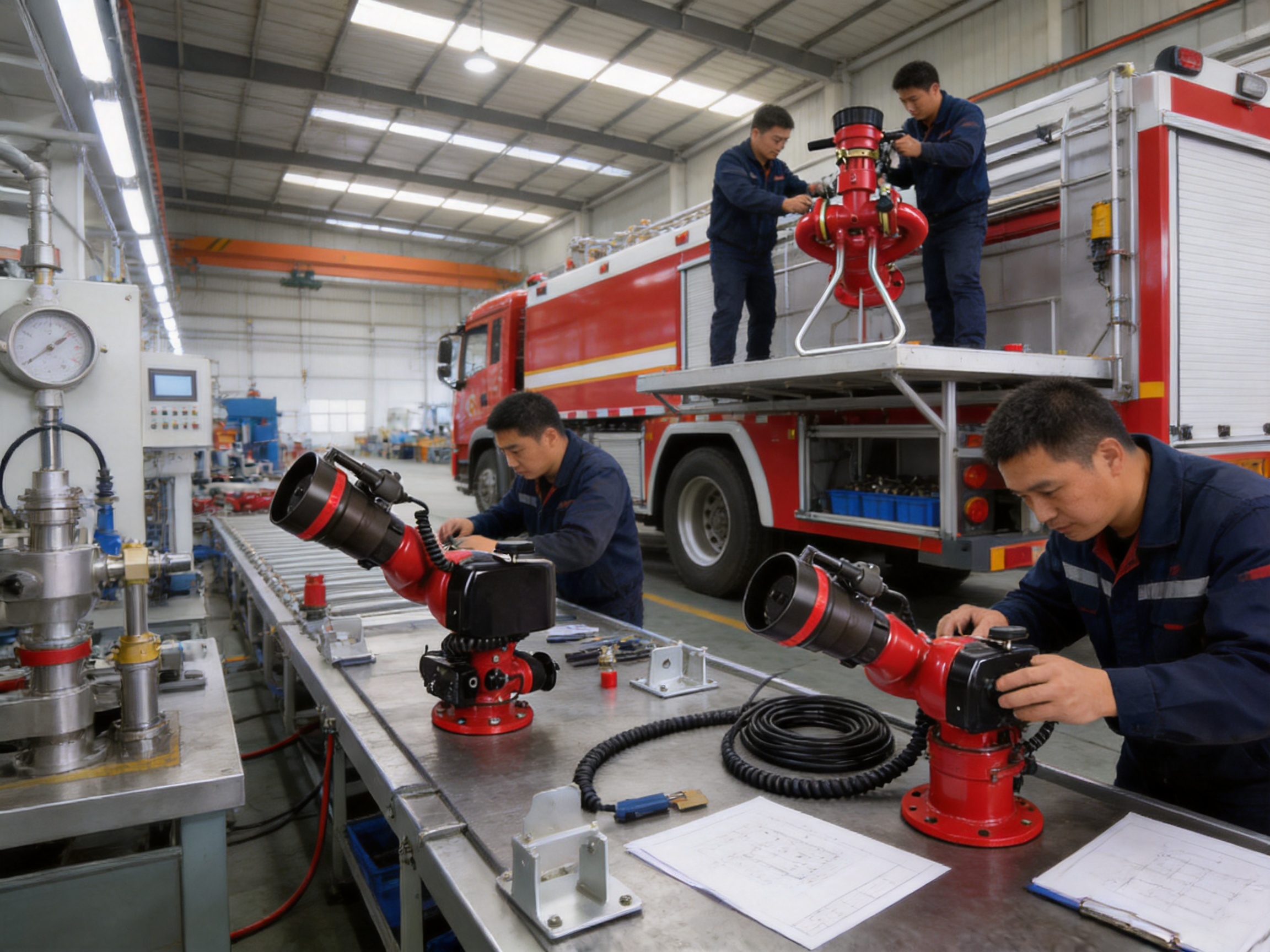
The Fixed Fire Cannon PSKD10/100WB and PS10-50W-D are engineered for applications requiring stable installation, rapid positioning, strong corrosion resistance, and reliable firefighting output. Both models use aluminum alloy construction and offer adjustable discharge patterns, including a concentrated straight stream and a wider spray mode. Their horizontal and vertical movement allows firefighters to direct water toward the fire, surrounding structures, or exposed equipment without having to approach the hazard unnecessarily.
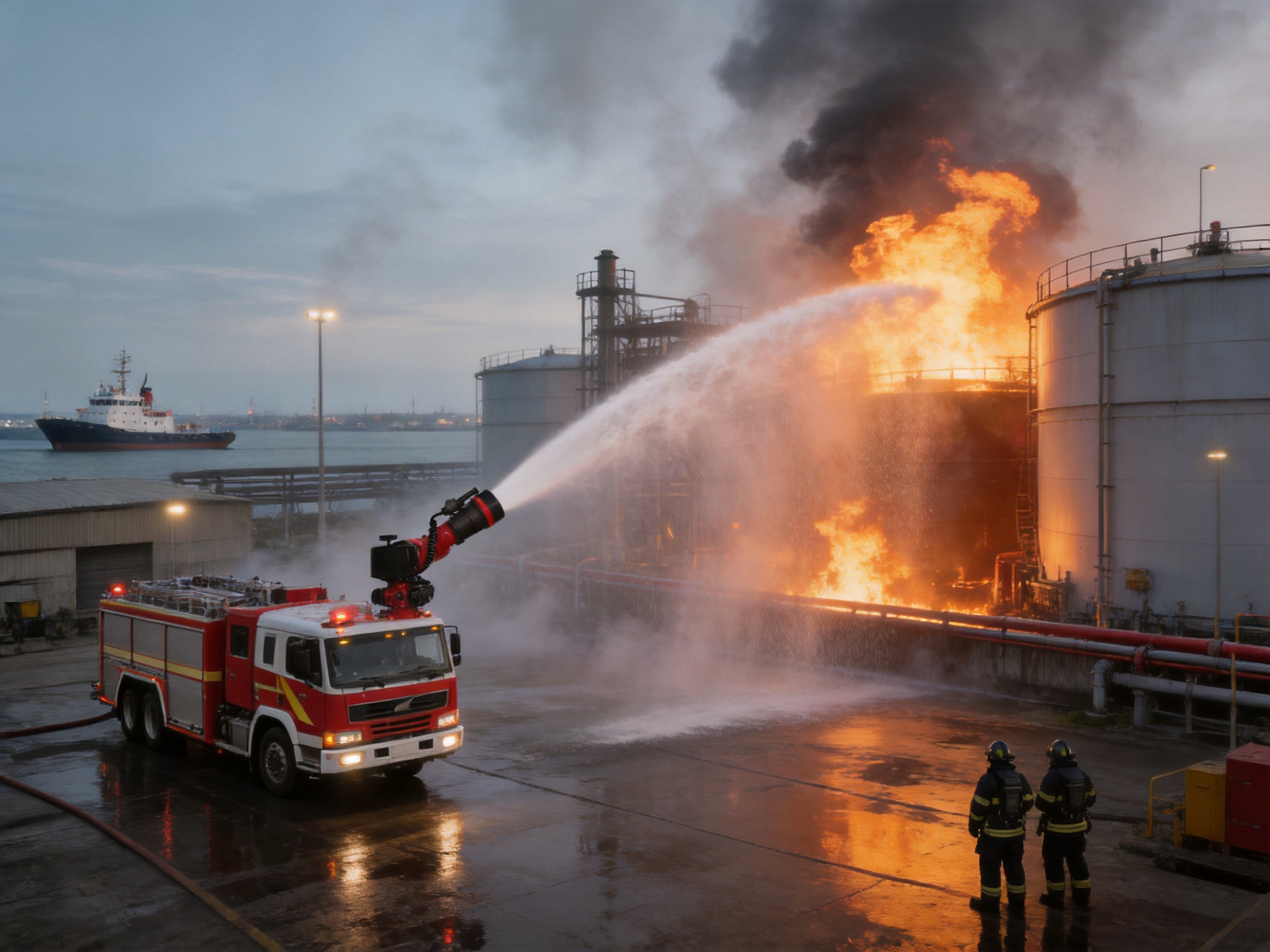
These systems are particularly suitable for fire trucks and fireboats, but their application is not limited to mobile emergency vehicles. They can also be installed in large warehouses, exhibition halls, cinemas, entertainment venues, oil depots, docks, airports, petrochemical facilities, and other locations where a long-range firefighting device can improve emergency response capability. Their compact structure, relatively low weight, and flexible mounting possibilities make them practical for both new equipment and replacement projects.
What Is a Fixed Fire Cannon?
A fixed fire cannon is a permanently or semi-permanently mounted water discharge device designed to project a controlled firefighting stream over a long distance. Unlike a portable handline nozzle, it is attached to a stable base or vehicle platform. This mounting arrangement reduces operator fatigue, improves directional control, and allows the device to handle higher flow rates while maintaining a predictable discharge pattern.
The term “fixed” refers primarily to the installation method rather than the discharge direction. Once installed, the cannon remains secured to a fire truck, fireboat, structural platform, or facility installation. However, the nozzle assembly can rotate horizontally and tilt vertically, enabling the operator to cover a broad area. Depending on the model, the cannon may provide full horizontal rotation or a more limited side-to-side operating range.
A fixed fire cannon normally combines several functional elements: a body or housing, a water inlet, an internal flow passage, a discharge nozzle, a directional movement mechanism, and a control arrangement. The structure must withstand hydraulic pressure, repeated operation, environmental exposure, vibration, and the mechanical loads associated with directional adjustment. For this reason, material selection and manufacturing quality are essential to long-term performance.
The two models described in this article are designed to provide adjustable water discharge. The operator can select a narrow, concentrated stream for long-range penetration or a wider spray for area coverage and heat reduction. The spray function can also support firefighter protection by creating a water mist screen between personnel and radiant heat, smoke, or flame exposure.
Product Overview
PSKD10/100WB Fixed Fire Cannon
The PSKD10/100WB is a high-capacity fixed fire cannon intended for applications that require substantial water output and long-range delivery. It operates at a working pressure of 1.0 to 1.4 MPa and provides a stated reach of up to 90 meters. Its flow rate is 100 liters per second, making it appropriate for large fire trucks, fireboats, industrial emergency systems, and high-risk facilities where rapid delivery of a large quantity of water is required.
The model provides a vertical tilt range from -15 degrees to +60 degrees. This allows the operator to address lower-level areas, elevated equipment, storage racks, roof structures, vessel decks, and other targets at different heights. Its horizontal rotation angle is 360 degrees, giving the operator full directional coverage when the installation platform and surrounding area permit unrestricted movement.
The maximum spray angle is 120 degrees. This wide spray capability is valuable when the objective is not only to attack the flame front but also to cool nearby surfaces, protect personnel, reduce radiant heat, and cover a broad zone with water droplets. The transition between straight stream and spray modes allows the same unit to serve multiple emergency functions.
PS10-50W-D Fixed Fire Cannon
The PS10-50W-D is a more compact model designed for applications requiring controlled flow from 30 to 50 liters per second. Its working pressure range is 1.0 to 1.6 MPa, while its stated reach is approximately 60 to 70 meters. The model has a maximum spray angle of at least 100 degrees and a horizontal rotation range of plus or minus 45 degrees.
With a weight of no more than 15 kilograms, the PS10-50W-D is suitable for installations where space, platform loading, or equipment weight must be carefully controlled. It can be mounted on certain fire truck platforms, smaller fireboats, industrial protection systems, and fixed emergency response points. Its compact format does not eliminate directional flexibility: the unit can still tilt vertically through a range of 30 to 70 degrees and can switch between concentrated and spray discharge patterns.
The PS10-50W-D provides a practical balance between output and mobility. Compared with larger high-flow equipment, it can be easier to install, maintain, reposition during vehicle design, and integrate with existing water delivery systems. It is especially useful where the available pump capacity is lower than that required by a 100-liter-per-second cannon or where the protected area can be covered effectively with a smaller flow rate.
| Parameter | PSKD10/100WB | PS10-50W-D |
|---|---|---|
| Construction | Aluminum alloy | Aluminum alloy |
| Working pressure | 1.0–1.4 MPa | 1.0–1.6 MPa |
| Vertical tilt angle | -15° to +60° | 30° to 70° |
| Reach | Up to 90 m | Approximately 60–70 m |
| Flow rate | 100 L/s | 30–50 L/s |
| Maximum spray angle | 120° | At least 100° |
| Horizontal rotation | 360° | ±45° |
| Weight | Not specified | ≤15 kg |
| Discharge modes | Straight stream and spray | Straight stream and spray |
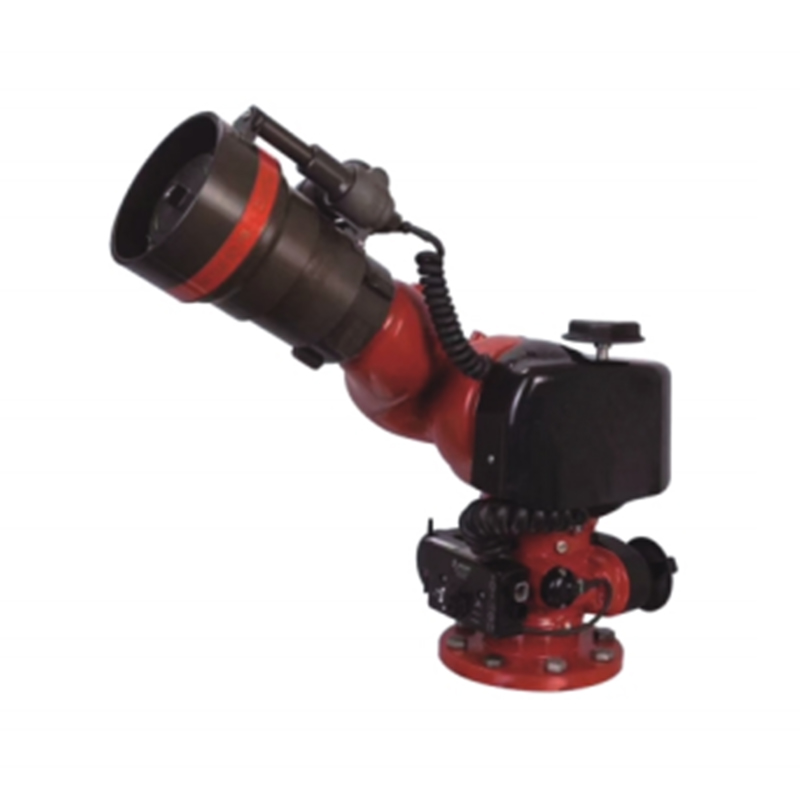
Fixed Fire Cannon
Key Performance Advantages
Long-Range Fire Attack
One of the most important advantages of a fixed fire cannon is the ability to project water well beyond the normal operating distance of a hand-held nozzle. The PSKD10/100WB can reach up to 90 meters under the stated operating conditions, while the PS10-50W-D can reach approximately 60 to 70 meters. This long-range capability allows emergency teams to begin firefighting from a safer position and can be especially important when approaching the fire is dangerous or impossible.
Long-range delivery is useful in incidents involving fuel tanks, chemical processing equipment, warehouse storage, vehicle fires, shipboard emergencies, and burning structures with unstable walls or roofs. By placing the cannon on a truck, boat, or fixed platform, firefighters can direct water toward the primary fire area without exposing personnel to unnecessary heat, falling debris, toxic smoke, or sudden flame expansion.
A long stream can also help reach the far side of a fire area. In large buildings or outdoor industrial sites, a conventional nozzle may not provide enough penetration to cool remote surfaces or suppress flames behind obstacles. A fixed cannon can deliver water across open spaces and support coordinated operations involving multiple attack lines.
Adjustable Flow and Discharge Patterns
The adjustable flow design allows the operator to adapt the discharge to the incident. A concentrated straight stream is appropriate when the objective is long-range reach, deep penetration, or direct cooling of a specific target. A spray pattern is useful for covering a larger area, cooling exposed equipment, suppressing embers, controlling radiant heat, or creating a protective water screen.
This flexibility gives the equipment a functional advantage over systems limited to a single discharge pattern. Fire conditions are rarely uniform. A storage tank may require a focused stream during the initial attack and a broad cooling spray during the exposure protection stage. A vehicle fire may require concentrated water for the burning compartment and spray for personnel protection. The same cannon can support both roles without replacing the complete unit.
The PSKD10/100WB offers a maximum spray angle of 120 degrees, while the PS10-50W-D provides a maximum spray angle of at least 100 degrees. These wide patterns increase the area that can be protected and make the cannon useful for defensive firefighting as well as direct flame attack.
Broad Directional Coverage
The ability to move the cannon horizontally and vertically directly influences the protected area. The PSKD10/100WB provides 360-degree horizontal rotation, allowing it to cover surrounding zones when installed on an unobstructed platform. This is valuable for fire trucks and fireboats that may approach an incident from different angles or need to change direction as the fire develops.
The PS10-50W-D provides a horizontal movement range of plus or minus 45 degrees. Although more limited than full rotation, this range is suitable for fixed mounting locations where the protected zone is known in advance. It can also be advantageous on compact vehicles where a controlled movement envelope prevents the nozzle from contacting ladders, storage boxes, cab structures, handrails, or other equipment.
Vertical tilt is equally important. Different fire scenes require different discharge elevations. A low angle may be used for ground-level flames, vehicle fires, or liquid spill fires. A higher angle can reach upper floors, vessel superstructures, warehouse racks, roofs, or elevated process equipment. The specified tilt ranges allow operators to adjust the trajectory without changing the mounting position.
Water Mist for Firefighter Protection
Water mist is not merely an alternative discharge pattern. It can serve as a protective barrier that reduces heat exposure and helps shield firefighters or other personnel operating near the incident. Fine droplets absorb heat as they evaporate, while the broad spray pattern can interrupt radiant heat transfer across a limited zone.
When used correctly as part of a broader emergency plan, the mist function can help personnel approach, reposition, or withdraw under difficult conditions. It may also cool nearby vehicles, pipelines, tanks, walls, and structural components that are exposed to heat from the main fire. This supports defensive operations and can reduce the risk of secondary ignition.
The water mist function should always be selected according to the fire type, water supply, wind conditions, and site procedures. It does not replace specialized extinguishing agents where foam, dry chemical, or other media are required. However, for water-compatible fire risks, it provides an additional operational option that increases the usefulness of the fixed cannon.
Lightweight Aluminum Alloy Construction
Both models are made from aluminum alloy. This material provides several practical benefits for fire equipment. Aluminum alloy offers a favorable strength-to-weight ratio, allowing the cannon to remain strong while avoiding unnecessary loading on a fire truck, boat, or structural platform. Lower equipment weight can simplify installation and may help preserve vehicle stability and payload capacity.
The material also provides strong corrosion resistance compared with many unprotected ferrous materials. This is particularly important for fireboats, coastal facilities, docks, petrochemical sites, and locations where the cannon may be exposed to moisture, salt, chemicals, or changing weather conditions. Corrosion resistance can help reduce maintenance requirements and preserve the movement and sealing functions of the equipment.
A lightweight body can also make the cannon easier to handle during installation, inspection, and service. It may allow designers to use a smaller mounting structure or integrate the device into a more compact vehicle layout. For fire truck manufacturers and emergency equipment integrators, this can create more flexibility when combining the cannon with roller shutters, hose storage, ladders, tool compartments, pumps, and other rescue components.
Advantages Compared with Conventional Firefighting Nozzles
Hand-held nozzles remain essential firefighting tools, but they are not always the best solution for high-risk or large-area incidents. A fixed fire cannon provides several advantages in situations where a stable, long-range, high-output device is required.
First, the cannon reduces the physical burden on firefighters. A high-flow handline can create significant reaction force, requiring multiple operators and a stable stance. Mounting the discharge device on a vehicle or fixed platform transfers much of the mechanical load to the structure. Personnel can focus on controlling direction, monitoring the fire, and coordinating the response rather than holding the full weight and reaction force of the hose line.
Second, a mounted cannon can provide more consistent positioning. A hand-held nozzle may move unintentionally because of hose movement, operator fatigue, or changing ground conditions. A fixed unit remains connected to its mounting point and can be directed in a controlled manner. This improves repeatability when cooling a tank wall, protecting an adjacent building, or maintaining a stream on a specific flame area.
Third, the long-range reach improves the safety margin. Firefighters can remain farther from unstable structures, hazardous materials, and intense heat while still delivering water to the target. The benefit is particularly significant in incidents involving flammable or explosive materials, where close approach may present an unacceptable risk.
Fourth, the adjustable straight stream and spray modes provide greater versatility than a nozzle with a single discharge pattern. The operator can change from penetration to area protection as conditions evolve. This adaptability is a major advantage when a single fire truck or facility system must respond to several different emergency scenarios.
Finally, the compact aluminum alloy construction can make the equipment easier to integrate than larger or heavier alternatives. The PS10-50W-D, with a maximum weight of 15 kilograms, is especially suitable for applications where platform capacity and installation space are restricted.
Applications in Fire Trucks and Fireboats
Fire Truck Installation
Fire trucks often carry a combination of pumps, water tanks, hoses, ladders, rescue tools, breathing apparatus, storage compartments, and communication systems. Every component must be arranged carefully to maintain vehicle balance, provide easy access, and protect equipment from weather and impact. A fixed fire cannon can be installed as a dedicated upper-platform device or positioned on another suitable section of the vehicle.
On a large fire truck, the PSKD10/100WB can provide a high-volume attack capability for industrial fires, warehouse incidents, large vehicle fires, and structural exposures. Its 360-degree horizontal rotation can be useful when the truck is positioned in an open area and needs to address several sides of the incident without being moved repeatedly.
The PS10-50W-D may be selected for smaller fire trucks, compact rescue vehicles, municipal response units, or specialist vehicles where a lower flow rate is sufficient. Its reduced weight can support more flexible vehicle design and may leave additional payload capacity for ladders, hose reels, breathing apparatus, or technical rescue tools.
When integrating a cannon with a fire truck, designers should consider pump capacity, water tank volume, inlet diameter, vehicle center of gravity, mounting reinforcement, operator access, control arrangement, hose routing, and maintenance clearance. The selected model should match the available water supply and the intended firefighting strategy rather than being chosen solely on nominal reach.
Fireboat Installation
Fireboats operate in a demanding environment. Saltwater exposure, vibration, wind, limited deck space, and difficult access can place high requirements on mounted firefighting equipment. Aluminum alloy construction and corrosion resistance are therefore valuable qualities for marine use.
The PSKD10/100WB is suited to fireboats that need to deliver a high-volume stream across a harbor, industrial waterfront, tanker, dock, or vessel deck. Its 90-meter reach can support firefighting from a safer distance, which is important when the target may contain fuel, chemicals, pressurized systems, or unstable structures.
The PS10-50W-D can be used on smaller fireboats or support vessels where a compact cannon is preferred. Its lower flow range may reduce demand on the pump system while still offering useful long-range coverage. A marine integrator should evaluate the effects of vessel movement, deck reinforcement, saltwater compatibility, drainage, and post-use freshwater flushing before final installation.
Industrial and Commercial Applications
Warehouses and Logistics Facilities
Large warehouses can contain dense storage, high-bay racks, packaging materials, plastics, textiles, machinery, or other combustible goods. Fires in these environments can spread rapidly and create intense heat. A fixed fire cannon installed on a response vehicle or at a strategic facility location can deliver water toward the affected area while helping personnel maintain a safer operating distance.
The straight stream can be directed into the core of the fire, while the spray mode can cool exposed storage racks, walls, roof structures, and adjacent goods. The ability to adjust the vertical angle is helpful in high-bay environments, where the fire may develop at a considerable height.
Petrochemical Facilities and Oil Depots
Petrochemical plants and oil storage areas require equipment that can support both direct firefighting and exposure protection. A fixed cannon may be used to attack a visible fire, cool tank walls, protect pipelines, reduce heat transfer, or control a fire around loading and unloading areas.
In these settings, long reach and remote operation are particularly important. Operators should avoid unnecessary exposure to flammable vapors, flash fire hazards, and high-temperature surfaces. The PSKD10/100WB’s high flow rate can provide substantial water delivery for large-scale incidents, while the PS10-50W-D may be appropriate for localized protection zones or facilities with lower hydraulic capacity.
The fixed cannon must be selected and installed according to the site’s hazardous-area requirements, water system design, fire protection engineering documentation, and applicable regulations. The product’s corrosion-resistant construction is useful in industrial environments, but the complete installation must also account for chemical exposure, grounding, electrical controls, and structural safety.
Docks and Port Facilities
Docks and port facilities combine marine exposure with heavy industrial activity. Fires may occur on vessels, cargo handling equipment, fuel transfer systems, warehouses, or loading platforms. A fixed cannon can provide a flexible line of defense from a fire truck, fireboat, or fixed emergency station.
The wide spray mode can help protect adjacent cargo and equipment, while the straight stream can reach across open water or a dock apron. Horizontal movement allows the operator to follow the location of the fire without relocating the entire vehicle or vessel.
Airports
Airport rescue and firefighting vehicles require rapid, high-capacity water application and the ability to cover large open areas. A fixed cannon can support response to aircraft fires, fuel spill incidents, hangar fires, and emergency situations involving service vehicles.
Aircraft and airport equipment often present complex geometries and large surfaces. The cannon’s vertical adjustment can help target engines, fuselage sections, landing gear areas, and nearby structures. The spray function can be used for cooling and protective coverage, while the straight stream can provide greater reach during the initial attack.
Public Buildings and Large Indoor Spaces
Cinemas, exhibition halls, entertainment venues, and other large indoor spaces may contain large open areas, dense seating, decorative materials, electrical systems, and substantial occupant loads. A fixed cannon installed on an emergency vehicle or positioned as part of a facility response system can supplement hose lines and fixed suppression systems.
Because indoor conditions can restrict visibility and movement, the cannon’s directional control and spray function may be useful for cooling and defensive protection. However, indoor installation requires careful attention to drainage, structural loading, water damage, visibility, evacuation procedures, and compatibility with the building’s fire strategy.
Engineering and Manufacturing Strengths
The performance of a fixed fire cannon depends not only on its published specifications but also on the quality of the manufacturing process behind those specifications. Tianchang Jinlv Fire Equipment Co., Ltd. has been dedicated to fire protection accessories since 2010 and has developed experience in fire truck equipment, rescue components, ladders, roller shutters, storage systems, and related products.
This product background is important because a fixed fire cannon is rarely installed as an isolated item. It must work within a broader emergency vehicle or facility system. Experience with fire truck roller shutters, storage assemblies, ladders, mounting systems, and plastic tool components can help a manufacturer understand the practical requirements of vehicle integration, access, weight distribution, durability, and field service.
Controlled Material Selection
The use of aluminum alloy reflects a deliberate approach to weight, corrosion resistance, and structural performance. Material selection begins with the intended application. Fire trucks require a balance between strength and vehicle payload. Fireboats require resistance to moisture and marine exposure. Industrial sites require durability in environments that may include chemicals, dust, heat, and frequent washdown.
Controlled material procurement helps reduce variations in mechanical properties, surface condition, and corrosion behavior. A professional production process should maintain appropriate records for incoming materials, confirm supplier consistency, and ensure that components meet internal specifications before entering machining or assembly.
Precision Production and Assembly
A compact cannon body must maintain accurate internal passages and reliable connections. Poor alignment, rough internal surfaces, inadequate sealing, or inconsistent assembly can reduce hydraulic efficiency and create avoidable maintenance problems. Advanced production facilities support more consistent machining, fitting, finishing, and assembly operations.
Manufacturing quality is especially important for the movement mechanisms. Horizontal rotation and vertical tilt must be smooth enough for practical operation while remaining stable when the cannon is aimed at a target. The structural joints and control interfaces must tolerate repeated adjustment and the vibration associated with vehicle and marine installation.
A complete production process also improves repeatability between batches. Fire truck builders, distributors, and fleet operators benefit when replacement units maintain consistent dimensions, mounting requirements, and operating behavior. This can simplify procurement, installation planning, spare parts management, and technician training.
Quality Management
The company has passed GB/T 19001-2016 quality certification and reports strict control from raw material procurement through final product delivery. A quality management system provides a framework for documented procedures, process monitoring, corrective action, traceability, and continuous improvement.
For fire protection equipment, quality management should cover more than visual appearance. It should address dimensional accuracy, pressure-related performance, movement range, discharge adjustment, surface treatment, sealing, fastening, packaging, and final inspection. A documented system helps ensure that important checks are not left to personal judgment alone.
Quality control also supports customer communication. When a buyer requests a customized mounting arrangement, labeling method, finish, connection configuration, or packaging format, an organized production system makes it easier to record the requirements and verify them before shipment.
Research and Development Capability
Fire protection technology must respond to changing vehicle designs, industrial risks, environmental conditions, and customer expectations. The company maintains a professional research and development team with industry experience and continues to invest in product development and advanced technology.
Research and development can improve a fixed cannon in several areas. Hydraulic design can be refined to improve stream concentration and spray distribution. Structural design can reduce weight without compromising strength. Movement mechanisms can be developed for smoother aiming and easier maintenance. Surface treatment can be optimized for demanding environments. Mounting interfaces can be adapted to different fire trucks, fireboats, and fixed platforms.
Environmental considerations are also becoming more important. Efficient water application can help reduce unnecessary consumption while maintaining effective cooling and suppression. Durable materials and repairable assemblies can extend service life and reduce replacement frequency. These improvements support both operational performance and responsible resource use.
Customization and OEM/ODM Support
Firefighting equipment is often purchased as part of a larger vehicle or emergency system. Standard specifications are important, but the final installation may require customization. Vehicle manufacturers and system integrators may need special mounting dimensions, connection positions, control arrangements, surface finishes, labels, packaging, or documentation.
OEM and ODM support allows the manufacturer to cooperate with customers during product selection and integration. The customer can provide information about the vehicle platform, pump capacity, water tank, available space, operating environment, expected flow, and preferred control method. The manufacturer can then assist in identifying a suitable model or developing a configuration that fits the application.
For the PSKD10/100WB, customization may focus on high-flow system integration, full-rotation mounting, vehicle or marine platform reinforcement, and access for inspection. For the PS10-50W-D, customization may emphasize compact mounting, weight control, limited movement envelopes, and compatibility with lower-capacity pump systems.
Customization should be managed through clear technical documentation. Important information includes operating pressure, rated flow, inlet and outlet dimensions, mounting bolt patterns, movement limits, materials, surface treatment, inspection requirements, and recommended service procedures. A structured technical process reduces the risk of mismatched components and supports smoother installation.
Installation Considerations
Correct installation is essential to achieve the advertised performance of a fixed fire cannon. The mounting base must be strong enough to handle the equipment weight, hydraulic reaction forces, vehicle vibration, wind loading, and operational movement. The base should be aligned accurately so that the cannon can rotate and tilt without interference.
The water supply system must be capable of delivering the required flow at the operating pressure. The PSKD10/100WB requires a substantially greater water supply than the PS10-50W-D. Pump sizing, pipe diameter, hose routing, tank volume, valves, strainers, and control components should therefore be evaluated as one system.
Installation planning should include sufficient clearance around the cannon. The full movement envelope must be checked against ladders, handrails, roof equipment, storage boxes, lighting, antennas, cab structures, and other vehicle components. On a fireboat, the movement path should also be assessed against mast structures, deck equipment, and crew access routes.
The operator should have a clear view or reliable indication of the cannon’s position. Controls must be accessible without forcing the operator into an unsafe location. If the cannon is installed in a hazardous environment, the control arrangement must comply with the applicable electrical and safety requirements.
After installation, the system should be tested under controlled conditions. Testing may include leakage inspection, pressure verification, flow confirmation, movement checks, straight-stream adjustment, spray-pattern assessment, and review of structural stability. Test results should be documented for commissioning and future maintenance reference.
Operation and Maintenance
Recommended Operating Practices
Before operation, personnel should confirm that the water supply is available, the mounting structure is secure, the movement area is clear, and the discharge direction is safe. Operators should consider wind direction, nearby personnel, electrical hazards, unstable structures, chemical compatibility, and potential water damage.
The straight stream should generally be selected when maximum reach and concentrated application are required. The spray mode should be selected when wider cooling, exposure protection, or water mist shielding is needed. Operators should adjust the vertical and horizontal direction gradually and avoid sudden movements that may disturb the vehicle or platform.
Training should cover the relationship between pump pressure, flow, reach, spray width, and reaction forces. Operators should understand that actual performance can vary with water quality, hose length, elevation, wind, nozzle condition, and pump output. Practical drills can help personnel become familiar with the cannon before a real emergency occurs.
Maintenance Program
Routine maintenance helps preserve reliability. After use, the cannon should be inspected for damage, contamination, loose fasteners, leakage, or restricted movement. If used with saltwater or chemically contaminated water, appropriate flushing and cleaning procedures should be followed according to the installation environment and material compatibility requirements.
Moving parts should be checked for smooth operation and abnormal resistance. Seals, gaskets, connection points, and control components should be inspected at scheduled intervals. Any corrosion, surface damage, or deformation should be recorded and addressed before the equipment is returned to service.
Maintenance records should include the date of inspection, operating hours or usage events, observed conditions, replacement parts, corrective actions, and test results. A documented maintenance program helps fire departments, industrial sites, and fleet operators demonstrate equipment readiness and identify developing problems before they become operational failures.
How to Select the Correct Model
The first selection factor is required flow. Customers should estimate the size and type of hazard, available water supply, desired extinguishing strategy, and the number of other devices that may operate simultaneously. The PSKD10/100WB is intended for high-flow applications at 100 liters per second, while the PS10-50W-D is designed for a lower flow range of 30 to 50 liters per second.
The second factor is reach. A site with large open distances, high-risk materials, or restricted access may benefit from the PSKD10/100WB’s stated reach of up to 90 meters. A smaller facility or compact vehicle may be adequately served by the PS10-50W-D’s approximately 60-to-70-meter reach.
The third factor is directional coverage. Full 360-degree rotation is valuable where the cannon must address a wide area around a vehicle or vessel. A plus-or-minus-45-degree range may be sufficient for a dedicated protection zone and can simplify integration where movement must be limited.
The fourth factor is platform capacity. The PS10-50W-D has a stated weight of no more than 15 kilograms, making it attractive for lightweight platforms. The weight and structural requirements of the PSKD10/100WB should be reviewed during system design, particularly for vehicles with strict axle loading or center-of-gravity limits.
The fifth factor is the environment. Marine, coastal, petrochemical, outdoor, and indoor applications may require different mounting, drainage, surface treatment, flushing, and inspection arrangements. Aluminum alloy construction provides a strong foundation for corrosion resistance, but the complete system must be designed for the actual conditions.
| Selection Requirement | More Suitable Consideration |
|---|---|
| Very high water output | PSKD10/100WB |
| Maximum stated reach | PSKD10/100WB |
| Compact and lightweight installation | PS10-50W-D |
| Lower pump capacity | PS10-50W-D |
| Full horizontal coverage | PSKD10/100WB |
| Defined protection zone with limited movement | PS10-50W-D |
| Wide-area cooling and protective spray | Either model, according to flow requirements |
| Fire truck or fireboat integration | Either model, subject to platform and hydraulic evaluation |
Why Manufacturer Experience Matters
Choosing a fixed fire cannon involves more than comparing flow rate and reach. The product must arrive with dependable manufacturing quality, clear technical information, responsive communication, and practical support. A manufacturer with long-term experience in fire protection accessories is better positioned to understand the relationship between individual components and the complete emergency vehicle or facility system.
Tianchang Jinlv Fire Equipment Co., Ltd. was established in 2010 and has focused on fire protection accessories for approximately 15 years. Its product range includes fire truck roller shutters, fire truck equipment, ladders, mounting systems, storage solutions, and rescue components. This specialization provides a practical understanding of the demands placed on equipment used in fire and rescue operations.
The company combines production facilities, a complete manufacturing process, quality management, research and development, OEM/ODM services, and technical support. Its stated corporate values include honesty, innovation, quality, and gratitude. For international buyers, these capabilities can be important when purchasing equipment for different vehicle platforms, industrial applications, or regional requirements.
A reliable supplier should be able to communicate clearly about specifications, installation conditions, lead times, inspection arrangements, packaging, spare parts, and after-sales service. Technical support is especially useful when the buyer is integrating the cannon with a custom fire truck, fireboat, pump system, or industrial emergency network.
Safety and Compliance Considerations
A fixed fire cannon is an important emergency device, but it should be used as part of a complete fire protection strategy. The product selection and installation should be reviewed by qualified fire protection engineers or responsible authorities. Local regulations may define requirements for pressure testing, materials, mounting structures, hazardous locations, fire truck design, marine systems, and operational training.
Customers should confirm that the intended application is compatible with water discharge. Some fires require foam or other extinguishing agents, and water may spread certain burning liquids or react dangerously with specific chemicals. The fixed cannon should therefore be matched with the hazard assessment and site emergency response plan.
Personnel should also consider electrical safety. Water streams must not be directed toward energized electrical equipment unless the situation has been evaluated and appropriate procedures are in place. Operators must maintain communication with incident commanders and avoid positioning the vehicle or vessel where it may be exposed to falling structures, explosions, flashover, or hazardous runoff.
Safety documentation should include operating instructions, maintenance requirements, flow and pressure data, movement limits, installation drawings, and warnings. Training should be refreshed periodically, especially when the cannon is installed on a new vehicle or when the operating team changes.
Q&A: Fixed Fire Cannon Selection and Use
What is the main purpose of a fixed fire cannon?
The main purpose is to deliver a controlled stream of water or water mist over a long distance from a stable mounting position. It supports direct firefighting, equipment cooling, exposure protection, and firefighter shielding while reducing the need for personnel to approach the fire closely.
What is the difference between the PSKD10/100WB and PS10-50W-D?
The PSKD10/100WB is the higher-capacity model, with a stated flow rate of 100 liters per second, reach of up to 90 meters, and 360-degree horizontal rotation. The PS10-50W-D provides 30 to 50 liters per second, approximately 60 to 70 meters of reach, a maximum weight of 15 kilograms, and plus-or-minus-45-degree horizontal rotation.
Can the fixed fire cannon spray water mist?
Yes. Both models support straight-stream and spray modes. The spray function can create a wider water pattern and may provide a water mist effect for cooling, area coverage, and firefighter protection, subject to operating conditions and the characteristics of the water supply.
Why is aluminum alloy used for the cannon body?
Aluminum alloy offers a useful combination of low weight, structural performance, and corrosion resistance. These qualities are valuable on fire trucks and fireboats, where equipment weight affects platform design, and in outdoor or marine environments where moisture and corrosion may be significant concerns.
Can the equipment be installed on a fire truck?
Yes. The product is designed for installation on fire trucks and can also be used on fireboats and fixed emergency platforms. The specific installation must be engineered according to the vehicle structure, pump capacity, water tank, mounting area, movement clearance, and operational requirements.
Can it be used in petrochemical facilities?
It can be used in oil depots, oil tank areas, docks, petrochemical facilities, and similar locations when the complete installation complies with the applicable fire protection and hazardous-area requirements. A site assessment is necessary to confirm water compatibility, safe positioning, control arrangements, and structural suitability.
Is the PS10-50W-D suitable for a small emergency vehicle?
Its compact design, flow range of 30 to 50 liters per second, and stated weight of no more than 15 kilograms make it a potential option for smaller vehicles or installations with limited payload capacity. Final selection should be based on the vehicle’s pump, mounting structure, desired reach, and protected area.
What should be checked before installation?
Before installation, the customer should verify flow and pressure requirements, mounting strength, connection dimensions, structural reinforcement, rotation clearance, tilt clearance, operator access, hose routing, drainage, corrosion exposure, and compatibility with other equipment mounted on the vehicle or platform.
Does the cannon require regular maintenance?
Yes. Regular inspection should cover leakage, movement, fasteners, seals, discharge performance, corrosion, contamination, and structural condition. After use with saltwater or contaminated water, suitable flushing and cleaning procedures should be followed. Maintenance results should be recorded for future reference.
Can the manufacturer provide OEM or ODM support?
The company provides OEM/ODM customization and technical support for fire truck equipment and related fire protection accessories. Customers can discuss application requirements, mounting arrangements, specifications, packaging, and other project details with the technical and sales team.
How should a customer choose between straight stream and spray mode?
A straight stream is normally selected when long-range penetration and concentrated application are required. A spray mode is generally selected for wider cooling, exposure protection, heat reduction, or personnel shielding. The correct choice depends on the fire type, water supply, wind, target distance, and emergency response plan.
What information should be included in an inquiry?
An inquiry should include the intended application, vehicle or platform type, required flow, available pressure, desired reach, water source, installation space, movement requirements, environmental conditions, quantity, customization needs, and destination market. Photos, drawings, or vehicle specifications can further improve technical communication.
Conclusion
The Fixed Fire Cannon PSKD10/100WB and PS10-50W-D provide practical solutions for long-range water delivery in mobile and fixed fire protection systems. Their aluminum alloy construction supports lightweight integration and corrosion resistance, while adjustable straight-stream and spray modes increase operational versatility. Horizontal rotation and vertical tilt allow the operator to adapt the discharge direction to changing fire conditions, and the water mist function can assist with cooling and firefighter protection.
The PSKD10/100WB is suited to high-flow applications requiring a 100-liter-per-second output, long reach, and full horizontal rotation. The PS10-50W-D offers a compact and lighter alternative for applications requiring 30 to 50 liters per second, a reach of approximately 60 to 70 meters, and controlled directional movement.
Compared with conventional hand-held nozzles, fixed fire cannons can reduce operator fatigue, improve positioning stability, extend the safety distance, and deliver a broader range of water patterns. Their effectiveness depends on correct hydraulic design, professional installation, appropriate training, and regular maintenance.
Backed by experience in fire protection accessories, an established production process, GB/T 19001-2016 quality certification, research and development capability, and OEM/ODM support, the manufacturer can provide more than an individual cannon. It can support the broader requirements of fire truck builders, fire departments, industrial facilities, emergency equipment distributors, and system integrators seeking reliable fire truck equipment and rescue solutions.
For projects requiring high-capacity firefighting, compact vehicle integration, industrial cooling, marine response, or long-range emergency water application, these fixed fire cannon models offer a strong foundation for building a dependable fire protection system.
References
1. Product specification information for Fixed Fire Cannon PSKD10/100WB and PS10-50W-D, supplied project materials.
2. Tianchang Jinlv Fire Equipment Co., Ltd., company profile and manufacturing capability information, supplied project materials.
3. GB/T 19001-2016, Quality Management Systems — Requirements.
4. General principles of fire apparatus water delivery, nozzle operation, and emergency response equipment maintenance.
5. General engineering practices for fire truck equipment integration, fireboat firefighting systems, industrial fire protection, and water spray applications.
Product: Fixed Fire Cannon
News
-
-
Every firefighter has opened a compartment door after a rough response only to find nozzles, webbing, and wrenches piled on top of each other. In gloves and low light, with the pump running, that is ...
READ MORE -
A firefighter opens a compartment door after a long working fire. Inside, the thermal imaging camera has slid under a halligan bar, the hose line is twisted into a knot, and a 20 kg SCBA cylinder is ...
READ MORE -
Two pumpers of the same model can feel like two different trucks on the same call. On the first, a firefighter reaches into a compartment, releases one latch with a gloved hand, and pulls a tray far ...
READ MORE -
Specification meetings usually park the ladder rack near the bottom of the option sheet, a few lines above the license plate bracket. That is also why ladder racks become the complaint in year three:...
READ MORE -
Two minutes into a working fire, a crew stands in front of a locked steel security door with a crowbar that is too short to pull with both hands. Nothing about the tool is broken. It was simply speci...
READ MORE
Hey! Interested in staying in the loop? Sign up for our updates.
WE WON'T SPAM YOU, PINKY PROMISE.

Tianchang Jinlv Fire Equipment Co., Ltd.
Copyright © Tianchang Jinlv Fire Equipment Co., Ltd. All rights reserved. Custom Fire Truck Equipment Supplier Fire Apparatus Parts Factory
