

 en
 English
 русский
 Español
 عربى

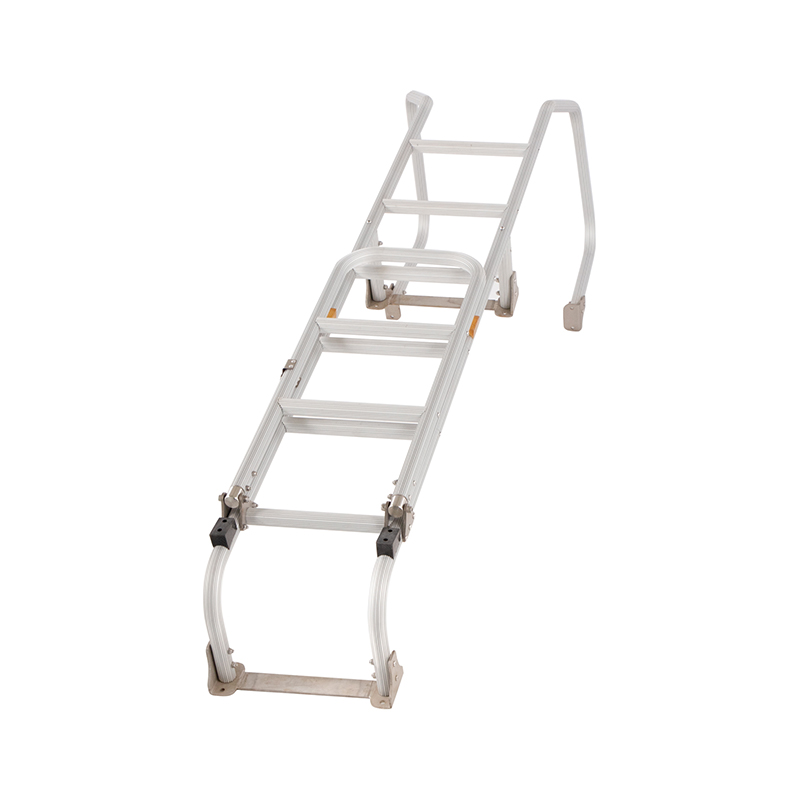
Three rungs up the rear of a pumper, a firefighter in wet gloves misses the grab and catches the handrail instead. Whether that rail holds was decided months earlier, at the bench: by tube wall thick...
READ MORE
Compact Aluminum Boarding Ladder for Side and Rear Fire Trucks
2026.09.09
Content
- 1 Why Fire Truck Boarding Access Matters
- 2 Product Overview
- 3 Material Advantages of Aluminum Alloy
- 4 Benefits of 304 Stainless Steel Fasteners
- 5 Compact Design for Restricted Installation Areas
- 6 Side and Rear Fire Truck Applications
- 7 Advantages Compared with Conventional Access Solutions
- 8 Safety-Oriented Product Use
- 9 Manufacturing Strengths of the Supplier
- 10 Research, Development, and Customization Capability
- 11 Production Process from Material to Delivery
- 12 Installation and Integration Considerations
- 13 Maintenance and Long-Term Service
- 14 Applications Across Emergency Vehicle Fleets
- 15 Why Choose a Specialist Fire Equipment Manufacturer
- 16 Purchasing Guidance for Fire Truck Boarding Ladders
- 17 Frequently Asked Questions
- 17.1 What is the main purpose of this product?
- 17.2 Where can the ladder be installed?
- 17.3 What material is used for the ladder?
- 17.4 What type of fasteners are supplied?
- 17.5 Can the dimensions be customized?
- 17.6 Is the product suitable for limited-space applications?
- 17.7 Can it be used on different types of fire trucks?
- 17.8 Does the manufacturer provide OEM and ODM services?
- 17.9 How should the ladder be maintained?
- 17.10 Can the ladder be installed without technical review?
- 17.11 What information should be provided for a quotation?
- 17.12 What other products does the manufacturer supply?
- 18 Conclusion
- 19 References
- 20 Product: Boarding Ladder For Sides/Rear Fire Trucks
Firefighters depend on fast, safe, and reliable access to every working area of an emergency vehicle. A fire truck may carry hoses, ladders, breathing apparatus, rescue tools, nozzles, pumps, and other essential equipment, but the value of that equipment is closely connected to how efficiently personnel can reach it. When the vehicle body is tall, the available mounting space is narrow, or the rear access area is crowded with other systems, a properly designed boarding ladder becomes an essential part of the truck rather than a simple accessory.
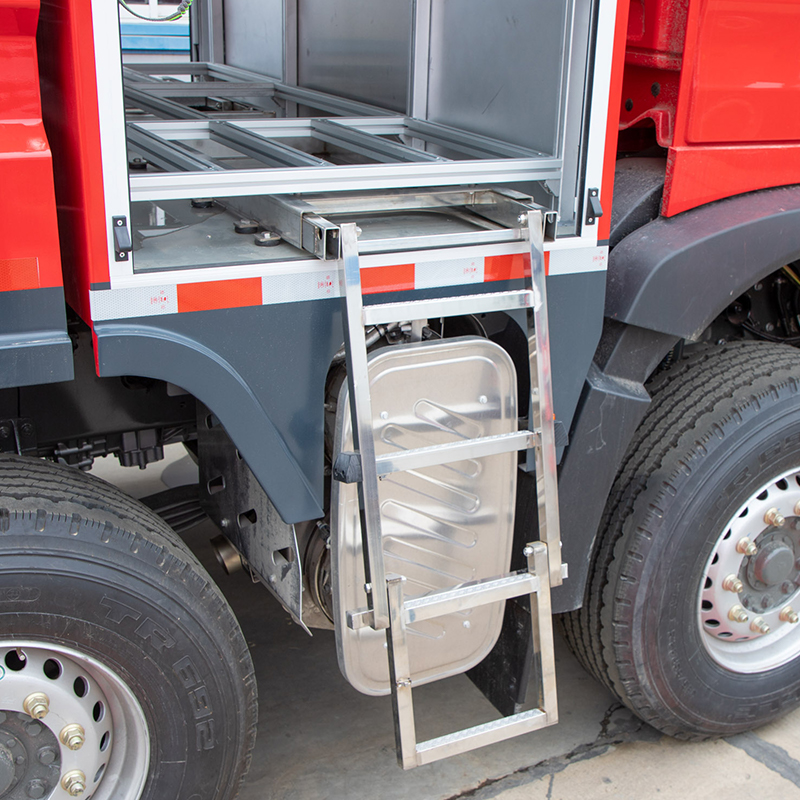
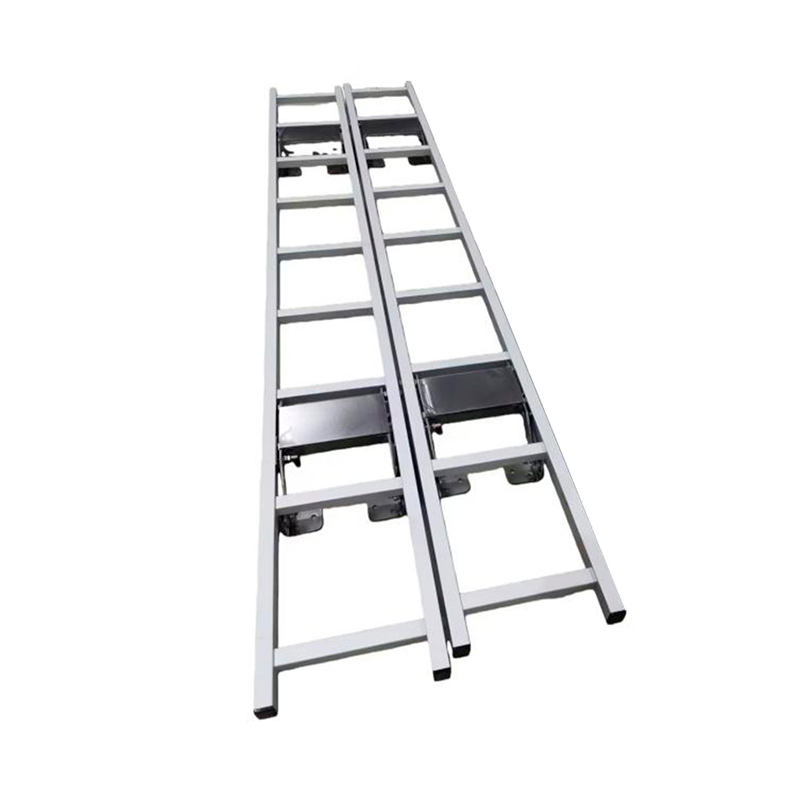
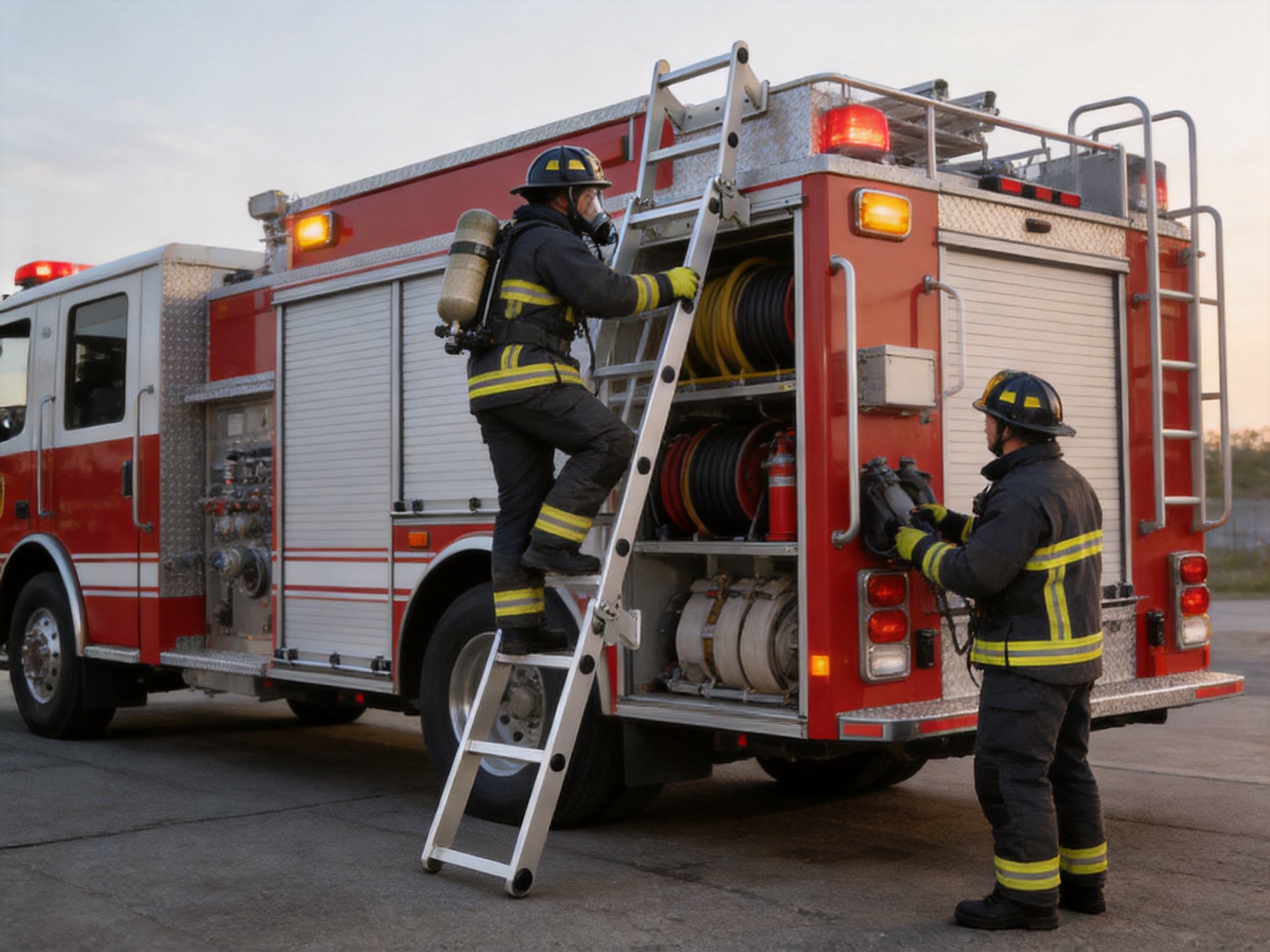
The Boarding Ladder for Sides and Rear Fire Trucks is designed for these demanding operating conditions. Manufactured from aluminum alloy with 304 stainless steel fasteners, the ladder provides a practical combination of strength, corrosion resistance, low weight, and long-term serviceability. Its compact structure allows it to be installed on the sides or rear of fire trucks, including areas where a full-size access system would be unsuitable. The design supports easier boarding, safer access, more efficient equipment handling, and better use of limited vehicle space.
This product is manufactured by Tianchang Jinlv Fire Equipment Co., Ltd., a specialist supplier of fire protection accessories and fire truck equipment. Since its establishment in 2010, the company has developed professional experience in fire truck roller shutters, equipment stowage systems, mounting systems, ladders, handrails, nozzles, hose cannons, demolition tools, SCBA equipment, cab doors, and plastic tool components. Its manufacturing capabilities, quality management practices, technical team, and OEM/ODM services enable it to provide boarding ladders for different fire truck configurations and operating environments.
Why Fire Truck Boarding Access Matters
Fire trucks are designed to transport people and equipment into complex emergency environments. Their bodies are often higher than ordinary commercial vehicles, and their compartments may be positioned above the ground to create additional storage capacity. While this arrangement improves equipment carrying capability, it can make access more difficult, especially when firefighters are wearing protective clothing, helmets, gloves, breathing apparatus, or other personal protective equipment.
A boarding ladder helps bridge the height difference between the ground and the vehicle platform, compartment, roof, rear working area, or other elevated access point. It provides a defined route for climbing and reduces the need for personnel to step on unsuitable vehicle components, uneven surfaces, hoses, bumpers, or temporary objects. In emergency response work, this improvement can save time and reduce unnecessary movement around the truck.
Access conditions are particularly important when the crew must retrieve equipment quickly. A firefighter may need to reach a storage compartment, board a rear platform, inspect a roof-mounted system, or assist another crew member. A compact ladder installed in the correct position gives the user a dedicated access solution that is available whenever the vehicle is deployed.
The ladder is intended for side and rear installation, which are common locations for fire truck boarding systems. These areas frequently have restricted dimensions because of roller shutters, compartment doors, hose reels, warning equipment, lighting units, handrails, pump controls, or other bodywork. The product’s compact structure makes it suitable for applications where space optimization is as important as access performance.
Product Overview
The Boarding Ladder for Sides and Rear Fire Trucks is made primarily from aluminum alloy. Aluminum is widely used in emergency vehicle construction because it offers a favorable strength-to-weight ratio and good resistance to atmospheric corrosion. A lightweight ladder can help limit unnecessary vehicle weight while still providing a firm and durable climbing structure.
All fasteners are made from 304 stainless steel. This material choice supports reliable assembly and helps protect the connection points from rust and deterioration in demanding service conditions. Fire trucks may operate in rain, snow, humidity, dust, road salt, firefighting foam, cleaning water, and other conditions that can affect ordinary steel hardware. Stainless steel fasteners provide a more durable solution for these exposed connection areas.
The ladder is designed with a compact structure that can be integrated into the side or rear of a fire truck. Its configuration can be adapted to the available mounting location, vehicle body design, and required access height. The product information identifies the principal dimensions as L, L1, and L2, with these measurements available for customization according to project requirements.
| Product Item | Specification or Feature | Application Value |
|---|---|---|
| Product type | Fire truck boarding ladder | Provides access to elevated side and rear areas of emergency vehicles |
| Main material | Aluminum alloy | Combines low weight, useful structural strength, and corrosion resistance |
| Fastener material | 304 stainless steel | Improves connection durability in outdoor and wet operating conditions |
| Mounting position | Fire truck sides and rear areas | Supports installation where vehicle space is limited |
| Dimensions | L, L1, and L2 | Can be customized for different truck bodies and installation layouts |
| Structural design | Compact configuration | Allows practical integration with equipment compartments and bodywork |
| Maintenance | Convenient service design | Helps operators inspect, clean, and maintain the ladder efficiently |
Material Advantages of Aluminum Alloy
Material selection has a direct effect on the operating performance of a fire truck accessory. A ladder must be strong enough for repeated use, but it should not add unnecessary mass to the vehicle. Aluminum alloy is well suited to this balance. Compared with many conventional steel structures, aluminum components can provide a lower-weight alternative for vehicle-mounted access systems.
Reduced component weight can offer several practical benefits. It may simplify installation, reduce the load placed on the vehicle body, and make handling easier during production or maintenance. A lighter ladder can also support the broader goal of controlling the total vehicle weight, which is important for fuel efficiency, payload capacity, braking performance, and maneuverability.
Aluminum alloy also offers useful resistance to corrosion. Fire trucks are frequently exposed to water and moisture, and their equipment may be washed after every operation. A ladder installed on the exterior of the vehicle must tolerate repeated exposure to changing weather and cleaning processes. Aluminum alloy helps reduce the risk of rapid surface deterioration when it is correctly manufactured, installed, and maintained.
The appearance of an aluminum component can also remain clean and professional over a long service period. This is valuable for fire departments, municipal fleets, industrial emergency teams, airports, ports, and other organizations that require equipment to maintain a reliable appearance while working under demanding conditions.
Another advantage is compatibility with modern fire truck body construction. Many emergency vehicle manufacturers use aluminum and other lightweight materials in compartments, panels, platforms, and mounting structures. An aluminum boarding ladder can be integrated into these designs without creating an unnecessary material mismatch or excessive weight concentration.
Benefits of 304 Stainless Steel Fasteners
Fasteners are small components, but they are critical to the safety and service life of a mounted ladder. Bolts, nuts, washers, and other connection parts must maintain their function while the truck experiences vibration, shock, temperature changes, moisture, and repeated use. The use of 304 stainless steel fasteners gives the ladder a dependable connection foundation.
304 stainless steel is widely recognized for its general corrosion resistance and suitability for outdoor equipment. It is appropriate for many applications involving water, humidity, cleaning agents, and ordinary atmospheric exposure. By specifying stainless steel for the fasteners, the product reduces the possibility that the connection points will become weak or difficult to service because of rust.
Stainless steel hardware also supports easier maintenance. When a ladder must be inspected, adjusted, or removed, fasteners that remain in usable condition are less likely to seize or require destructive replacement. This is especially useful for fire departments that need to keep vehicles available and minimize workshop downtime.
The combination of aluminum alloy and 304 stainless steel fasteners creates a practical material system for a vehicle-mounted ladder. As with all mixed-metal assemblies, installation should follow suitable engineering and maintenance practices, including appropriate contact protection where required by the vehicle builder or application environment. Proper assembly torque, alignment, and periodic inspection remain important regardless of material selection.
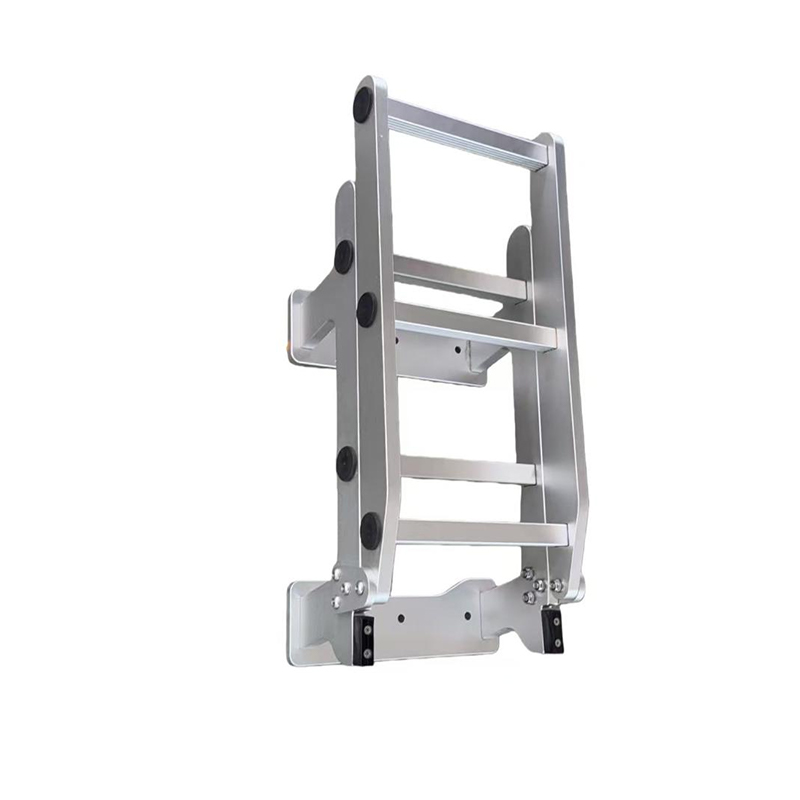
Boarding Ladder For Sides/Rear Fire Trucks
Compact Design for Restricted Installation Areas
Fire truck equipment is often arranged within a limited body envelope. Side compartments may contain hoses, nozzles, SCBA cylinders, rescue tools, electrical systems, or pump controls. Rear areas may include hose connections, warning lights, towing components, platforms, doors, and other access equipment. A ladder that occupies too much room may interfere with these systems or reduce valuable storage capacity.
The compact structure of this boarding ladder is intended to solve that challenge. It can be positioned on the side or rear of the truck while preserving as much usable space as possible. The design is appropriate for narrow mounting areas and vehicle layouts where a conventional external staircase or large fixed ladder would be impractical.
Compact does not mean that access is treated as an afterthought. The ladder is designed to provide a defined climbing route while fitting into the available bodywork. During customization, the dimensions L, L1, and L2 can be adjusted according to the truck’s construction, the mounting surface, the required reach, and the relationship between the ladder and nearby compartments.
Space-efficient installation is particularly valuable for specialized vehicles. Airport fire trucks, industrial fire vehicles, rescue tenders, municipal pumpers, forestry firefighting vehicles, and multi-purpose emergency trucks may all have different body layouts. A customizable boarding ladder enables the access system to be developed around the vehicle instead of forcing the vehicle builder to make unnecessary compromises.
The compact design can also help preserve the vehicle’s external profile. This may reduce the chance of the ladder becoming an obstruction when the truck passes through narrow gateways, station doors, industrial corridors, or crowded emergency scenes. Final clearances should always be confirmed against the vehicle design, but a space-conscious structure gives engineers more options during integration.
Side and Rear Fire Truck Applications
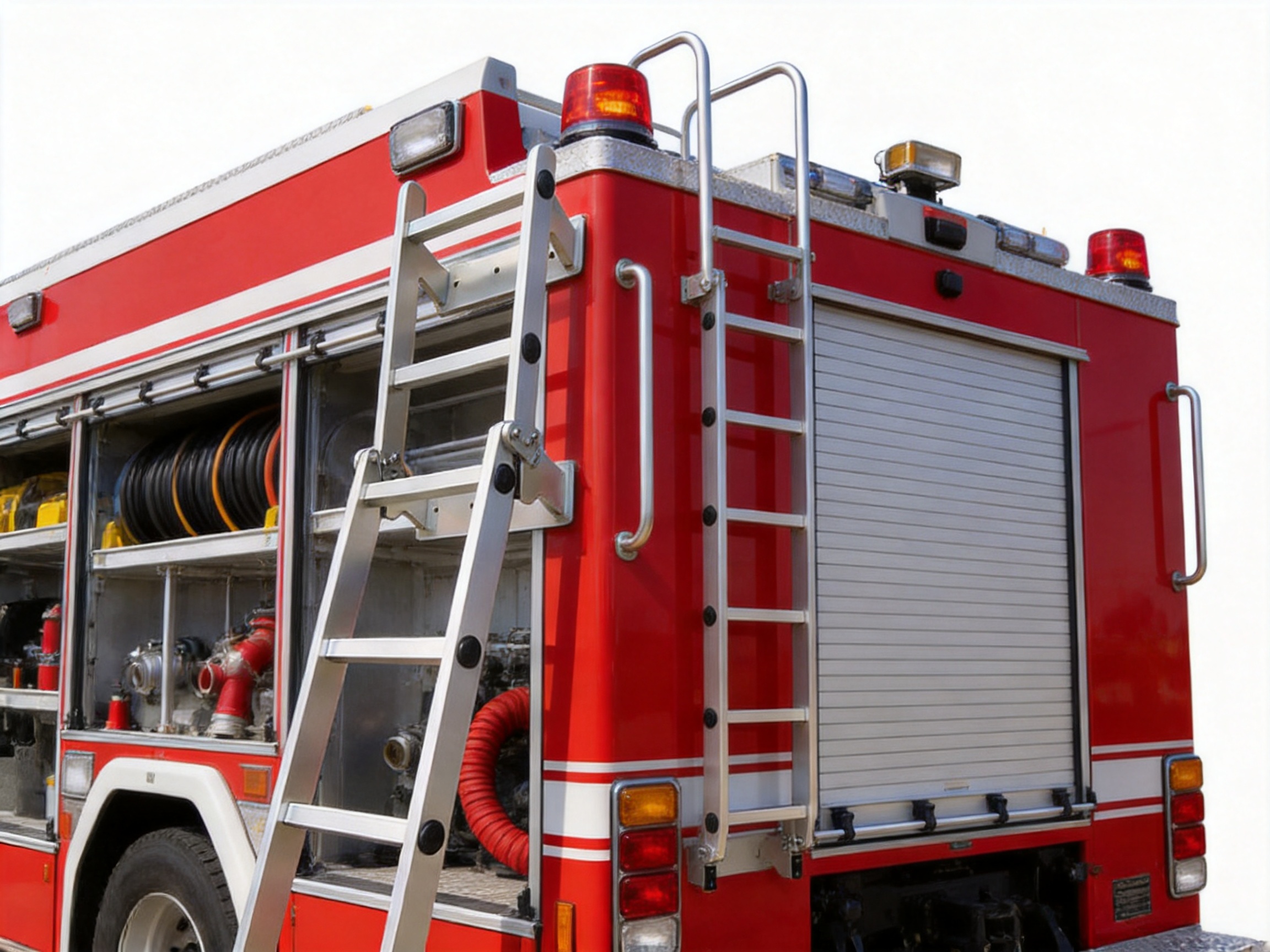
Side installation is useful when the main equipment compartments are arranged along the vehicle body and personnel need to reach an elevated side platform or storage zone. A side boarding ladder may be positioned near a compartment, walkway, pump panel, or access point, depending on the vehicle layout. It can provide a more direct route for crew members who are working on the side of the truck.
Rear installation is useful when the vehicle’s rear section contains an elevated platform, equipment area, hose management system, or specialized working position. The rear of a fire truck may also be used for access during rescue operations, equipment deployment, inspection, and maintenance. A dedicated ladder can make these tasks more orderly and reduce dependence on improvised footholds.
In both locations, the ladder should be coordinated with doors, roller shutters, handrails, lighting, reflective markings, hose outlets, and other components. The company’s experience in manufacturing related fire truck accessories supports this integrated approach. Because the manufacturer also produces storage systems, roller shutters, mounting systems, ladder racks, handrails, and other equipment, it can better understand how a boarding ladder must coexist with the rest of the vehicle.
The product can be considered for new vehicle production as well as specialized modification projects. For original equipment manufacturers, the ladder can be incorporated during the initial body design. For fleet operators and vehicle upfitters, it may be adapted to a specific existing truck after measurements and installation conditions have been reviewed.
Advantages Compared with Conventional Access Solutions
One advantage of a purpose-built fire truck boarding ladder is that it is designed for the actual operating environment of emergency vehicles. Ordinary household ladders, generic industrial steps, or improvised vehicle access points may not fit the available space or withstand repeated outdoor use. A specialized product is developed with fire truck installation conditions in mind.
Compared with bulky fixed stair structures, the compact ladder can preserve more storage and working space. This is important because every compartment on a fire truck has a specific function. Reducing interference with nearby equipment can make the vehicle easier to organize and may help keep tools accessible when they are needed.
Compared with unprotected carbon steel structures, an aluminum alloy ladder with stainless steel fasteners can offer improved resistance to corrosion in wet and outdoor environments. This material configuration can reduce the maintenance burden associated with rust, coating failure, and deteriorated connection hardware.
Compared with non-customized products, the availability of adjustable dimensions provides greater installation flexibility. L, L1, and L2 can be discussed and customized according to the vehicle body. This helps accommodate differences in deck height, compartment arrangement, side panel geometry, rear platform location, and customer access requirements.
Compared with temporary access methods, a permanently installed boarding ladder is available at the point of use. Firefighters do not need to search for a portable ladder before reaching the relevant part of the vehicle. This can support faster equipment retrieval and more consistent operating procedures.
The ladder also offers an attractive balance between product simplicity and functional value. It does not depend on a complicated power system or a large number of moving mechanisms. Its primary purpose is to provide stable, convenient access through a durable, serviceable structure. Fewer unnecessary mechanisms can help reduce potential failure points and simplify inspection.
Safety-Oriented Product Use
A boarding ladder is part of the crew access system, so safety should be considered during design, installation, and operation. The ladder should be mounted to a structurally suitable part of the vehicle, and the installation should follow the vehicle manufacturer’s engineering requirements. The mounting surface must be capable of transferring expected loads without distortion or loosening.
Users should keep the steps and surrounding surfaces free from mud, ice, oil, foam residue, loose tools, and other slipping hazards. After firefighting operations, the ladder should be rinsed or cleaned when necessary and checked for any damage caused by impact, heat, chemicals, or debris.
Personnel should use the ladder with appropriate hand support and should avoid carrying loads that prevent secure contact with the ladder. Heavy or bulky equipment should be handled according to the department’s safe working procedures. Where the vehicle configuration includes a separate handrail, the ladder should be coordinated with that handrail to provide a continuous and comfortable access route.
Regular inspection should include the ladder structure, steps, brackets, fasteners, mounting points, surface condition, and alignment. Any loose hardware, deformation, cracks, sharp edges, or unusual movement should be investigated before continued use. The ladder is intended to support access to the vehicle; it should not be treated as a replacement for a certified high-angle access system unless the complete vehicle application has been designed and approved for that purpose.
Manufacturing Strengths of the Supplier
Tianchang Jinlv Fire Equipment Co., Ltd. has focused on fire protection accessories since 2010. This specialized industry experience is important because fire truck components must function as part of a larger emergency response system. Product design decisions must account for vehicle integration, storage organization, operator access, environmental exposure, maintenance, and fleet service conditions.
The company operates with advanced production facilities and a complete manufacturing process. A complete process helps connect material procurement, fabrication, assembly, inspection, packaging, and delivery into a controlled workflow. For a boarding ladder, this type of process can support consistent dimensions, reliable fastening, repeatable assembly quality, and better coordination between customized orders.
The company has passed GB/T 19001-2016 quality certification and states that it controls each stage from raw material procurement to final product delivery. A quality management system provides a framework for documenting processes, monitoring conformity, managing corrective actions, and improving production performance. For customers purchasing vehicle-mounted equipment, this process control can provide greater confidence in the consistency of supplied components.
Manufacturing quality begins with material control. Aluminum alloy profiles or components should be checked against the required specifications before production. Stainless steel fasteners should be verified for the designated material and suitable dimensions. Traceable purchasing and incoming inspection help reduce the risk of incorrect or inconsistent materials entering the production process.
Fabrication is another important stage. Aluminum components must be cut, formed, drilled, machined, or assembled with attention to dimensional accuracy. Small deviations can affect mounting alignment, clearance, step position, or the relationship between the ladder and nearby truck body components. Controlled production methods help maintain consistency across both standard and customized orders.
Assembly quality is equally important. The ladder must be assembled so that the steps, brackets, fasteners, and structural members work together as intended. Correct alignment can reduce stress concentration and make installation more efficient. Fastener inspection and assembly checks can help verify that the finished unit is ready for integration into the vehicle.
Final inspection provides an additional opportunity to confirm product conformity. Depending on the order requirements, inspection may include dimensional verification, visual examination, mounting review, hardware confirmation, and packaging checks. Clear communication between the customer and manufacturer is essential when the ladder is customized for a particular truck.
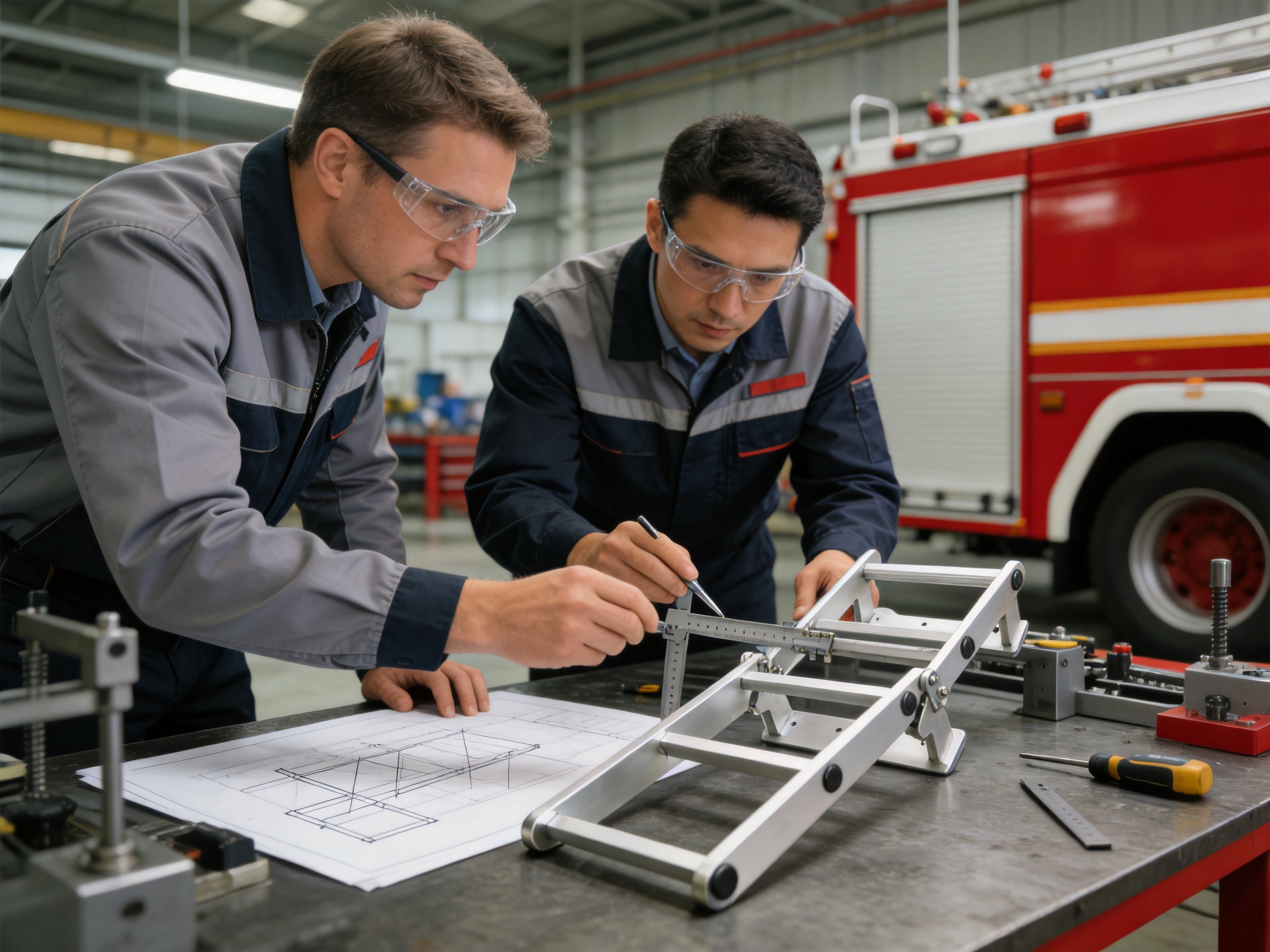
Research, Development, and Customization Capability
Fire truck designs vary widely. A municipal pumper may have a different side compartment arrangement from an airport rescue tender. An industrial fire vehicle may require access around pumps and foam systems, while a rescue truck may prioritize rear equipment storage and specialized tools. A single fixed dimension cannot satisfy every vehicle configuration.
The manufacturer maintains a professional research and development team with industry experience. Its development approach follows market requirements, customer application scenarios, and changes in emergency equipment design. This supports the development of products that can be adapted to different vehicle structures and operating needs.
For the boarding ladder, the key customizable dimensions include L, L1, and L2. These values can be confirmed through technical drawings, vehicle measurements, or an installation discussion. Customization may consider the overall ladder length, the relationship between mounting points, the distance between structural sections, platform height, or other project-specific requirements.
OEM and ODM services are available for customers requiring more than a standard product. An OEM project may involve manufacturing the ladder according to the customer’s drawings, branding requirements, or vehicle production specifications. An ODM project may involve technical cooperation during product development, structural adjustment, material selection, and integration planning.
Customization should be handled through a clear technical confirmation process. Customers may provide vehicle model information, body drawings, installation photographs, available mounting dimensions, required access height, expected operating conditions, and any relevant standards. The manufacturer can then evaluate the application and confirm a suitable configuration.
Good customization is not simply a matter of changing one dimension. It should consider the complete installation environment. The ladder must not obstruct doors or roller shutters, interfere with lights or warning markings, reduce ground clearance, create a snagging hazard, or conflict with nearby equipment. It should also remain accessible to firefighters wearing protective clothing and should be convenient to inspect after installation.
Production Process from Material to Delivery
Material Procurement and Incoming Control
The production process begins with the procurement of aluminum alloy materials and 304 stainless steel fasteners. Incoming materials are reviewed to confirm that they meet the requirements of the project. Proper material control is especially important for customized orders because different projects may require different lengths, profiles, brackets, or hardware quantities.
Engineering Confirmation
Before fabrication, the product configuration is confirmed. This stage may include reviewing L, L1, and L2 dimensions, installation orientation, mounting points, surrounding clearances, and the position of any handrail or platform. Engineering confirmation helps ensure that the manufactured ladder corresponds with the actual truck application.
Cutting and Component Preparation
Aluminum components are prepared according to the approved dimensions. Cutting and machining should be carried out with attention to accuracy, edge condition, and repeatability. Proper preparation helps the components fit together efficiently during assembly and reduces the need for unnecessary adjustment at the vehicle installation site.
Forming and Structural Assembly
Where required by the design, aluminum parts are formed or shaped to match the intended structure. The steps, rails, brackets, and supporting members are then assembled into the compact ladder configuration. The assembly process must maintain proper alignment and ensure that the ladder remains stable under normal use.
Fastener Installation
304 stainless steel fasteners are installed at the designated connection points. The assembly team should confirm that the hardware is correctly positioned and tightened according to the applicable engineering requirements. Correct fastener installation helps maintain structural integrity and makes later maintenance more predictable.
Inspection and Quality Review
The completed ladder is reviewed for appearance, dimensions, assembly condition, hardware completeness, and any visible defects. Customized products may receive additional checks against customer drawings or technical specifications. Quality records and inspection procedures support consistency across production batches.
Packaging and Delivery
Because the ladder is supplied for vehicle integration, packaging should protect aluminum surfaces, mounting areas, fasteners, and other components during handling and transportation. Clear product identification and documentation can help the customer receive, inspect, and install the ladder efficiently.
Installation and Integration Considerations
Before installation, the vehicle builder or service team should confirm the mounting area, access height, body structure, and clearance around the ladder. The selected location should provide a stable support surface and should not interfere with equipment that must open, extend, rotate, or be removed during normal use.
The installation team should compare the supplied ladder with the approved technical drawing. If the vehicle body differs from the information used during customization, the installer should contact the supplier before drilling or modifying the structure. Unplanned changes can affect alignment, strength, corrosion protection, or access ergonomics.
Mounting holes and brackets should be positioned accurately. The ladder should be installed squarely and securely, with all fasteners properly fitted. If the vehicle uses aluminum body panels or other lightweight structures, the installation may require suitable reinforcement or load-spreading components as determined by the vehicle engineer.
After installation, the ladder should be checked for movement, clearance, step alignment, sharp edges, interference, and ease of use. A practical operational test should confirm that personnel can approach, climb, and leave the ladder without contacting nearby components or creating an unstable posture.
Vehicle integration should also consider cleaning and maintenance access. The ladder should be positioned so that water, dirt, and firefighting residue can be removed. If a fastener or mounting bracket cannot be reached for inspection, the installation design may need adjustment.
Maintenance and Long-Term Service
The product is designed for convenient maintenance, but regular care is still necessary. The ladder should be inspected as part of the vehicle’s routine service schedule and after any collision, heavy impact, unusual loading, or severe operating event.
Cleaning should remove dirt, mud, salt, foam residue, oil, and other substances that may accumulate around the steps and mounting points. A mild cleaning method is generally preferable, followed by thorough rinsing and drying where practical. Harsh chemicals should not be used unless their compatibility with the aluminum alloy, stainless steel, surface finish, and vehicle materials has been confirmed.
Fasteners should be checked for looseness, corrosion, deformation, and missing components. Although 304 stainless steel provides good corrosion resistance, it should still be inspected because environmental exposure, mechanical stress, contamination, or incompatible contact surfaces can affect any hardware.
The aluminum structure should be checked for cracks, bending, deep scratches, sharp edges, or unusual wear. Damage should be evaluated by a qualified technician. Repairs or modifications should not be made without considering the original structural design and the requirements of the vehicle manufacturer.
Keeping the ladder free from unauthorized modifications is also important. Drilling additional holes, welding unapproved parts, adding heavy equipment, or changing the step arrangement may reduce its performance. Any required adjustment should be discussed with the manufacturer or a qualified vehicle engineer.
Applications Across Emergency Vehicle Fleets
The boarding ladder can support a broad range of emergency vehicle applications. Municipal fire departments may use it on pumpers, rescue engines, aerial support vehicles, and command units. Industrial facilities may specify it for fire tenders and emergency response trucks operating in factories, chemical plants, warehouses, refineries, and power stations.
Airport rescue and firefighting vehicles often require rapid access around large bodies and specialized equipment compartments. A compact side or rear ladder can support access without taking excessive space from other emergency systems. Port authorities, offshore support operators, and logistics facilities may also benefit from corrosion-conscious materials and a durable access design.
Forestry and rural firefighting vehicles may work on uneven roads and in exposed outdoor conditions. In these applications, the ladder must be integrated carefully with the vehicle’s overall body and ground-clearance requirements. Customized dimensions allow the access system to be considered alongside the vehicle’s mission profile.
Rescue vehicles and multi-purpose emergency units may carry a mixture of hydraulic tools, ropes, medical supplies, lighting equipment, breathing apparatus, and demolition tools. Efficient access to these systems is important because the crew may need to move between storage areas quickly. A compact ladder can help organize the relationship between access and equipment storage.
Fleet operators may also use the product when refurbishing or standardizing several vehicle models. Custom dimensions can accommodate different bodies while maintaining a similar access concept across the fleet. Standardized access arrangements may support training, maintenance routines, and operator familiarity.
Why Choose a Specialist Fire Equipment Manufacturer
A specialist manufacturer understands that a fire truck accessory must operate within a complete emergency vehicle system. The boarding ladder is not isolated from roller shutters, storage compartments, ladder racks, handrails, nozzles, hose cannons, cab doors, SCBA equipment, and other components. Its location and dimensions can influence how the vehicle is loaded, accessed, cleaned, and maintained.
Tianchang Jinlv Fire Equipment Co., Ltd. produces a broad range of related fire protection accessories. This product knowledge can support more coordinated communication when a customer is developing a complete vehicle equipment package. Instead of treating the ladder as an unrelated generic component, the supplier can consider how it interacts with other fire truck equipment.
The company’s experience in OEM and ODM cooperation is also valuable for vehicle manufacturers and project contractors. Customers may require a standard ladder for a straightforward application, or they may need a customized product developed around a unique body design. A supplier with technical and manufacturing capabilities can support both situations.
Quality, innovation, honesty, and service are identified as the company’s operating principles. Its stated commitment to research and development, process control, customer support, and continuous improvement provides a foundation for long-term cooperation. For fire equipment buyers, reliable communication and after-sales support can be as important as the initial product specification.
Purchasing Guidance for Fire Truck Boarding Ladders
Before requesting a quotation, customers should collect the information needed to define the application. Useful details include the fire truck model, vehicle body drawings, intended mounting side, rear or side access location, required ladder length, available width, platform height, surrounding components, expected environmental conditions, and estimated order quantity.
Customers should also explain whether the ladder is for a new vehicle, a replacement, a fleet retrofit, or a prototype. New vehicle projects may allow more freedom in the body design, while retrofit projects must work within existing mounting points and available space. The product can be evaluated differently depending on this distinction.
It is helpful to identify the required customization dimensions clearly. The product information lists L, L1, and L2 as customizable. Confirming these values through a drawing or measurement can reduce production delays and prevent incorrect assumptions during order processing.
Customers should ask for confirmation of the materials, fastener type, surface treatment if applicable, packaging method, inspection arrangements, and documentation. They should also clarify the expected delivery schedule, sample requirements, and whether technical drawings will be exchanged before production.
For international projects, buyers may need to coordinate local vehicle regulations, access requirements, load expectations, corrosion conditions, and installation standards. The manufacturer can discuss the product configuration, but the final vehicle integration should be reviewed by the responsible vehicle builder or engineering authority.
Frequently Asked Questions
What is the main purpose of this product?
The main purpose is to provide convenient access to elevated side or rear areas of a fire truck. It offers a dedicated boarding route for firefighters and maintenance personnel while helping the vehicle use limited installation space efficiently.
Where can the ladder be installed?
It is mainly designed for installation on the sides and rear of fire trucks. The exact location depends on the vehicle body, equipment arrangement, available mounting surface, and required access route.
What material is used for the ladder?
The ladder is made of aluminum alloy. This provides a useful combination of low weight, structural performance, and resistance to outdoor corrosion.
What type of fasteners are supplied?
All fasteners are made from 304 stainless steel. This material supports durable connections in wet, outdoor, and frequently cleaned operating environments.
Can the dimensions be customized?
Yes. The dimensions identified as L, L1, and L2 are customizable. Customers should provide vehicle drawings, measurements, or installation requirements so that the correct configuration can be confirmed.
Is the product suitable for limited-space applications?
Yes. Its compact structure is specifically intended for side and rear installation areas where space is restricted or where a larger access system would interfere with vehicle equipment.
Can it be used on different types of fire trucks?
It can be considered for different fire truck and emergency vehicle configurations, provided that the mounting structure, dimensions, clearances, and operating requirements are confirmed for each application.
Does the manufacturer provide OEM and ODM services?
Yes. The company provides OEM/ODM customization and can discuss product dimensions, technical requirements, vehicle integration, and project-specific configurations with customers.
How should the ladder be maintained?
It should be cleaned regularly and inspected for loose fasteners, deformation, cracks, sharp edges, corrosion, and mounting damage. It should also be checked after impact or unusually demanding operations.
Can the ladder be installed without technical review?
Installation should be reviewed by the vehicle manufacturer, body builder, or a qualified technician. The mounting structure, clearances, fastener arrangement, and access path must be suitable for the specific truck.
What information should be provided for a quotation?
Customers should provide the vehicle model, intended mounting location, required dimensions, installation photographs or drawings, order quantity, material expectations, operating environment, and any customization or documentation requirements.
What other products does the manufacturer supply?
The company supplies fire truck roller shutters, fire apparatus equipment stowage and mounting systems, ladder racks, handrails, firefighting nozzles, fire hose cannons, demolition tools, SCBA equipment, cab doors, plastic tool components, and related fire protection accessories.
Conclusion
The Boarding Ladder for Sides and Rear Fire Trucks is a practical access solution for emergency vehicles that require safe, convenient, and space-efficient boarding. Its aluminum alloy construction helps control weight while providing useful durability and corrosion resistance. The use of 304 stainless steel fasteners strengthens the connection system and supports long-term service in outdoor and wet environments.
Its compact structure makes it suitable for restricted side and rear installation areas, while customizable L, L1, and L2 dimensions allow the product to be adapted to different fire truck bodies. The ladder can help improve equipment access, support more organized crew movement, reduce dependence on improvised footholds, and preserve valuable vehicle storage space.
The product is supported by the manufacturing capabilities of Tianchang Jinlv Fire Equipment Co., Ltd., a specialist fire equipment supplier established in 2010. The company combines professional industry experience, advanced production facilities, a complete manufacturing process, GB/T 19001-2016 quality certification, research and development capability, OEM/ODM support, and global technical service.
For fire truck manufacturers, fleet operators, rescue organizations, and equipment integrators, the product provides a strong starting point for developing a reliable access system. By confirming the vehicle dimensions, mounting conditions, operating environment, and maintenance requirements in advance, customers can obtain a boarding ladder that is closely matched to their specific emergency vehicle application.
References
1. Product information supplied for the Boarding Ladder for Sides and Rear Fire Trucks, including materials, applications, customizable dimensions, and structural features.
2. Company information supplied by Tianchang Jinlv Fire Equipment Co., Ltd., including manufacturing experience, product range, research and development capabilities, quality management, and OEM/ODM services.
3. General engineering principles for aluminum alloy components used in vehicle-mounted equipment and outdoor access systems.
4. General material guidance for 304 stainless steel fasteners used in outdoor and moisture-exposed applications.
5. General fire apparatus design and maintenance practices concerning equipment access, vehicle integration, inspection, and serviceability.
6. Quality management principles associated with GB/T 19001-2016 certification and controlled manufacturing processes.
Product: Boarding Ladder For Sides/Rear Fire Trucks
News
-
-
Two minutes into a working fire, a crew stands in front of a locked steel security door with a crowbar that is too short to pull with both hands. Nothing about the tool is broken. It was simply speci...
READ MORE -
Specification meetings usually park the ladder rack near the bottom of the option sheet, a few lines above the license plate bracket. That is also why ladder racks become the complaint in year three:...
READ MORE -
Quick Answer The right fire truck boarding ladder is a fixed, upward-folding, or rotating step assembly mounted at the rear or side of the apparatus that gives firefighters a stable, non-slip surface ...
READ MORE -
Key Takeaway The right fire truck boarding ladder comes down to matching the mounting style, ground clearance, and material to your truck class: fixed ladders suit trucks with no clearance limits, f...
READ MORE -
Fire truck ladder racks are roof-mounted storage and deployment systems that hold ground ladders securely in transit and let firefighters lower them to the side or rear of the apparatus in seconds. ...
READ MORE
Hey! Interested in staying in the loop? Sign up for our updates.
WE WON'T SPAM YOU, PINKY PROMISE.

Tianchang Jinlv Fire Equipment Co., Ltd.
Copyright © Tianchang Jinlv Fire Equipment Co., Ltd. All rights reserved. Custom Fire Truck Equipment Supplier Fire Apparatus Parts Factory
