

 en
 English
 русский
 Español
 عربى

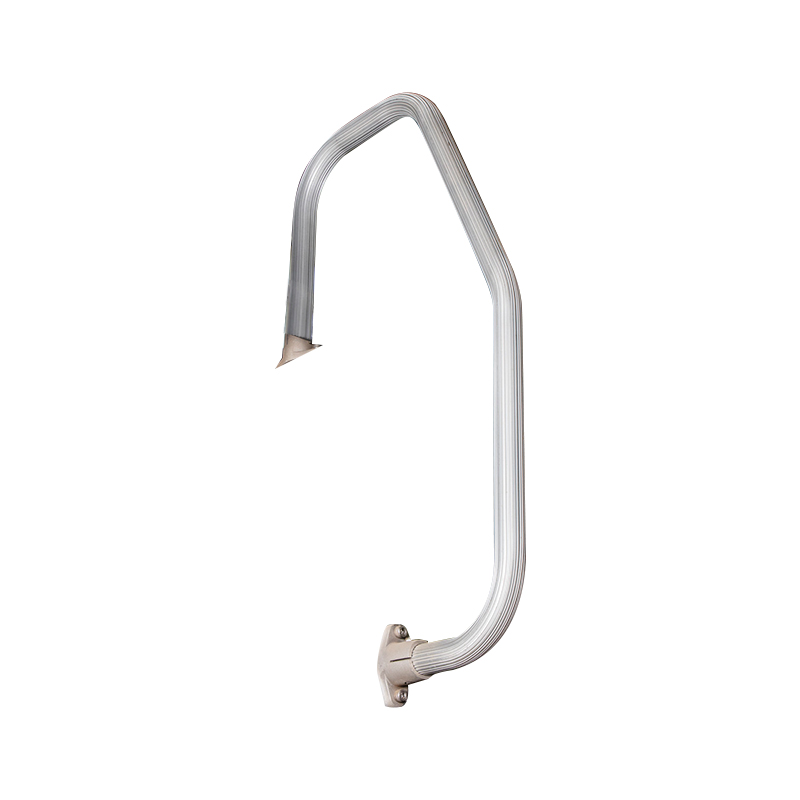
Key Takeaway The right fire truck boarding ladder comes down to matching the mounting style, ground clearance, and material to your truck class: fixed ladders suit trucks with no clearance limits, f...
READ MORE
How to Select a Reliable Folding Boarding Ladder for Fire Trucks
2026.10.25
Content
- 1 The Role of Boarding Ladders in Fire Apparatus Design
- 2 Product Overview
- 3 Why Stainless Steel Is Suitable for Fire Truck Boarding Ladders
- 4 Advantages of the Folding Configuration
- 5 Customization for Different Fire Truck Configurations
- 6 Design Considerations for Safe and Practical Use
- 7 Manufacturing Process and Quality Control
- 8 Company Capabilities and Industry Experience
- 9 Advantages Compared with Basic or Less Specialized Alternatives
- 10 Installation Planning
- 11 Maintenance and Inspection
- 12 Applications Beyond Standard Fire Trucks
- 13 OEM and ODM Project Support
- 14 How to Specify the Product When Requesting a Quotation
- 15 Frequently Asked Questions
- 15.1 What is the main purpose of this folding boarding ladder?
- 15.2 What material is used for the ladder?
- 15.3 Can the ladder dimensions be customized?
- 15.4 Why is a folding design useful on a fire truck?
- 15.5 Is the ladder suitable for replacement projects?
- 15.6 How does the product compare with a removable portable ladder?
- 15.7 How does stainless steel benefit the application?
- 15.8 Are the fasteners important to product performance?
- 15.9 Can the ladder be used on vehicles other than fire trucks?
- 15.10 What information should be supplied for a customized order?
- 15.11 What manufacturing capabilities support this product?
- 15.12 How should the ladder be maintained?
- 16 Why Choose a Specialized Fire Equipment Manufacturer
- 17 Conclusion
- 18 References
- 19 Product: Folding Boarding Ladder for Fire Truck
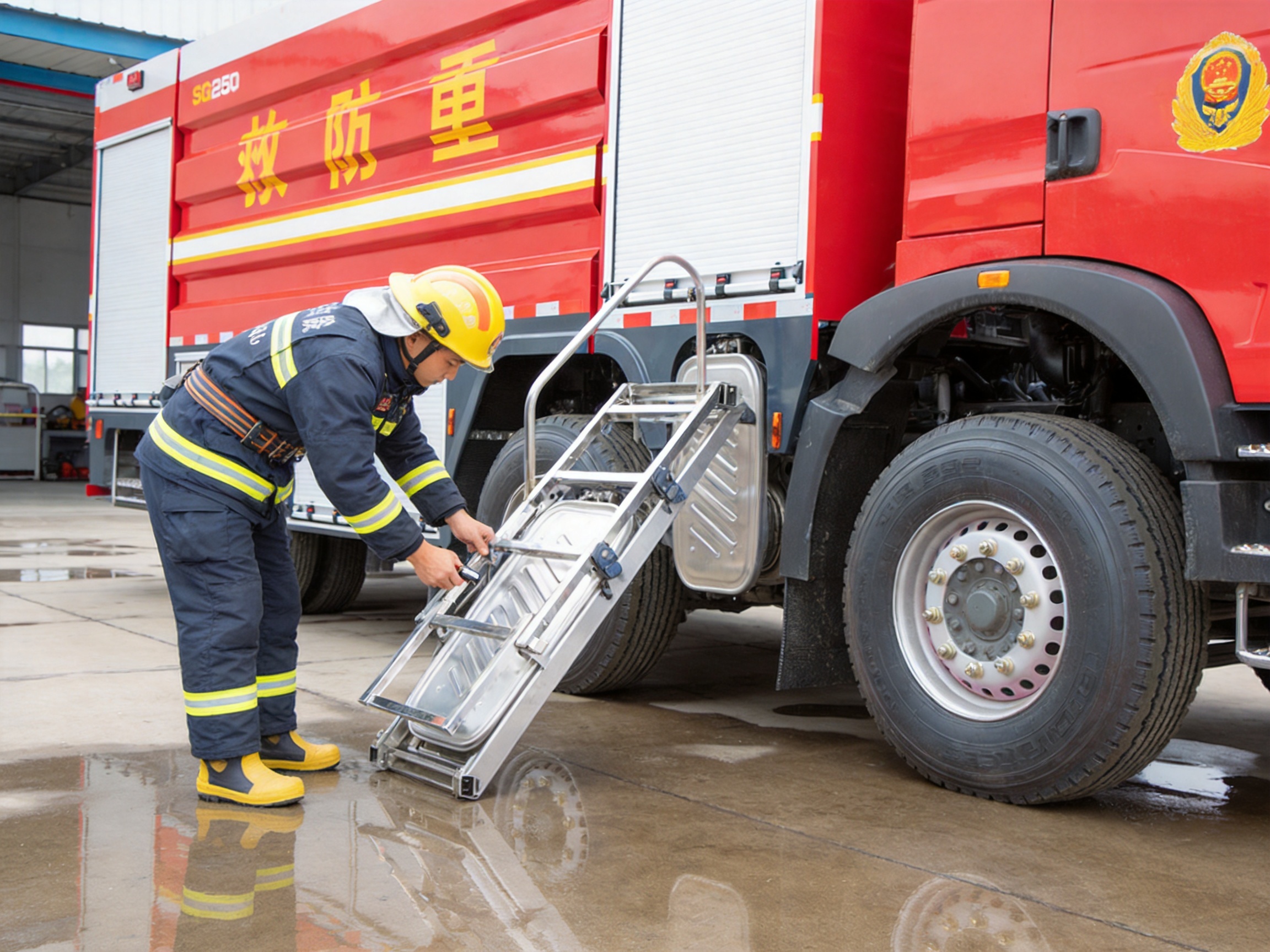
Fire trucks operate in demanding environments where equipment must remain accessible, dependable, and easy to use. A boarding ladder installed on the side of a fire apparatus may appear to be a simple component, but its design directly affects crew access, operational efficiency, vehicle safety, and long-term maintenance. When firefighters need to reach the cab, equipment compartments, roof areas, or elevated working positions, a well-designed ladder provides a stable and practical access solution without unnecessarily increasing the vehicle’s size or obstructing surrounding equipment.
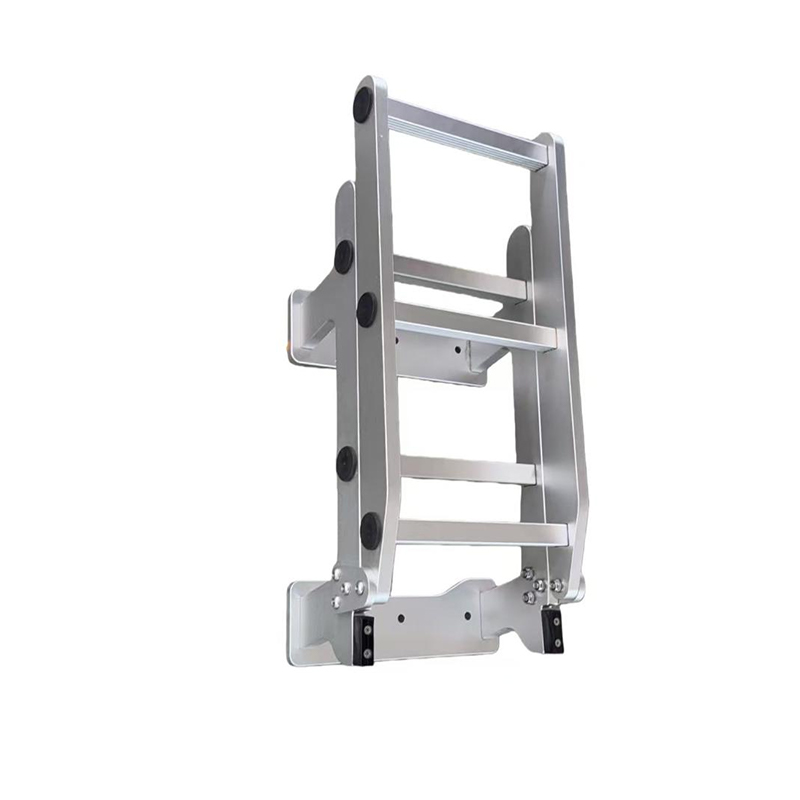
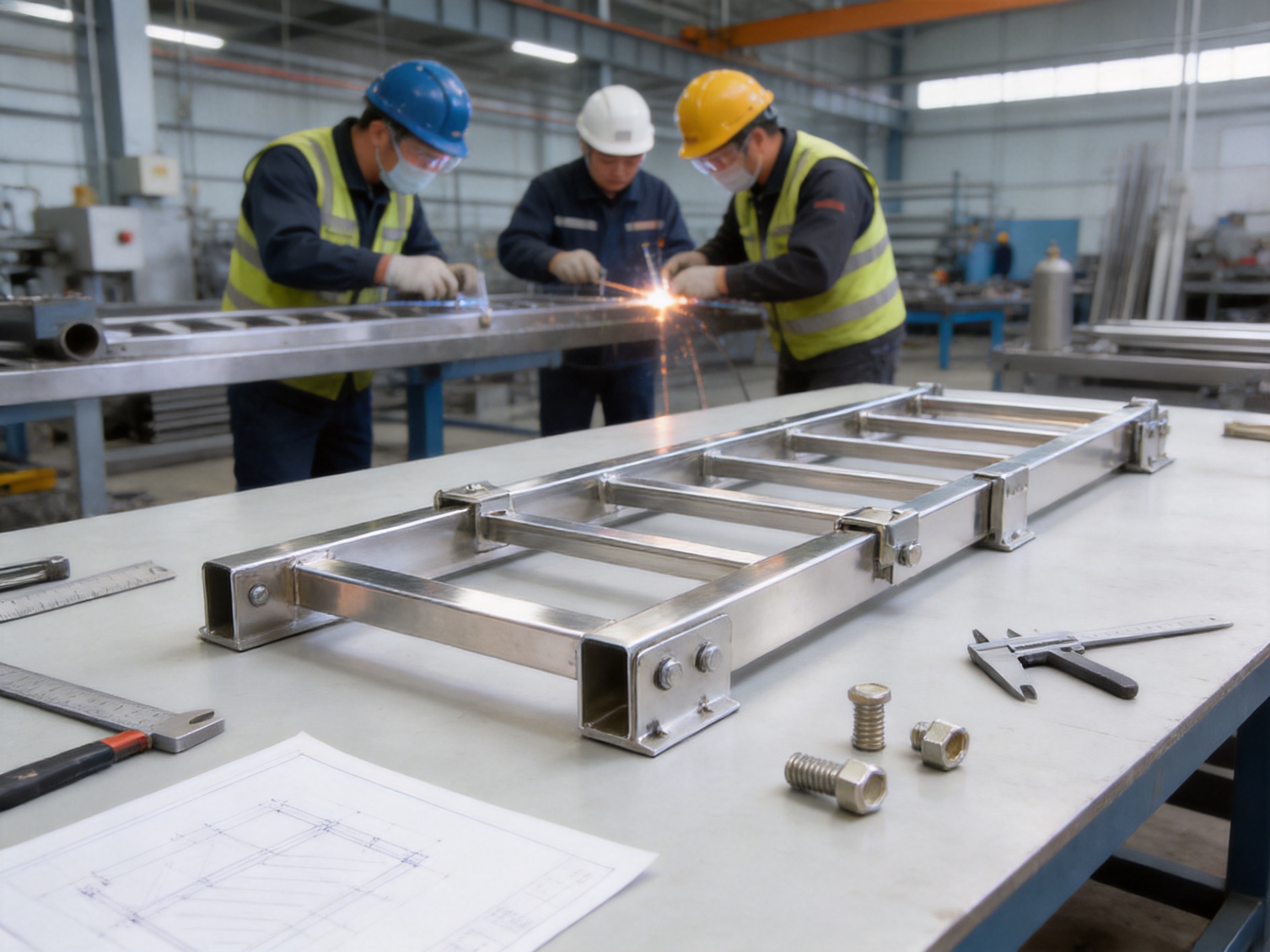
The folding boarding ladder for fire trucks described in this article is designed for side installation on fire apparatus and for use in confined spaces. It is manufactured from welded stainless steel, while all fasteners are made from 304 stainless steel. The result is a compact, corrosion-resistant, and customizable access component suitable for fire trucks and other specialized vehicles.
This product is manufactured by Tianchang Jinlv Fire Equipment Co., Ltd., a China-based manufacturer specializing in fire protection accessories, fire truck equipment, roller shutters, storage systems, ladders, and related components. Since its establishment in 2010, the company has focused on developing practical products for fire protection applications and supporting customers through OEM and ODM services.
The Role of Boarding Ladders in Fire Apparatus Design
Fire apparatus are designed to carry large quantities of equipment while remaining maneuverable in urban streets, industrial sites, highways, and emergency response zones. Every external component must therefore perform its function without compromising access, clearance, or crew movement. A boarding ladder is particularly important when the vehicle includes elevated compartments, roof-mounted equipment, elevated platforms, or cab structures that are difficult to reach directly from the ground.
Unlike a general-purpose portable ladder, a vehicle-mounted boarding ladder is integrated into the apparatus. It is stored in a defined position, remains available for immediate use, and can be folded when not required. This arrangement helps reduce the risk of loose equipment, avoids unnecessary obstruction along the vehicle side, and enables the ladder to remain part of the truck’s permanent access system.
A folding design is especially useful when the available installation area is limited. Fire trucks often include side roller shutters, storage compartments, pump controls, hose connections, lighting systems, handrails, and other accessories. A fixed ladder with a large outward projection may interfere with these components or increase the vehicle’s overall width. A foldable ladder can be positioned close to the body when stowed and extended only when access is required.
The ladder can also support more efficient vehicle layout planning. When dimensions are customized according to the truck body, the manufacturer or vehicle integrator can coordinate the ladder with compartment doors, side panels, handrails, and other equipment. This flexibility is valuable for standard fire engines as well as specialized rescue vehicles, airport fire trucks, industrial emergency vehicles, and other custom-built apparatus.
Product Overview
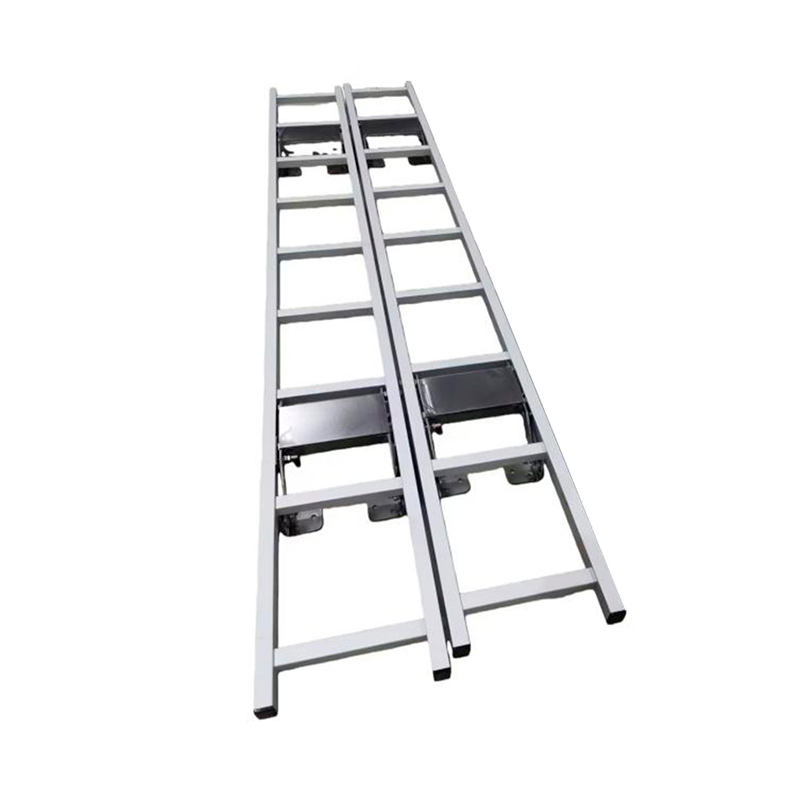
The folding boarding ladder is a stainless steel access product intended primarily for installation on the sides of fire trucks. It may also be used in confined spaces where a compact, folding access structure is needed. The basic product is welded from stainless steel, providing a rigid construction with fewer separate joints than a fully assembled structure made from numerous individual parts.
All fasteners are manufactured from 304 stainless steel. This material selection is important because fire apparatus frequently operate in wet, humid, dirty, and chemically exposed environments. Road spray, water from firefighting operations, cleaning agents, outdoor storage, and changing temperatures can all accelerate corrosion in unsuitable metal components. The use of stainless steel fasteners helps maintain assembly integrity and reduces the likelihood of rust-related maintenance problems.
The ladder is designed with a compact structure. Its folding configuration helps it occupy less space when not in use, which is particularly beneficial on vehicles with narrow side clearances or densely arranged equipment. A compact structure also makes the ladder easier to integrate into a complete vehicle body without creating an unnecessary external projection.
Installation is intended to be convenient for vehicle manufacturers, body builders, maintenance departments, and equipment integrators. Because the product dimensions can be customized, the ladder can be adapted to different mounting positions and vehicle configurations rather than forcing every project to use one fixed size.
The product’s main characteristics can be summarized as follows:
| Feature | Product Description | Practical Benefit |
|---|---|---|
| Primary material | Welded stainless steel | Rigid structure and resistance to demanding operating conditions |
| Fasteners | 304 stainless steel | Improved corrosion resistance and long-term assembly reliability |
| Configuration | Folding boarding ladder | Reduced storage projection and improved space efficiency |
| Application | Fire truck sides and confined spaces | Suitable for vehicle-mounted and compact access requirements |
| Dimensions | Customizable according to customer requirements | Improved compatibility with different vehicle designs |
| Maintenance | Convenient service structure | Easier inspection, cleaning, adjustment, and replacement work |
Why Stainless Steel Is Suitable for Fire Truck Boarding Ladders
Material selection is one of the most important decisions in the design of a vehicle-mounted ladder. The ladder must support repeated use, tolerate outdoor conditions, and remain reliable when the vehicle is exposed to water, dirt, vibration, and temperature changes. Stainless steel is well suited to these requirements because it provides a combination of strength, durability, surface stability, and corrosion resistance.
A welded stainless steel structure can provide a continuous and rigid assembly. Proper welding joins the structural members into a unified component, reducing the number of loose interfaces that may require frequent adjustment. This is useful for a boarding ladder because the product may experience repeated loading, vibration during vehicle movement, and occasional impacts from tools or clothing during emergency operations.
Stainless steel also supports easier cleaning. Fire trucks may be exposed to mud, smoke residue, foam, dust, oils, and other contaminants. A durable metal surface can be washed as part of routine apparatus maintenance. When the surface is properly fabricated and finished, it can help reduce the retention of contaminants and support a cleaner working environment.
The use of 304 stainless steel fasteners complements the welded body. Fasteners are often overlooked during product selection, yet bolts, nuts, washers, and other connection elements are essential to the safety and durability of an installed ladder. If ordinary steel fasteners are used in a wet environment, rust can develop at the connection points, making future disassembly difficult and potentially affecting the appearance and integrity of the assembly. Using 304 stainless steel throughout the fastening system provides a more consistent material solution.
Material selection should always be evaluated together with the operating environment. Different projects may involve coastal exposure, winter road salt, industrial chemicals, frequent washing, or long periods of outdoor parking. A professional manufacturer can help customers confirm the most suitable specification for the intended use and vehicle environment.
Advantages of the Folding Configuration
The primary advantage of a folding boarding ladder is that it combines permanent availability with efficient storage. A ladder that remains installed on the vehicle can be used immediately, but a folding mechanism allows the structure to be moved into a compact position when access is not needed.
This is important on modern fire apparatus, where external space is limited. Side compartments may contain hoses, nozzles, tools, breathing apparatus, extinguishers, and rescue equipment. A large fixed ladder could block access to these systems or interfere with the operation of a roller shutter. A folding ladder can be positioned to cooperate with the vehicle’s overall equipment layout.
The folding format may also improve clearance when the truck travels through narrow streets, enters a station, or maneuvers close to buildings and other vehicles. By minimizing unnecessary outward projection, the ladder can reduce the risk of contact with nearby objects. The exact clearance depends on the vehicle design and installation method, so dimensional planning remains essential.
Another benefit is visual and functional organization. A well-integrated folding ladder can help the vehicle maintain a clean external profile. It can be placed beside or below other apparatus elements without creating an untidy arrangement. For fire departments and fleet managers, an organized vehicle exterior can simplify inspection and help operators identify the intended position of access equipment.
Compared with a removable portable ladder, a vehicle-mounted folding ladder also reduces the risk of misplacement. A portable ladder may be left at an incident scene, stored in a different compartment, or become unavailable when the crew needs it. A built-in ladder remains associated with the apparatus and can be checked during routine vehicle inspections.
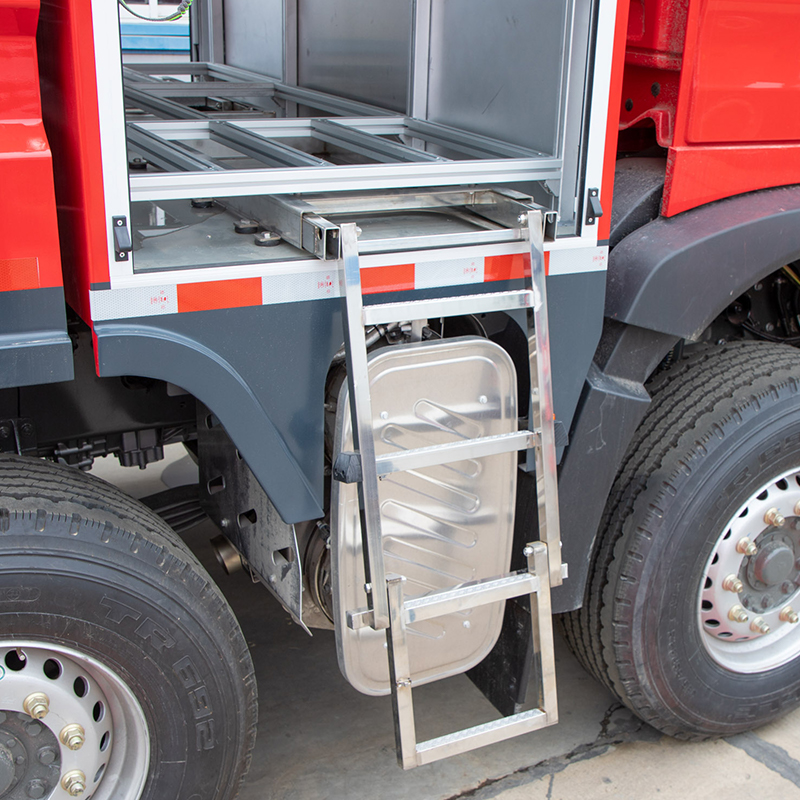
Folding Boarding Ladder for Fire Truck
Customization for Different Fire Truck Configurations
Fire trucks are not manufactured according to one universal body design. Vehicle length, compartment arrangement, cab height, roof access requirements, pump position, equipment load, and local standards can vary significantly. For that reason, a boarding ladder that is available in only one dimension may not provide a practical solution for every project.
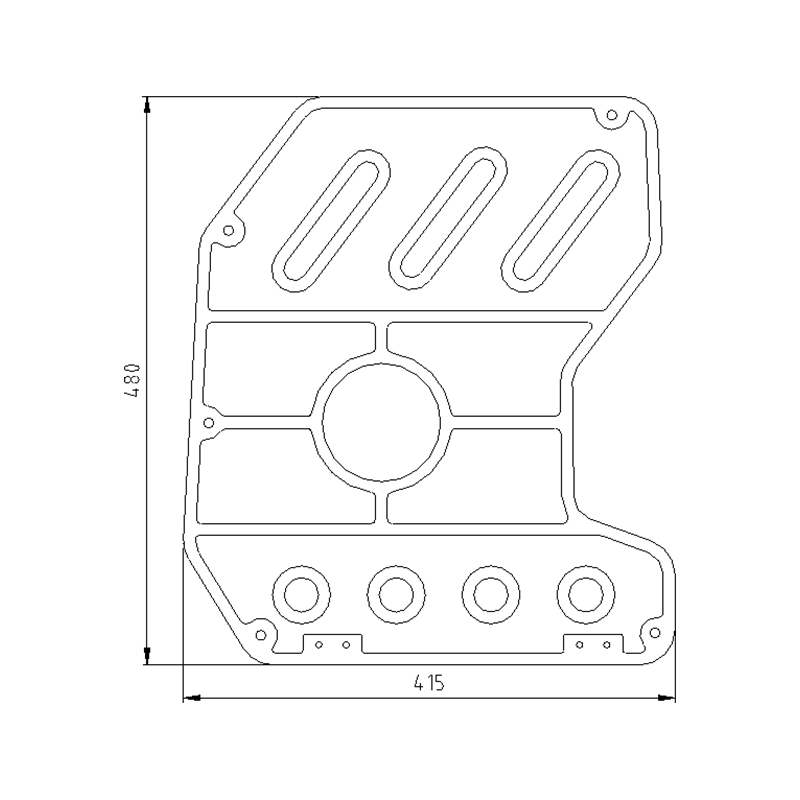
The folding boarding ladder described here allows all principal product dimensions to be customized according to customer requirements. The product information includes the dimensions L, L1, W, W1, and H1, each identified as customizable. These dimensions can be coordinated with the vehicle body, the available mounting area, and the required access position.
| Dimension | Customization Status | Typical Design Consideration |
|---|---|---|
| L | Customizable | Overall ladder length or primary longitudinal dimension |
| L1 | Customizable | Secondary length, mounting interval, or folded-section dimension |
| W | Customizable | Overall width and space required for installation |
| W1 | Customizable | Step or frame width related to user access and vehicle clearance |
| H1 | Customizable | Height or vertical position required for the selected vehicle layout |
These labels should be confirmed against the customer’s technical drawing before production. Dimension names can have different meanings in different engineering projects, so a professional quotation and approval process should include drawings, mounting references, material specifications, and installation details.
Customization can be particularly valuable for replacement projects. A fire department may need to replace an existing ladder on an older vehicle without changing the entire side structure. By providing the relevant measurements, photographs, mounting-hole information, and installation constraints, the customer can work with the manufacturer to develop a compatible replacement.
Customization is also important for OEM vehicle manufacturers. A truck builder may require the ladder to match a specific cab height, side compartment width, body panel design, or access route. A manufacturer with experience in OEM and ODM projects can support the transition from concept design to sample production and then to repeat manufacturing.
Design Considerations for Safe and Practical Use
A boarding ladder should be considered as part of the complete fire truck access system rather than as an isolated component. The ladder’s position must allow users to approach it naturally, deploy it without unnecessary effort, and maintain a stable stance while climbing. The surrounding area should be evaluated for obstructions such as compartment handles, hose outlets, lights, handrails, and other projections.
The folded and deployed positions should both be reviewed. In the folded position, the ladder should remain secure and should not interfere with doors, shutters, or equipment access. In the deployed position, it should provide a clear route for the user. Any locking or retention arrangement should be inspected regularly to confirm that the ladder does not move unintentionally during vehicle travel.
Load requirements should be established before production. The customer should communicate the intended use, expected number of users, operating frequency, and any equipment that may be carried while climbing. These factors influence the structural design, connection method, support points, and verification process.
Surface quality is also relevant. Edges, corners, and welded areas should be appropriately finished so that they do not create avoidable snagging or cutting hazards. The ladder should be easy to inspect visually, allowing operators to identify damage, deformation, contamination, or loose components during routine checks.
For apparatus used in freezing climates, customers may also consider water retention, ice formation, and cleaning procedures. For coastal or industrial environments, additional attention may be given to corrosion exposure. These application details should be included in the technical communication process so that the selected design reflects actual service conditions.
Manufacturing Process and Quality Control
The performance of a stainless steel boarding ladder depends not only on the material grade but also on the manufacturing process. Accurate cutting, forming, welding, finishing, assembly, and inspection are all necessary to produce a dependable component. A weak process can result in dimensional errors, inconsistent joints, poor surface treatment, or installation difficulties even when the selected material is suitable.
Tianchang Jinlv Fire Equipment Co., Ltd. operates with advanced production facilities and a complete production process. The company states that it controls each stage from raw material procurement to final product delivery. This process-oriented approach is important for OEM and ODM customers because repeatability is essential when multiple ladders must be installed across a fleet or produced as part of a recurring vehicle program.
The manufacturing process generally begins with the review of customer requirements. Technical drawings, dimensions, application conditions, mounting arrangements, and desired quantities are assessed before production planning. For customized products, this stage helps identify potential conflicts between the ladder and the vehicle body.
Raw material procurement is another important stage. Stainless steel sheet, tube, bar, fittings, and fasteners should be selected according to the approved specification. Material traceability and incoming inspection support consistency and help prevent the use of unsuitable or mixed materials.
After material preparation, the structural parts are cut and formed according to the approved design. Accurate dimensions are essential because the finished ladder must align with the mounting position and folded clearance of the vehicle. Controlled processing can reduce rework and improve consistency between batches.
Welding joins the prepared stainless steel components into the main ladder structure. The quality of welded joints affects rigidity, appearance, dimensional accuracy, and service life. A professional production process should include appropriate welding procedures, operator control, visual inspection, and dimensional checks after welding.
Following welding, the component may undergo cleaning, finishing, and surface treatment appropriate to the stainless steel construction. The exact treatment depends on the design and customer requirements. The objective is to provide a clean and durable product that is suitable for installation on a professional emergency vehicle.
Assembly includes the installation of 304 stainless steel fasteners and any associated folding or mounting components. The assembly process should verify alignment, movement, fastening condition, and the relationship between the folded and deployed positions.
Final inspection can include visual checks, dimensional verification, welding inspection, functional movement checks, and packaging review. For customized orders, the final product should be compared with the approved drawing and customer specifications before shipment.
Company Capabilities and Industry Experience
Tianchang Jinlv Fire Equipment Co., Ltd. was established in 2010 and has dedicated its operations to the field of fire protection accessories for 15 years. Its product scope includes fire truck roller shutters, fire apparatus equipment stowage and mounting systems, boarding ladders, ladder racks, ladder handrails, firefighting nozzles, fire hose cannons, demolition tools, SCBA equipment, cab doors, and plastic tool components.
This product range gives the company experience across several connected areas of fire truck design. A boarding ladder often needs to be coordinated with storage compartments, roller shutters, handrails, racks, and other body equipment. A supplier familiar with these related components may be better positioned to understand the installation challenges faced by vehicle manufacturers and fire apparatus integrators.
The company emphasizes professional technical expertise, reliable product quality, and customer service. It has passed GB/T 19001-2016 quality certification and states that it uses scientific production processes to support stable quality, cost control, and efficient manufacturing. Quality certification does not replace project-specific verification, but it indicates that the company has established a formal quality management framework.
The company also maintains a research and development team with industry experience. Its stated development approach includes following market trends, investing in research and development, introducing advanced technologies, and developing products for different application scenarios. For customized boarding ladders, this engineering capability can support the adaptation of dimensions, structure, and installation details to suit different fire truck designs.
OEM and ODM capability is another important strength. OEM customers may require a product manufactured according to their drawings or vehicle standards. ODM customers may need assistance developing a suitable design from functional requirements. In both cases, communication, drawing review, sampling, modification, and controlled production are central to a successful project.
International customers may also benefit from dedicated technical support and customer service. Fire apparatus projects frequently involve multiple parties, including vehicle manufacturers, distributors, engineering companies, fire departments, and installation teams. Clear communication helps ensure that product requirements are understood before manufacturing begins.
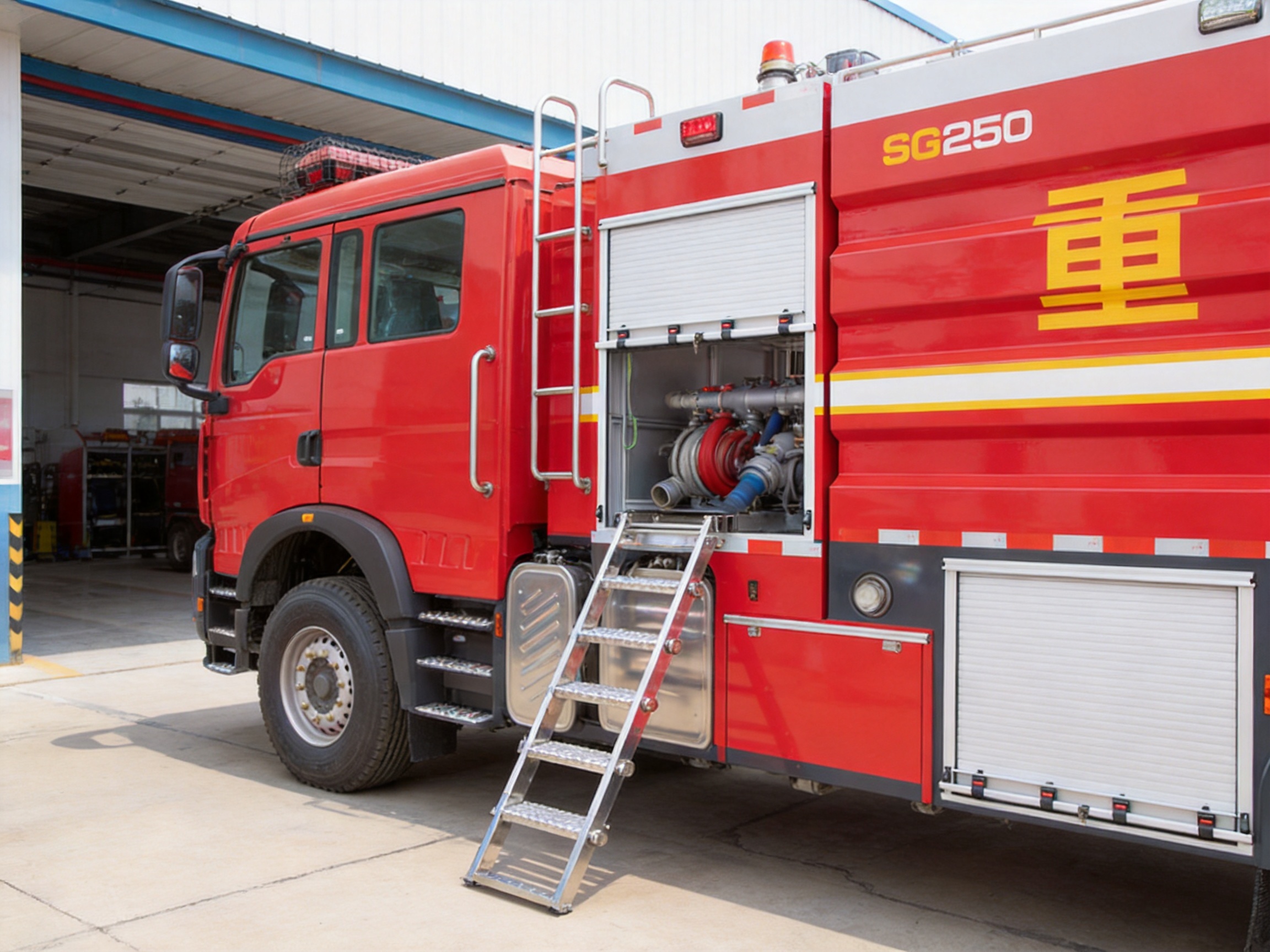
Advantages Compared with Basic or Less Specialized Alternatives
When selecting a boarding ladder, customers may encounter basic carbon steel products, generic aluminum ladders, permanently fixed ladders, or components from suppliers without specific fire protection experience. Each alternative may have its own application, but the stainless steel folding ladder offers several practical advantages for fire truck use.
Compared with a basic carbon steel ladder, the stainless steel construction offers stronger resistance to rust in wet and outdoor environments. Carbon steel can be effective when properly coated and maintained, but damage to the coating may expose the underlying metal. Stainless steel provides a more consistent corrosion-resistant material solution, particularly when the fasteners are also made from 304 stainless steel.
Compared with a fixed ladder, the folding structure provides greater flexibility in confined areas. The ladder can remain installed while reducing its projection when not in use. This supports a more efficient use of side-panel space and can reduce interference with other vehicle components.
Compared with a removable portable ladder, the permanently installed product is less likely to be misplaced. It forms part of the apparatus and can be included in the vehicle’s standard inspection and maintenance routine. This can improve readiness because the access solution is available where it is expected to be.
Compared with a generic ladder with fixed dimensions, the customizable product can be designed around the actual vehicle. This reduces the need for improvised mounting brackets or unsuitable modifications. Proper dimensional coordination can also improve appearance, clearance, and ease of installation.
Compared with a supplier focused only on one product category, a manufacturer with a broad fire truck equipment portfolio may understand how the ladder interacts with storage, access, and mounting systems. This broader perspective can be useful when the customer is developing a complete apparatus body rather than purchasing an isolated component.
| Comparison Point | Folding Stainless Steel Boarding Ladder | Basic Fixed or Generic Alternative |
|---|---|---|
| Space usage | Folds into a compact position | May remain fully projected or require separate storage |
| Material consistency | Stainless steel body with 304 stainless steel fasteners | May combine coated steel, ordinary steel, or mixed materials |
| Vehicle integration | Dimensions can be customized | May require additional adaptation during installation |
| Availability | Installed directly on the apparatus | Portable alternatives can be misplaced or stored elsewhere |
| Maintenance | Designed for convenient inspection and service | Maintenance access depends on the specific design |
| Application focus | Developed for fire trucks and confined spaces | May be designed for general industrial use |
Installation Planning
Installation planning should begin before the ladder is ordered. The customer should identify the intended mounting location, the access height, the available side-panel area, and the space required for folding movement. Drawings or clear photographs of the vehicle can help the manufacturer evaluate the installation.
The mounting surface should be structurally suitable for the expected loads. If the ladder is attached to a panel that is not designed to carry concentrated forces, reinforcement may be necessary. The mounting points should be positioned so that the load is transferred effectively into the vehicle structure.
Clearance checks should be conducted with nearby components in both the open and folded positions. These checks should include roller shutters, compartment doors, handles, lights, hose reels, handrails, pump controls, and external tools. The ladder should not block essential equipment or prevent doors from opening fully.
Vehicle movement should also be considered. The ladder should remain securely folded during travel and should not create excessive vibration or noise. The installation should account for road shock, body flex, and normal vehicle movement. Any retention device should be accessible for inspection and designed for repeated operation.
Customers should confirm whether installation will be performed by the vehicle manufacturer, a body builder, a local distributor, or the end user. The manufacturer can provide installation guidance, drawings, or technical recommendations according to the project requirements. Clear responsibility for installation helps avoid uncertainty regarding adjustment, fastening, and final inspection.
Maintenance and Inspection
A stainless steel ladder is designed for long service life, but regular inspection remains necessary. Fire trucks operate in severe conditions, and even a robust component can be affected by impact, contamination, vibration, misuse, or accidental damage. Routine checks help identify problems before they affect readiness.
Operators should inspect the ladder for visible deformation, cracked welds, damaged surfaces, loose fasteners, unusual movement, or obstruction of the folding mechanism. The ladder should be cleaned after exposure to mud, salt, firefighting foam, chemicals, or other contaminants. Cleaning practices should be compatible with stainless steel and should not introduce corrosive residues.
Fasteners should be checked periodically, especially during the early service period after installation and after heavy use. If a fastener must be replaced, a compatible 304 stainless steel replacement should be considered unless the approved design specifies another material.
The folding movement should be tested to confirm that the ladder opens and closes smoothly. Excessive resistance, unusual noise, or unexpected looseness may indicate contamination, misalignment, wear, or damage. Any locking or retention mechanism should be confirmed in both its operating and storage positions.
Maintenance personnel should follow the vehicle manufacturer’s inspection program and any product-specific instructions provided during supply. If structural damage is discovered, the ladder should be removed from service until it has been assessed by qualified personnel.
Applications Beyond Standard Fire Trucks
Although the main application is side installation on fire trucks, the compact folding design can also be considered for other specialized vehicles and confined-space access requirements. Rescue vehicles, airport emergency vehicles, industrial firefighting trucks, municipal service vehicles, and certain utility vehicles may require permanent but space-efficient access components.
Industrial facilities may use specialized vehicles where operators need access to elevated platforms, equipment compartments, or service areas. A folding ladder can be suitable when the vehicle must operate close to buildings, machinery, or storage racks and cannot accommodate a large fixed projection.
Emergency response vehicles often carry a high concentration of equipment. A customizable ladder can be integrated into the vehicle without displacing essential tools or reducing access to storage compartments. The final suitability depends on the application, load requirements, installation method, and applicable regulations.
Confined spaces are another potential application. In a restricted area, a compact folding access product may be easier to store and deploy than a larger conventional ladder. The customer should define the required dimensions, operating environment, and safety conditions before selecting the final configuration.
OEM and ODM Project Support
OEM and ODM projects require more than the supply of a standard product. They require a coordinated process that connects engineering requirements, production capability, quality control, packaging, delivery, and after-sales support. The manufacturer’s ability to customize dimensions is a useful starting point, but successful project execution also depends on communication and documentation.
For an OEM project, the customer may provide an existing drawing or specification. The manufacturer reviews the information, confirms the material and production requirements, and prepares the product according to the approved documentation. If manufacturing concerns are identified, they should be discussed before the order is finalized.
For an ODM project, the customer may describe the intended use without providing a complete drawing. In this case, the manufacturer can help translate the functional requirement into a product structure. Important information includes vehicle type, access height, available mounting space, operating environment, expected use frequency, required folding direction, and estimated load.
Sampling is often useful for customized products. A sample allows the customer to verify fit, access, clearance, folding movement, appearance, and installation procedure before larger-volume production. Modifications can then be recorded in an approved drawing or technical document.
For fleet orders, repeatability is particularly important. The production process should maintain consistent dimensions and assembly quality across multiple units. Packaging should protect the stainless steel surfaces and moving parts during transportation, while product identification can help the customer manage installation and inventory.
How to Specify the Product When Requesting a Quotation
A clear inquiry helps the manufacturer prepare an accurate quotation and avoid unnecessary delays. The customer should identify the product as a folding boarding ladder for a fire truck and explain whether it is intended for a new vehicle, a replacement project, or a custom apparatus.
The inquiry should include the required quantities, target delivery schedule, installation position, vehicle model, and destination. Technical information should include the desired material, approximate dimensions, available mounting space, and any specific surface or fastener requirements.
Drawings are highly recommended. If drawings are not available, the customer can provide photographs, hand sketches, measurement diagrams, and the values for L, L1, W, W1, and H1. The intended meaning of each dimension should be clearly marked.
Customers should also explain the operating environment. Information about coastal locations, industrial exposure, cold weather, road salt, frequent washing, or chemical contact may influence the recommended configuration and maintenance guidance.
A complete quotation request may include the following information:
| Information Category | Recommended Details |
|---|---|
| Vehicle information | Vehicle type, body design, model, and intended mounting side |
| Dimensions | L, L1, W, W1, H1, mounting height, and available clearance |
| Material | Stainless steel construction and 304 stainless steel fasteners |
| Operation | Folding direction, expected frequency of use, and access purpose |
| Environment | Outdoor exposure, humidity, salt, chemicals, temperature, and cleaning conditions |
| Commercial details | Quantity, packaging needs, destination, and requested delivery schedule |
| Documentation | Drawings, inspection requirements, certificates, and installation instructions |
Frequently Asked Questions
What is the main purpose of this folding boarding ladder?
The main purpose is to provide convenient access to elevated or difficult-to-reach areas of a fire truck while occupying limited space when folded. It is primarily designed for installation on the side of fire apparatus and may also be used in confined spaces.
What material is used for the ladder?
The ladder is welded from stainless steel. All fasteners are made from 304 stainless steel. This combination is intended to support durability and corrosion resistance in demanding vehicle environments.
Can the ladder dimensions be customized?
Yes. The dimensions L, L1, W, W1, and H1 are customizable according to customer requirements. Final dimensions should be confirmed through technical drawings or other approved documentation before production.
Why is a folding design useful on a fire truck?
A folding design reduces the ladder’s projection when it is not being used. This helps conserve side-panel space, maintain clearance, and coordinate the ladder with compartments, roller shutters, handrails, and other fire truck equipment.
Is the ladder suitable for replacement projects?
It can be considered for replacement projects, subject to dimensional and structural confirmation. Customers should provide the existing ladder measurements, mounting information, vehicle photographs, and any available drawings so that compatibility can be evaluated.
How does the product compare with a removable portable ladder?
The folding boarding ladder remains installed on the vehicle, which can reduce the risk of misplacement and make it available whenever the apparatus is used. Its compact folded position also helps integrate it into the vehicle layout.
How does stainless steel benefit the application?
Stainless steel provides resistance to corrosion, supports long-term outdoor use, and can be cleaned as part of normal fire truck maintenance. It is particularly useful where the ladder may be exposed to water, humidity, dirt, cleaning agents, or road conditions.
Are the fasteners important to product performance?
Yes. Fasteners hold the assembly and mounting points together. The use of 304 stainless steel fasteners helps provide a consistent corrosion-resistant solution and can make future inspection or maintenance more practical.
Can the ladder be used on vehicles other than fire trucks?
The primary application is fire truck side installation, but the product may also be considered for rescue vehicles, industrial emergency vehicles, airport firefighting vehicles, and other specialized vehicles or confined-space applications. Suitability must be confirmed for each project.
What information should be supplied for a customized order?
Customers should provide the vehicle type, mounting location, dimensions, available clearance, expected use, environmental conditions, quantity, and any technical drawings or photographs. Details about the folding direction and installation structure are also useful.
What manufacturing capabilities support this product?
The manufacturer uses a complete production process covering raw material procurement, fabrication, welding, assembly, inspection, and delivery. The company also has advanced production facilities, a research and development team, quality management certification, and experience with OEM and ODM customization.
How should the ladder be maintained?
The ladder should be inspected regularly for damage, deformation, loose fasteners, surface contamination, and abnormal folding movement. It should be cleaned after exposure to mud, salt, foam, chemicals, or other contaminants. Damaged structural components should be assessed by qualified personnel before the ladder is returned to service.
Why Choose a Specialized Fire Equipment Manufacturer
A boarding ladder is part of a safety-critical vehicle environment. Although it is not the firefighting medium itself, it supports crew movement and access to the apparatus. Selecting a manufacturer with specific fire equipment experience can help reduce design uncertainty and improve coordination with other vehicle components.
A specialized supplier understands that fire trucks are not ordinary commercial vehicles. They must remain ready for rapid deployment, tolerate demanding environments, and carry equipment in a carefully organized layout. Products must therefore be durable, space-efficient, easy to inspect, and compatible with the broader apparatus design.
Tianchang Jinlv Fire Equipment Co., Ltd. combines product manufacturing with technical development and customization. Its experience includes ladders, roller shutters, storage systems, nozzles, hose cannons, demolition tools, SCBA equipment, cab doors, and other fire truck components. This range supports a practical understanding of the equipment relationships that influence fire apparatus design.
The company’s stated philosophy is based on honesty, innovation, quality, and gratitude. It provides fire truck equipment, related accessories, OEM and ODM customization, global technical support, and customer service. For customers purchasing a customized folding boarding ladder, these capabilities can support the project from initial inquiry through production and delivery.
Conclusion
A folding boarding ladder is a small but important part of an efficient fire truck design. It provides permanent access capability while helping the vehicle conserve space and maintain a clean external layout. For applications on fire apparatus and in confined spaces, the combination of a folding structure, welded stainless steel construction, 304 stainless steel fasteners, and customizable dimensions offers a practical solution.
The product’s advantages are strongest when the ladder is correctly coordinated with the vehicle body. Dimensions, mounting points, folding clearance, load requirements, and environmental conditions should be confirmed before production. A structured engineering and inspection process helps ensure that the finished component fits the vehicle and performs as intended.
With experience in fire protection accessories, advanced production facilities, a complete manufacturing process, GB/T 19001-2016 quality certification, research and development capabilities, and OEM/ODM support, Tianchang Jinlv Fire Equipment Co., Ltd. is positioned to supply customized boarding ladders for different fire truck projects.
For fire departments, vehicle manufacturers, equipment integrators, and distributors, the most effective purchasing approach is to treat the ladder as part of the complete apparatus system. By providing accurate drawings and application information, customers can obtain a more suitable configuration, simplify installation, support long-term maintenance, and improve the operational readiness of the vehicle.
References
1. Product information supplied for the Folding Boarding Ladder for Fire Truck, including material, application, customization, and dimensional data.
2. Company information supplied for Tianchang Jinlv Fire Equipment Co., Ltd., including manufacturing capabilities, product categories, quality management, and OEM/ODM services.
3. General engineering principles for stainless steel fabrication, welded structures, corrosion-resistant fasteners, and vehicle-mounted access equipment.
4. General fire apparatus design and maintenance practices relating to equipment accessibility, vehicle clearance, inspection, and operational readiness.
Product: Folding Boarding Ladder for Fire Truck
News
-
-
Two minutes into a working fire, a crew stands in front of a locked steel security door with a crowbar that is too short to pull with both hands. Nothing about the tool is broken. It was simply speci...
READ MORE -
Quick Answer The right fire fighting nozzle depends on three factors: the flow rate your pump can deliver, the pattern your crew needs on the fireground, and the thread standard your hose already us...
READ MORE -
Quick Answer The right fire truck boarding ladder is a fixed, upward-folding, or rotating step assembly mounted at the rear or side of the apparatus that gives firefighters a stable, non-slip surface ...
READ MORE -
When a fire apparatus rolls out of the station for a structure fire or a highway rescue, every bolt, hinge, and ladder surface is about to face heat, vibration, moisture, and rough handling. Some com...
READ MORE -
Specification meetings usually park the ladder rack near the bottom of the option sheet, a few lines above the license plate bracket. That is also why ladder racks become the complaint in year three:...
READ MORE
Hey! Interested in staying in the loop? Sign up for our updates.
WE WON'T SPAM YOU, PINKY PROMISE.

Tianchang Jinlv Fire Equipment Co., Ltd.
Copyright © Tianchang Jinlv Fire Equipment Co., Ltd. All rights reserved. Custom Fire Truck Equipment Supplier Fire Apparatus Parts Factory
