

 en
 English
 русский
 Español
 عربى

When a fire apparatus rolls out of the station for a structure fire or a highway rescue, every bolt, hinge, and ladder surface is about to face heat, vibration, moisture, and rough handling. Some com...
READ MORE
High-Performance SCBA Cylinders for Firefighting and Emergency Response
2026.11.06
Content
- 1 Why the SCBA Cylinder Is Critical in Emergency Operations
- 2 Product Configuration and Available Capacities
- 3 Carbon-Fiber Composite Construction
- 4 Pressure Performance and Safety Margin
- 5 Integrated Respirator Technical Parameters
- 6 Advantages Compared with Conventional Alternatives
- 7 Manufacturing Process and Quality Control
- 8 Standards, Inspection, and Service Life
- 9 Applications Across Fire and Industrial Sectors
- 10 Integration with Fire Truck and Rescue Equipment
- 11 Company Manufacturing Strengths
- 12 Purchasing Guidance for Distributors and End Users
- 13 Use, Storage, and Maintenance Recommendations
- 14 Frequently Asked Questions
- 14.1 What is an SCBA cylinder used for?
- 14.2 What material is used for this cylinder?
- 14.3 What is the rated working pressure?
- 14.4 What cylinder capacities are available?
- 14.5 How much does each cylinder configuration weigh?
- 14.6 What is the bottle-neck thread?
- 14.7 What is the cylinder burst pressure?
- 14.8 When does the low-pressure alarm activate?
- 14.9 How often should the cylinder be inspected?
- 14.10 Can the cylinder be used with any SCBA pressure reducer?
- 14.11 What should be done if the cylinder is dropped or exposed to fire?
- 14.12 Does the manufacturer provide customization?
- 15 Conclusion
- 16 References
- 17 Product: Self-Contained Breathing Apparatus (SCBA)Cylinder
Self-contained breathing apparatus (SCBA) cylinders are essential life-support components for firefighters, industrial emergency teams, hazardous-materials specialists, and rescue personnel working in environments where breathable air is limited or contaminated. An SCBA cylinder stores compressed breathing air and supplies it through a pressure-reduction and facepiece system, allowing the user to operate independently of the surrounding atmosphere. In a fire, chemical release, mining incident, warehouse emergency, or oxygen-deficient industrial area, dependable respiratory protection can determine whether a rescue operation is completed safely and effectively.
The SCBA cylinder described in this article is designed for demanding professional applications. It uses a carbon-fiber composite construction, a rated working pressure of 30 MPa, a bottle-neck thread of M18×1.5, and a stated burst pressure of 105 MPa for the cylinder configuration. Available capacities include 3 liters, 6.8 liters, 6.8 liters in a twin-cylinder arrangement, and 9 liters. This range allows users to select a compact cylinder for mobility, a larger cylinder for extended operational time, or a dual-cylinder configuration for increased air capacity.
Unlike basic compressed-air storage vessels intended for general industrial use, a professional SCBA cylinder must perform as part of an integrated respiratory protection system. It must be compatible with the cylinder valve, pressure reducer, alarm, back frame, full facepiece, and harness. It must also maintain structural integrity under demanding temperature, pressure, handling, and inspection conditions. For these reasons, cylinder material selection, winding quality, valve installation, testing, traceability, and final inspection are all critical.
The product is supplied by Tianchang Jinlv Fire Equipment Co., Ltd., a manufacturer focused on fire protection accessories, fire truck equipment, rescue components, ladders, roller shutters, and equipment storage systems. The company combines product development, manufacturing, quality control, and OEM/ODM support to serve fire equipment distributors, vehicle manufacturers, emergency response organizations, and industrial safety customers.
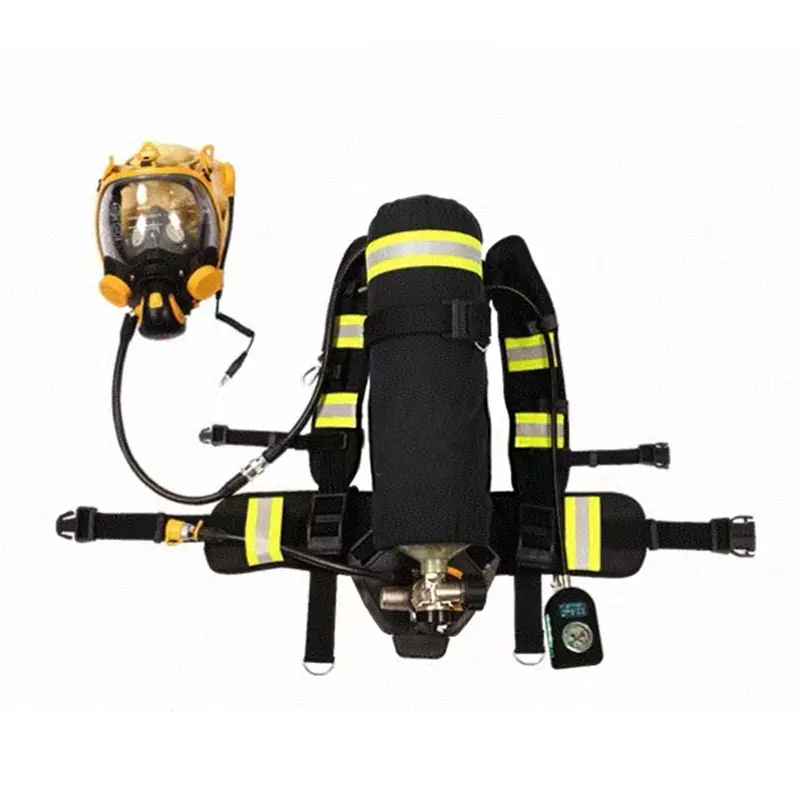
Self-Contained Breathing Apparatus (SCBA)Cylinder
Why the SCBA Cylinder Is Critical in Emergency Operations
Smoke, toxic gases, suspended dust, and oxygen deficiency create immediate dangers for people entering a fire or industrial emergency zone. Even when the air appears clear, combustion products and chemical vapors may be present at concentrations that can cause unconsciousness, poisoning, or fatal respiratory injury. A standard dust mask or air-purifying respirator may not provide adequate protection in an unknown or oxygen-deficient atmosphere because those devices depend on the surrounding air and, in many cases, cannot remove every hazardous substance.
An SCBA system uses an independent supply of compressed air. The cylinder stores the air at high pressure, while the pressure reducer lowers the pressure to a level suitable for delivery to the wearer. The facepiece creates a protected breathing environment, and the alarm warns the wearer when the remaining cylinder pressure reaches a specified level. This configuration gives trained personnel the ability to enter hazardous areas without relying on the quality or oxygen concentration of the surrounding atmosphere.
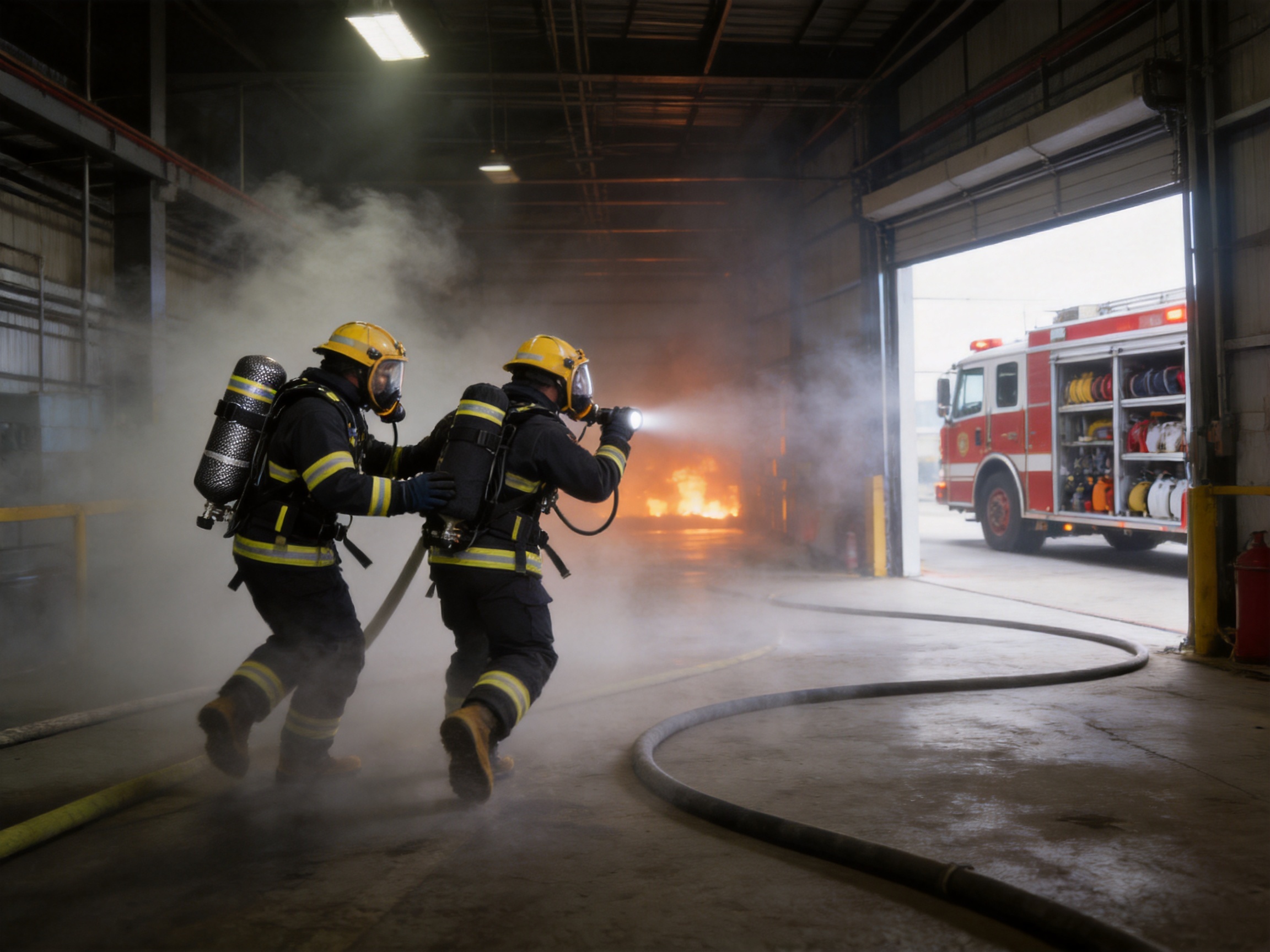
Firefighters may use SCBA equipment during structural firefighting, vehicle fires, industrial fires, tunnel incidents, and rescue operations in smoke-filled buildings. Chemical and petroleum facilities may require SCBA equipment for leakage response, maintenance emergencies, and confined-space rescue. Mining, shipbuilding, laboratories, oil depots, warehouses, and manufacturing plants may also require independent respiratory protection for emergency teams.
In these applications, the cylinder is more than an air container. It is a pressure-bearing safety component that must remain reliable when exposed to impact, vibration, heat, moisture, repeated handling, and rapid changes in operating conditions. The cylinder must be light enough to support mobility but strong enough to withstand high internal pressure. It must also integrate securely with the valve and back-frame assembly so that the system remains stable while the wearer climbs, bends, crawls, carries equipment, or performs rescue work.
Product Configuration and Available Capacities
The SCBA cylinder is available in several capacity options to meet different operational requirements. A smaller cylinder can reduce the weight carried by the user and may be suitable for short-duration intervention, training, inspection, or applications where mobility is especially important. Larger cylinders generally provide more stored air and can support longer work periods, although actual duration depends on the wearer’s breathing rate, workload, environmental conditions, and reserve-air requirements.
| Configuration | Nominal Volume | Approximate Weight | Typical Selection Consideration |
|---|---|---|---|
| Single cylinder | 3 L | Approximately 2.2 kg | Compact and lightweight applications |
| Single cylinder | 6.8 L | Approximately 3.8 kg | Balanced capacity and portability |
| Twin-cylinder arrangement | 6.8 L × 2 | Approximately 7.6 kg | Higher total air capacity and extended use |
| Single cylinder | 9 L | Approximately 5.4 kg | Longer-duration professional applications |
The weights listed above are approximate product data and may vary according to valve configuration, protective accessories, fittings, and production tolerances. Buyers should confirm the complete assembly weight before final equipment selection, especially where the cylinder will be installed on a compact back frame or combined with thermal protective clothing, communication equipment, rescue tools, and other personal protective equipment.
The 6.8-liter cylinder offers a practical balance between stored-air capacity and carried weight. It is suitable for many standard firefighting and industrial rescue configurations. The 6.8-liter twin-cylinder arrangement can support applications that require increased air capacity while distributing the load through a compatible back-frame design. The 9-liter option provides a larger reserve of compressed air for operations in which longer entry time or increased working duration is important.
The 3-liter configuration can be considered where compactness, reduced load, or task-specific deployment is more important than maximum duration. It may be useful for specialized rescue kits, short-duration interventions, or applications where a smaller breathing-air supply is integrated with other equipment. Selection should always be based on a documented risk assessment, operational procedure, user training, and the requirements of the complete SCBA system.
Carbon-Fiber Composite Construction
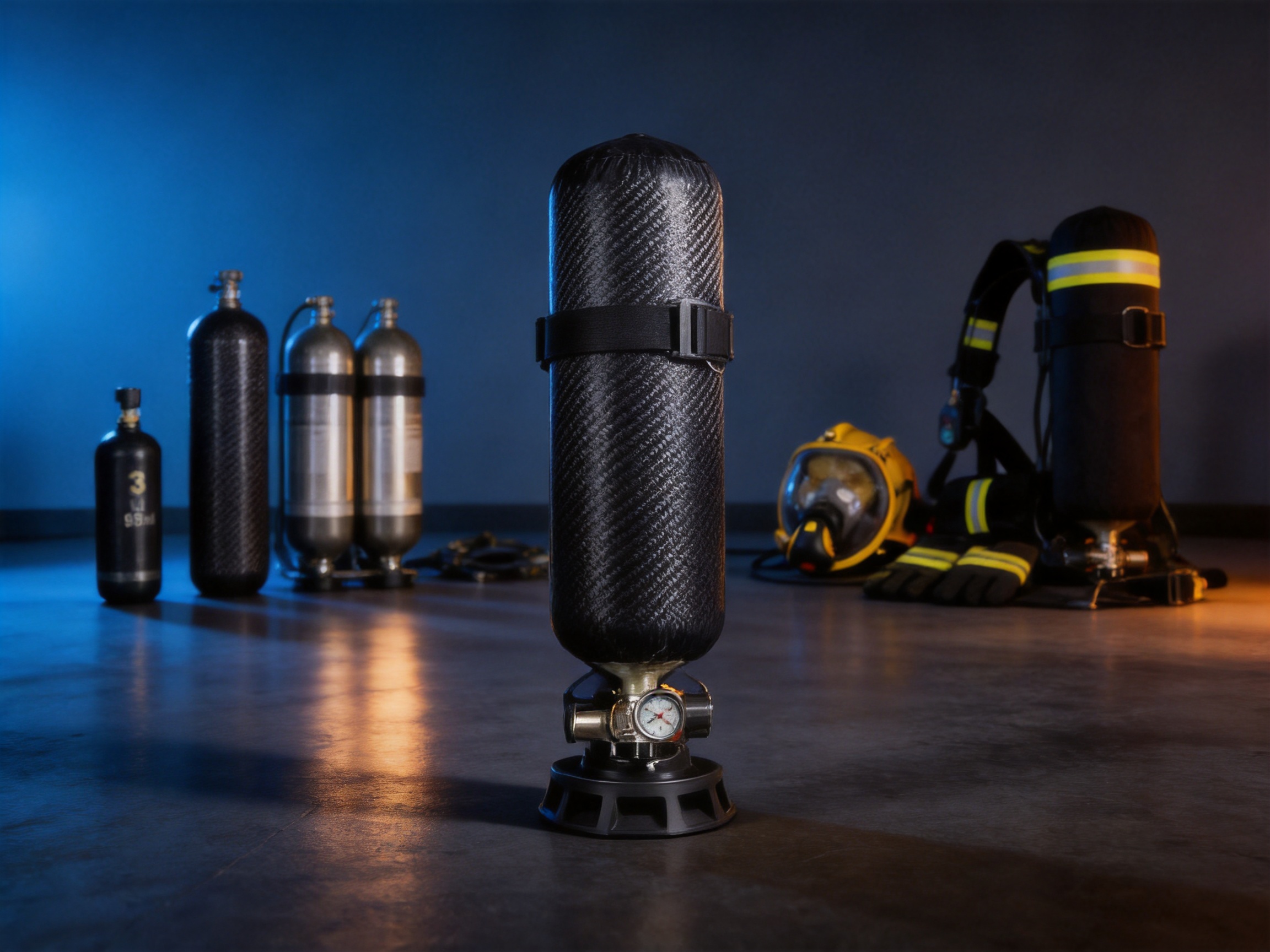
The cylinder uses carbon fiber composite material with a full carbon-fiber winding structure. This construction is a major advantage over traditional all-metal cylinders when weight reduction is a priority. A lighter cylinder can reduce the physical burden on firefighters and emergency responders, potentially improving mobility, balance, climbing ability, and endurance during extended operations.
Full carbon-fiber winding is intended to distribute reinforcing fibers around the pressure vessel in a controlled pattern. The winding structure works with the internal liner to contain the compressed air and resist the forces generated by high internal pressure. The quality of the fiber, resin system, liner preparation, winding angle, winding tension, curing process, and inspection procedure all influence the finished cylinder’s performance.
Compared with conventional steel cylinders, carbon-fiber composite cylinders can offer a more favorable strength-to-weight ratio. Steel cylinders are known for their structural strength, but their higher mass may increase fatigue during firefighting and rescue work. Aluminum cylinders can reduce weight compared with steel, but composite construction can provide further weight benefits when properly engineered and manufactured. The practical advantage is not simply a lower specification weight; it is the possibility of carrying breathing air with less effect on the wearer’s movement.
Lower weight can be particularly valuable in environments that require frequent movement through narrow passages, stairwells, ladders, vehicles, industrial platforms, or confined spaces. Firefighters may need to crawl beneath smoke, climb while carrying hose and tools, or assist injured people. A lighter breathing-air cylinder can help reduce the cumulative load imposed on the back, shoulders, and legs.
Composite cylinders must nevertheless be handled responsibly. Carbon-fiber construction does not make a cylinder immune to damage. Abrasion, severe impact, exposure to incompatible chemicals, heat damage, or unauthorized modification can affect the cylinder’s safety. Users must follow the manufacturer’s handling instructions, inspection schedule, filling procedures, and service limitations. Any cylinder involved in a serious impact, fire exposure, or suspected damage should be removed from service and evaluated by an authorized professional.
Pressure Performance and Safety Margin
The cylinder has a rated working pressure of 30 MPa. This high-pressure storage capability allows a relatively compact vessel to contain a useful quantity of breathing air. High-pressure operation is important in SCBA design because the cylinder must provide sufficient breathing-air capacity without becoming excessively large or heavy for the user.
The specified cylinder burst pressure is 105 MPa. The relationship between working pressure and burst pressure represents an important structural safety consideration, but burst pressure should not be interpreted as an allowable operating pressure. The cylinder must be filled only to its rated working pressure using approved equipment and procedures. Operators must never attempt to increase the pressure beyond the product rating in order to obtain additional air.
The cylinder valve and pressure-reduction system have separate performance requirements. The broader respirator technical parameters list a pressure reducer output pressure of 0.6–1.0 MPa, an output flow rate below 800 liters per minute, and a safety valve opening pressure of 1.1–1.7 MPa. These values relate to the complete respirator configuration and should be confirmed against the exact system model supplied to the customer.
The low-pressure warning alarm is specified with an alarm pressure of 5.5±0.5 MPa and a sound level of 90 dB(A). This warning is intended to alert the wearer that the available air supply is reaching a low-pressure level. In actual operation, the alarm should be treated as a signal to leave the hazardous area according to the organization’s emergency procedure. It should not be regarded as an indication that the wearer has a full additional working period available.
The alarm’s effectiveness depends on more than its nominal sound level. Fire scenes may contain engine noise, hose streams, collapsing materials, radio communication, ventilation systems, and other loud sounds. Users should receive training on recognizing the alarm through both sound and established emergency procedures. Supervisors should also ensure that the alarm is tested during scheduled inspections and before operational deployment.
Integrated Respirator Technical Parameters
Although the product focus is the SCBA cylinder, the cylinder operates within a complete respiratory protection system. Understanding the main associated parameters helps purchasers evaluate compatibility and system performance.
| Component or Function | Specified Parameter | Operational Significance |
|---|---|---|
| Rated working pressure | 30 MPa | Nominal maximum filling pressure for the cylinder |
| Pressure reducer output pressure | 0.6–1.0 MPa | Reduces cylinder pressure for system delivery |
| Pressure reducer output flow | Less than 800 L/min | Supports air delivery under breathing demand |
| Safety valve opening pressure | 1.1–1.7 MPa | Provides pressure-relief protection within the system |
| Low-pressure alarm pressure | 5.5±0.5 MPa | Warns the wearer of low remaining cylinder pressure |
| Alarm sound level | 90 dB(A) | Provides an audible low-pressure warning |
| Full facepiece inhalation pressure | Greater than 0 Pa | Supports positive-pressure breathing protection |
| Full facepiece exhalation pressure | Less than 800 Pa | Controls exhalation resistance |
| Cylinder valve burst pressure | 37–45 MPa | Specified pressure behavior for the valve component |
| Back-frame flame test temperature | 800 °C | Indicates the stated thermal test condition for the frame |
System compatibility is essential. A cylinder should not be connected to a pressure reducer, valve, back frame, or facepiece merely because the connection appears physically suitable. Thread specifications, pressure ratings, flow requirements, sealing surfaces, valve design, and regulatory approvals must all be checked. The stated bottle-neck thread is M18×1.5, but buyers should confirm the complete valve and connection configuration before placing an order.
Advantages Compared with Conventional Alternatives
Reduced Carrying Burden
One of the most important advantages of a carbon-fiber SCBA cylinder is its potential to reduce carrying weight compared with conventional metal alternatives. In emergency work, every kilogram affects the wearer’s balance and energy consumption. Firefighters already carry protective clothing, boots, gloves, helmets, radios, thermal imaging devices, lights, forcible-entry tools, and sometimes hose or rescue equipment. A lighter cylinder can contribute to a more manageable total load.
Weight reduction is especially valuable during tasks involving stairs, ladders, steep terrain, confined passages, and prolonged search operations. It may also reduce the effort required when a responder must kneel, crawl, rise from the floor, or assist another person. The practical benefit should be evaluated as part of the full SCBA assembly rather than by comparing cylinder weights alone.
High Air Capacity in a Compact Form
A 30 MPa rated working pressure allows compressed air to be stored efficiently in a portable cylinder. The range of 3-liter, 6.8-liter, twin 6.8-liter, and 9-liter configurations gives equipment planners flexibility. Instead of using one universal size for every task, organizations can assign cylinder capacities according to expected entry duration, user workload, rescue strategy, and equipment restrictions.
The larger configurations can be advantageous for operations in which exiting the hazard zone may take time. For example, a responder operating deep inside a warehouse, industrial plant, ship compartment, or underground area may require more air capacity than someone performing a short inspection near an access point. The correct selection must account for reserve requirements and should never be based solely on the theoretical cylinder volume.
Composite Strength and Professional Use
The full carbon-fiber winding structure is intended for professional compressed-air applications. It combines a lightweight construction concept with the pressure capability required by modern SCBA systems. Compared with low-cost or general-purpose air containers that are not designed for emergency respiratory protection, a dedicated SCBA cylinder is better aligned with the mechanical and operational requirements of firefighting equipment.
Professional use also requires supporting components and quality procedures. The supplied cylinder specifications include a defined valve thread, working pressure, burst pressure, inspection interval, service life, and product standard. These details help purchasers establish a maintenance plan and compare complete equipment proposals more effectively.
Multiple System Configurations
The availability of single and twin-cylinder configurations is another practical advantage. A single cylinder can provide a simpler and lighter arrangement, while a twin-cylinder assembly may increase total air capacity. This flexibility is useful for fire departments, industrial plants, distributors, and vehicle manufacturers that serve different end users and operating environments.
OEM and ODM support can further help customers adapt the cylinder and related SCBA components to specific requirements. Customization may involve equipment configuration, labeling, packaging, mounting arrangement, color, documentation, or integration with a customer’s existing fire truck and rescue equipment program. Any customization affecting pressure containment, valve connections, or safety-critical performance must be reviewed and approved through appropriate technical procedures.
Manufacturing Process and Quality Control
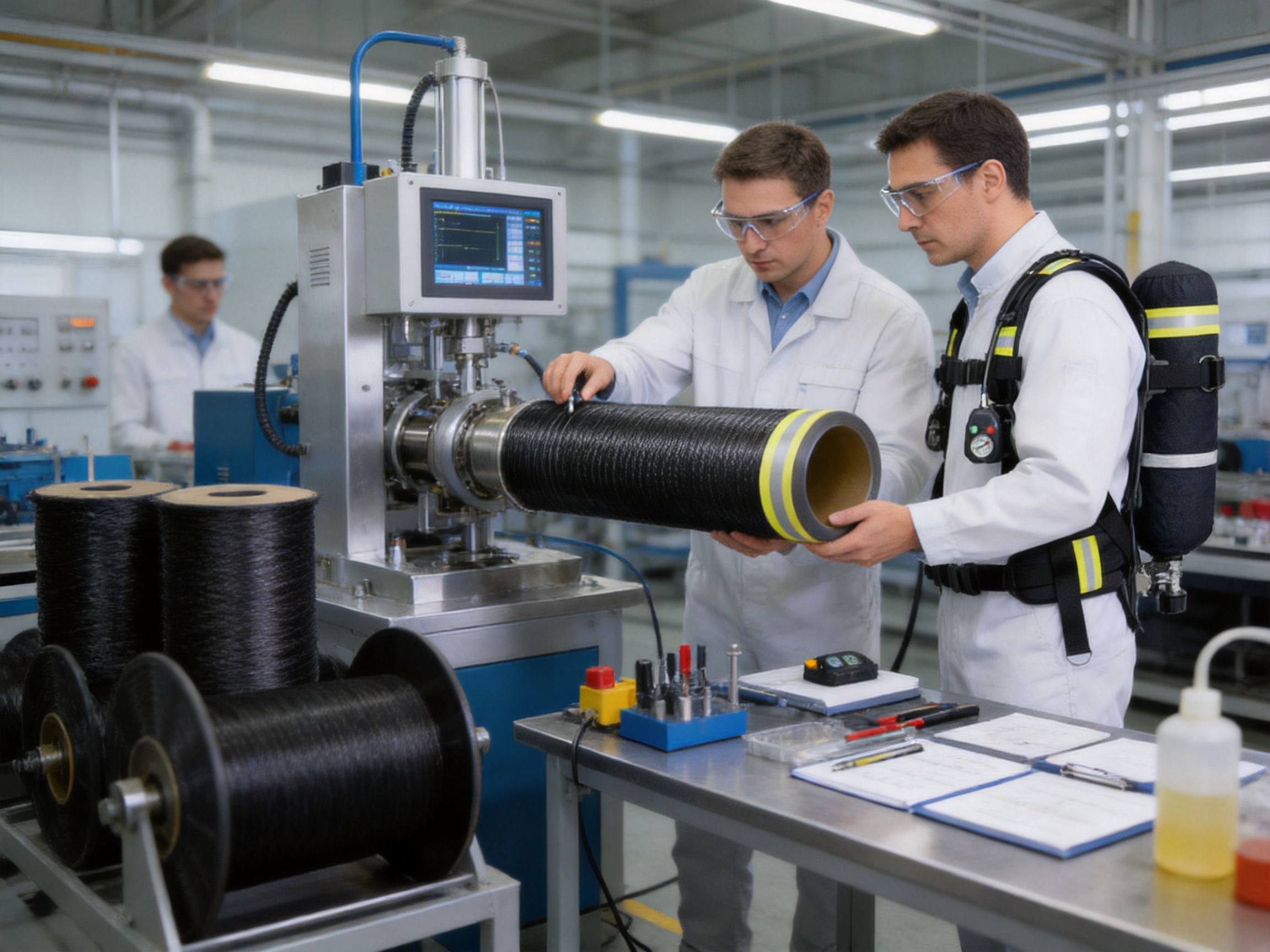
The performance of a composite SCBA cylinder depends heavily on the consistency of its manufacturing process. A professional manufacturer must control raw materials, production parameters, assembly, testing, and documentation. The objective is not only to produce a cylinder that meets a nominal specification but also to ensure repeatable quality from one production batch to the next.
Raw Material Management
Manufacturing begins with the selection and verification of raw materials. Carbon fiber, resin systems, liners, valves, seals, protective components, and other materials must be suitable for the intended pressure and service conditions. Incoming materials should be checked against purchasing specifications and controlled through batch identification. Proper material storage is also important because temperature, humidity, contamination, and shelf life can affect resin and sealing materials.
A controlled raw-material process supports traceability. When a product is delivered to a fire department, equipment integrator, or international distributor, the ability to identify the relevant production batch provides an important foundation for quality management, inspection, and after-sales service.
Liner Preparation and Surface Control
The liner forms an important part of the pressure vessel structure and provides the internal surface that contains the compressed air. Before winding, the liner must be inspected for dimensional accuracy, surface condition, cleanliness, and defects. Areas around the neck and valve interface require particular attention because they influence sealing, alignment, and connection strength.
Surface preparation must be consistent. Contamination, moisture, or uneven treatment can affect the bonding relationship between the liner, resin, and carbon-fiber reinforcement. Production personnel should follow controlled procedures for cleaning, preparation, storage, and handling before the winding operation begins.
Controlled Carbon-Fiber Winding
Filament winding is a central manufacturing stage for a full carbon-fiber composite cylinder. The fiber is wound around the liner according to a programmed pattern designed to manage the stresses produced by internal pressure. Winding angle, fiber tension, resin content, coverage, overlap, and end-region treatment all require control.
Automated or semi-automated winding equipment can improve repeatability by maintaining defined movement paths and process parameters. Skilled technical personnel remain important because equipment setup, material behavior, process monitoring, and inspection results must be interpreted correctly. A stable winding process helps minimize variations in wall structure and reduces the risk of localized weaknesses.
Particular care is required at the cylinder shoulders and neck transition. These areas may experience complex stress patterns and can be more difficult to wind uniformly than the central cylindrical section. Proper program design and inspection help ensure that the reinforcement extends correctly across the intended pressure-bearing zones.
Resin Impregnation and Curing
The resin binds the carbon fibers into a rigid composite structure and transfers load among the fibers. Resin impregnation must be controlled so that the fibers are adequately wetted without creating unacceptable voids, dry areas, or excessive resin-rich regions. The curing process must follow defined temperature, time, and environmental conditions.
Insufficient curing can reduce structural performance, while uncontrolled curing can produce internal stress, dimensional variation, or surface defects. Manufacturing personnel should monitor curing conditions and retain relevant process records. Depending on the production system, curing may be performed in a controlled oven or through another validated method suitable for the composite design.
Valve Installation and Assembly
After the cylinder body has been manufactured and inspected, the valve assembly must be installed according to controlled procedures. The M18×1.5 bottle-neck thread is a key connection specification, but thread compatibility alone is not enough. Correct torque, sealing method, alignment, cleanliness, and component identification are all important.
The valve must be suitable for the rated working pressure and complete SCBA system. Unauthorized substitution of valves, adapters, or fittings can create serious safety risks. The assembly process should protect threads and sealing surfaces from damage and should include checks for leakage and correct operation.
Pressure Testing and Final Inspection
Pressure-containing products require rigorous testing. The manufacturer’s quality process should include dimensional checks, visual inspection, pressure-related testing, valve and leakage checks, and verification of markings and documentation. The precise test sequence depends on the product design, applicable standard, and production approval.
Final inspection should confirm that the cylinder is free from unacceptable surface damage, that the valve is correctly installed, and that identification marks are legible. The finished product should be matched with the correct technical data and shipment documentation. A controlled release process helps prevent incorrect configurations from reaching the customer.
Standards, Inspection, and Service Life
The stated product standard is GB28053-2011. Customers should confirm the current applicability of this standard, any amendments, and any additional national or regional requirements that apply in the destination market. Fire departments and industrial users may also require certification, testing, labeling, or documentation under local occupational safety, pressure-vessel, or respiratory-protection regulations.
The specified inspection interval is three years, and the stated service life is 15 years. These values provide a planning framework, but the actual inspection and retirement requirements must be determined according to the applicable regulations, manufacturer instructions, cylinder markings, usage history, and condition of the individual cylinder.
Inspection intervals should not be treated as permission to continue using a visibly damaged cylinder until the scheduled date. A cylinder should be removed from service if it shows signs of impact, abrasion through protective layers, heat exposure, chemical damage, leakage, damaged threads, unauthorized modification, or other abnormal conditions. Qualified inspection personnel should determine whether it can return to service.
Organizations should maintain records for each cylinder, including serial number, manufacturing date, inspection dates, filling history where required, repairs or evaluations, and retirement status. Recordkeeping improves accountability and helps managers identify equipment that is approaching inspection or service-life limits.
Applications Across Fire and Industrial Sectors
Structural Firefighting
Structural firefighters may encounter smoke, carbon monoxide, heated gases, oxygen deficiency, and rapidly changing fire conditions. An SCBA cylinder supplies the independent air required for interior operations. The cylinder’s weight, capacity, alarm performance, and compatibility with the back frame all affect the wearer’s ability to perform search, hose advancement, ventilation support, and victim rescue.
Industrial Fire Protection
Petroleum facilities, chemical plants, metal-processing facilities, warehouses, and manufacturing sites may maintain emergency response teams equipped for hazardous releases and fires. These teams may need SCBA equipment for inspection, isolation, rescue, or firefighting. The availability of different cylinder capacities enables industrial users to create equipment packages for short-duration response and extended intervention.
Mining and Tunnel Rescue
Mining and tunnel environments can contain smoke, toxic gases, dust, oxygen deficiency, and restricted escape routes. In such settings, air capacity and equipment reliability are particularly important because the route to safety may be long or difficult. A lightweight composite cylinder can support mobility, while a higher-capacity arrangement may be selected for longer travel distances and complex rescue tasks.
Shipbuilding and Marine Applications
Ship compartments, engine rooms, storage areas, and construction zones can present confined spaces, heat, smoke, and limited ventilation. SCBA equipment must be easy to carry through narrow passages and compatible with the user’s protective clothing and rescue tools. The cylinder’s compact form and available capacity options can help support different marine emergency-response plans.
Laboratory and Emergency Rescue Work
Laboratories and emergency response teams may face chemical releases, unknown atmospheres, or oxygen-deficient rooms. SCBA equipment provides independent respiratory protection when the composition of the atmosphere cannot be confirmed or when air-purifying equipment is unsuitable. Users must follow chemical compatibility, decontamination, and post-use inspection procedures.
Integration with Fire Truck and Rescue Equipment
Fire departments often transport SCBA cylinders in fire trucks, rescue vehicles, equipment lockers, or dedicated rear compartments. Safe transport requires secure retention, protection from impact, separation from incompatible materials, and easy access for trained personnel. The cylinder should be stored according to the equipment manufacturer’s instructions and the vehicle body builder’s requirements.
Tianchang Jinlv Fire Equipment Co., Ltd. also manufactures fire truck roller shutters, equipment stowage and mounting systems, boarding ladders, ladder racks, handrails, nozzles, hose cannons, demolition tools, cab doors, and plastic tool components. This broader product capability can be useful for customers seeking coordinated fire truck equipment rather than isolated components.
When SCBA cylinders are installed in a vehicle, the storage system should prevent uncontrolled movement during driving, braking, or collision events. It should also allow personnel to remove the cylinder efficiently while wearing gloves and protective clothing. Mounting arrangements should avoid excessive pressure on the cylinder body and should not obstruct valves, gauges, alarms, or inspection markings.
Vehicle integration should be designed around the complete operational workflow. Firefighters need to access breathing equipment quickly, check cylinder pressure, don the back frame, connect the facepiece, and move toward the incident area without unnecessary delay. A well-designed equipment compartment can improve readiness while protecting expensive respiratory equipment from avoidable damage.
Company Manufacturing Strengths
Tianchang Jinlv Fire Equipment Co., Ltd. was established in 2010 and has focused on fire protection accessories for approximately 15 years. The company operates with production facilities and a complete manufacturing process covering raw-material procurement, processing, assembly, quality control, and delivery. This integrated approach supports consistent product management and allows the company to coordinate related fire truck and rescue equipment projects.
The company has passed GB/T 19001-2016 quality certification. A quality-management system provides a structured framework for document control, process management, corrective action, supplier evaluation, customer feedback, and continuous improvement. Certification alone does not replace product-specific testing, but it demonstrates the existence of an organized quality-management approach.
The company states that it strictly controls each stage from incoming materials to final product delivery. For SCBA cylinders, this type of process discipline is particularly important because pressure-containing components require more than appearance-based inspection. Material identification, manufacturing records, equipment maintenance, process parameters, testing, and final release all contribute to product reliability.
Its research and development team follows market requirements and develops fire protection equipment for different application scenarios. This experience can help the company understand how a cylinder interacts with fire truck storage, rescue equipment, protective clothing, and emergency operating procedures. A manufacturer that understands the broader equipment environment can provide more useful technical support than a supplier focused only on a single disconnected component.
The company also provides OEM/ODM customization, global technical support, and customer service. For overseas buyers, customization may include product configurations, packaging, documentation, private labeling, shipping requirements, and integration with existing product portfolios. Customers should specify the intended market, required certifications, operating environment, service conditions, and compatibility requirements at the beginning of the project.
Purchasing Guidance for Distributors and End Users
When purchasing an SCBA cylinder, buyers should first define the operating scenario. Important questions include whether the cylinder will be used for structural firefighting, industrial response, confined-space rescue, mining, marine work, training, or vehicle-based emergency deployment. The answer will influence capacity, weight, valve arrangement, harness compatibility, inspection planning, and documentation requirements.
Buyers should request a complete technical data sheet rather than relying only on a product name. The data sheet should identify rated working pressure, nominal volume, approximate weight, cylinder material, bottle-neck thread, valve configuration, applicable standard, inspection interval, service life, and operating limitations. If the cylinder is sold as part of a complete SCBA system, the purchaser should also confirm reducer pressure, alarm pressure, facepiece characteristics, and back-frame compatibility.
Certification and market access requirements should be reviewed before ordering. A product suitable for one country may require additional approval, labeling, testing, or documentation in another. Importers and distributors should confirm whether local authorities recognize the stated product standard and whether periodic inspection must be performed by an approved facility.
Packaging and transportation are also important. Cylinders should be protected against impact, moisture, contamination, and uncontrolled movement during shipping. The supplier should provide handling and storage instructions, and the customer should establish procedures for receiving inspection. Any package that shows signs of severe damage should be documented and evaluated before the equipment is placed into service.
For large projects, purchasers may benefit from sample evaluation and factory quality review. Sample evaluation can confirm fit, finish, markings, valve compatibility, system balance, and equipment storage requirements. A factory audit may review quality-system certification, production equipment, testing capability, traceability, warehouse controls, and after-sales procedures.
Use, Storage, and Maintenance Recommendations
Only trained personnel should fill, inspect, install, or operate an SCBA cylinder. Before use, the cylinder and valve should be examined for visible damage, contamination, leakage, abnormal pressure, missing markings, or expired inspection status. The cylinder should be installed on the approved back frame and connected only to compatible components.
Cylinders should be stored in a clean, dry, and ventilated location away from direct sunlight, excessive heat, corrosive chemicals, sharp edges, and heavy objects. They should be secured to prevent falling or rolling. Storage conditions should follow the manufacturer’s instructions and relevant local requirements.
After use, the SCBA assembly should be cleaned and inspected according to the organization’s procedures. Exposure to smoke residues, chemicals, saltwater, foam concentrate, or other contaminants may require additional cleaning or professional evaluation. Do not use solvents or cleaning agents that could damage composite materials, seals, markings, or protective coatings.
The cylinder should never be drilled, painted in a manner that hides identification marks, repaired with unauthorized materials, or modified to accept a different valve. If damage is suspected, the cylinder must be isolated and assessed by qualified personnel. Pressure testing and periodic inspection should be performed only by an authorized facility with suitable equipment.
Emergency teams should incorporate cylinder checks into equipment readiness programs. A documented checklist can include pressure status, alarm function, valve condition, harness attachment, facepiece condition, gauge readability, inspection date, and cylinder identification. Regular training should also cover donning, doffing, emergency procedures, low-air alarms, buddy checks, and exit strategies.
Frequently Asked Questions
What is an SCBA cylinder used for?
An SCBA cylinder stores compressed breathable air for a self-contained breathing apparatus. It allows trained users to work in smoke-filled, toxic, dusty, or oxygen-deficient environments without relying on the surrounding atmosphere.
What material is used for this cylinder?
The cylinder uses carbon-fiber composite material in a full carbon-fiber winding construction. This design is intended to provide high pressure capability while reducing weight compared with many conventional metal-cylinder alternatives.
What is the rated working pressure?
The stated rated working pressure is 30 MPa. The cylinder should be filled only to the specified working pressure using approved filling equipment and procedures.
What cylinder capacities are available?
The listed options are 3 liters, 6.8 liters, 6.8 liters × 2 in a twin-cylinder arrangement, and 9 liters. Capacity selection should be based on the expected work duration, user workload, reserve requirements, equipment compatibility, and applicable regulations.
How much does each cylinder configuration weigh?
The approximate weights are 2.2 kg for the 3-liter option, 3.8 kg for the single 6.8-liter option, 7.6 kg for the 6.8-liter twin-cylinder arrangement, and 5.4 kg for the 9-liter option. Actual delivered weight may vary according to valves, fittings, protective components, and production tolerances.
What is the bottle-neck thread?
The stated bottle-neck thread is M18×1.5. Buyers should still confirm the exact valve, pressure reducer, and complete SCBA connection configuration before installation.
What is the cylinder burst pressure?
The stated cylinder burst pressure is 105 MPa. Burst pressure is not an operating pressure. The cylinder must never be filled above its rated working pressure.
When does the low-pressure alarm activate?
The associated respirator specification lists an alarm pressure of 5.5±0.5 MPa and an alarm sound level of 90 dB(A). The alarm indicates that the remaining pressure is low, and the wearer should follow the established exit and emergency procedures.
How often should the cylinder be inspected?
The listed inspection interval is three years, while the stated service life is 15 years. Actual inspection and retirement requirements must follow applicable laws, current standards, manufacturer instructions, cylinder markings, usage history, and the condition of the individual cylinder.
Can the cylinder be used with any SCBA pressure reducer?
No. The cylinder must be used with compatible valves, pressure reducers, back frames, facepieces, and other components designed for the specified pressure and connection requirements. Compatibility should be confirmed by the manufacturer or an authorized technical professional.
What should be done if the cylinder is dropped or exposed to fire?
Remove the cylinder from service and have it evaluated by qualified inspection personnel. Do not return it to operation solely because no visible damage is found. Impact, heat, and chemical exposure can affect composite components in ways that require professional assessment.
Does the manufacturer provide customization?
The company provides OEM/ODM customization and technical support. Buyers should discuss the required capacity, valve configuration, labeling, packaging, documentation, certification, and integration requirements before production begins.
Conclusion
A dependable SCBA cylinder must combine pressure performance, manageable weight, material quality, system compatibility, inspection support, and manufacturing consistency. The described carbon-fiber composite cylinder offers a professional solution for firefighting, industrial emergency response, chemical protection, mining, shipbuilding, laboratory, warehouse, and rescue applications.
Its 30 MPa rated working pressure, full carbon-fiber winding construction, range of capacity options, M18×1.5 bottle-neck thread, defined inspection interval, and stated 15-year service life provide a clear technical foundation for equipment selection. The availability of 3-liter, 6.8-liter, twin 6.8-liter, and 9-liter configurations allows organizations to match air capacity and carrying weight to operational needs.
Compared with heavier conventional alternatives, the composite construction can improve portability and reduce the burden carried by firefighters and rescue personnel. Its value is strengthened when it is integrated with a compatible pressure reducer, low-pressure alarm, full facepiece, back frame, and properly designed fire truck storage system.
Tianchang Jinlv Fire Equipment Co., Ltd. supports this product with experience in fire protection accessories, fire truck equipment, rescue components, manufacturing process control, quality management, research and development, and OEM/ODM service. For distributors, fire departments, industrial safety managers, and vehicle manufacturers, the company’s broader product range can support coordinated equipment projects rather than isolated cylinder procurement.
Before purchase and deployment, customers should verify the applicable standards, certification requirements, system compatibility, inspection procedures, training needs, and local regulatory obligations. When correctly selected, installed, inspected, and maintained, the SCBA cylinder can provide an important layer of respiratory protection for professionals working in some of the most hazardous emergency environments.
References
GB28053-2011, Respiratory Protective Equipment and Related Technical Requirements, as applicable to the supplied product configuration.
GB/T 19001-2016, Quality Management Systems—Requirements.
Manufacturer-provided technical parameters for the self-contained breathing apparatus cylinder and associated respirator components.
Manufacturer-provided product information concerning carbon-fiber composite construction, capacity options, inspection interval, service life, and OEM/ODM support.
General principles of compressed-gas-cylinder inspection, handling, storage, filling, and maintenance for professional respiratory protection equipment.
Product: Self-Contained Breathing Apparatus (SCBA)Cylinder
News
-
-
Two minutes into a working fire, a crew stands in front of a locked steel security door with a crowbar that is too short to pull with both hands. Nothing about the tool is broken. It was simply speci...
READ MORE -
Three rungs up the rear of a pumper, a firefighter in wet gloves misses the grab and catches the handrail instead. Whether that rail holds was decided months earlier, at the bench: by tube wall thick...
READ MORE -
Quick Answer The right fire fighting nozzle depends on three factors: the flow rate your pump can deliver, the pattern your crew needs on the fireground, and the thread standard your hose already us...
READ MORE -
Every firefighter has opened a compartment door after a rough response only to find nozzles, webbing, and wrenches piled on top of each other. In gloves and low light, with the pump running, that is ...
READ MORE -
Two pumpers of the same model can feel like two different trucks on the same call. On the first, a firefighter reaches into a compartment, releases one latch with a gloved hand, and pulls a tray far ...
READ MORE
Hey! Interested in staying in the loop? Sign up for our updates.
WE WON'T SPAM YOU, PINKY PROMISE.

Tianchang Jinlv Fire Equipment Co., Ltd.
Copyright © Tianchang Jinlv Fire Equipment Co., Ltd. All rights reserved. Custom Fire Truck Equipment Supplier Fire Apparatus Parts Factory
