

 en
 English
 русский
 Español
 عربى

Three rungs up the rear of a pumper, a firefighter in wet gloves misses the grab and catches the handrail instead. Whether that rail holds was decided months earlier, at the bench: by tube wall thick...
READ MORE
Fire Truck Iron Ladder Handrails: Safe Access, Durable Construction, and OEM/ODM Engineering
2026.10.15
Content
- 1 1. The Role of a Ladder Handrail on a Fire Truck
- 2 2. Product Overview
- 3 3. Construction and Functional Design
- 4 4. Key Advantages Over Generic Alternatives
- 5 5. Manufacturing Strengths and Production Capabilities
- 6 6. Customization Process for Fire Truck Handrails
- 7 7. Operational Benefits for Firefighters
- 8 8. Durability, Corrosion Resistance, and Service Life
- 9 9. Installation and Maintenance Considerations
- 10 10. Applications in Different Fire Apparatus Configurations
- 11 11. Why Manufacturer Capability Matters
- 12 12. Procurement Guide for Buyers and Vehicle Builders
- 13 13. Comparison with Common Alternative Approaches
- 14 14. Recommended Quality Evaluation Points
- 15 15. Frequently Asked Questions
- 15.1 Q1: What is the main purpose of a fire truck iron ladder handrail?
- 15.2 Q2: Where is the handrail installed?
- 15.3 Q3: Can the handrail be customized for different fire truck models?
- 15.4 Q4: Why is iron used for this product?
- 15.5 Q5: Is the handrail suitable for new vehicles and replacement projects?
- 15.6 Q6: Does the handrail replace safe climbing procedures?
- 15.7 Q7: What information should be provided for a quotation?
- 15.8 Q8: How should the handrail be maintained?
- 15.9 Q9: What manufacturing capabilities support this product?
- 15.10 Q10: Can the supplier support other fire truck equipment?
- 16 16. Conclusion
- 17 References
- 18 Product: Fire Truck Iron Ladder Handrail
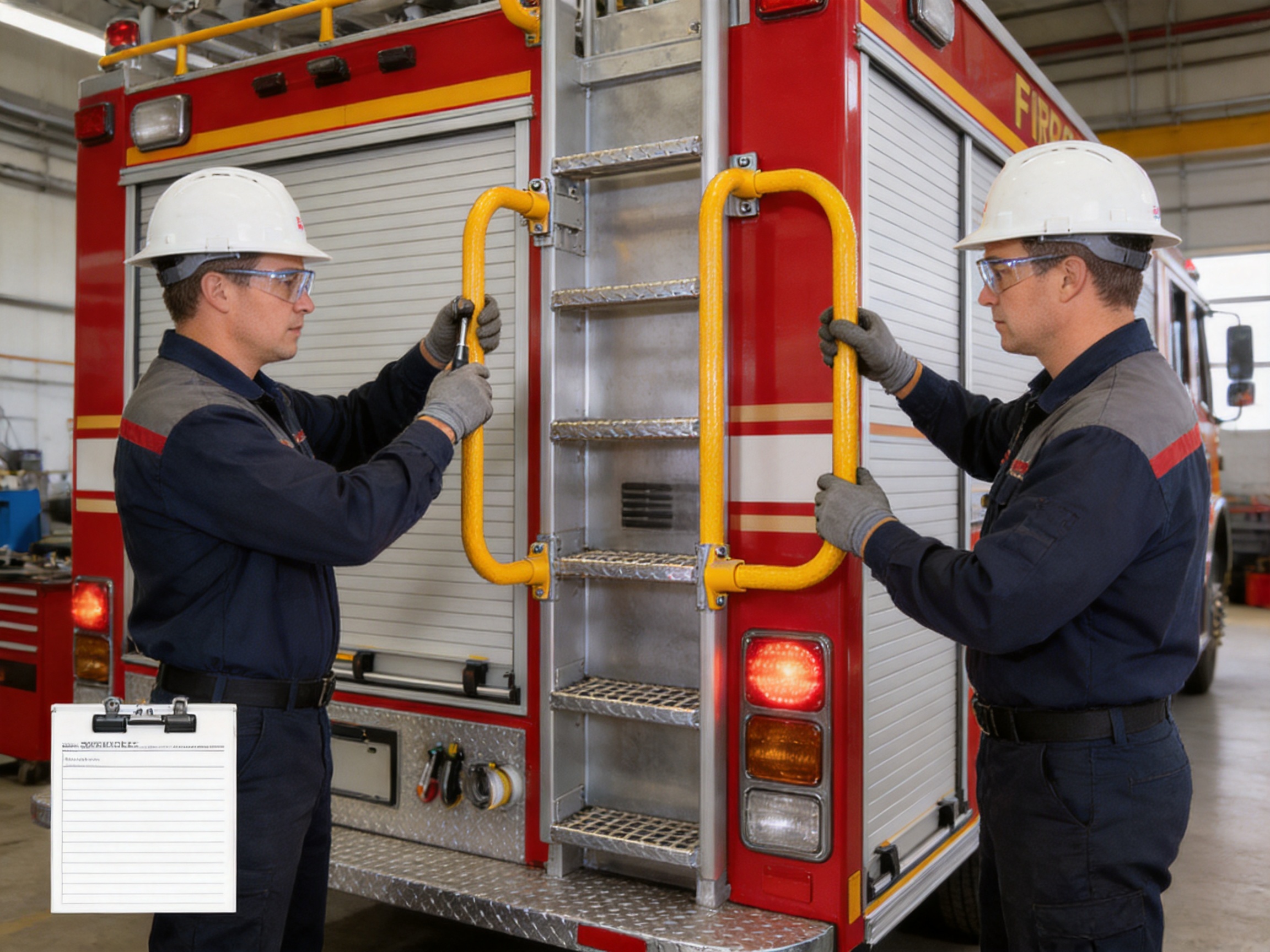
Fire apparatus must support rapid, confident movement in demanding conditions. Firefighters may need to climb onto a vehicle while wearing heavy protective clothing, carrying tools, or working in rain, smoke, darkness, and restricted spaces. In these situations, a ladder handrail is not simply a metal accessory. It is an important safety component that helps personnel maintain balance, control their movement, and access elevated areas of the fire truck efficiently.
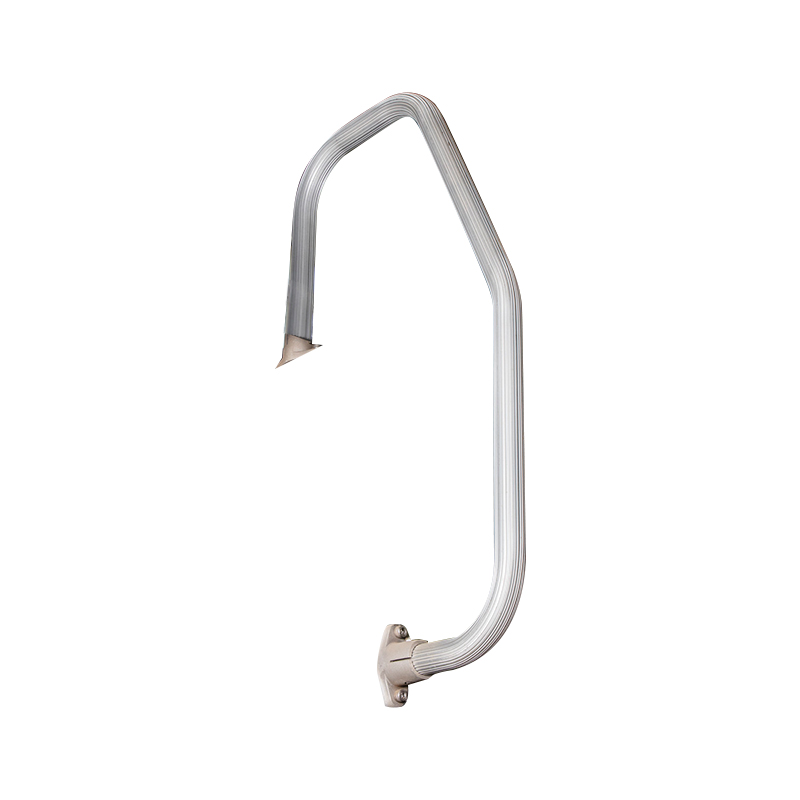
The fire truck iron ladder handrail is designed for installation on both sides of a rear ladder or boarding ladder. Its purpose is to provide a stable gripping point as firefighters climb onto or descend from the vehicle and as they transport equipment for elevated operations. With a robust iron construction, adaptable dimensions, and support from an experienced fire equipment manufacturer, the product is suitable for fire trucks that require dependable access protection and vehicle-specific customization.
This article examines the product’s construction, applications, benefits, customization options, manufacturing strengths, quality management approach, and selection considerations. It also explains why a properly engineered iron ladder handrail can provide advantages over generic, poorly fitted, or insufficiently supported alternatives.
1. The Role of a Ladder Handrail on a Fire Truck
Fire trucks combine transportation, firefighting, rescue, storage, pumping, and elevated-access functions in one vehicle. Their bodies often include compartments, ladders, roof platforms, equipment racks, and boarding areas. Each of these features must be accessible without creating unnecessary risk for firefighters.
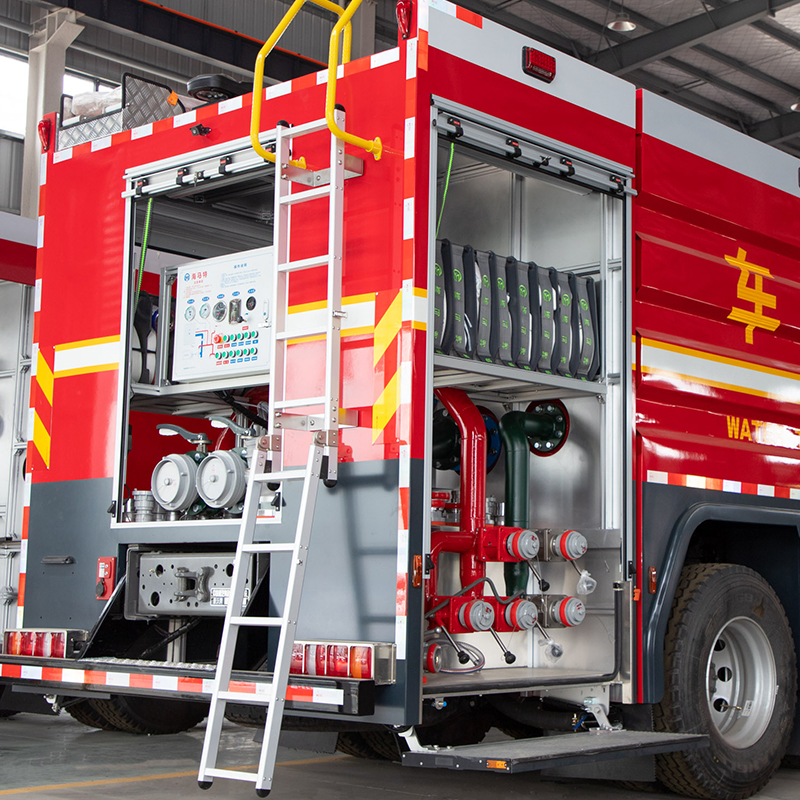
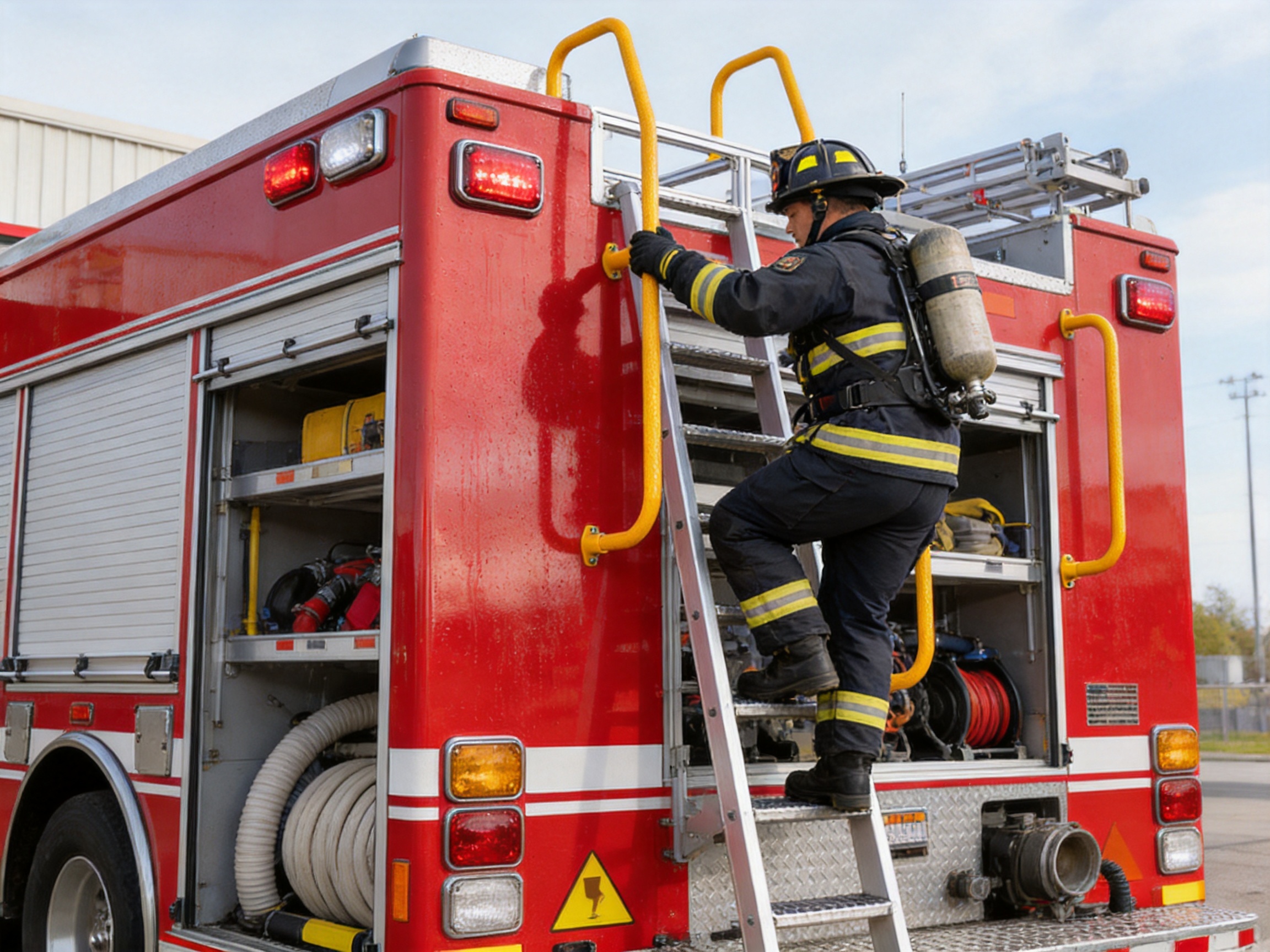
A boarding ladder allows personnel to move between ground level and the vehicle body. However, ladder steps alone may not provide sufficient stability, particularly when the user is wearing gloves or carrying a hose, breathing apparatus, rescue tool, or other equipment. A handrail adds a continuous gripping structure beside the ladder, helping the user maintain three-point contact whenever practical.
The handrail also supports faster and more controlled movement. Firefighters can grasp the rail before placing a foot on a step, stabilize themselves during transitions, and maintain balance when stepping onto the vehicle deck. During return movement, the rail provides a clear guide and reduces reliance on nearby body panels, doors, or equipment housings that may not be intended for gripping.
Because fire apparatus is used in high-pressure environments, access components must be practical rather than decorative. A good handrail should be easy to identify, comfortable to grip, firmly mounted, resistant to service conditions, and positioned so that it does not obstruct the ladder or nearby equipment. The fire truck iron ladder handrail is developed around these functional requirements.
2. Product Overview
The fire truck iron ladder handrail is a safety protection device installed on both sides of a rear ladder or boarding ladder. It is intended to help firefighters get on and off the vehicle quickly and safely while carrying equipment or preparing for elevated operations.
The basic product is manufactured from iron, providing a sturdy structure suitable for repeated use. The material offers durability, resistance to everyday mechanical loading, and a long service life when properly finished, installed, inspected, and maintained. Its construction can be adapted to the specific geometry of the fire truck.
Fire apparatus are not all built to the same dimensions. Vehicle length, body height, ladder width, step spacing, mounting locations, and surrounding equipment may differ between models. For this reason, the handrail can be customized in length and curvature according to the truck’s dimensions and ladder step position.
Customization is especially important when the handrail is being integrated into an existing vehicle design or supplied as part of a new fire truck body. A correctly matched rail improves usability and appearance while reducing interference with doors, storage compartments, roller shutters, roof access points, lighting, and other accessories.
| Product item | Specification or function | Practical value |
|---|---|---|
| Product name | Fire Truck Iron Ladder Handrail | Provides a stable gripping point for vehicle access |
| Primary application | Rear ladder or boarding ladder | Supports safer climbing and descending |
| Main material | Iron | Offers structural strength and durability |
| Configuration | Installed on both sides of the ladder | Supports balanced movement and two-handed access |
| Customization | Length and curvature | Allows adaptation to vehicle height, length, and step location |
| Application environment | Fire trucks and emergency apparatus | Suitable for demanding operational conditions |
| Supply model | Standard production and OEM/ODM customization | Supports vehicle manufacturers, body builders, and replacement needs |
The product is part of a wider fire apparatus equipment portfolio that includes vehicle storage components, roller shutters, ladders, mounting systems, nozzles, hose cannons, demolition tools, SCBA-related equipment, cab doors, and plastic tool components. This broader product knowledge can be valuable when the handrail must be coordinated with other vehicle systems.
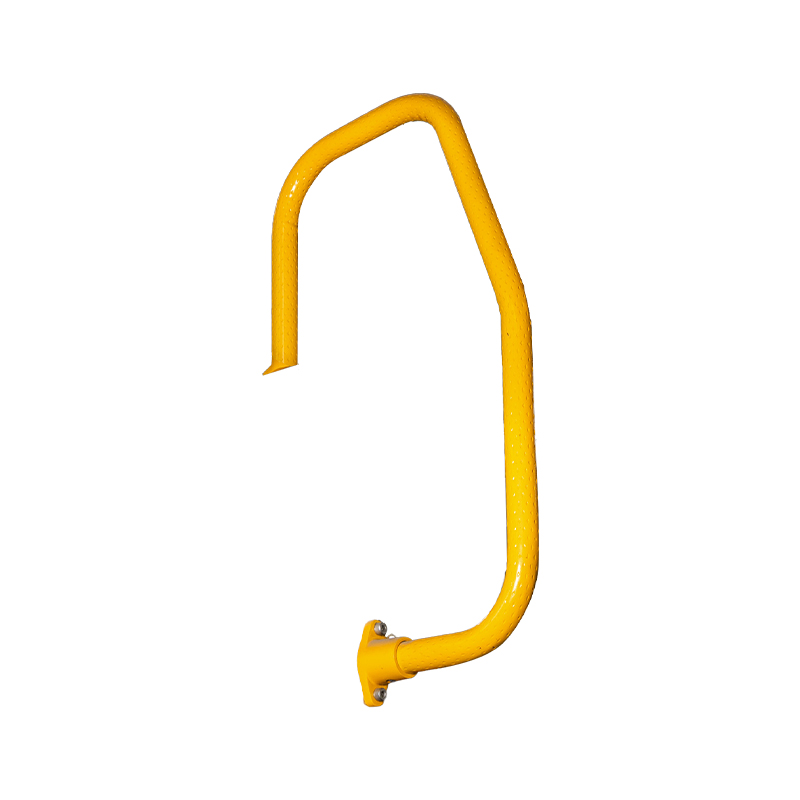
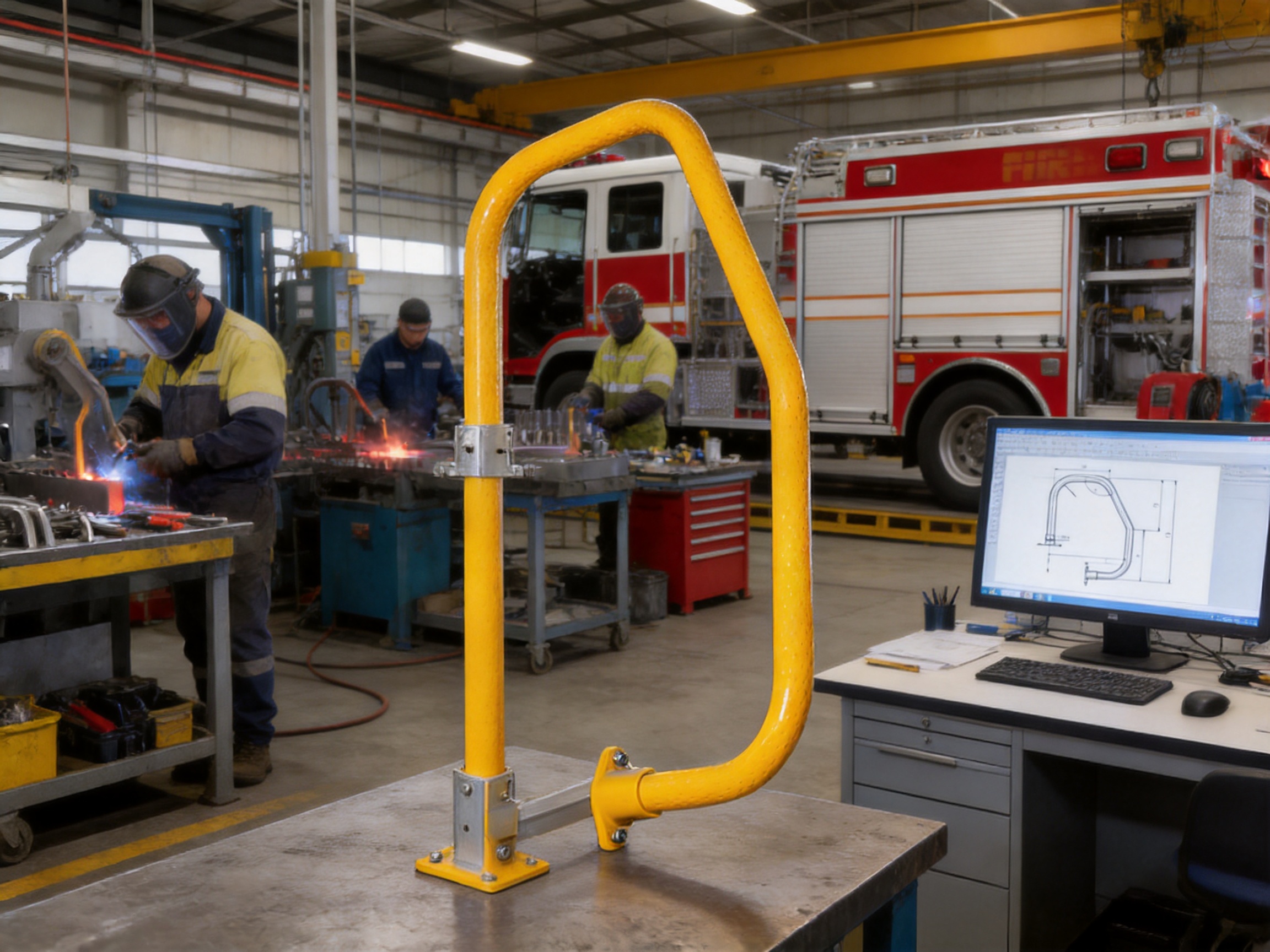
Fire Truck Iron Ladder Handrail
3. Construction and Functional Design
3.1 Sturdy Iron Structure
The principal advantage of the product is its iron construction. A handrail must withstand repeated gripping, pulling, vibration, incidental impact, and the dynamic movement of users climbing in protective clothing. Iron provides a solid foundation for a durable component when the material thickness, forming method, weld quality, mounting design, and surface treatment are properly controlled.
Compared with lightweight components that may feel flexible or unstable, a well-manufactured iron handrail provides a firm and reassuring grip. This perception of solidity is important in emergency work. A firefighter should not have to question whether the rail will move unexpectedly when weight is transferred onto it.
Iron also offers a practical balance between strength, availability, manufacturability, and cost. It can be cut, formed, welded, finished, and adapted to different shapes using established industrial processes. This makes it suitable for both standard product supply and customized vehicle projects.
3.2 Side-Mounted Access Support
The handrail is designed to be mounted on both sides of the rear or boarding ladder. Dual-side installation provides support for users with different climbing habits and allows a firefighter to use both hands when the situation requires additional stability. It also helps maintain a balanced arrangement around the ladder.
Side-mounted rails should be positioned to complement the ladder steps rather than compete with them. The rail should remain within comfortable reach while leaving enough clearance for boots, gloves, hoses, and equipment. The correct position depends on the ladder angle, step width, vehicle body, and intended user movement.
3.3 Customized Length
Different fire trucks have different access heights. A short municipal rescue vehicle may require a compact rail, while a larger apparatus with elevated compartments may need a longer handrail. Customized length enables the product to follow the actual ladder structure instead of forcing the vehicle manufacturer to compromise its design.
Length customization also supports replacement projects. If a damaged handrail is being replaced, the new component can be produced to match the existing mounting points and ladder configuration. This may reduce modification work during installation and help preserve the original vehicle layout.
3.4 Customized Curvature
The curvature of a handrail affects both appearance and usability. A curved rail can follow the profile of a ladder, body panel, or access platform. It may also provide a smoother hand path during climbing and reduce the risk of sharp directional changes.
Customized curvature is useful when the ladder is positioned near a sloped body section, a rounded rear panel, or an equipment enclosure. Instead of using a generic straight rail that creates awkward gaps or interference, the manufacturer can produce a shape suited to the actual vehicle geometry.
3.5 Integration with Vehicle Equipment
A fire truck handrail is often installed near multiple components. These may include roller shutters, equipment compartments, roof access areas, warning lights, hose storage, ladders, brackets, doors, and body reinforcement structures. A rail that is dimensionally correct but poorly integrated can obstruct access or create maintenance problems.
For this reason, engineering review should consider the complete installation zone. The rail length, curvature, end position, mounting brackets, clearances, and surface finish should be evaluated together. A manufacturer experienced in fire truck equipment can better understand these interactions and communicate with vehicle builders during customization.
4. Key Advantages Over Generic Alternatives
4.1 Vehicle-Specific Fit
Generic handrails are often produced in fixed lengths and shapes. While they may be suitable for simple applications, they can create problems when applied to fire trucks with different ladder positions or body dimensions. A vehicle-specific handrail is developed around the actual installation requirements.
The ability to customize length and curvature is a major advantage for OEM and replacement projects. It helps the handrail follow the vehicle profile, align with ladder steps, and maintain usable clearance. This can result in a cleaner installation and a more natural climbing movement than a one-size-fits-all product.
4.2 Durable Material Selection
A handrail used on emergency equipment must tolerate frequent use and exposure to demanding service conditions. Iron provides a strong and durable base for this application. When combined with appropriate surface treatment and quality control, it can deliver reliable long-term performance.
Compared with thin or poorly supported alternatives, a solid iron rail is less likely to give a fragile impression during use. Its robustness is particularly valuable on vehicles that operate frequently, carry multiple crew members, or travel over uneven roads where vibration is unavoidable.
4.3 Support for Fast Emergency Access
Firefighters often work under severe time pressure. A clearly positioned handrail helps make the access route more predictable. Users can reach for the rail, step onto the ladder, and transition to the truck body with greater confidence.
The product does not replace safe climbing procedures or appropriate vehicle design. Instead, it contributes to a complete access system by providing a dependable point of contact. This can be especially important when the user is wearing gloves, protective clothing, or an SCBA set that affects balance and movement.
4.4 Better Coordination with Fire Apparatus Design
A dedicated fire equipment manufacturer understands that accessories must work as part of a larger apparatus. The handrail may need to coordinate with ladders, storage systems, roller shutters, mounting brackets, and other rescue equipment. This broader experience supports more practical customization than a supplier focused only on general metal fabrication.
Coordination can also simplify communication. Vehicle manufacturers and distributors can discuss the handrail together with other fire truck components, helping align dimensions, materials, finishes, packaging, and delivery requirements.
4.5 OEM/ODM Flexibility
OEM and ODM capability is valuable for fire apparatus manufacturers, body builders, importers, and distributors. A customer may require a handrail based on an existing drawing, a sample, a vehicle measurement, or a new design concept. Flexible production allows the product to be adapted to different project conditions.
OEM supply can preserve the customer’s specified design and branding requirements. ODM support can assist customers who need engineering input, dimensional development, or a practical product configuration based on their application. The combination can be useful for both recurring orders and specialized projects.
5. Manufacturing Strengths and Production Capabilities
The quality of a fire truck handrail depends not only on the selected material but also on the manufacturing process. A rail with correct dimensions but poor forming, weak joints, rough edges, or inconsistent finishing may not provide the expected service performance. Tianchang Jinlv Fire Equipment Co., Ltd. has been dedicated to fire protection accessories since 2010 and has developed manufacturing experience across multiple fire truck equipment categories.
5.1 Experience in Fire Protection Accessories
Long-term specialization in fire protection accessories helps a manufacturer understand the practical requirements of emergency vehicles. These requirements include durability, compact installation, operational accessibility, dimensional coordination, repeatability, and reliable delivery.
Experience with related products such as roller shutters, equipment storage systems, ladders, mounting systems, nozzles, hose cannons, demolition tools, SCBA equipment, cab doors, and plastic tool components creates a broader technical context. A handrail is not produced in isolation; it is part of a vehicle system in which every component must fit around the others.
5.2 Advanced Production Facilities
The company is equipped with advanced production facilities and a complete manufacturing process. For a metal handrail, a complete process may include material preparation, cutting, forming, bending, welding, surface treatment, dimensional inspection, assembly checking, and final packing.
Each stage contributes to the final result. Accurate material preparation supports consistent dimensions. Controlled forming and bending help maintain the specified curvature. Stable welding practices support joint strength and appearance. Surface treatment helps protect the iron structure and creates a suitable finish for the vehicle environment.
Production equipment is most effective when supported by clear operating procedures and experienced personnel. Repeatable workflows help reduce variation between batches and make it easier to reproduce a customer-approved design for future orders.
5.3 Process Control from Raw Material to Delivery
The company states that it controls every stage from raw material procurement to final product delivery. This full-process approach is important for customized components because quality problems can originate at any point. Material inconsistency, incorrect dimensions, incomplete welding, inadequate finishing, or poor packaging may all affect the customer’s result.
Raw material control helps ensure that the iron used for production is appropriate for the intended component. Process control helps maintain the specified size and shape. Inspection before delivery helps identify defects or deviations before the product reaches the vehicle manufacturer or end user.
For OEM and ODM projects, process control also supports design consistency. Once a handrail has been approved by the customer, future production should reproduce the same critical dimensions, mounting locations, curvature, and finish unless a change is formally requested.
5.4 Quality Management Certification
Tianchang Jinlv Fire Equipment Co., Ltd. has passed GB/T 19001-2016 quality certification. A quality management system provides a structured framework for managing documents, processes, responsibilities, inspections, corrective actions, and continuous improvement.
Certification does not eliminate the need for product-specific verification. However, it demonstrates that the company has established a formal approach to quality management rather than relying only on informal inspection. For international customers, this can provide additional confidence when evaluating a supplier for recurring or customized fire equipment orders.
5.5 Research and Development
The company has a professional research and development team with industry experience. Product development is important because fire apparatus requirements continue to change. Vehicle platforms, storage configurations, access arrangements, customer expectations, and regional standards may all influence component design.
Research and development can support improvements in shape, installation, manufacturability, material use, surface treatment, and compatibility with other equipment. It can also help transform a customer’s practical requirement into a stable production drawing or repeatable manufacturing specification.
6. Customization Process for Fire Truck Handrails
6.1 Collecting Vehicle Information
The first step in customization is gathering accurate information about the fire truck and ladder. Useful information may include the vehicle model, body height, ladder angle, step position, ladder width, available mounting area, surrounding equipment, preferred handrail length, desired curvature, and finish requirements.
Photographs, sketches, technical drawings, measurements, or physical samples can help clarify the application. The more complete the information, the easier it is to confirm whether the proposed handrail will provide adequate reach and clearance.
6.2 Reviewing the Installation Area
The installation area should be reviewed for access, interference, and structural support. The handrail should not block a compartment door, roller shutter, lighting unit, hose connection, or other essential component. It should also be mounted to a structure capable of supporting the loads generated during normal use.
Although the handrail itself is important, mounting points are equally significant. A strong rail attached to a weak or unsuitable support may not perform as intended. The vehicle body builder and component supplier should therefore coordinate the mounting arrangement before production.
6.3 Confirming Dimensions and Curvature
After the installation area is reviewed, the customer and manufacturer can confirm the required dimensions. Length should provide useful support over the climbing route without extending into an obstruction zone. Curvature should follow the ladder or vehicle profile while maintaining a comfortable hand path.
Design confirmation may involve a drawing, digital file, sample, or approved dimensional sheet. For repeat orders, maintaining an approved record helps ensure consistent production and reduces the need to repeat the entire development process.
6.4 Prototype and Sample Evaluation
For a new vehicle platform or unusual installation, a prototype or sample can be beneficial. The sample may be checked on the actual vehicle or a representative fixture. This allows the customer to evaluate reach, clearance, appearance, mounting alignment, and interaction with nearby equipment before full production.
Sample evaluation is especially useful when the rail has a complex curve or when the ladder is installed near a narrow body section. Small dimensional adjustments made at this stage may prevent costly modifications later.
6.5 Production and Final Inspection
Once the design is approved, production can proceed according to the confirmed requirements. Inspection should verify key dimensions, curvature, weld condition, surface quality, mounting features, and overall appearance. Packaging should protect the rail from impact, abrasion, and deformation during transportation.
For export orders, documentation and packing requirements should be agreed in advance. Clear identification of models, quantities, and project references can help customers receive and install the correct components efficiently.
7. Operational Benefits for Firefighters
7.1 Improved Stability During Climbing
The most direct benefit is improved stability. A firefighter can hold the rail while moving from ground level to the first step, between steps, and from the final step onto the vehicle body. This is useful when the ladder is wet, the user is wearing gloves, or the person is carrying equipment.
A stable handhold also helps users control their body position when stepping around an obstacle. It can reduce the need to grip painted panels or equipment housings that may be hot, wet, sharp, contaminated, or unsuitable for supporting body weight.
7.2 Support When Carrying Equipment
Firefighters frequently carry equipment while boarding a vehicle. Hoses, tools, breathing apparatus accessories, rescue equipment, and replacement components can make climbing more difficult. A handrail provides an additional point of control and can help the user move deliberately rather than relying solely on the ladder steps.
The rail should not be used to support equipment loads beyond its intended design. Nevertheless, its presence can make the access process more manageable and organized when personnel follow appropriate handling procedures.
7.3 Assistance in Low-Visibility Conditions
Emergency operations may occur at night, in smoke, during heavy rain, or in congested areas. A consistently positioned handrail creates a predictable tactile reference. Even when visual information is limited, a firefighter may locate the rail by touch and use it to orient movement.
Visibility features, reflective elements, or contrasting finishes may be considered as part of the broader vehicle design where appropriate. These features should be selected according to the customer’s requirements and applicable regulations.
7.4 Support for Different Users
Fire crews may include users with different heights, reach, climbing preferences, and equipment configurations. Dual-side handrails provide flexibility and allow users to choose the most comfortable grip. A customized rail can also be positioned according to the average access requirements of the vehicle’s intended crew.
Ergonomic suitability should be checked during vehicle design. The rail must be reachable without excessive stretching and should not force the user into an awkward posture when entering or leaving the vehicle.
8. Durability, Corrosion Resistance, and Service Life
Fire trucks operate outdoors and may be exposed to water, road spray, humidity, cleaning chemicals, dust, smoke residues, and temperature changes. Equipment installed on the exterior must therefore be designed with environmental exposure in mind.
The product description identifies the iron handrail as sturdy and durable, with strong corrosion resistance and a long service life. In practical terms, corrosion resistance depends on the complete material and finishing system, including surface preparation, protective coating, handling, installation, cleaning, and maintenance.
A suitable finish helps protect the iron substrate from moisture and contaminants. It also contributes to the appearance of the fire truck and can make surface defects easier to identify during inspection. Customers should confirm the required coating or finish according to the operating environment, local specifications, and vehicle manufacturer’s standards.
Routine inspection remains important even when a corrosion-resistant finish is used. Personnel should check for coating damage, rust spots, loose fasteners, cracked welds, deformation, sharp edges, or movement at the mounting points. Any defect that could affect safe access should be addressed before continued use.
Cleaning should remove dirt, salt, chemical residue, and other contaminants that may remain on the rail after an incident or road journey. Harsh cleaning methods should be avoided unless they are confirmed to be compatible with the surface treatment. Proper maintenance helps preserve both appearance and performance.
9. Installation and Maintenance Considerations
9.1 Confirming Mounting Strength
The handrail should be attached to suitable structural points on the vehicle. Mounting brackets, fasteners, welds, and reinforcement areas must be selected according to the vehicle design and expected service conditions. Installation should be carried out by qualified personnel familiar with fire apparatus construction.
9.2 Checking Clearance
After installation, the complete access route should be tested. The user should be able to place feet on the steps and grip the handrail without contacting sharp edges or nearby equipment. Doors, shutters, covers, and removable components should open and close without interference.
9.3 Inspecting Welds and Surfaces
Welded areas should be inspected for visible cracks, incomplete joints, excessive spatter, or other defects. The rail surface should be smooth enough for gloved use and should not contain dangerous burrs or sharp projections. Any damage to the protective finish should be repaired using an appropriate method.
9.4 Checking Fasteners and Movement
Vibration from road travel can gradually loosen fasteners if they are not correctly installed or maintained. Inspection should confirm that the handrail remains secure and does not rotate, shake, or shift under normal use. The frequency of inspection may depend on vehicle mileage, operating conditions, and service intensity.
9.5 Replacing Damaged Components
If a handrail is bent, cracked, heavily corroded, or detached from its mounting points, it should be replaced or professionally repaired. Temporary repairs that reduce clearance or create sharp edges may introduce additional hazards. Providing the supplier with the original dimensions, vehicle information, and photographs can help accelerate replacement development.
10. Applications in Different Fire Apparatus Configurations
The fire truck iron ladder handrail can be adapted to various rear and side access arrangements. It may be used on municipal fire engines, rescue trucks, pumpers, special service vehicles, and other emergency apparatus that require access to elevated body sections.
On a standard rear boarding ladder, the handrail can support entry to the upper vehicle body or roof area. On a taller apparatus, a longer or more strongly curved rail may be needed to follow the ladder route. On a compact rescue vehicle, a shorter rail may be more appropriate because of limited body height and restricted surrounding space.
The product may also be considered for refurbishment and replacement projects. Older fire trucks may have damaged, missing, or outdated access rails. A customized replacement can restore the intended access function while matching the existing ladder and vehicle structure.
For vehicle manufacturers, the handrail can be included during the initial design stage. Early integration allows the rail position, mounting points, ladder steps, storage compartments, and body panels to be considered as one system. This usually provides a better result than adding the component after the vehicle body has already been completed.
11. Why Manufacturer Capability Matters
When purchasing a safety-related fire truck component, the supplier’s manufacturing capability is as important as the product description. A handrail may appear simple, but its reliability depends on dimensional accuracy, material control, forming quality, joint integrity, finishing, inspection, and consistent delivery.
A company focused on fire protection accessories is more likely to understand the operational context than a general supplier with no experience in emergency vehicles. Tianchang Jinlv Fire Equipment Co., Ltd. has operated in this field since 2010 and provides products for fire truck equipment and related applications.
The company’s product range includes vehicle roller shutters, equipment storage and mounting systems, boarding ladders, ladder racks, ladder handrails, firefighting nozzles, hose cannons, demolition tools, SCBA equipment, cab doors, and plastic tool components. This range indicates experience with the different functional areas of a fire apparatus.
The company’s stated philosophy emphasizes honesty, innovation, quality, and gratitude. It provides standard products as well as OEM/ODM customization, global technical support, and dedicated customer service. For customers developing or sourcing fire trucks in different markets, communication and after-sales support can be important parts of the supplier relationship.
Manufacturing close to a complete production process can also improve coordination. A supplier that understands storage, access, mounting, and vehicle body integration may be able to identify potential conflicts earlier and recommend a more practical handrail configuration.
12. Procurement Guide for Buyers and Vehicle Builders
12.1 Define the Intended Application
Before requesting a quotation, buyers should identify whether the handrail is intended for a new vehicle, a replacement project, a retrofit, or a standardized fleet program. The application affects the amount of engineering work, the need for samples, and the required documentation.
12.2 Provide Accurate Measurements
Measurements should include the ladder height, step position, available width, mounting area, and distance from adjacent equipment. Photographs taken from several angles can help the manufacturer understand the three-dimensional installation environment.
12.3 Confirm Material and Finish Requirements
Customers should confirm whether the project requires a specific iron grade, coating, color, surface treatment, or corrosion protection system. If the vehicle is intended for coastal, humid, cold, dusty, or chemically demanding conditions, the environmental requirements should be clearly communicated.
12.4 Review Drawings and Samples
Drawings and samples provide opportunities to confirm the design before production. Buyers should review the rail length, curvature, end shape, mounting points, clearances, and finish. If the handrail will be installed on multiple vehicle models, each configuration should be checked separately.
12.5 Discuss Inspection and Documentation
For professional procurement, the customer and supplier should agree on inspection requirements, packaging, labeling, quantity tolerance, delivery schedule, and technical documentation. Clear requirements reduce misunderstandings and support consistent quality across repeated orders.
13. Comparison with Common Alternative Approaches
A generic straight metal bar may offer a low initial cost, but it may not follow the vehicle shape or provide the best reach along the ladder. An undersized rail may be difficult to grip when the user is carrying equipment. An oversized rail may interfere with doors, storage, or vehicle clearance.
A lightweight material may reduce component weight, but the customer must consider stiffness, impact resistance, mounting requirements, repairability, and environmental performance. Iron remains attractive where a robust and durable structure is preferred.
A handrail produced without fire apparatus experience may meet a basic dimensional request but overlook practical details such as ladder-step alignment, body-panel access, equipment interference, or service inspection. A specialized fire equipment manufacturer can bring broader application knowledge to the project.
Finally, a supplier that only performs isolated fabrication may have limited ability to support repeatability, documentation, quality management, and product development. A company with established facilities, formal quality processes, research and development capability, and experience across fire truck accessories can provide a more complete sourcing solution.
14. Recommended Quality Evaluation Points
When evaluating a fire truck iron ladder handrail, customers should consider more than appearance. The following points can help create a balanced assessment:
First, verify that the rail matches the vehicle and ladder dimensions. A correct fit is necessary for safe and comfortable access.
Second, examine the iron structure, including wall thickness, rigidity, joints, and mounting features. The product should feel stable during normal use.
Third, inspect the curvature and grip path. The rail should be reachable, continuous where required, and free from sharp projections.
Fourth, review the surface treatment and corrosion protection. The finish should be appropriate for the vehicle’s environmental conditions and maintenance program.
Fifth, assess the supplier’s quality system, production facilities, technical communication, inspection practices, and ability to reproduce approved designs.
Sixth, consider the supplier’s broader fire truck equipment experience. This can be especially valuable when the handrail must be integrated with roller shutters, ladders, storage systems, or other components.
15. Frequently Asked Questions
Q1: What is the main purpose of a fire truck iron ladder handrail?
The main purpose is to provide a stable gripping point on both sides of a rear or boarding ladder. It helps firefighters climb onto and descend from the vehicle more safely, particularly when wearing protective clothing or carrying equipment.
Q2: Where is the handrail installed?
It is generally installed on both sides of the rear ladder or boarding ladder of a fire truck. The exact position depends on the ladder design, vehicle body, step location, and surrounding equipment.
Q3: Can the handrail be customized for different fire truck models?
Yes. The product can be customized in length and curvature according to the vehicle’s length, height, ladder step position, and installation area. Customers should provide drawings, measurements, photographs, or samples whenever possible.
Q4: Why is iron used for this product?
Iron provides a sturdy and durable structure suitable for repeated gripping and vehicle operation. It can be cut, bent, welded, finished, and adapted to different vehicle configurations. With suitable surface protection, it can also provide strong corrosion resistance and a long service life.
Q5: Is the handrail suitable for new vehicles and replacement projects?
Yes. It can be developed for new fire truck production or customized as a replacement for a damaged or missing existing rail. Replacement projects should include accurate measurements and photographs of the original installation.
Q6: Does the handrail replace safe climbing procedures?
No. The handrail is a safety support component, not a substitute for proper training, three-point contact practices, vehicle inspection, or compliance with applicable fire apparatus requirements. It should be used as part of a complete and correctly maintained access system.
Q7: What information should be provided for a quotation?
Useful information includes the fire truck model, ladder dimensions, vehicle height, required handrail length, curvature, mounting arrangement, finish, quantity, drawings, photographs, and delivery requirements.
Q8: How should the handrail be maintained?
It should be cleaned regularly and inspected for corrosion, coating damage, cracks, deformation, loose fasteners, damaged welds, and movement at mounting points. Any defect that may affect safe use should be repaired or replaced promptly.
Q9: What manufacturing capabilities support this product?
The manufacturer has advanced production facilities, a complete manufacturing process, experience in fire protection accessories, a research and development team, and a quality management system certified to GB/T 19001-2016. These capabilities support both standard products and customized OEM/ODM projects.
Q10: Can the supplier support other fire truck equipment?
Yes. The company’s product categories include roller shutters, equipment storage and mounting systems, boarding ladders, ladder racks, ladder handrails, firefighting nozzles, hose cannons, demolition tools, SCBA equipment, cab doors, and plastic tool components.
16. Conclusion
The fire truck iron ladder handrail is a practical safety component that supports fast, controlled, and reliable access to elevated areas of emergency vehicles. Its position on both sides of the rear or boarding ladder gives firefighters a dependable point of contact while climbing, descending, or carrying equipment.
Its primary advantages include a sturdy iron structure, durable performance, strong corrosion resistance when correctly finished, long service potential, and customization in length and curvature. These features make it more adaptable than fixed, generic alternatives that may not suit the dimensions or layout of a particular fire truck.
The value of the product is strengthened by the manufacturer’s experience in fire protection accessories, advanced production facilities, complete production processes, formal quality management, research and development capability, and OEM/ODM support. Control from raw material procurement through final delivery helps support stable product quality and repeatable customized production.
For fire truck manufacturers, body builders, distributors, emergency service fleets, and replacement-part buyers, the most suitable solution is one that combines correct dimensions, robust construction, practical installation, compatible finishing, and dependable supplier support. When these factors are considered together, the fire truck iron ladder handrail becomes an important part of a safer and more efficient fire apparatus access system.
References
1. Tianchang Jinlv Fire Equipment Co., Ltd., product information for the Fire Truck Iron Ladder Handrail.
2. Tianchang Jinlv Fire Equipment Co., Ltd., company information and fire protection accessory manufacturing profile.
3. GB/T 19001-2016, Quality Management Systems—Requirements.
4. General principles of fire apparatus design, access systems, equipment mounting, inspection, and maintenance.
5. General occupational safety principles for ladder use, handholds, emergency vehicle access, and protective equipment operations.
Product: Fire Truck Iron Ladder Handrail
News
-
-
It is 02:40, the truck is backed into the bay, and the rear compartment shutter stops about thirty centimetres up and will not move. Inside are the rescue tools for the next call. That is the moment ...
READ MORE -
Quick Answer The right fire truck boarding ladder is a fixed, upward-folding, or rotating step assembly mounted at the rear or side of the apparatus that gives firefighters a stable, non-slip surface ...
READ MORE -
Fire truck ladder racks are roof-mounted storage and deployment systems that hold ground ladders securely in transit and let firefighters lower them to the side or rear of the apparatus in seconds. ...
READ MORE -
Every firefighter has opened a compartment door after a rough response only to find nozzles, webbing, and wrenches piled on top of each other. In gloves and low light, with the pump running, that is ...
READ MORE -
Two minutes into a working fire, a crew stands in front of a locked steel security door with a crowbar that is too short to pull with both hands. Nothing about the tool is broken. It was simply speci...
READ MORE
Hey! Interested in staying in the loop? Sign up for our updates.
WE WON'T SPAM YOU, PINKY PROMISE.

Tianchang Jinlv Fire Equipment Co., Ltd.
Copyright © Tianchang Jinlv Fire Equipment Co., Ltd. All rights reserved. Custom Fire Truck Equipment Supplier Fire Apparatus Parts Factory
