

 en
 English
 русский
 Español
 عربى

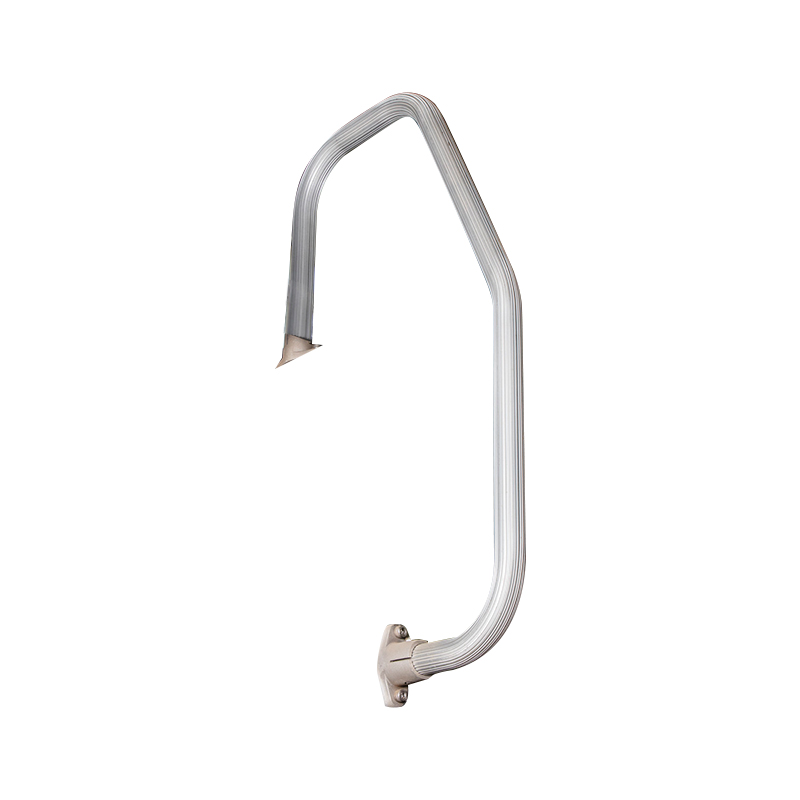
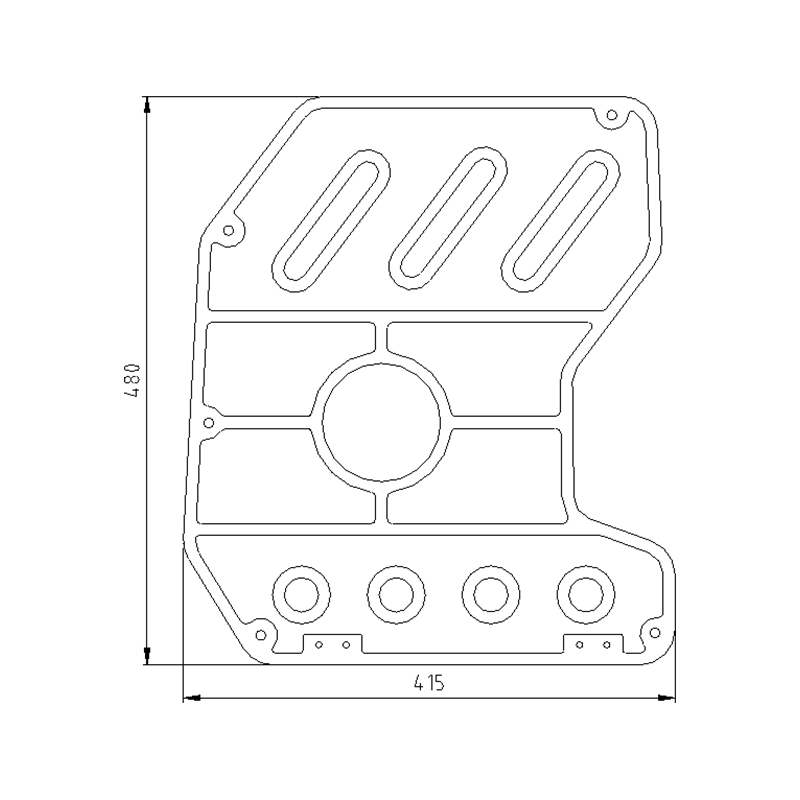
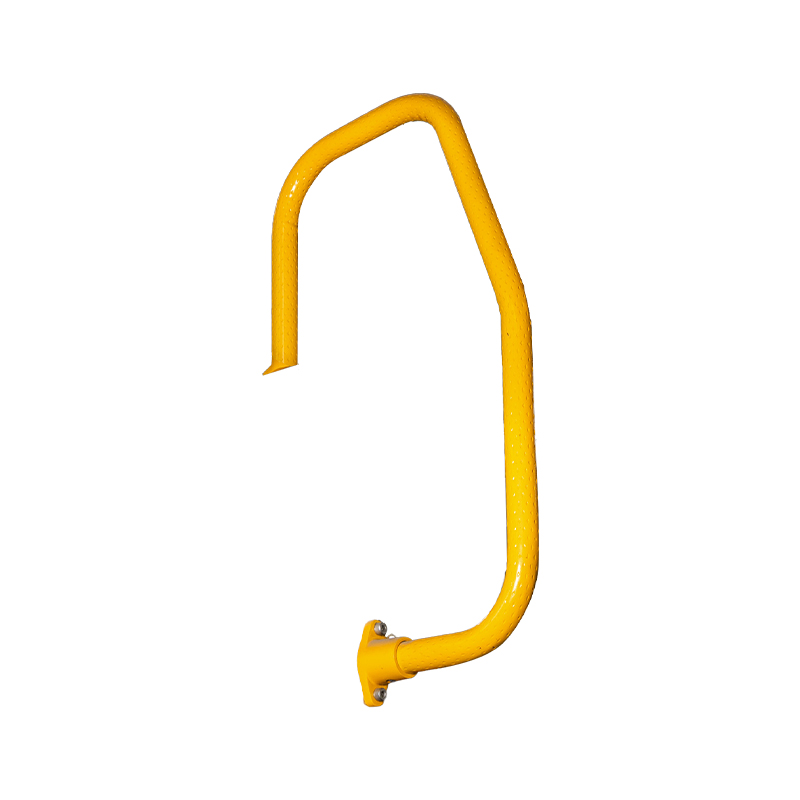
Three rungs up the rear of a pumper, a firefighter in wet gloves misses the grab and catches the handrail instead. Whether that rail holds was decided months earlier, at the bench: by tube wall thick...
READ MORE
Fire Truck Drawer: A Practical, Quiet, and Customizable Storage System for Emergency Vehicles
2026.10.03
Content
- 1 Why Storage Design Matters in Fire and Rescue Vehicles
- 2 Product Configuration and Main Construction
- 3 High-Strength Aluminum Alloy Frame
- 4 304 Stainless Steel Fasteners
- 5 Quiet Guide Rails for Smooth Operation
- 6 Silicone Rubber Buffer Blocks
- 7 Integrated Limit Button and Ergonomic Handle
- 8 Custom Dimensions for Different Fire Apparatus
- 9 Equipment Storage Applications
- 10 Advantages Over Basic or Inflexible Storage Solutions
- 11 Manufacturing Strengths and Quality Control
- 12 Research and Development Capability
- 13 Installation Planning and Integration Considerations
- 14 Maintenance and Service Recommendations
- 15 How the Drawer Supports Operational Readiness
- 16 Suitable Customers and Application Scenarios
- 17 Purchasing and Customization Checklist
- 18 Frequently Asked Questions
- 18.1 What is a fire truck drawer used for?
- 18.2 What drawer configurations are available?
- 18.3 Can the drawer dimensions be customized?
- 18.4 What materials are used in the main frame?
- 18.5 What type of fasteners are used?
- 18.6 How does the drawer reduce operating noise?
- 18.7 Can the drawer be operated with one hand?
- 18.8 What equipment can be stored in the drawer?
- 18.9 Is the product suitable for new vehicles and retrofits?
- 18.10 What manufacturing strengths support the product?
- 18.11 Does the manufacturer provide OEM and ODM services?
- 18.12 How should the drawer be maintained?
- 19 Why Choose a Specialized Fire Equipment Manufacturer
- 20 Conclusion
- 21 References
- 22 Product: Fire Truck Drawer
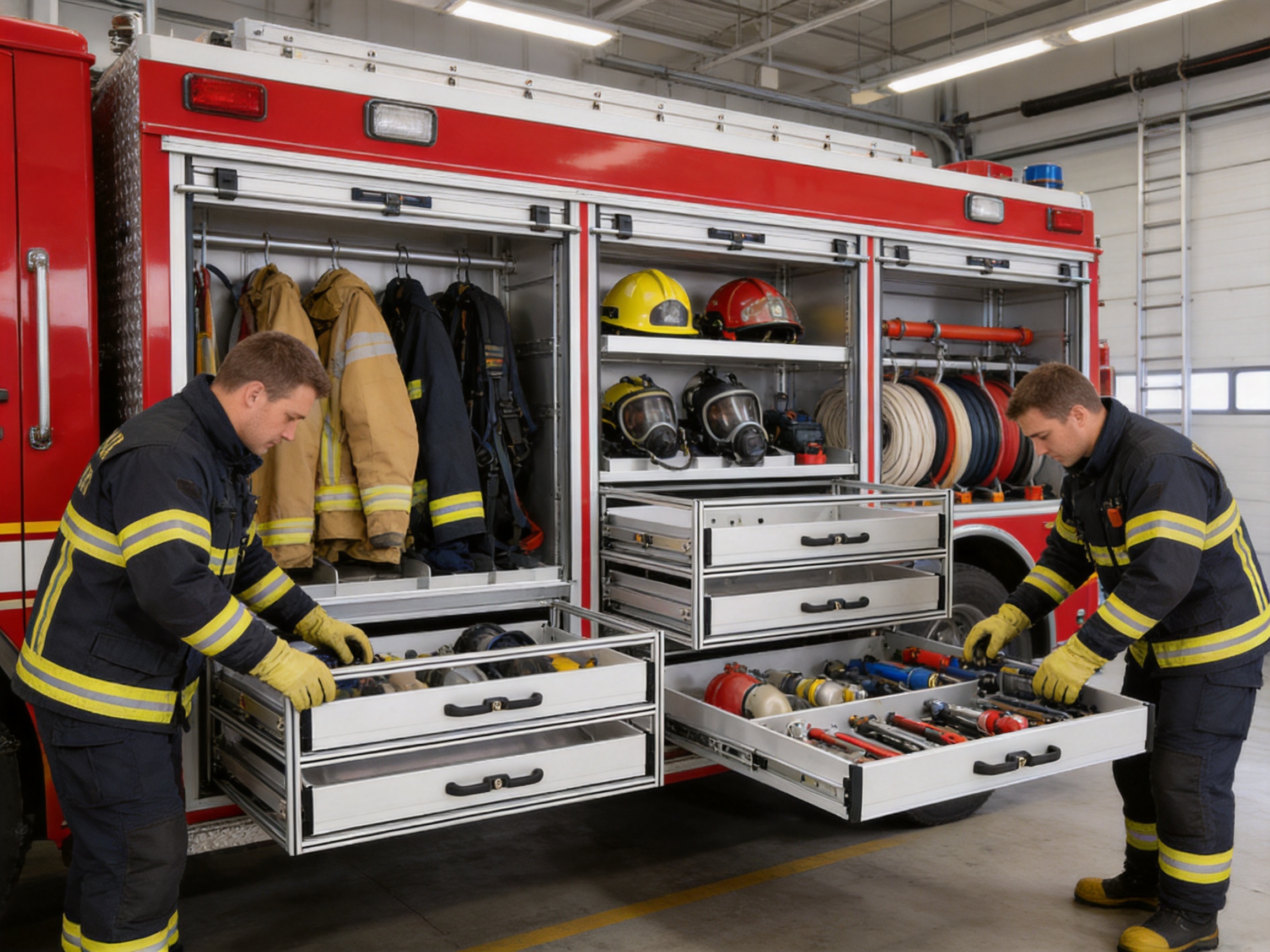
Fire and rescue vehicles must carry a large amount of equipment in a limited amount of space. Fire suits, helmets, lifelines, gas masks, breathing apparatus accessories, hand tools, rescue devices, and other firefighting supplies all need to be stored securely while remaining easy to reach. In an emergency, poor organization can delay deployment, increase physical strain, and make it more difficult for crews to maintain an accurate inventory. A properly designed drawer system is therefore more than a simple storage box. It is an important part of vehicle ergonomics, equipment protection, operational readiness, and crew safety.
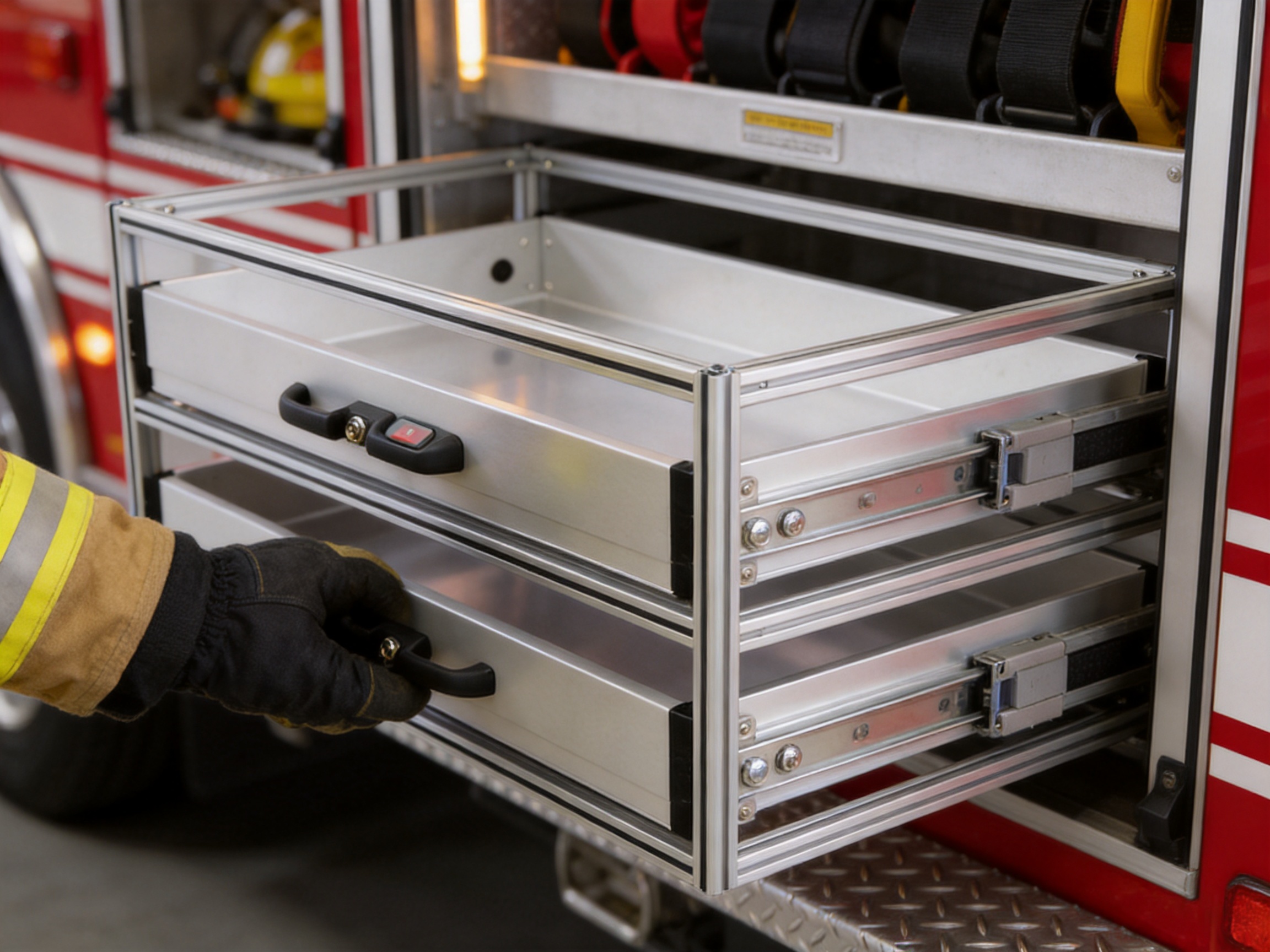
The fire truck drawer is designed for equipment stowage and mounting applications in fire apparatus. It combines a high-strength aluminum alloy frame, 304 stainless steel fasteners, quiet guide rails, silicone rubber buffer blocks, and an ergonomic integrated handle and limit button. The system is available in single-layer, double-layer, and multi-layer configurations, enabling vehicle manufacturers, emergency service departments, and equipment integrators to select a layout appropriate for their available compartment space and operational requirements.
One of the most important characteristics of this product is its adaptability. The length, width, height, and related dimensional parameter L1 can be customized according to customer requirements. This allows the drawer to be integrated into different fire truck bodies, rescue vehicles, equipment compartments, and special-purpose emergency platforms without being restricted to one fixed size. Customization also helps users make better use of irregular or limited storage areas.
For fire apparatus manufacturers and fleet operators, the value of a drawer system is measured by more than its appearance. It must operate smoothly, withstand repeated use, resist corrosion, support organized equipment access, and remain practical in demanding working environments. The design of this fire truck drawer addresses these requirements through material selection, functional integration, modular configuration, and a manufacturing process focused on quality control.
Why Storage Design Matters in Fire and Rescue Vehicles
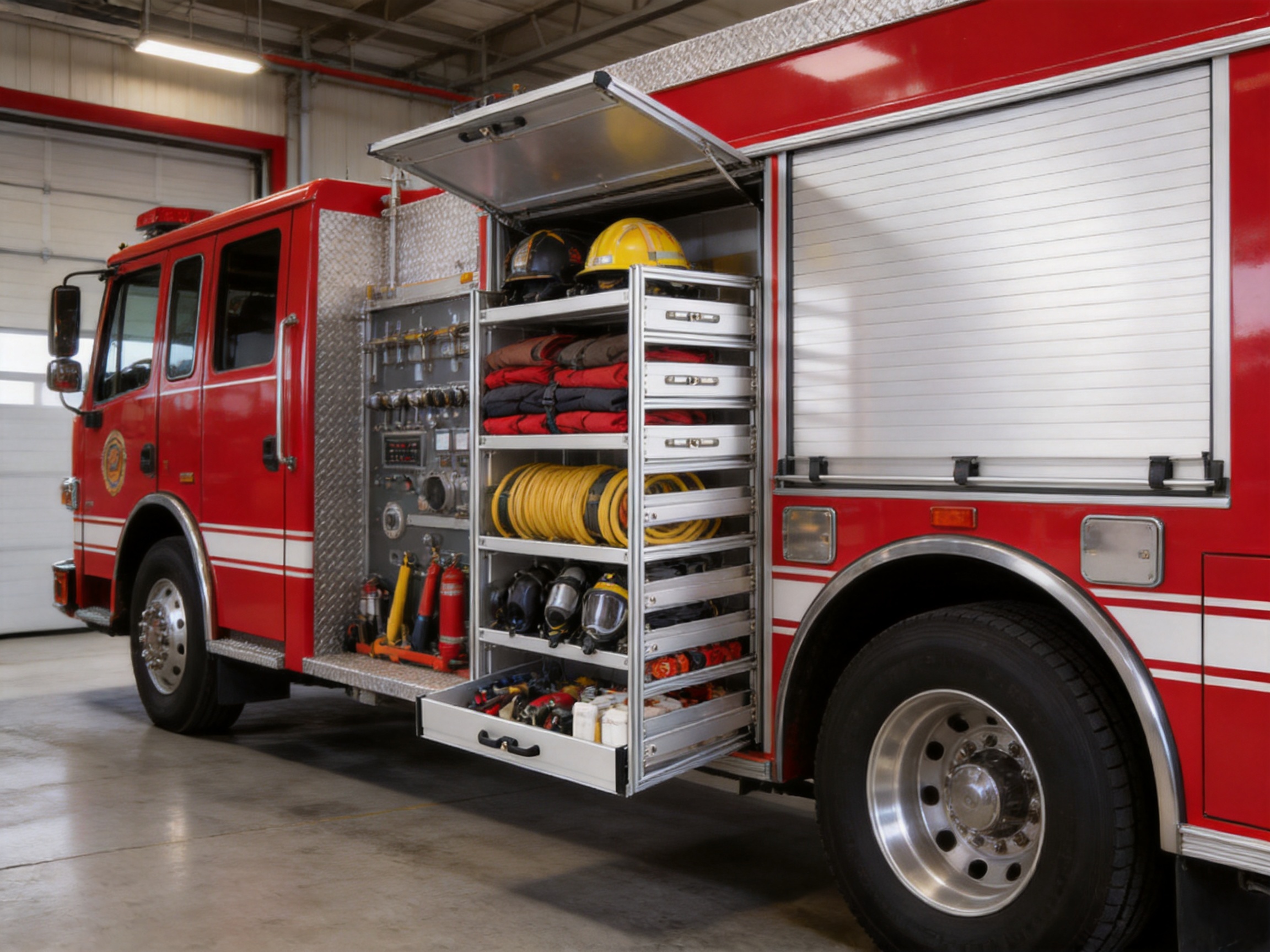
Firefighters often work under intense time pressure, limited visibility, heat, smoke, water exposure, and heavy protective clothing. Equipment compartments must therefore support fast and intuitive access. A storage solution that forces personnel to move several items before reaching a critical tool can reduce efficiency during an incident. A drawer system allows equipment to be brought forward from the compartment, improving visibility and reducing the need for deep reaching.
Traditional fixed shelves may provide basic storage, but they can create unused space at the rear of a compartment. Items placed toward the back may become difficult to identify and retrieve. Open shelves can also expose equipment to dust, water spray, accidental impact, and disorganized stacking. A properly fitted drawer uses the available depth of the compartment while allowing the contents to move outward as one organized unit.
Different emergency missions require different equipment combinations. A municipal fire engine may need to store helmets, protective clothing, hoses, nozzles, and breathing equipment. A rescue vehicle may carry lifelines, gas masks, demolition tools, medical supplies, and technical rescue accessories. A specialized industrial response vehicle may use larger or heavier equipment. The availability of single-layer, double-layer, and multi-layer drawer configurations makes it possible to create storage arrangements for these different scenarios.
Good compartment organization also supports equipment inspection. When the contents of a drawer are arranged by function, crews can quickly identify missing items or damaged components during pre-departure checks. After an operation, equipment can be returned to a defined position. This contributes to better inventory management and helps teams maintain a consistent loading procedure.
Product Configuration and Main Construction
Single-Layer Drawer Configuration
A single-layer drawer is suitable for compartments where a simple, accessible storage level is preferred. It can be used for helmets, fire suits, compact tools, gas masks, lifelines, or other equipment that must be reached quickly. A single-layer arrangement may also be useful when the compartment has a limited vertical opening or when larger individual items need a clear storage area.
The single-layer layout offers straightforward operation and easy visual control. Personnel can pull out one storage tray and access its contents without moving upper drawers. This arrangement can be selected for frequently used equipment or for compartments designed around one main equipment category.
Double-Layer Drawer Configuration
A double-layer drawer provides two levels of storage within the same general compartment area. It can improve space utilization where the vehicle body offers adequate vertical clearance. Equipment may be separated according to use, size, or response procedure. For example, one layer may be used for protective clothing and helmets, while the other stores breathing accessories, lifelines, or hand tools.
Separating equipment into two layers can reduce clutter and make inspection easier. It also allows operators to keep heavier or less frequently used equipment on one level while placing urgent-access items on the other. The exact arrangement can be developed according to the compartment structure and the customer’s loading plan.
Multi-Layer Drawer Configuration
Multi-layer drawer systems are intended for applications where maximum organization and vertical storage efficiency are required. Several drawers can be installed in a coordinated structure, creating dedicated locations for different groups of equipment. This is particularly useful for larger fire apparatus, rescue support vehicles, and specialized vehicles that carry a broad range of accessories.
A multi-layer configuration can help separate clean equipment from used equipment, lightweight items from heavy items, or personal protective equipment from technical tools. By assigning each drawer a clear function, crews can reduce search time and establish repeatable loading and unloading procedures.
| Configuration | Typical Application | Main Benefit |
|---|---|---|
| Single-layer drawer | Compact compartments and frequently accessed equipment | Simple access and clear visibility |
| Double-layer drawer | Medium-capacity equipment compartments | Improved vertical organization |
| Multi-layer drawer | Large apparatus and specialized rescue vehicles | Flexible separation of multiple equipment categories |
High-Strength Aluminum Alloy Frame
The main frame is constructed from high-strength aluminum alloy profiles. Aluminum alloy is widely valued in vehicle equipment because it can provide a favorable balance between strength, weight, corrosion resistance, and design flexibility. For fire apparatus, reducing unnecessary weight can be beneficial because the vehicle must carry pumps, water, tools, ladders, protective equipment, and other payloads while maintaining stable driving performance.
A high-strength profile structure can support the repeated loading and unloading associated with emergency service operations. The frame is designed to maintain its functional geometry during everyday use, allowing the drawer to move along its guide rails without unnecessary interference. Profile-based construction also supports modular manufacturing and customization, which is important when the product must fit different compartment dimensions.
The use of aluminum alloy profiles offers additional advantages during product development. Components can be cut and assembled according to the required length, width, and height. This makes it easier to adapt the drawer system to new fire truck body designs, retrofit projects, and special-purpose vehicles. Instead of forcing a customer to redesign the vehicle compartment around one standard drawer, the drawer can be developed around the available mounting space.
Material selection also affects long-term maintenance. A storage system exposed to moisture, cleaning water, road spray, and changing temperatures must be designed with consideration for corrosion and surface durability. Aluminum alloy helps support a practical service environment, while the use of stainless steel fasteners further strengthens the product’s resistance to common sources of deterioration.
304 Stainless Steel Fasteners
All fasteners used in the product are made of 304 stainless steel. Fasteners are small components, but they are essential to the reliability of a drawer system. They hold the frame, brackets, guide assemblies, and other structural parts together. If fasteners corrode, loosen, or become difficult to service, the performance of the entire storage system may be affected.
304 stainless steel is selected for its widely recognized resistance to corrosion and its suitability for many industrial and vehicle applications. Fire apparatus can encounter rain, humidity, road salt, cleaning agents, foam residues, and water from firefighting operations. Stainless steel fasteners provide a more durable choice than ordinary untreated steel in these conditions.
The use of the same specified stainless steel material throughout the fastening system also supports consistency in production. It helps simplify material control and provides customers with a clear understanding of the construction standard. During assembly, properly selected fasteners contribute to stable connections and help the drawer maintain alignment during repeated operation.
Quiet Guide Rails for Smooth Operation
The drawer uses silent bearings in the guide rails. Smooth and quiet movement is particularly valuable in emergency vehicles because the equipment compartment may be opened in residential areas, hospitals, industrial facilities, or other locations where unnecessary noise is undesirable. A quieter drawer also creates a more comfortable working environment for the crew.
The guide rail system is responsible for supporting the drawer during extension and retraction. Silent bearings help reduce friction and improve the operating feel. When a firefighter pulls the handle, the drawer should respond in a controlled manner rather than binding, scraping, or moving unevenly. Smooth travel also helps reduce the effort required to access equipment, especially when the drawer is fully loaded.
Consistent movement is important for both safety and convenience. An unstable or poorly aligned drawer may place additional stress on the frame, mounting points, and stored equipment. By using guide rails with silent bearings, the design aims to provide reliable movement over repeated operating cycles.
Compared with basic sliding arrangements, a bearing-supported rail system can offer a more refined user experience. It allows the drawer to be opened and closed with less noise and better control. This is a meaningful advantage over low-cost storage solutions that may use simple friction surfaces, poorly protected rollers, or components that produce excessive vibration during operation.
Silicone Rubber Buffer Blocks
Buffer blocks made of silicone rubber prevent the drawer from directly striking the frame. This detail protects the structure from repeated impact when the drawer is closed. It also reduces closing noise and helps create a smoother final movement.
In a fire truck, drawers may be operated quickly and sometimes under stress. A user may push the drawer closed with more force than intended, particularly when wearing gloves or carrying other equipment. Without a buffer, direct contact between metal components can create noise, surface damage, vibration, and long-term wear. The silicone rubber buffer acts as a cushioning element between the moving drawer and the frame.
Silicone rubber is suitable for this type of function because it can provide elasticity and impact absorption. The buffer helps limit the severity of contact while also improving the perceived quality of the product. A controlled closing action can make the drawer more comfortable to use and help protect the surrounding compartment structure.
The buffer blocks complement the silent guide rails. The guide rails support smooth movement during opening and closing, while the silicone components manage the final contact point. Together, these features contribute to a quieter and more controlled operating cycle.
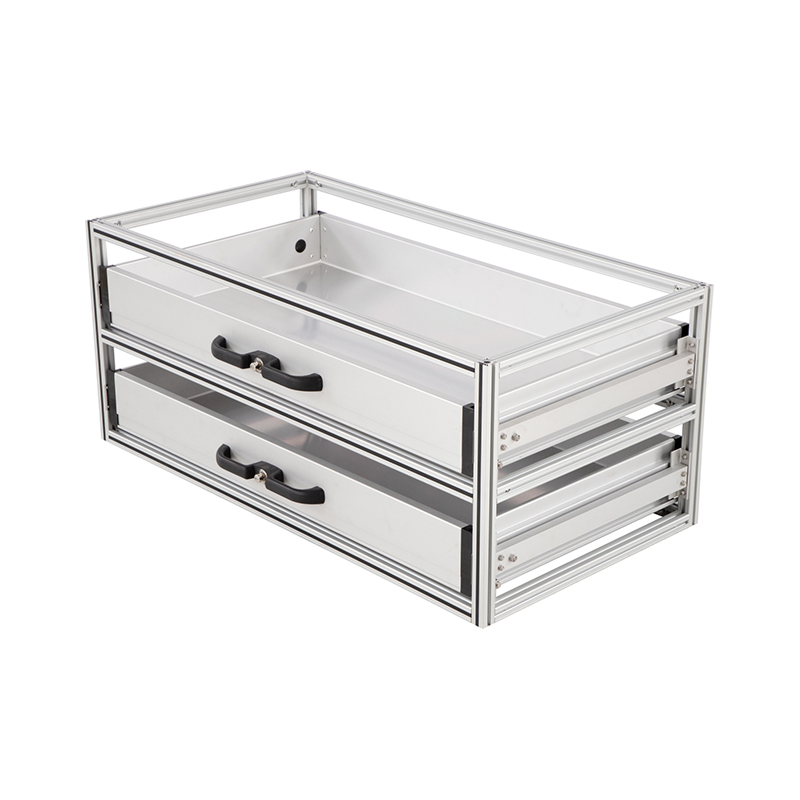
Fire Truck Drawer
Integrated Limit Button and Ergonomic Handle
The limit button and handle are integrated into one piece. This design simplifies the user interface and allows one-hand operation. In emergency service environments, an operator may need to hold a tool, communicate with another crew member, or maintain balance while opening a compartment. A one-hand control can make access more practical.
An integrated handle and limit button also reduces the number of separate controls that the user must identify. The operator can reach one assembly, release or control the drawer, and pull it forward. This supports intuitive use and may reduce the risk of confusion when several drawers are installed close together.
Ergonomics is especially important when users are wearing gloves. A handle must be easy to locate and large enough to operate without delicate finger movement. Integrating the limit button with the handle can reduce unnecessary hand repositioning. The design supports a direct operating motion and helps keep the user’s attention on the equipment rather than on the drawer mechanism.
The integrated assembly can also contribute to a cleaner product appearance. Fewer exposed operating components may reduce visual clutter across the compartment face. In a multi-layer installation, consistent handle positioning can make the overall equipment layout easier to understand.
Custom Dimensions for Different Fire Apparatus
The product length L, width W, and height H can be customized according to customer requirements. Parameter L1 is also listed as customizable for project-specific dimensional planning. This flexibility is one of the product’s most significant advantages because fire apparatus compartments are not always standardized across vehicle models or manufacturers.
A new fire truck may have a purpose-built body with defined compartment openings. A retrofit project may need to use existing mounting points and available clearances. A specialized rescue vehicle may contain angled structures, unusual equipment layouts, or different door and body arrangements. Custom dimensions allow the drawer system to be developed around these practical conditions.
| Parameter | Availability | Purpose |
|---|---|---|
| W | Customizable | Adapts the drawer to the compartment width |
| H | Customizable | Supports single-layer, double-layer, or multi-layer layouts |
| L | Customizable | Matches the available compartment depth |
| L1 | Customizable | Supports project-specific installation and structural requirements |
Custom sizing can improve storage density. If a standard drawer is too small, unused space may remain around it. If it is too large, installation may be impossible or may interfere with nearby doors, rails, tools, or body structures. A correctly sized drawer helps reduce wasted space while preserving the required clearance for safe operation.
Dimension customization also supports better weight distribution. Equipment can be arranged in a manner that matches the vehicle’s structural plan. Heavier items may be assigned to lower drawers, while lighter and frequently accessed equipment can be placed at a convenient height. The final layout should be determined in cooperation with the vehicle builder or equipment integrator.
Equipment Storage Applications
Fire Suits and Protective Clothing
Fire suits require organized storage because they are essential personal protective equipment. A drawer can provide a defined location for folded or arranged protective clothing and can help keep garments separated from loose tools. Storing fire suits in a dedicated drawer may also make pre-departure inspections more efficient.
Helmets
Helmets can occupy valuable compartment space when placed loosely on shelves. A suitable drawer layout can give helmets a dedicated position and reduce the likelihood of them being displaced during vehicle movement. Easy access is important because helmets may be needed immediately after the vehicle stops.
Lifelines
Lifelines and related rescue accessories can become tangled when stored without organization. A drawer can help create a dedicated space where lines and accessories are kept together. Separating them from sharp tools and heavy equipment may reduce the risk of damage and improve deployment readiness.
Gas Masks and Breathing Accessories
Gas masks and breathing-related accessories should be protected from unnecessary impact and kept in an accessible position. A drawer system helps operators assign a stable storage area to these items. The exact internal arrangement can be adapted by the customer according to the size and quantity of the equipment.
Firefighting Accessories
The drawer is also suitable for various firefighting accessories used in different scenarios. Depending on the vehicle’s mission, these may include compact hand tools, nozzles, communication-related accessories, rescue supplies, or other equipment that benefits from organized storage. Multiple drawer levels make it easier to group accessories by function.
Because the drawer dimensions are customizable, users can plan the storage system around the actual equipment list rather than selecting equipment solely to fit a fixed container. This approach supports more efficient vehicle outfitting and can make future equipment changes easier to manage.
Advantages Over Basic or Inflexible Storage Solutions
Fire truck storage products vary widely in construction and function. Basic cabinets or fixed shelves may be less expensive at the initial purchase stage, but they may not provide the same level of access, organization, and customization. The fire truck drawer offers several practical advantages over less developed storage arrangements.
Better Access to Deep Compartments
A fixed shelf may require the operator to reach over other items or into the rear of the compartment. A drawer brings the stored equipment outward, allowing a larger portion of the contents to be seen and reached. This can be particularly useful when the compartment is deep or when the user is wearing thick protective gloves.
Improved Space Organization
Single-layer, double-layer, and multi-layer options help users divide equipment by purpose. Dedicated storage levels can reduce random stacking and make it easier to return items to their correct locations after an operation.
Quieter and More Controlled Movement
Silent bearings and silicone rubber buffer blocks contribute to quieter operation than a simple metal-on-metal arrangement. This can improve the user experience and reduce repeated impact on the frame.
Reduced Unnecessary Weight
The high-strength aluminum alloy frame supports a lightweight structural approach compared with heavier all-steel constructions. The final vehicle weight depends on the complete configuration and installed equipment, but material selection provides a practical foundation for weight-conscious fire apparatus design.
Greater Installation Flexibility
Customizable L, W, H, and L1 dimensions allow the product to be adapted to different vehicle platforms. This is an important distinction from fixed-size products that may require extensive compartment modification or leave unused space.
Convenient One-Hand Operation
The integrated handle and limit button are designed for ergonomic use. One-hand operation can be valuable when the operator is carrying equipment or working in a restricted area.
Manufacturing Strengths and Quality Control
The manufacturer has been dedicated to the field of fire protection accessories since 2010. Its experience covers fire truck equipment, roller shutters, ladders, storage systems, and related rescue components. This industry focus is important because fire apparatus products must be developed with an understanding of vehicle integration, emergency use, durability, and customer-specific requirements.
The company operates with advanced production facilities and a complete production process. A complete process helps connect design, material procurement, profile processing, component preparation, assembly, inspection, and delivery. When these stages are coordinated, the manufacturer can better control dimensional accuracy, component compatibility, and final product consistency.
Quality management is supported by GB/T 19001-2016 quality certification. Certification does not replace product testing or responsible engineering, but it indicates that the company has established a formal quality management framework. Process-based quality control can help ensure that customer requirements are communicated across departments and that production activities are documented and monitored.
For a customizable product, process control is especially important. Each project may have different dimensions, drawer quantities, mounting requirements, and equipment applications. The manufacturer must maintain accurate technical information from the initial inquiry through production. Drawings, dimensional records, material specifications, assembly instructions, and inspection results all contribute to a reliable customized product.
Material Procurement
The process begins with the selection and procurement of appropriate raw materials and components. The aluminum alloy profiles must meet the requirements of the intended structural application. Stainless steel fasteners, guide rail components, silicone buffer blocks, handles, and other parts must also be checked for conformity with the project specification.
Profile Processing
Aluminum alloy profiles can be processed according to the required L, W, H, and L1 dimensions. Accurate cutting and preparation are necessary for a stable frame and smooth drawer operation. Dimensional control at this stage helps prevent alignment issues during assembly.
Component Assembly
During assembly, the frame, drawer body, guide rails, bearings, buffer blocks, handle, limit button, and fasteners are combined into a functioning system. Correct positioning is essential because even a high-quality component may perform poorly if it is installed with incorrect alignment or insufficient adjustment.
Functional Inspection
Functional inspection should include drawer movement, handle operation, limit function, closing contact, general alignment, and visible assembly quality. The drawer should move smoothly and should not create excessive noise or interference. The inspection process provides an opportunity to identify problems before delivery.
Final Preparation and Delivery
Before delivery, the product can be reviewed against the customer’s dimensional and configuration requirements. Proper preparation helps ensure that the drawer arrives ready for integration into the intended fire apparatus project. The company also provides OEM and ODM customization, global technical support, and dedicated customer service for customers with specific application needs.
Research and Development Capability
The manufacturer has a professional research and development team with industry experience. Research and development is important for fire truck equipment because vehicle designs, emergency response practices, materials, and customer expectations continue to change. A supplier that can develop and adapt products is better positioned to support both standard orders and specialized projects.
Continuous attention to market trends allows the company to identify changing needs in storage, access, vehicle integration, and equipment organization. Investment in technology and product improvement can support the development of more efficient and environmentally responsible fire protection equipment.
For the fire truck drawer, research and development may involve improvements to guide rail performance, handle ergonomics, modular frame construction, dimensional flexibility, installation methods, and compatibility with new vehicle layouts. These improvements can be considered while maintaining the product’s essential functions: reliable access, organized storage, and durable construction.
OEM and ODM capability is another important strength. OEM projects may require a product to be manufactured according to an existing design or vehicle builder’s specifications. ODM projects may require the manufacturer to participate more actively in product development and configuration. Both models benefit from technical communication and a clear understanding of the customer’s application.
Installation Planning and Integration Considerations
Successful installation begins with accurate measurement of the target compartment. The available width, height, depth, door opening, nearby equipment, body structure, mounting points, and required operating clearance should be considered before production. The customizable dimensions of the drawer provide flexibility, but the final design must still be based on reliable vehicle information.
The installation team should consider how far the drawer will extend and whether the fully opened position will interfere with personnel movement, doors, hose reels, ladders, nozzles, or other equipment. In a multi-layer configuration, the operator should be able to access each drawer without obstruction from adjacent components.
Equipment weight is also relevant. The storage plan should identify which items will be placed in each drawer and consider the effect of their weight on operation. Heavy equipment should be positioned in a manner consistent with the vehicle’s loading plan and the drawer system’s intended use. The final installation should be verified by the vehicle manufacturer or qualified integration personnel.
Drainage, cleaning, and maintenance should also be considered. Fire apparatus may be exposed to water, foam, dirt, and debris. The surrounding compartment should be designed and maintained so that moisture does not remain trapped around the drawer system. Regular cleaning and inspection can help preserve smooth operation and identify loose fasteners, damaged buffers, or guide rail contamination.
Maintenance and Service Recommendations
A routine inspection program can extend the service life of the drawer and help maintain safe operation. Operators should periodically check whether the drawer opens and closes smoothly, whether the handle and limit button respond correctly, and whether the drawer closes without excessive impact.
The guide rails should be inspected for dirt, foreign objects, visible damage, or abnormal wear. If the drawer begins to move unevenly or produce unusual sounds, the cause should be investigated before continued heavy use. Cleaning procedures should follow the recommendations of the vehicle integrator or equipment supplier.
Fasteners should be checked during scheduled vehicle maintenance. Vibration from road travel and repeated drawer operation can affect mechanical connections over time. Any loose or damaged fastener should be addressed using the correct replacement specification. Because the product uses 304 stainless steel fasteners, replacement parts should maintain compatibility with the original design.
Silicone rubber buffer blocks should also be inspected. If a buffer becomes cracked, detached, or excessively compressed, the drawer may begin to contact the frame more directly. Replacing worn buffers can help maintain quiet closing performance and protect the frame from repeated impact.
The drawer should not be overloaded beyond the approved application. Equipment should be arranged so that it does not obstruct the guide rails, handle, limit button, or closing surface. Keeping the interior organized improves access and reduces the possibility of items shifting during vehicle movement.
How the Drawer Supports Operational Readiness
Operational readiness depends on the condition and location of equipment as well as the vehicle’s mechanical systems. A firefighter may know that a tool is on the vehicle, but that is not enough if the tool cannot be reached quickly. The drawer system supports readiness by creating defined locations for important equipment.
A well-planned storage layout can improve crew familiarity. When each item has a designated position, team members can locate equipment even when working under pressure or in poor visibility. New personnel can also learn the vehicle layout more easily when the storage arrangement is consistent.
After an emergency response, the drawer system helps crews restore equipment to its normal position. Used items can be removed for cleaning or inspection, while replacement items can be returned to clearly assigned locations. This supports a repeatable post-operation procedure and reduces the possibility of departing for the next call with missing equipment.
Equipment protection is another part of readiness. Items that move freely inside a compartment may be scratched, crushed, contaminated, or difficult to find. Separate drawers can reduce contact between equipment categories and help protect sensitive accessories from unnecessary impact.
Suitable Customers and Application Scenarios
The fire truck drawer can be used by fire apparatus manufacturers, emergency vehicle body builders, municipal fire departments, industrial emergency teams, rescue organizations, and fleet operators. It may be specified for new vehicle production or considered as part of a compartment improvement or retrofit project.
Vehicle manufacturers can integrate the drawer into a complete equipment compartment design. Rescue organizations can use the customizable dimensions to improve the layout of existing vehicles. Industrial facilities with dedicated fire brigades may select different drawer configurations for specialized protective equipment and response tools.
The product is also suitable for customers seeking OEM or ODM cooperation. Some projects may require a standard configuration with customized dimensions. Others may require a more detailed development process involving drawings, compartment planning, special mounting requirements, or a coordinated multi-layer storage system.
Purchasing and Customization Checklist
Before requesting a quotation or beginning a customization project, customers should prepare as much application information as possible. This helps the manufacturer evaluate the appropriate structure and avoid delays caused by incomplete dimensional data.
Important information may include the vehicle model, compartment location, available width, height and depth, preferred drawer quantity, equipment categories, approximate equipment weights, required access direction, and any nearby components that could affect operation.
Customers should also clarify whether the product is intended for a new vehicle or a retrofit. New vehicles may offer more freedom for mounting design, while retrofit projects may require the drawer to work with existing brackets and body structures. Photographs, drawings, compartment sketches, and three-dimensional data can help improve communication.
| Project Information | Why It Matters |
|---|---|
| Vehicle and compartment details | Confirms available installation space |
| Required L, W, H, and L1 dimensions | Supports accurate customization |
| Number of drawer layers | Determines storage capacity and vertical arrangement |
| Equipment list | Helps define drawer function and internal organization |
| Approximate equipment weight | Supports suitable structural and loading planning |
| Operating clearance | Prevents interference with doors and nearby equipment |
| Installation drawings or photographs | Improves technical communication and project accuracy |
Frequently Asked Questions
What is a fire truck drawer used for?
A fire truck drawer is used to organize and store fire and rescue equipment inside a vehicle compartment. It can hold fire suits, helmets, lifelines, gas masks, and various firefighting accessories. By allowing the contents to move outward, it can improve access to equipment stored in deeper compartments.
What drawer configurations are available?
The product is available in single-layer, double-layer, and multi-layer configurations. The appropriate configuration depends on the compartment dimensions, required storage capacity, equipment categories, and preferred operating arrangement.
Can the drawer dimensions be customized?
Yes. The product length L, width W, height H, and parameter L1 can be customized according to customer requirements. Accurate compartment measurements and installation information should be provided during the technical discussion.
What materials are used in the main frame?
The main frame is constructed from high-strength aluminum alloy profiles. This material supports a strong yet weight-conscious structure and allows the frame to be adapted to different dimensions.
What type of fasteners are used?
All fasteners are made of 304 stainless steel. This material is selected for its corrosion resistance and suitability for demanding vehicle and industrial environments.
How does the drawer reduce operating noise?
Silent bearings are used in the guide rails to support smooth movement with minimal noise. Silicone rubber buffer blocks prevent the drawer from striking the frame directly when it closes, further reducing impact and noise.
Can the drawer be operated with one hand?
The limit button and handle are integrated into one ergonomic assembly, allowing one-hand operation. This is useful when the operator is wearing gloves or holding another item.
What equipment can be stored in the drawer?
The drawer is suitable for fire suits, helmets, lifelines, gas masks, and various firefighting accessories. The specific equipment arrangement should be planned according to the mission and vehicle layout.
Is the product suitable for new vehicles and retrofits?
Yes. The customizable dimensions make it suitable for new fire apparatus projects and selected retrofit applications. Retrofit suitability depends on the existing compartment space, mounting conditions, and required operating clearance.
What manufacturing strengths support the product?
The manufacturer has operated in the fire protection accessory field since 2010 and uses advanced production facilities and a complete production process. Its quality management system has passed GB/T 19001-2016 certification, and it has a professional research and development team for product improvement and customization.
Does the manufacturer provide OEM and ODM services?
Yes. OEM and ODM customization are available. Customers can discuss dimensions, configurations, vehicle integration requirements, and other project-specific details with the technical and service teams.
How should the drawer be maintained?
Operators should regularly inspect the guide rails, fasteners, handle, limit button, buffer blocks, and general alignment. The drawer should be kept clean and should not be overloaded or packed in a way that blocks the operating components.
Why Choose a Specialized Fire Equipment Manufacturer
A drawer designed specifically for fire apparatus is different from a general industrial drawer. It must be considered in relation to emergency access, vehicle vibration, limited compartment space, protective equipment, crew ergonomics, and frequent operation. A specialized manufacturer is more likely to understand these combined requirements and develop solutions suitable for actual fire and rescue applications.
Experience in related products can also improve project coordination. A supplier familiar with roller shutters, ladders, mounting systems, nozzles, demolition tools, SCBA equipment, and other fire truck accessories can better understand how a drawer may interact with the wider vehicle equipment package. This broader knowledge can be useful when planning a complete compartment rather than purchasing an isolated component.
The company’s focus on honesty, innovation, quality, and service supports a customer-oriented approach. Its stated commitment includes reliable fire truck equipment, technical assistance, global support, and dedicated customer service. For international customers, clear communication and responsive technical support are particularly important when dimensions and vehicle standards differ between markets.
Conclusion
The fire truck drawer is a functional storage and access system developed for the demanding environment of emergency vehicles. Its single-layer, double-layer, and multi-layer configurations provide flexibility for different storage requirements. The high-strength aluminum alloy frame supports a practical balance of strength and weight, while 304 stainless steel fasteners provide reliable resistance to corrosion in wet and active vehicle environments.
Silent guide rail bearings support smooth, low-noise movement. Silicone rubber buffer blocks protect the frame from direct impact during closing. The integrated handle and limit button allow ergonomic one-hand operation, helping firefighters access stored equipment efficiently. Customizable L, W, H, and L1 dimensions allow the system to be adapted to different fire apparatus compartments, vehicle platforms, and equipment plans.
In comparison with basic fixed shelves or inflexible storage boxes, the drawer offers improved access to deep compartments, better organization, quieter operation, and greater design flexibility. Its value is further supported by the manufacturer’s experience in fire protection accessories, advanced production facilities, formal quality management, research and development capability, and OEM/ODM service support.
For fire truck manufacturers, rescue organizations, fleet operators, and industrial emergency teams, a carefully planned drawer system can improve equipment visibility, operational readiness, maintenance procedures, and overall compartment efficiency. By combining durable materials, ergonomic operation, modular configurations, and application-specific customization, this fire truck drawer provides a practical foundation for modern fire apparatus equipment storage.
References
1. International Organization for Standardization. Quality Management Systems — Requirements. ISO 9001 reference principles.
2. GB/T 19001-2016. Quality Management Systems — Requirements.
3. General engineering references for aluminum alloy profiles used in vehicle structures and equipment frames.
4. General technical references for 304 stainless steel fasteners in industrial and vehicle applications.
5. General design references for ergonomic handles, manual controls, and equipment access systems.
6. General maintenance practices for emergency vehicle compartments, sliding storage systems, and rescue equipment organization.
Product: Fire Truck Drawer
News
-
-
Two minutes into a working fire, a crew stands in front of a locked steel security door with a crowbar that is too short to pull with both hands. Nothing about the tool is broken. It was simply speci...
READ MORE -
Every firefighter has opened a compartment door after a rough response only to find nozzles, webbing, and wrenches piled on top of each other. In gloves and low light, with the pump running, that is ...
READ MORE -
A firefighter opens a compartment door after a long working fire. Inside, the thermal imaging camera has slid under a halligan bar, the hose line is twisted into a knot, and a 20 kg SCBA cylinder is ...
READ MORE -
Two pumpers of the same model can feel like two different trucks on the same call. On the first, a firefighter reaches into a compartment, releases one latch with a gloved hand, and pulls a tray far ...
READ MORE -
Specification meetings usually park the ladder rack near the bottom of the option sheet, a few lines above the license plate bracket. That is also why ladder racks become the complaint in year three:...
READ MORE
Hey! Interested in staying in the loop? Sign up for our updates.
WE WON'T SPAM YOU, PINKY PROMISE.

Tianchang Jinlv Fire Equipment Co., Ltd.
Copyright © Tianchang Jinlv Fire Equipment Co., Ltd. All rights reserved. Custom Fire Truck Equipment Supplier Fire Apparatus Parts Factory
