

 en
 English
 русский
 Español
 عربى

A builder fitting out a pumper asks one question before ordering anything: fixed deck monitor or portable cannon? The answer should follow the attack, not the catalog. A fire hose cannon earns its p...
READ MORE
Fixed Fire Cannon: Compact, High-Reach Water and Mist Protection for Demanding Firefighting Applications
2026.09.29
Content
- 1 1. Product Overview
- 2 2. Key Performance Characteristics
- 3 3. Product Specification Comparison
- 4 4. Advantages Over Less Flexible Alternatives
- 5 5. Application Scenarios
- 6 6. Manufacturing Strengths and Quality Control
- 7 7. Installation and System Integration
- 8 8. Operation and Maintenance
- 9 9. Customization and OEM/ODM Support
- 10 10. Selecting the Appropriate Model
- 11 11. Why Manufacturing Experience Matters
- 12 12. Frequently Asked Questions
- 12.1 Q1: What is a fixed fire cannon used for?
- 12.2 Q2: What materials are used in the Fixed Fire Cannon?
- 12.3 Q3: Can the cannon produce both a straight stream and a spray?
- 12.4 Q4: What is the reach of the PSKD10/100WB?
- 12.5 Q5: What is the flow rate of the PS10-50W-D?
- 12.6 Q6: Which model provides the higher water capacity?
- 12.7 Q7: Is the PS10-50W-D suitable for lightweight vehicles?
- 12.8 Q8: Can the cannon be installed on a fireboat?
- 12.9 Q9: Does the cannon replace handheld firefighting equipment?
- 12.10 Q10: Can the product be customized?
- 12.11 Q11: What should be checked before installation?
- 12.12 Q12: How should the cannon be maintained?
- 13 13. Conclusion
- 14 References
- 15 Product: Fixed Fire Cannon
Fixed fire cannons are important components in firefighting systems that require extended water reach, directional control, rapid deployment, and reliable operation in difficult environments. They are used on fire trucks, fireboats, industrial facilities, warehouses, docks, airports, petrochemical sites, entertainment venues, and other locations where a conventional handline may not provide sufficient coverage or operator safety.
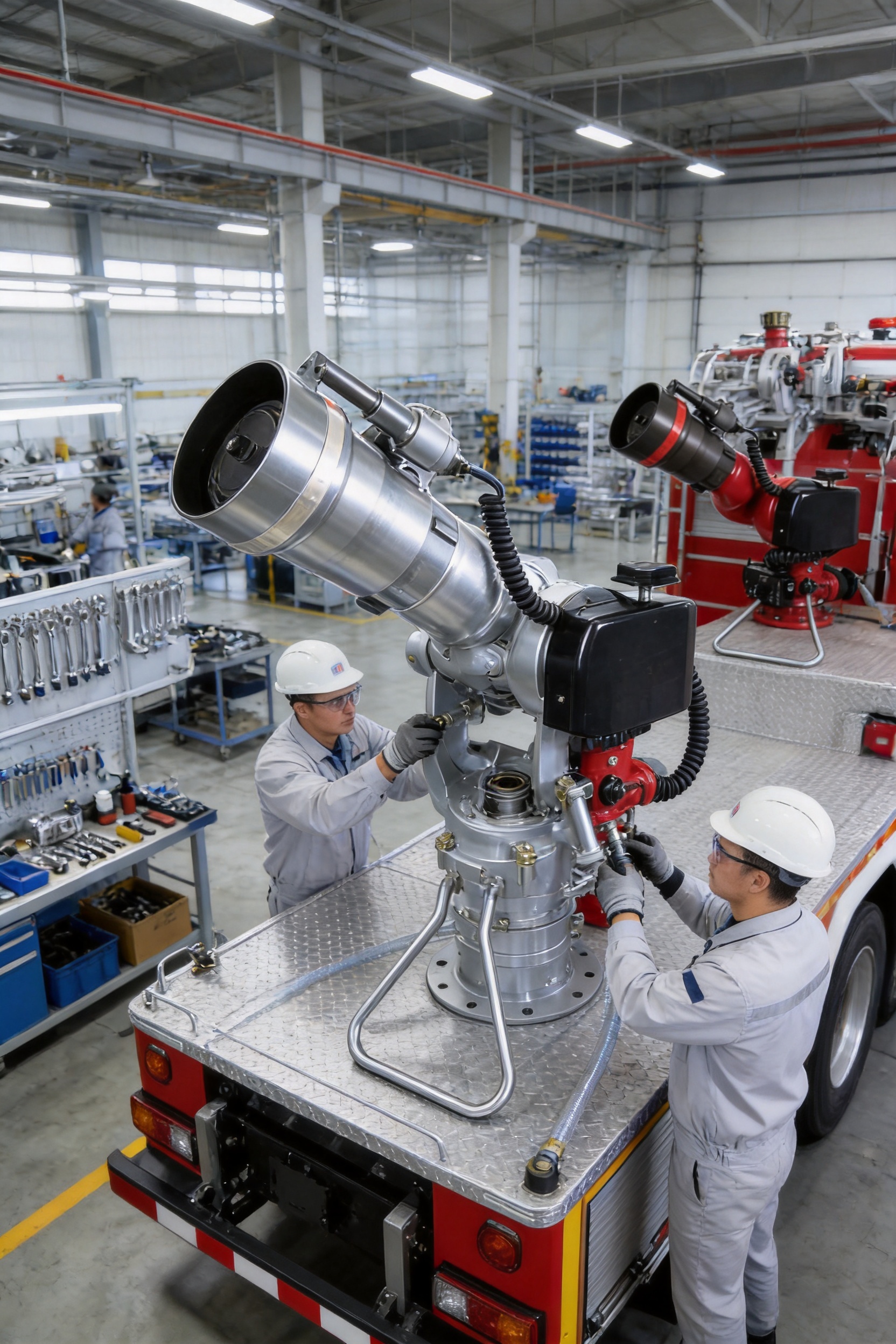
The Fixed Fire Cannon series described in this article is designed to deliver concentrated water streams over long distances while also providing adjustable flow, spray capability, horizontal rotation, and vertical movement. Manufactured from aluminum alloy, the cannon combines low weight with corrosion resistance and a practical structure that supports installation on mobile and fixed platforms.
Two configurations are presented in the supplied product information: the PSKD10/100WB and the PS10-50W-D. Although they differ in flow rate, reach, movement range, and operating specifications, both models are intended to provide flexible water delivery for professional firefighting and fire protection systems.
This article examines the construction, operating principle, specifications, application areas, safety value, installation considerations, maintenance requirements, and manufacturing strengths associated with this type of fixed fire cannon. It also explains why a compact aluminum-alloy design can offer practical advantages compared with heavier, less flexible, or more specialized alternatives.
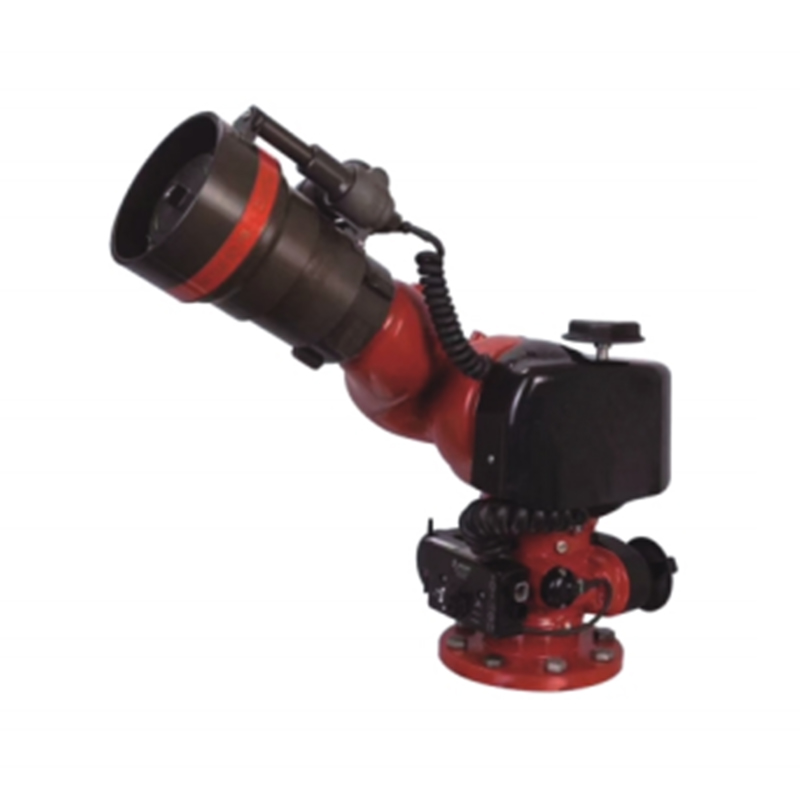
Fixed Fire Cannon
1. Product Overview
A fixed fire cannon is a directional firefighting device that projects water or water mist toward a fire, heat source, or hazardous area. Unlike a handheld nozzle, it is mounted on a vehicle, vessel, structural platform, or facility piping system. Its mounting arrangement allows the operator to control the discharge direction while remaining at a safer distance from flames, smoke, radiant heat, or hazardous substances.
The Fixed Fire Cannon series uses a compact body and adjustable discharge mechanism. The product can produce a straight water stream for long-distance suppression and a spray pattern for broader coverage or personnel protection. The same basic unit can therefore support several firefighting tasks rather than being limited to one discharge pattern.
The PSKD10/100WB configuration is specified with a flow rate of 100 liters per second and a reach of approximately 90 meters. It operates at a working pressure of 1.0 to 1.4 MPa, provides a vertical tilt range from -15 degrees to +60 degrees, and allows 360-degree horizontal rotation. Its maximum spray angle is listed as 120 degrees.
The PS10-50W-D configuration is designed for a lower flow range. Its listed flow rate is 30 to 50 liters per second, with a working pressure of 1.0 to 1.6 MPa and a reach of approximately 60 to 70 meters. Its specifications include a maximum spray angle of at least 100 degrees, a horizontal rotation angle of plus or minus 45 degrees, and a weight of no more than 15 kilograms.
These two configurations allow users to select a suitable balance between flow capacity, reach, movement range, equipment weight, and installation requirements. A large fire truck or industrial firefighting vehicle may benefit from the higher-capacity PSKD10/100WB, while a lighter vehicle, fixed platform, or installation with more limited water supply may be better suited to the PS10-50W-D.
2. Key Performance Characteristics
2.1 Adjustable Flow and Discharge Patterns
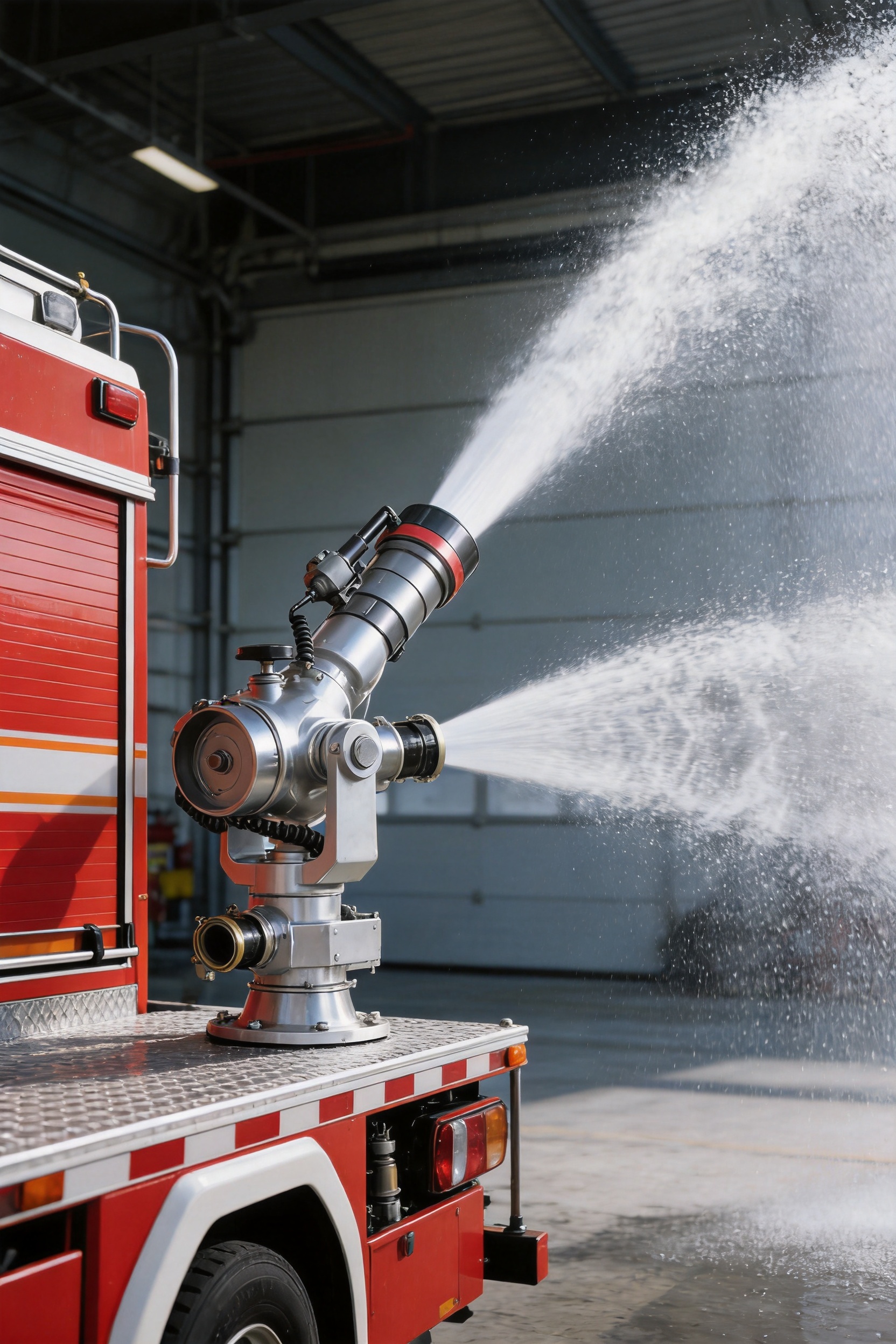
One of the main functional advantages of the Fixed Fire Cannon is its adjustable water discharge. Fire conditions vary considerably. A high-volume straight stream may be required to attack flames at a distance, while a wider spray pattern may be more suitable for cooling equipment, shielding personnel, suppressing radiant heat, or covering a larger area.
The cannon supports both straight-stream and spray modes. In straight-stream mode, the discharge is concentrated to achieve greater reach and penetration. This mode is particularly useful when the operator must direct water toward a fire located across an open yard, roadway, dock, warehouse floor, or industrial installation.
In spray mode, water is dispersed across a wider area. This can assist with surface cooling, exposure protection, vapor suppression, and the creation of a water curtain. A spray pattern may also help protect firefighters and nearby equipment from radiant heat. The stated maximum spray angles of 120 degrees for the PSKD10/100WB and at least 100 degrees for the PS10-50W-D indicate the broad coverage potential of the two configurations.
Adjustability improves operational efficiency because the same cannon can be adapted to changing conditions. Operators do not have to rely exclusively on a narrow jet or replace the nozzle whenever a broader pattern is needed. This flexibility is especially valuable during incidents that develop through several stages, such as an initial fire attack followed by cooling, exposure protection, and final hot-spot control.
2.2 Long-Range Water Delivery
Reach is a critical performance factor for vehicle-mounted and fixed firefighting equipment. A cannon with a long water throw allows operators to engage a fire from a safer distance and can reduce the need to position the vehicle directly beside the hazard.
The PSKD10/100WB is listed with a reach of 90 meters. The PS10-50W-D provides an approximate reach of 60 to 70 meters. Actual performance may vary according to water pressure, elevation, wind, discharge pattern, piping arrangement, and installation conditions, but the stated figures demonstrate that both models are intended for long-range firefighting rather than short-distance manual use.
Long-distance delivery can be valuable at oil depots, docks, airports, chemical facilities, large warehouses, and fire scenes involving unstable structures. Greater reach may provide additional time for emergency crews to assess the situation and may limit exposure to falling debris, toxic smoke, intense heat, or explosive hazards.
2.3 Horizontal and Vertical Movement
The ability to direct the cannon is as important as its flow rate. A fixed water outlet with no directional control can leave uncovered areas and may require the entire vehicle or platform to be repositioned. By contrast, a movable cannon can sweep across a fire zone and target specific areas without moving the base structure.
The PSKD10/100WB offers 360-degree horizontal rotation and a vertical tilt range from -15 degrees to +60 degrees. This broad movement range supports coverage around the mounting location and allows the operator to direct water toward elevated or lower targets.
The PS10-50W-D provides horizontal movement of plus or minus 45 degrees and a vertical tilt range listed as 30 to 70 degrees. This configuration may be suitable for installations where the intended operating area is more defined or where a limited directional range is preferred.
Directional movement improves water usage by allowing the operator to concentrate the stream where it is most effective. Instead of applying water indiscriminately, the crew can target flames, burning surfaces, nearby exposures, storage tanks, vehicle compartments, or structural areas that require cooling.
2.4 Aluminum-Alloy Construction
The fire cannon is made from aluminum alloy. This material choice contributes to a lightweight structure, which is especially beneficial for fire truck and fireboat installations. Vehicle-mounted equipment must be strong enough for repeated operation while remaining within the vehicle’s allowable weight and center-of-gravity limits.
Lower equipment weight can simplify installation, reduce the load placed on the mounting platform, and support better vehicle handling. It may also make inspection, removal, replacement, and service work easier for maintenance personnel. On a fireboat, reducing unnecessary upper-structure weight can be particularly important because weight distribution influences stability and maneuverability.
Aluminum alloy also offers useful corrosion resistance. Firefighting equipment is frequently exposed to water, humidity, salt spray, foam residues, dust, smoke, and industrial atmospheres. A corrosion-resistant material can help preserve structural integrity and reduce the risk of premature deterioration when appropriate surface treatment, inspection, and maintenance practices are followed.
Compared with a similarly sized steel assembly, an aluminum-alloy cannon can provide a more favorable weight-to-strength balance. Compared with some highly specialized materials, aluminum alloy may also offer a practical combination of availability, machinability, serviceability, and cost control.
3. Product Specification Comparison
The following table summarizes the specifications provided for the two Fixed Fire Cannon configurations. Users should confirm final technical data, connection dimensions, control arrangements, and installation requirements with the manufacturer before placing an order or integrating the equipment into a complete firefighting system.
| Specification | PSKD10/100WB | PS10-50W-D |
|---|---|---|
| Product type | Fixed fire cannon | Fixed fire cannon |
| Material | Aluminum alloy | Aluminum alloy |
| Working pressure | 1.0–1.4 MPa | 1.0–1.6 MPa |
| Vertical tilt angle | -15° to +60° | 30° to 70° |
| Reach | 90 m | 60–70 m |
| Flow rate | 100 L/s | 30–50 L/s |
| Maximum spray angle | 120° | At least 100° |
| Horizontal rotation | 360° | ±45° |
| Listed weight | Not specified | ≤15 kg |
The table shows that the PSKD10/100WB is the higher-capacity option, with a greater flow rate, longer stated reach, broader horizontal rotation, and a wide vertical movement range. It may be appropriate for large vehicles, fireboats, industrial sites, and applications where high-volume water delivery is a priority.
The PS10-50W-D is more compact in terms of specified weight and provides a lower flow range. Its performance may make it suitable for installations where water supply, vehicle payload, platform size, or system capacity must be carefully managed. The lower flow requirement can also be advantageous where the available pump and piping system are designed for moderate capacity rather than maximum output.
4. Advantages Over Less Flexible Alternatives
4.1 Greater Operational Versatility
A basic fixed outlet may deliver water in only one direction and with one discharge pattern. The Fixed Fire Cannon provides more operational choices through its directional movement and selectable stream or spray modes. This versatility allows one unit to address several firefighting tasks.
For example, a straight stream can be used for initial attack, a wide spray can be used to cool adjacent equipment, and a protective mist can be directed toward firefighters or vulnerable areas. The ability to make these changes without replacing the entire device can reduce response time and simplify equipment planning.
4.2 Improved Operator Protection
Firefighting operations expose personnel to heat, smoke, flame, chemical substances, unstable structures, and unexpected changes in fire behavior. A long-range cannon can allow water application from a position farther away from the immediate hazard. Spray and mist modes can also provide a degree of thermal shielding when correctly positioned and used as part of a complete safety plan.
The cannon does not eliminate the need for personal protective equipment, respiratory protection, fireground coordination, water-supply planning, or hazard assessment. However, it can reduce the amount of time personnel must spend close to the fire and can give incident commanders another method for controlling dangerous areas.
4.3 Efficient Coverage of Large Areas
The combination of high flow, long reach, and directional movement is useful for large-area protection. A fire truck or facility-mounted cannon can cover a broad zone without requiring a large number of separate handlines or fixed outlets. This may reduce congestion around the incident and help crews focus on rescue, evacuation, ventilation, containment, and other essential tasks.
Wide spray capability is especially useful for exposure protection. In an industrial yard, for example, the cannon can be aimed toward nearby storage tanks, pipelines, vehicles, or structures that are threatened by heat. At a dock or petrochemical site, a water curtain may help limit heat transfer and support defensive firefighting tactics.
4.4 Practical Weight and Installation Benefits
Equipment weight has a direct effect on mobile firefighting platforms. Heavy devices may require reinforced supports, larger actuators, more complicated handling arrangements, and additional structural analysis. The aluminum-alloy construction of this series helps reduce such burdens while maintaining a robust professional configuration.
The stated weight of the PS10-50W-D is no more than 15 kilograms. This can be beneficial for smaller fire trucks, compact rescue vehicles, portable platforms, and installations where several accessories must be mounted on the same structure. The final installed weight will also include the base, controls, piping, valves, and mounting hardware, so a complete system assessment remains necessary.
4.5 Corrosion Resistance for Challenging Environments
Firefighting equipment is often used outdoors and may be exposed to aggressive conditions. Fireboats face saltwater and marine humidity. Industrial facilities may contain corrosive vapors. Fire trucks may be stored outdoors or operated in rainy, snowy, dusty, and polluted environments.
Aluminum alloy provides a useful foundation for corrosion resistance. Proper material selection, protective treatment, drainage, compatible fasteners, and routine inspection all contribute to long service life. The cannon’s corrosion-resistant construction is therefore a practical advantage for customers who need dependable equipment in demanding locations.
5. Application Scenarios
5.1 Fire Trucks and Emergency Vehicles
Fire truck installation is one of the primary uses for a fixed fire cannon. The cannon can be mounted on a roof, rear platform, front section, or other structurally suitable location, depending on the vehicle design and intended discharge direction.
On a large pumper or rescue vehicle, the higher-capacity PSKD10/100WB may support defensive firefighting at industrial, commercial, or infrastructure incidents. Its 360-degree horizontal rotation can help cover multiple directions without relocating the vehicle.
The PS10-50W-D may be appropriate for a vehicle with a lower-capacity pump or more limited payload. Its lower flow range and stated weight limit can support a compact design while still providing substantial reach for many fireground conditions.
Installation on a fire truck requires careful attention to pump output, piping diameter, pressure loss, vehicle stability, structural reinforcement, operator controls, access for maintenance, and clearance from ladders, doors, lights, exhaust systems, and other equipment.
5.2 Fireboats and Marine Firefighting
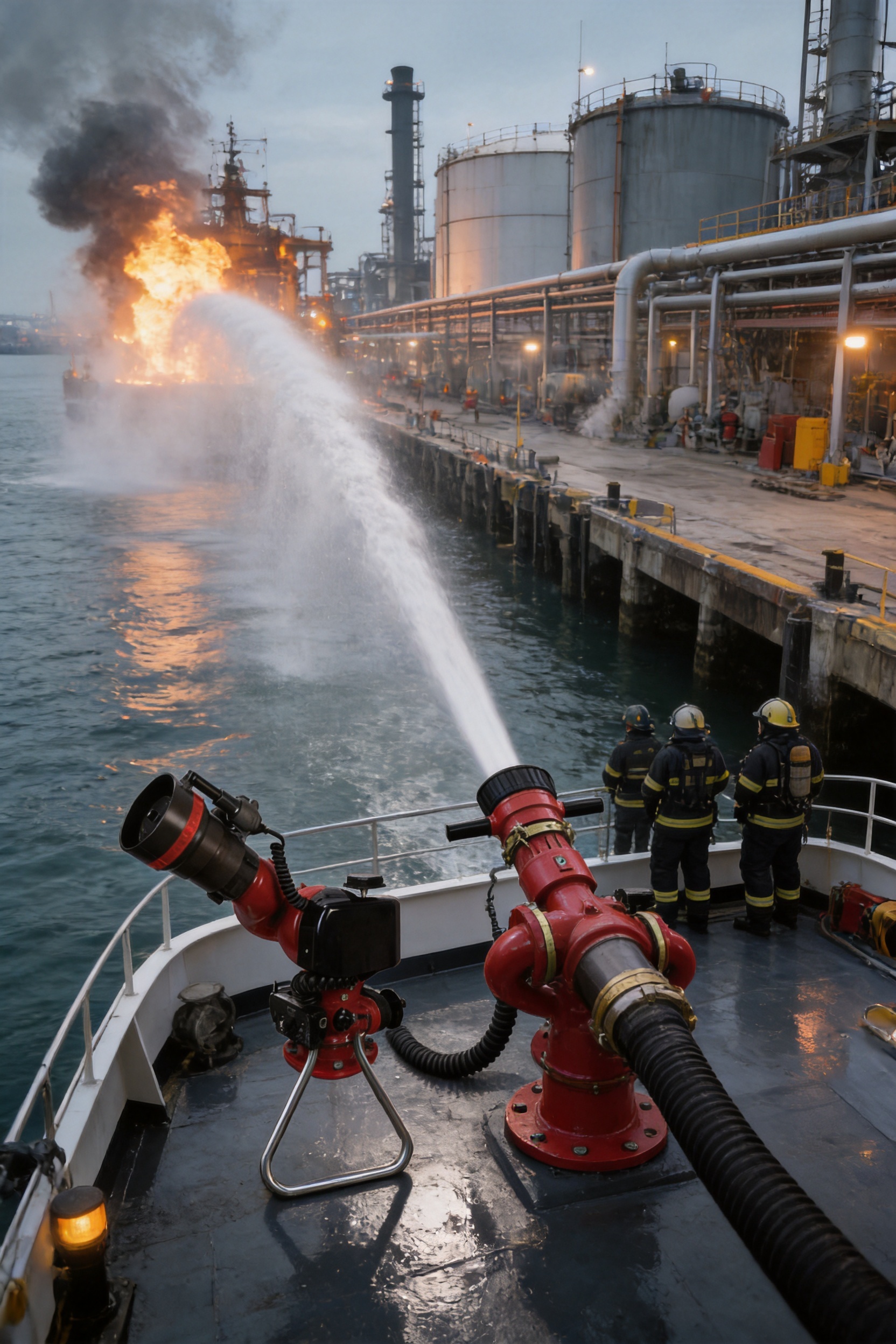
Fireboats require equipment that can project water across open spaces, docks, vessels, storage areas, and shoreline facilities. A cannon mounted on a fireboat can provide a high-volume stream while the vessel remains at a controlled distance from the incident.
Marine environments place special demands on equipment. Saltwater exposure, vibration, spray, limited maintenance access, and changing vessel trim must all be considered. The aluminum-alloy construction and compact arrangement of the Fixed Fire Cannon can support marine installation, provided that the complete system is designed with suitable materials, coatings, drainage, fasteners, and corrosion-control procedures.
The cannon can be directed toward a burning vessel, dock structure, cargo area, or industrial installation. Spray mode may also be useful for cooling the fireboat itself or for protecting crew positions from radiant heat.
5.3 Warehouses and Large Indoor Spaces
Large warehouses, exhibition halls, cinemas, entertainment venues, and other spacious buildings may contain high fuel loads, large open areas, or valuable contents that are difficult to reach with short-range equipment. A fixed cannon can be integrated into a broader firefighting strategy for rapid water application across a large interior or semi-enclosed space.
Indoor use requires careful system design. The operator must consider drainage, visibility, smoke movement, electrical equipment, structural loading, water damage, and the risk of discharging water into areas occupied by personnel. The cannon should be used according to the site’s fire protection plan and under the direction of trained emergency personnel.
5.4 Oil Depots and Petrochemical Facilities
Oil storage areas and petrochemical facilities may involve intense heat, flammable liquids, vapor hazards, and the possibility of fire spreading between tanks or process units. Long-range water cannons can support defensive cooling and exposure protection while reducing the need to place firefighters immediately beside the hazard.
At these sites, water application is often part of a coordinated response that may include foam systems, fixed deluge systems, emergency shutdown procedures, gas detection, remote monitoring, evacuation, and hazardous-area controls. The Fixed Fire Cannon can serve as one part of that integrated system.
Its ability to switch between concentrated and spray discharge makes it useful for both direct attack and cooling operations. However, users must select the appropriate extinguishing medium and confirm that water is suitable for the specific material involved. Water is not appropriate for every fire type, and certain flammable liquids or reactive substances require specialized agents and procedures.
5.5 Docks, Airports, and Industrial Yards
Docks, airports, and industrial yards often contain large open areas where a long-range directional stream provides a practical advantage. A cannon can be used to reach aircraft, vehicles, cargo, fuel equipment, loading areas, or remote sections of a yard.
At airports, the final design must account for aircraft movement, runway and taxiway clearance, jet blast, fuel hazards, vehicle access, and coordination with airport emergency plans. At docks, the system should be evaluated for marine corrosion and the movement of vessels, cranes, containers, and loading equipment.
Industrial yards benefit from the cannon’s ability to cover changing targets. A movable water stream can be directed toward a fire, then shifted toward an adjacent structure or storage unit that is at risk of ignition.
6. Manufacturing Strengths and Quality Control
The product is manufactured by Tianchang Jinlv Fire Equipment Co., Ltd., a company established in 2010 and focused on fire protection accessories and fire truck equipment. Its product range includes specialty vehicle roller shutters, equipment stowage and mounting systems, boarding ladders, ladder racks, handrails, firefighting nozzles, fire hose cannons, demolition tools, SCBA equipment, cab doors, and plastic tool components.
This product range is relevant to the manufacturing of a fixed fire cannon because a cannon is rarely installed as an isolated item. It forms part of a larger vehicle or emergency-response system. A supplier with experience in fire truck structures, access equipment, storage systems, and related components can better understand the spatial, mechanical, and operational requirements of complete vehicle integration.
6.1 Controlled Production Processes
The company is described as having advanced production facilities and a complete production process. A complete process typically involves material procurement, incoming inspection, cutting, machining, forming, welding or assembly, surface treatment, component inspection, final assembly, functional testing, packaging, and delivery control.
For an aluminum-alloy fire cannon, manufacturing consistency is important. Dimensional accuracy affects movement, sealing, connection alignment, and the relationship between the cannon and its mounting base. Surface quality affects corrosion resistance and appearance. Assembly accuracy affects smooth operation and the reliability of directional control.
Consistent production also helps reduce variation between batches. This is important for customers operating multiple vehicles or ordering replacement equipment over time. Repeatable dimensions and documented processes can simplify installation, spare-part management, and fleet standardization.
6.2 Quality Management Certification
The company has passed GB/T 19001-2016 quality certification. A quality management system based on this standard supports documented processes, responsibilities, customer-focused planning, corrective action, continual improvement, and traceability of important activities.
Certification does not replace product-specific inspection or field validation, but it provides an organized framework for managing production quality. For buyers of professional firefighting equipment, this can be an important indicator that the supplier has formal procedures rather than relying solely on individual operator experience.
In practical terms, a quality-controlled production process can help address common risks such as inconsistent material selection, dimensional deviation, incomplete assembly, inadequate inspection, or unclear documentation. Customers should still request the exact inspection records, test reports, material information, and compliance documents required for their project.
6.3 Research and Development Capability
The company maintains a professional research and development team with industry experience. The company states that it follows market trends, invests in development, introduces advanced technologies, and creates efficient and environmentally conscious fire protection equipment for different application scenarios.
Research and development is particularly valuable for fixed cannons because different customers may require different flow capacities, connection standards, movement arrangements, control systems, mounting configurations, surface treatments, or vehicle integration solutions. An experienced engineering team can help adapt a standard product to the practical constraints of a fire truck, fireboat, industrial platform, or fixed facility.
OEM and ODM capability can also support private-label programs, customized dimensions, special mounting arrangements, and product configurations for distributors or vehicle manufacturers. Customization should be based on confirmed technical drawings, performance requirements, material specifications, testing procedures, and responsibilities for system integration.
6.4 Cost-Effective Production
The company emphasizes efficient manufacturing, scientific production processes, stable quality, and reduced costs. For buyers, cost effectiveness does not simply mean the lowest purchase price. It includes the relationship between initial cost, installation complexity, service life, spare parts, maintenance requirements, operating efficiency, and long-term availability.
A compact and lightweight aluminum-alloy cannon may reduce structural and handling costs. A standardized design may simplify procurement and replacement. A supplier with related fire truck components may reduce the complexity of sourcing products from multiple vendors.
Cost control must always remain compatible with safety and performance. Firefighting equipment should not be selected solely on price. Customers should evaluate the product according to flow, pressure, reach, material, operating range, compatibility with the water system, certifications, inspection requirements, and expected service conditions.
7. Installation and System Integration
Correct installation is essential to obtain the expected performance of a fixed fire cannon. The cannon must be matched with a pump, piping system, valves, controls, mounting structure, and water source capable of meeting the required flow and pressure.
7.1 Pump and Piping Compatibility
The PSKD10/100WB is listed with a flow rate of 100 liters per second. This is a substantial water demand, and the pump must be sized accordingly. The piping system must also provide adequate internal diameter and acceptable pressure loss. Elbows, valves, filters, reducers, flexible sections, and elevation changes can all affect final discharge performance.
The PS10-50W-D is listed with a flow rate of 30 to 50 liters per second. Although lower than the PSKD10/100WB, this flow still requires a properly designed supply system. The water source, pump curve, suction arrangement, and pressure-control equipment should be checked before installation.
System designers should avoid assuming that the rated flow will automatically be achieved under every operating condition. The available pressure at the cannon depends on the entire hydraulic system. A professional hydraulic assessment can identify pressure losses and confirm whether the selected model is appropriate.
7.2 Mounting Structure
The mounting structure must withstand the static weight of the cannon and the dynamic reaction forces generated during discharge and movement. On a vehicle, the support should be attached to a structurally adequate section of the body or frame. On a fireboat, the mounting position must be assessed in relation to deck strength, vibration, vessel stability, and access for maintenance.
The base should be level and aligned according to the manufacturer’s installation drawings. Incorrect alignment may affect movement, sealing, discharge direction, or the operating range. Bolts, brackets, gaskets, and connecting components should be selected for the environment and should be compatible with the aluminum-alloy body to reduce galvanic corrosion risks.
7.3 Control Arrangement
The cannon can be used with a manual, mechanical, hydraulic, electric, or other control arrangement, depending on the final configuration and customer requirements. The selected control method should allow trained operators to adjust direction and discharge mode without exposing themselves unnecessarily to hazards.
Controls should be clearly identified and protected against accidental activation. The operator should have a suitable view of the discharge area or access to cameras and remote monitoring. Emergency shutoff capability should be included in the overall system design where appropriate.
7.4 Safety Clearance
Before installation, the user should verify the full movement envelope of the cannon. The nozzle must not interfere with ladders, light bars, antennas, doors, hatches, exhaust components, lifting equipment, or overhead structures. The discharge path should be checked at every available horizontal and vertical position.
Vehicle-mounted equipment must also be evaluated for road clearance, parking structures, bridges, overhead power lines, and transport restrictions. The cannon should be secured in a safe travel position when the vehicle is moving.
8. Operation and Maintenance
8.1 Pre-Operation Inspection
Before each use, operators should inspect the cannon, mounting structure, water connections, controls, seals, valves, and visible surfaces. The movement mechanism should be checked for obstruction or unusual resistance. Any loose hardware, leakage, cracking, corrosion, or deformation should be reported before the equipment is placed into service.
The water supply system should be flushed or checked according to the site’s maintenance procedure. Foreign material in the piping can obstruct the discharge path or affect the spray pattern. If the system uses strainers or filters, these should be inspected and cleaned at the specified intervals.
8.2 Operating Procedure
Operators should confirm the target, water source, pump condition, personnel location, and surrounding hazards before opening the discharge. Pressure should be increased in a controlled manner to reduce shock loading and unexpected movement. The operator should begin with the appropriate discharge pattern and adjust the direction gradually.
When switching between straight stream and spray mode, the operator should monitor changes in reaction force, coverage, and water behavior. Wind may significantly affect spray and mist. The cannon should not be directed toward people, electrical hazards, unstable structures, or materials for which water is unsuitable.
After use, the system should be shut down according to the manufacturer’s procedure. Remaining water should be drained where necessary, particularly in freezing climates or areas where stagnant water may cause corrosion or contamination.
8.3 Routine Maintenance
Routine maintenance should include cleaning, inspection of moving parts, checking fasteners, examining seals, confirming smooth rotation and tilt, and inspecting the discharge outlet. The aluminum-alloy body should be kept free of deposits that could conceal corrosion or damage.
Marine and industrial users may require more frequent inspection because of salt, chemicals, dust, vibration, and high humidity. Compatible lubricants and protective products should be used. Lubrication should not contaminate water passages or interfere with seals.
Maintenance records should include inspection dates, defects found, corrective actions, replacement components, test results, and the names of responsible personnel. Documented maintenance helps preserve reliability and demonstrates that the system is being managed as safety-critical equipment.
9. Customization and OEM/ODM Support
Different fire truck manufacturers, emergency-service organizations, industrial plants, and distributors may require customized solutions. The company provides OEM/ODM customization and technical support, which can assist customers seeking a specific brand identity, mounting arrangement, connection format, performance range, or complete equipment package.
Customization may involve adapting the cannon to a particular vehicle roof, platform, deck, or piping system. It may also involve selecting a suitable control method, changing connection details, adjusting the discharge arrangement, or coordinating the product with related ladders, roller shutters, storage systems, and other fire truck components.
A successful customization project should begin with a detailed technical brief. The brief should identify the required flow rate, working pressure, reach, movement angles, water source, operating environment, mounting space, control method, material requirements, surface treatment, inspection standard, packaging requirements, and delivery schedule.
Drawings should be reviewed before production. Customers should confirm interface dimensions, bolt patterns, pipe connections, clearance envelopes, operating positions, and maintenance access. Prototype or pre-production inspection may be appropriate for complex vehicle or industrial installations.
OEM/ODM support can be especially valuable for international customers that need products adapted to local vehicle designs or procurement standards. The manufacturer’s experience in fire truck equipment and related accessories can help coordinate multiple components into a more coherent solution.
10. Selecting the Appropriate Model
The correct model should be selected according to the complete firefighting system rather than reach or flow alone. Important factors include the available pump output, water-storage capacity, vehicle payload, mounting structure, target distance, required coverage, operator location, environmental exposure, movement range, and maintenance resources.
The PSKD10/100WB may be considered when high-volume water delivery and broad directional coverage are required. Its listed 100-liter-per-second flow rate and 90-meter reach make it suitable for large-scale defensive firefighting, fireboat operation, industrial facilities, and major fire trucks with adequate hydraulic capacity.
The PS10-50W-D may be considered when a lower flow rate and lighter equipment package are preferred. Its listed 30-to-50-liter-per-second flow range, 60-to-70-meter reach, and weight of no more than 15 kilograms can be useful for smaller platforms and systems with more limited pump capacity.
Users should not compare the two models only by their maximum reach. The PSKD10/100WB provides a wider horizontal rotation range, while the PS10-50W-D has its own stated vertical range and compact weight specification. The final decision should be based on the actual incident scenarios and system limitations.
11. Why Manufacturing Experience Matters
A fire cannon must function reliably when crews are dealing with high-consequence emergencies. Manufacturing experience matters because product quality depends on more than the visible body of the equipment. It includes material control, machining accuracy, assembly consistency, sealing, movement performance, connection quality, inspection, packaging, and after-sales support.
A company that has worked in fire protection accessories since 2010 has had time to understand the practical requirements of emergency vehicles and fire-service equipment. Experience with roller shutters, stowage systems, ladders, handrails, nozzles, cab doors, and related components can provide useful insight into vehicle space, access, operator ergonomics, equipment protection, and fleet maintenance.
The stated combination of professional technical expertise, advanced production facilities, quality certification, research and development, OEM/ODM capability, and global technical support gives the supplier a foundation for serving both standard-product and customized-project customers.
For buyers, the most useful approach is to evaluate this manufacturing strength through specific evidence. Customers can request product drawings, material information, test procedures, quality documents, inspection records, installation instructions, spare-parts information, and references for comparable applications. A transparent technical exchange helps ensure that the selected product matches the intended system.
12. Frequently Asked Questions
Q1: What is a fixed fire cannon used for?
A fixed fire cannon is used to project water or water mist toward fires, heated surfaces, exposed equipment, and hazardous areas from a mounted position. It is commonly installed on fire trucks, fireboats, industrial platforms, warehouses, docks, airports, petrochemical facilities, and other large sites.
Q2: What materials are used in the Fixed Fire Cannon?
The product is made from aluminum alloy. This provides a lightweight structure and strong corrosion resistance, which are useful for mobile vehicles, marine equipment, and outdoor industrial installations.
Q3: Can the cannon produce both a straight stream and a spray?
Yes. The product supports straight-stream and spray modes. The straight stream is intended for concentrated, long-range water delivery, while the spray mode provides broader coverage and can assist with cooling, exposure protection, and water-mist shielding.
Q4: What is the reach of the PSKD10/100WB?
The supplied specification lists a reach of 90 meters for the PSKD10/100WB. Actual field performance may depend on pressure, flow, discharge pattern, elevation, wind, piping losses, and installation conditions.
Q5: What is the flow rate of the PS10-50W-D?
The PS10-50W-D is listed with a flow rate of 30 to 50 liters per second. The final operating flow should be confirmed according to the pump, piping system, water source, and selected operating pressure.
Q6: Which model provides the higher water capacity?
The PSKD10/100WB provides the higher listed capacity, at 100 liters per second. It also has a stated reach of 90 meters and 360-degree horizontal rotation. It requires a suitable water supply and pump system capable of supporting its performance.
Q7: Is the PS10-50W-D suitable for lightweight vehicles?
It may be suitable for applications where a lower flow range and compact equipment package are preferred. Its listed weight is no more than 15 kilograms, but the complete installed system will also include the base, piping, controls, valves, and mounting hardware.
Q8: Can the cannon be installed on a fireboat?
Yes. The product information identifies fireboats as an application. Marine installation must address saltwater exposure, vibration, deck strength, vessel stability, corrosion control, piping, and maintenance access.
Q9: Does the cannon replace handheld firefighting equipment?
No. It complements handheld hoses, portable nozzles, foam systems, breathing apparatus, ladders, rescue tools, and other firefighting equipment. The cannon is most useful for long-range, high-volume, directional water application and should be integrated into the site’s overall emergency plan.
Q10: Can the product be customized?
The manufacturer provides OEM/ODM customization. Customers should provide detailed requirements covering flow, pressure, reach, connection dimensions, movement range, control method, mounting arrangement, material, environment, testing, and documentation.
Q11: What should be checked before installation?
Users should check pump capacity, water-storage capacity, piping pressure loss, mounting strength, vehicle or vessel stability, control access, movement clearance, electrical or mechanical interfaces, maintenance access, corrosion protection, and compliance with applicable local requirements.
Q12: How should the cannon be maintained?
Maintenance should include cleaning, inspection of the body and mounting structure, checking fasteners and seals, confirming smooth movement, inspecting the discharge outlet, checking water connections, flushing the system when required, and recording all inspections and repairs.
13. Conclusion
The Fixed Fire Cannon series is designed for professional firefighting situations where long reach, directional control, adjustable discharge, corrosion resistance, and practical installation are important. The PSKD10/100WB provides a high-capacity option with a listed flow rate of 100 liters per second, 90-meter reach, 360-degree horizontal rotation, and a broad spray angle. The PS10-50W-D provides a more moderate flow range, a listed reach of 60 to 70 meters, a compact weight of no more than 15 kilograms, and directional control suited to defined operating areas.
Both configurations offer the operational advantages of straight-stream and spray modes. Their aluminum-alloy construction supports lightweight installation and corrosion resistance, while their movement capabilities allow operators to direct water toward changing fire conditions, exposed equipment, and areas requiring cooling or protection.
The product is supported by a manufacturer with experience in fire protection accessories and fire truck equipment. Its stated quality certification, production facilities, research and development capabilities, OEM/ODM support, and related product portfolio provide a strong foundation for standard supply and customized integration projects.
For the best result, customers should select the model according to the complete hydraulic and mechanical system. Pump output, pressure, flow, reach, mounting strength, movement clearance, operator safety, environmental exposure, inspection, and maintenance should all be considered before purchase. When correctly specified, installed, and maintained, a fixed fire cannon can become a valuable part of a modern fire truck, fireboat, industrial protection, or large-site emergency response system.
References
1. Product specification information for Fixed Fire Cannon PSKD10/100WB and PS10-50W-D, supplied manufacturer materials.
2. Tianchang Jinlv Fire Equipment Co., Ltd. company profile and product portfolio information, supplied manufacturer materials.
3. GB/T 19001-2016, Quality Management Systems—Requirements.
4. General principles of fire pump, hose, nozzle, and water-cannon system design for emergency response applications.
5. General maintenance and inspection practices for vehicle-mounted and fixed firefighting equipment.
6. General engineering principles for aluminum-alloy equipment, corrosion control, hydraulic pressure loss, and structural mounting.
Product: Fixed Fire Cannon
News
-
-
Two minutes into a working fire, a crew stands in front of a locked steel security door with a crowbar that is too short to pull with both hands. Nothing about the tool is broken. It was simply speci...
READ MORE -
Three rungs up the rear of a pumper, a firefighter in wet gloves misses the grab and catches the handrail instead. Whether that rail holds was decided months earlier, at the bench: by tube wall thick...
READ MORE -
Every firefighter has opened a compartment door after a rough response only to find nozzles, webbing, and wrenches piled on top of each other. In gloves and low light, with the pump running, that is ...
READ MORE -
Two pumpers of the same model can feel like two different trucks on the same call. On the first, a firefighter reaches into a compartment, releases one latch with a gloved hand, and pulls a tray far ...
READ MORE -
Specification meetings usually park the ladder rack near the bottom of the option sheet, a few lines above the license plate bracket. That is also why ladder racks become the complaint in year three:...
READ MORE
Hey! Interested in staying in the loop? Sign up for our updates.
WE WON'T SPAM YOU, PINKY PROMISE.

Tianchang Jinlv Fire Equipment Co., Ltd.
Copyright © Tianchang Jinlv Fire Equipment Co., Ltd. All rights reserved. Custom Fire Truck Equipment Supplier Fire Apparatus Parts Factory
