

 en
 English
 русский
 Español
 عربى

Three rungs up the rear of a pumper, a firefighter in wet gloves misses the grab and catches the handrail instead. Whether that rail holds was decided months earlier, at the bench: by tube wall thick...
READ MORE
Fire Truck Aluminum Ladder Handrails for Safer, Faster Access
2026.09.23
Content
- 1 What Is a Fire Truck Aluminum Ladder Handrail?
- 2 Why Safe Access Matters on Fire Apparatus
- 3 Core Product Features
- 4 Advantages Compared with Conventional Alternatives
- 5 Engineering the Handrail for Different Fire Truck Designs
- 6 Manufacturing Capabilities and Quality Control
- 7 OEM and ODM Customization Support
- 8 Installation Considerations
- 9 Maintenance and Service Life
- 10 Applications Across the Fire and Rescue Sector
- 11 Why Choose an Experienced Fire Equipment Manufacturer?
- 12 Purchasing Guidance for Fleet Managers and Vehicle Builders
- 13 Frequently Asked Questions
- 13.1 What is the primary purpose of a fire truck ladder handrail?
- 13.2 Why is aluminum suitable for this application?
- 13.3 Can the handrail be made for different fire truck models?
- 13.4 Can the handrail be installed on both sides of a ladder?
- 13.5 Is this product suitable for OEM projects?
- 13.6 Can it be used as a replacement part?
- 13.7 What information should be provided when requesting a quotation?
- 13.8 How should the handrail be maintained?
- 13.9 Does aluminum mean the component requires no inspection?
- 13.10 How does customization improve usability?
- 13.11 What quality system supports production?
- 13.12 Can the supplier provide other fire truck equipment?
- 14 Conclusion
- 15 References
- 16 Product: Fire Truck Aluminum Ladder Handrail
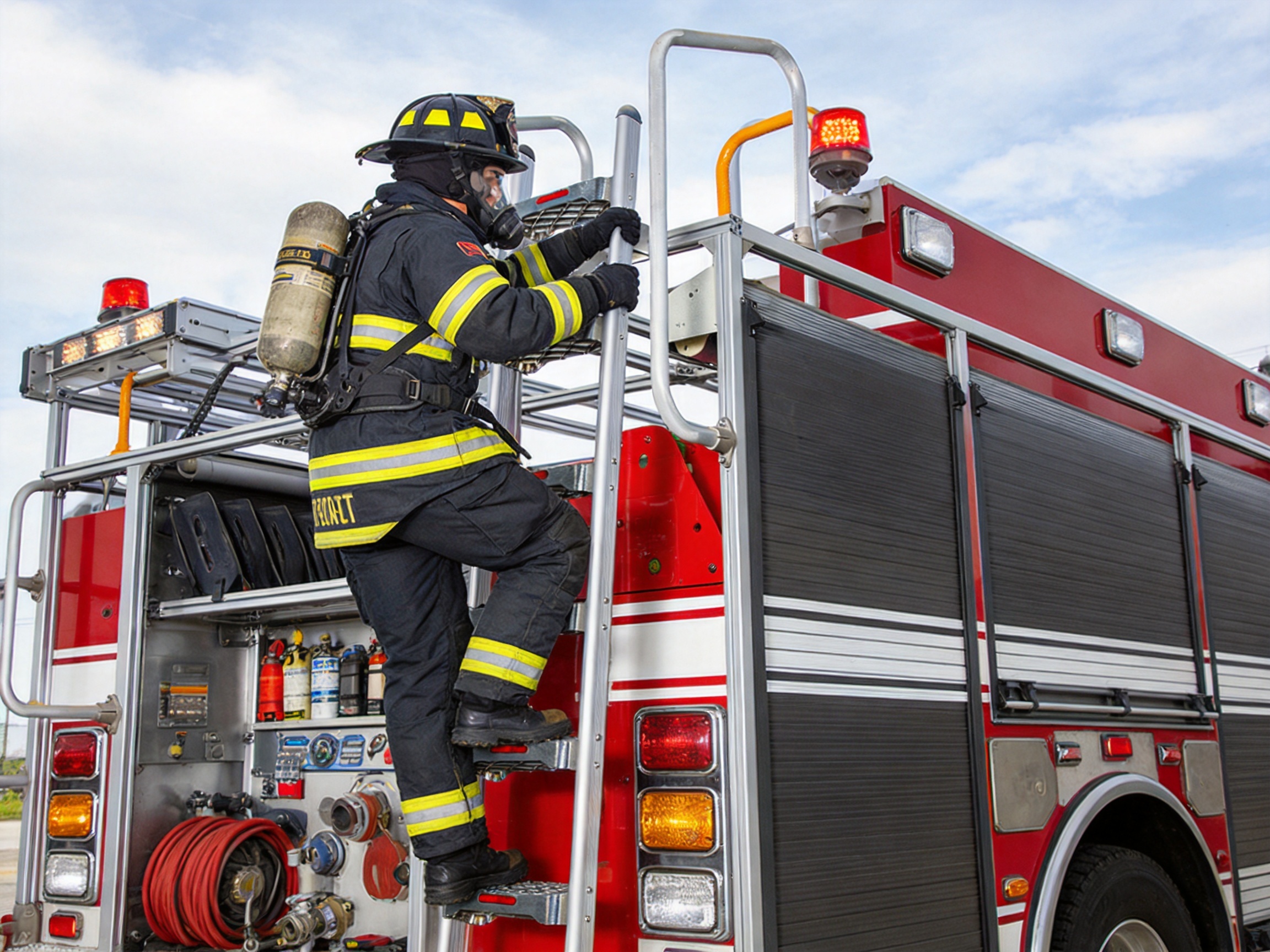
Firefighters work in environments where every movement matters. They may need to climb onto a vehicle while wearing heavy protective clothing, carrying breathing equipment, handling hose lines, or responding to a developing emergency. A secure handrail installed beside a fire truck ladder can provide essential support during these demanding operations. It helps personnel maintain balance, improve climbing confidence, and move more efficiently between the ground, the vehicle deck, and elevated working areas.
The fire truck aluminum ladder handrail described in this article is designed as a dedicated safety and access component for fire apparatus. It can be installed on both sides of a rear ladder or boarding ladder and configured to match the dimensions, geometry, and operating requirements of the vehicle. Its aluminum alloy construction combines low weight, corrosion resistance, and a clean professional appearance, while its customizable length and curvature allow it to be adapted to different fire truck designs.
For fire apparatus manufacturers, municipal fire departments, emergency service fleets, and specialty vehicle integrators, the handrail is more than a simple metal tube. It is part of the vehicle’s overall access system. Its shape, mounting position, surface condition, clearance, and relationship with the ladder steps all affect usability and safety. A correctly engineered handrail should support rapid boarding and dismounting without creating unnecessary obstruction or adding excessive weight to the apparatus.
Tianchang Jinlv Fire Equipment Co., Ltd. has developed experience in fire protection accessories and fire truck equipment since its establishment in 2010. The company supplies ladder-related components, vehicle storage products, roller shutters, equipment mounting systems, and other fire apparatus accessories. Its production capabilities, quality management system, technical team, and OEM/ODM service model support customers that require standard or customized vehicle equipment solutions.
What Is a Fire Truck Aluminum Ladder Handrail?
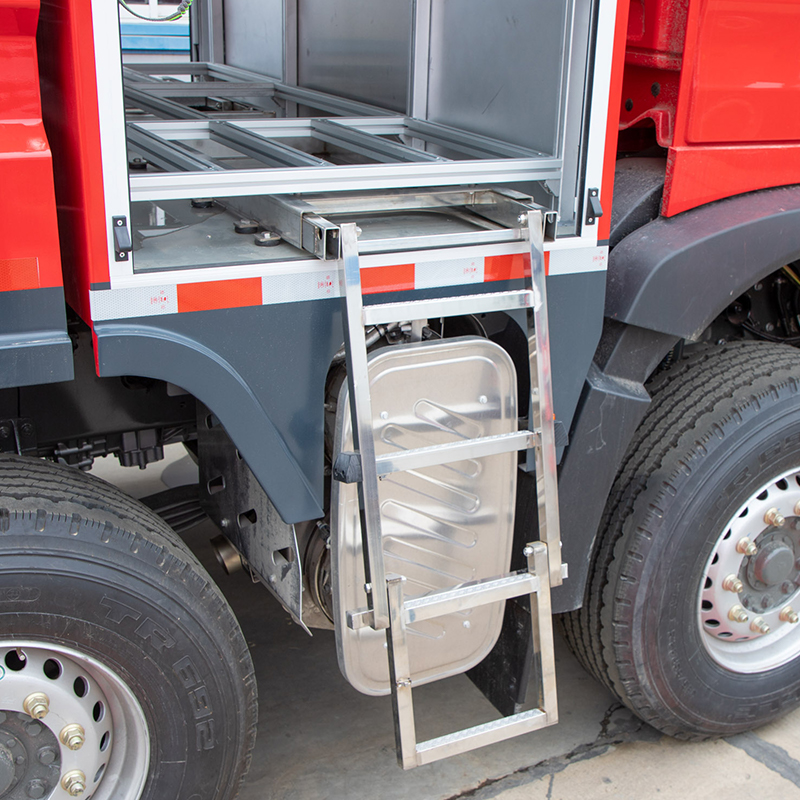
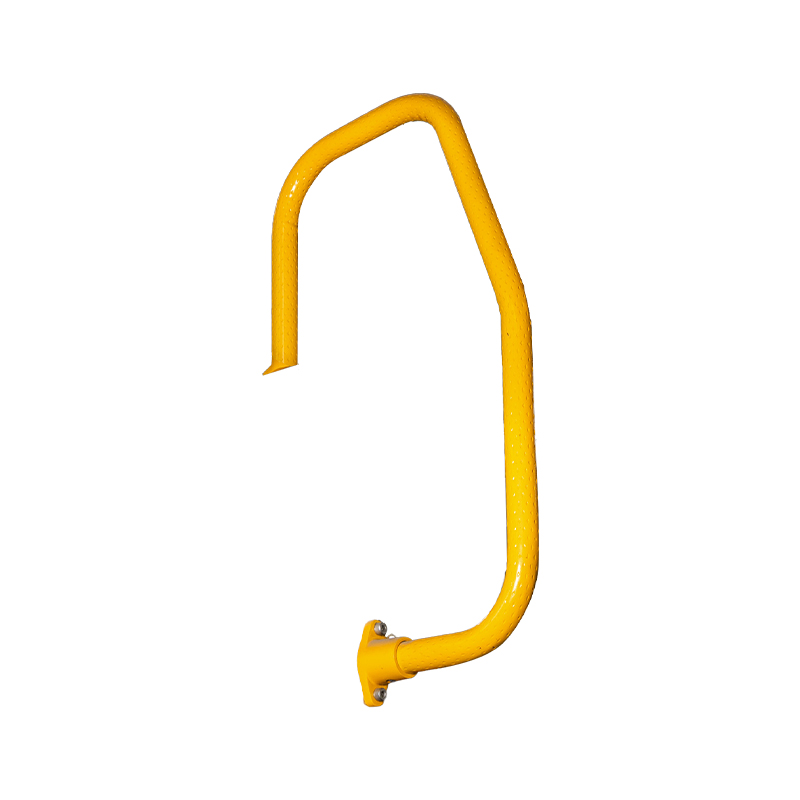
A fire truck aluminum ladder handrail is a support rail mounted alongside a rear access ladder, boarding ladder, or similar climbing structure on a fire apparatus. It gives firefighters a stable gripping surface while they ascend or descend the vehicle. Depending on the design of the fire truck, the handrail may follow a straight path, a curved profile, or a combination of sections that correspond to the ladder’s height and angle.
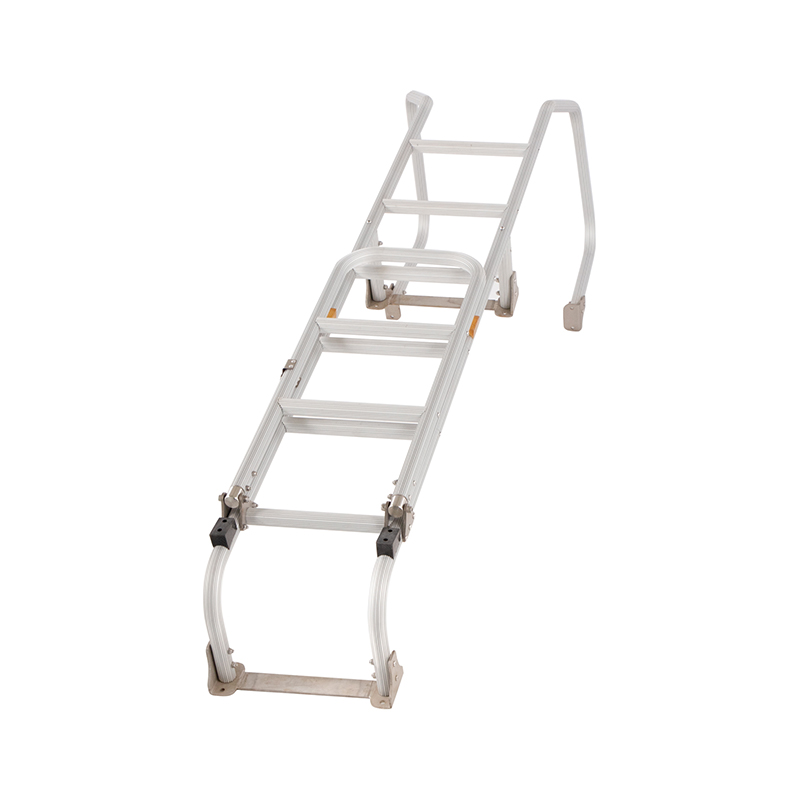
The handrail normally works together with ladder steps, brackets, mounting plates, and the surrounding vehicle body. It is not intended to replace the ladder itself. Instead, it complements the ladder by providing a secure point of contact for the hands. This is especially important when the user’s center of gravity changes during climbing, when the vehicle surface is wet, or when the firefighter is carrying equipment.
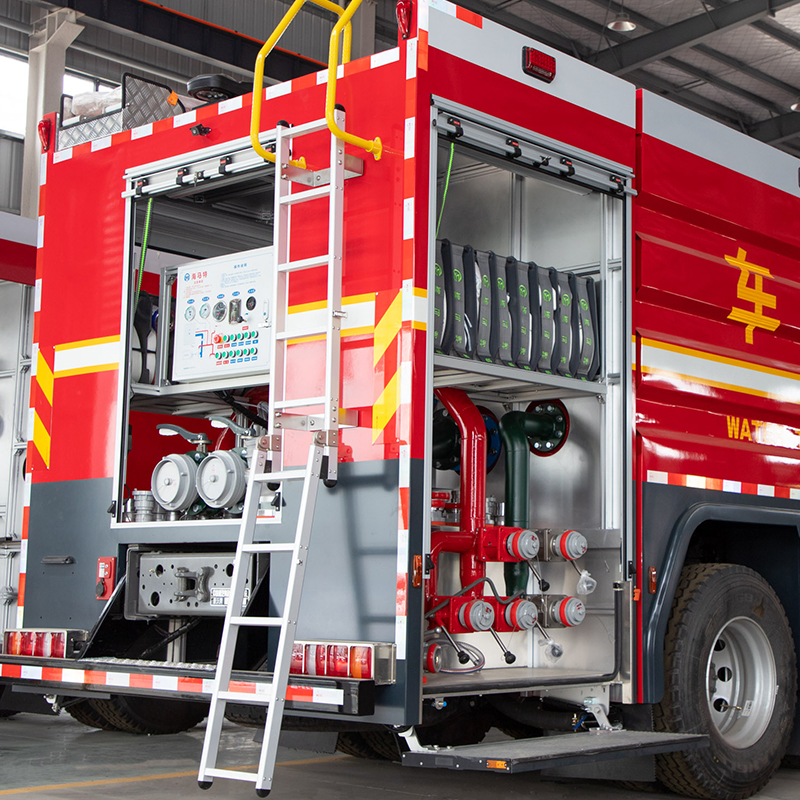
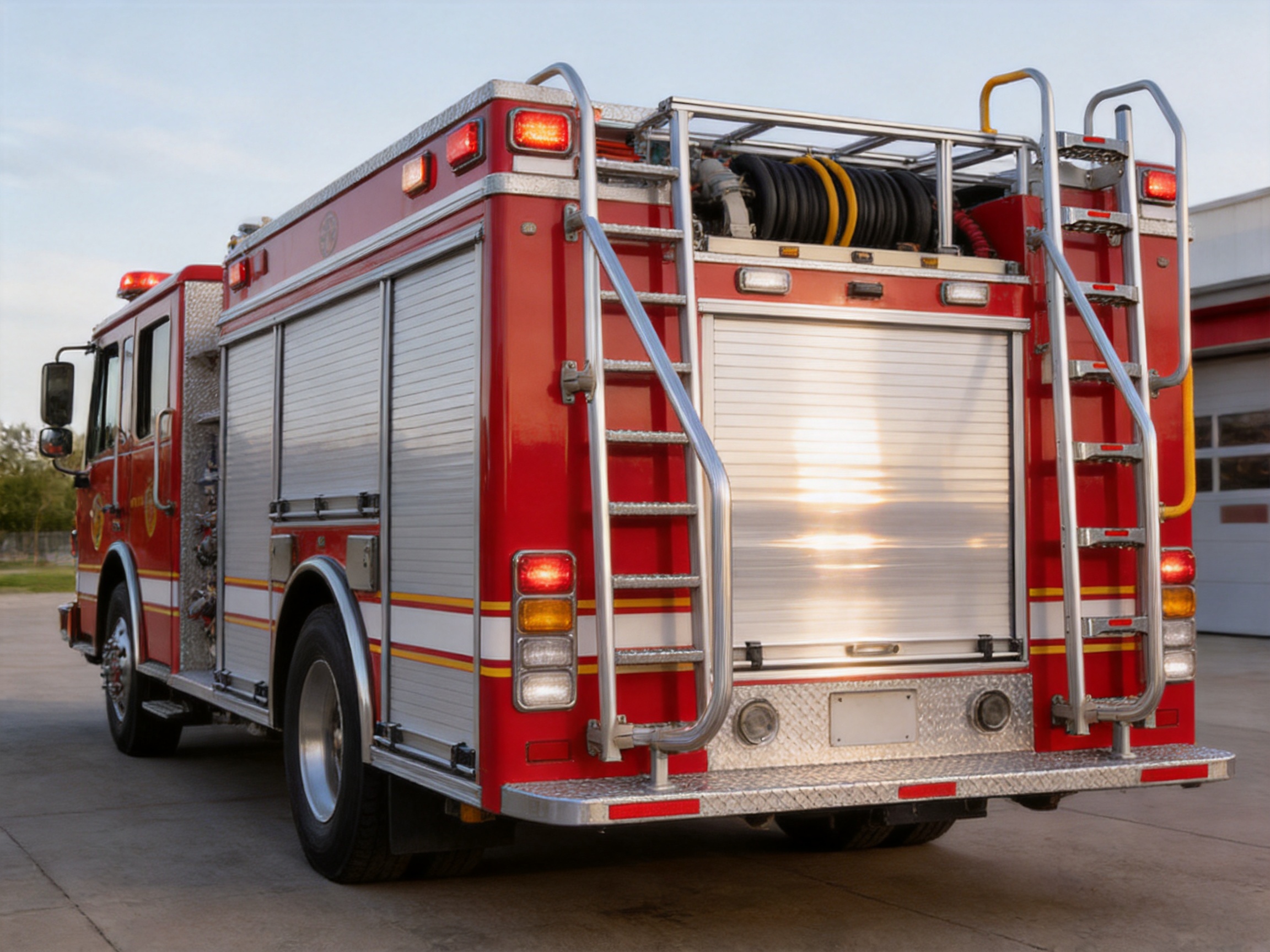
In many fire truck applications, the handrail is installed on both sides of the ladder. A two-sided arrangement can improve balance and offer users the flexibility to use either hand depending on their position, task, equipment load, or direction of movement. The final arrangement should be selected according to the ladder width, available clearance, vehicle layout, expected operating practices, and applicable project requirements.
The handrail can be used on rear boarding ladders, equipment access ladders, elevated platforms, and other fire apparatus access points. Its design may be integrated into a new vehicle during production or added as part of a refurbishment and upgrade project. Because fire trucks vary significantly in body configuration, a configurable product is often more practical than a single fixed-size component.
Why Safe Access Matters on Fire Apparatus
Fire trucks are mobile workplaces containing pumps, hoses, ladders, nozzles, rescue tools, breathing apparatus, lighting systems, and other operational equipment. Firefighters frequently move around the vehicle in low visibility, during bad weather, under time pressure, and while wearing gloves. These conditions make access design an important part of apparatus safety.
A ladder without a suitable handrail may provide insufficient support, particularly when the user is climbing quickly or carrying a tool. Even a well-designed ladder can become more difficult to use when the steps are wet, contaminated, or partially obstructed by equipment. A handrail creates an additional contact point that can help reduce instability and support controlled movement.
The handrail also contributes to workflow efficiency. Firefighters need to reach equipment compartments and elevated areas without unnecessary hesitation. A well-positioned rail can make boarding more natural and help personnel maintain three points of contact while climbing. Faster, more controlled access can support better organization during rescue, firefighting, inspection, and maintenance activities.
For fleet managers, access components should be considered over the entire service life of the vehicle. The handrail must withstand repeated use, environmental exposure, cleaning, vibration, and normal operational contact. A lightweight but durable aluminum construction can help reduce the burden placed on the vehicle while providing a long-lasting access solution.
Core Product Features
Aluminum Alloy Construction
The principal material of the product is aluminum alloy. Aluminum is widely used in specialty vehicles because it provides a favorable balance between weight and functional strength. Compared with many heavier metal alternatives, aluminum can help limit the additional mass added to the fire truck. This is valuable for apparatus designers who must manage payload, equipment capacity, fuel efficiency, and overall vehicle balance.
The supplied product information identifies the aluminum alloy as permanently rust-resistant. This characteristic is particularly suitable for fire apparatus that may operate in rain, snow, humid environments, industrial areas, coastal regions, and locations where the vehicle is frequently washed. Resistance to rust can support a cleaner appearance and reduce concerns associated with conventional ferrous corrosion.
Aluminum also offers a modern, professional appearance. A consistent metallic finish can complement the bodywork, access ladders, compartment doors, and other vehicle components. For fire departments that want equipment to remain presentable throughout its service life, appearance is not only a cosmetic consideration. A clean surface can make inspection easier and reinforce the overall impression of organized vehicle maintenance.
Custom Length
The handrail can be customized in length according to the fire truck’s dimensions and ladder arrangement. The required length may depend on the vertical distance from the ground to the vehicle deck, the number and position of ladder steps, the body structure, and the desired gripping area. Custom length helps ensure that the handrail provides useful support without extending into an unsuitable area.
A correctly sized rail should be long enough to support the principal climbing movement but not so long that it interferes with nearby compartments, doors, hoses, lighting equipment, or other components. The ability to produce different lengths is therefore important for both original equipment manufacturers and replacement projects.
Custom Curvature
Different fire trucks use different ladder angles and body shapes. A straight handrail may be appropriate for one vehicle, while another may require a curved or shaped profile. The product can be customized in curvature to correspond with the ladder step position, vehicle height, and available installation space.
Curvature can improve the relationship between the rail and the user’s natural hand movement. It may also allow the handrail to follow the contour of the vehicle or ladder while maintaining suitable clearance. Custom shaping can help create a more integrated appearance and reduce the need for improvised mounting solutions.
Designed for Repeated Operational Use
Fire apparatus components are used repeatedly over many years. A boarding handrail may be touched and pulled thousands of times during training, emergency response, inspection, and maintenance. Its design should therefore reflect actual field use rather than occasional decorative application.
The product is developed as a functional safety accessory for fire truck ladders. Its purpose is to provide a stable handhold during rapid access and elevated operations. When properly specified, installed, and maintained, the handrail can become a dependable part of the apparatus access system.
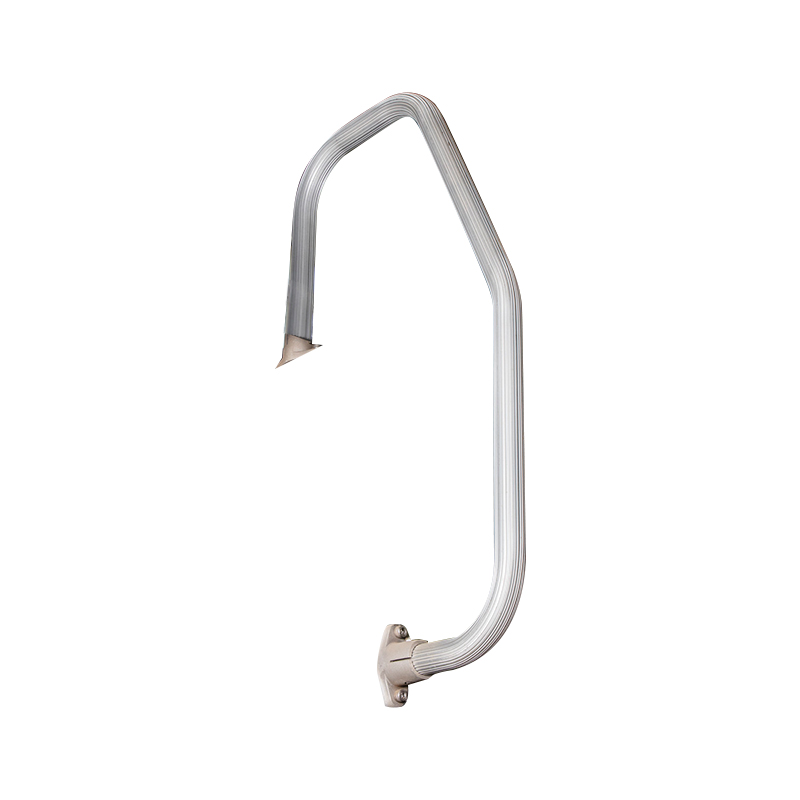
Fire Truck Aluminum Ladder Handrail
Advantages Compared with Conventional Alternatives
Lower Weight Than Heavier Metal Rails
One of the most important advantages of aluminum is its low weight. A fire truck contains many components, and even small weight reductions can be useful when combined across the complete vehicle. Reducing unnecessary mass may give designers greater flexibility in allocating capacity to hoses, water, rescue tools, breathing equipment, generators, and other mission-critical items.
A lighter handrail may also simplify handling during vehicle assembly, repair, and replacement. Installation teams can position the component more easily, particularly when working around a tall vehicle body or restricted access area. Lower weight can reduce the effort required for alignment and may support more efficient production procedures.
Improved Resistance to Rust
Traditional steel components can require careful surface protection to reduce corrosion. Damage to paint, powder coating, plating, or other protective layers may expose the base metal to moisture and contaminants. Aluminum alloy provides a different material solution and is recognized for its resistance to rust.
For fire trucks that operate in wet or chemically challenging environments, resistance to rust can be a significant lifecycle advantage. It may help maintain the handrail’s appearance and reduce the frequency of corrosion-related repairs. However, all installed hardware should still be selected carefully, and the complete assembly should be inspected for galvanic interaction, surface damage, and fastener condition.
Greater Design Flexibility
Fixed-size rails are not always suitable for specialized vehicles. A fire engine, airport rescue vehicle, industrial response truck, municipal pumper, and rescue apparatus may all use different access geometries. Custom length and curvature enable the handrail to be adapted to the vehicle rather than forcing the vehicle design to accommodate an unsuitable standard part.
This flexibility benefits both new construction and replacement work. Vehicle manufacturers can request components that match their body design. Fleet operators can specify replacement rails that correspond to the original ladder arrangement. Refurbishment companies can use customized rails when upgrading older apparatus with improved access protection.
Professional Visual Integration
A handrail that follows the lines of the ladder and vehicle body can contribute to a more unified appearance. Poorly matched rails may look improvised, create unwanted projections, or conflict with nearby equipment. A customized aluminum rail can be designed to provide a cleaner relationship with the surrounding apparatus.
Professional integration also supports practical inspection. When the rail, brackets, and ladder are arranged clearly, technicians can more easily identify loose fasteners, deformation, surface damage, or unusual wear. Good appearance should never replace mechanical performance, but it can accompany an orderly and maintainable installation.
Suitability for OEM and Replacement Projects
The product can support original equipment manufacturing, special vehicle integration, and replacement supply. OEM customers may require repeated production of a defined profile, while replacement customers may need a small quantity with specific dimensions. A manufacturer with customization capability can address both types of demand more effectively than a supplier offering only generic rails.
| Design and Performance Area | Aluminum Ladder Handrail Benefit | Practical Value for Fire Apparatus |
|---|---|---|
| Material weight | Lightweight aluminum alloy construction | Helps manage vehicle mass and simplifies handling during installation |
| Environmental resistance | Permanent resistance to rust as described for the product | Supports use in wet, humid, and frequently washed operating environments |
| Dimensional flexibility | Customized handrail length | Allows adaptation to different ladder heights and vehicle bodies |
| Geometric flexibility | Customized curvature | Helps match ladder steps, access paths, and available clearance |
| Operational purpose | Designed as a support device for boarding and elevated access | Helps firefighters climb and descend with greater stability |
| Supply model | Suitable for OEM/ODM and replacement requirements | Supports new apparatus production, fleet upgrades, and repair programs |
Engineering the Handrail for Different Fire Truck Designs
Every fire truck should be evaluated as a complete system before a handrail is specified. The ladder position, step spacing, platform height, body width, rear equipment layout, compartment doors, warning lights, hose connections, and exhaust arrangement can all affect the final design.
Ladder Height and Step Position
The distance between the ground and the first usable step influences the start point of the handrail. The upper end should provide support through the most demanding part of the climb, while the lower end should be accessible without forcing the user into an awkward posture. The relationship between the rail and each step should be consistent enough to support natural movement.
Step position is also important when a rail is curved. The profile should follow the access route without creating abrupt changes that could make gripping uncomfortable. A customized shape can be developed after reviewing measurements, drawings, photographs, or physical samples supplied by the customer.
Vehicle Width and Rear Body Layout
Rear fire truck bodies often contain hose beds, pump panels, equipment compartments, lighting assemblies, ladders, and towing or recovery points. The handrail must remain clear of these features while still being easy to reach. If the rail is positioned too close to the body, gloves may have insufficient space. If it extends too far outward, it may increase the vehicle’s overall projection or become vulnerable to impact.
The mounting method should be considered together with the body structure. Brackets need suitable attachment points and adequate support. The body panel thickness, internal reinforcement, access for tools, and service requirements may all affect how the handrail is installed.
Clearance and User Movement
A useful handrail should provide enough clearance for gloved hands and should not force the firefighter to twist the wrist or shoulder excessively. The clear space around the rail should also accommodate protective clothing and carried equipment. Engineers should review the path of movement from the ground to the top step, including entry and exit points.
Clearance must be checked when nearby doors, shutters, covers, or ladders are opened. A component that appears suitable when the apparatus is closed may interfere with an adjacent door during service. A complete design review helps identify such conflicts before production or installation.
Vehicle Vibration and Dynamic Conditions
Fire trucks travel on public roads, rough access routes, and emergency response paths. Vibration and repeated impact can affect brackets, fasteners, and connection points. The handrail should therefore be mounted to a sufficiently supported structure, and the installation should use appropriate hardware for the vehicle environment.
Periodic inspection is recommended to identify looseness, deformation, cracks, unusual movement, or contact marks. If a handrail is damaged in a collision or overloaded by an abnormal event, it should be evaluated before the vehicle returns to service.
Manufacturing Capabilities and Quality Control
A reliable fire truck component depends on more than the selected material. Manufacturing consistency, dimensional control, surface handling, inspection procedures, and communication between engineering and production teams all influence the final result. Tianchang Jinlv Fire Equipment Co., Ltd. states that it has advanced production facilities and a complete production process for fire protection accessories and related equipment.
The company has passed GB/T 19001-2016 quality certification and applies quality control from raw material procurement through final product delivery. A process-based quality system can help organize production responsibilities, document requirements, and improve consistency between batches. For OEM customers, this is especially important because repeated vehicles may require components with stable dimensions and appearance.
Requirement Review and Technical Confirmation
Production begins with understanding the customer’s application. For a customized ladder handrail, the technical review may include overall length, rail curvature, mounting orientation, ladder dimensions, material preference, surface requirements, quantity, packaging, and delivery schedule. Drawings, measurements, photographs, and vehicle information can help reduce uncertainty.
Technical confirmation is valuable because a handrail is closely connected to the vehicle structure. A small difference in the position of a step or bracket can influence the entire profile. Clear communication before production can reduce the chance of dimensional mismatch and help the customer receive a component that is ready for integration.
Material Procurement and Incoming Inspection
The company describes strict control from raw material procurement to final delivery. For an aluminum ladder handrail, material control may involve confirming the requested alloy, dimensions, surface condition, and supplier documentation. Incoming inspection helps identify issues before material enters the production process.
Good material management also supports traceability and repeatability. When customers reorder a component or require a similar design for another vehicle model, controlled purchasing records and technical specifications can make future production more efficient.
Forming, Cutting, and Profile Processing
Customized handrails may require cutting to a specified length, forming to a defined curvature, and processing of ends or connection areas. Each operation should be coordinated with the approved design. Excessive deformation, inconsistent curves, or inaccurate end preparation can affect both fit and appearance.
Advanced production facilities can help improve repeatability by using appropriate forming equipment, fixtures, measuring tools, and work instructions. The specific process depends on the requested profile and the production volume. For an OEM order, controlled fixtures may be used to maintain consistent shape across multiple units.
Surface and Edge Treatment
Because firefighters handle the rail directly, edge condition and surface quality are important. The handrail should be checked for sharp edges, burrs, rough transitions, or other conditions that could affect safe handling. Surface treatment should preserve the aluminum’s professional appearance while supporting practical use.
After processing, the component should be cleaned and inspected for visible defects. Any required finishing or protective treatment should be confirmed during technical review so that the delivered part matches the customer’s expectations and the vehicle’s appearance.
Assembly and Dimensional Inspection
If the product is supplied with mounting hardware or associated brackets, assembly checks can help verify alignment and fit. Dimensional inspection may include overall length, curvature, hole position, bracket spacing, and orientation. The inspection method should correspond to the approved drawing or specification.
For customized components, inspection records can provide useful evidence that production followed the confirmed requirements. They can also help identify recurring issues and support continuous improvement within the manufacturing process.
Final Quality Review and Delivery
Before delivery, the handrail should be reviewed for quantity, appearance, dimensions, packaging condition, and order conformity. Packaging is important because long or shaped aluminum components can be vulnerable to scratches, bending, or impact during transportation. Suitable protection helps preserve the finished surface and geometry.
The company’s quality philosophy includes reliability, service, and continuous improvement. These principles are relevant to fire truck equipment because customers often require coordinated support before, during, and after delivery. A supplier that can discuss technical details, customization, packaging, and application questions provides more value than a supplier focused only on shipment.
OEM and ODM Customization Support
Fire apparatus manufacturers often produce vehicles for different municipalities, industrial facilities, airports, ports, military organizations, and emergency response departments. These customers may have different body dimensions, access requirements, equipment layouts, and appearance preferences. OEM and ODM support allows the ladder handrail to be adapted to the intended application.
Customization Options
Depending on the project, customization may include handrail length, curvature, mounting arrangement, bracket location, end configuration, surface finish, and packaging. Customers should provide as much technical information as possible so the supplier can evaluate the design accurately.
Customization does not mean that every project needs a completely new product. In many cases, the base design can be adapted to a different length or curve while maintaining an efficient manufacturing process. This can help balance project-specific requirements with production cost and lead time.
Prototype and Sample Review
For a new vehicle model, a sample or prototype review can be useful before full production. The customer can check the fit on the actual ladder, confirm hand clearance, review the appearance, and identify any interference with surrounding equipment. Feedback from the sample stage can then be incorporated into the final production specification.
Sample evaluation is particularly valuable when drawings do not fully capture the three-dimensional relationship between the rail, ladder, vehicle body, and user. Physical verification can reveal practical details that may not be obvious in a two-dimensional design.
Batch Consistency
Once a design is approved, production consistency becomes a priority. The length, curvature, mounting positions, and surface appearance should remain stable across the batch. Consistency simplifies vehicle assembly and reduces the need for individual adjustment.
Controlled production documentation, inspection methods, and communication between the customer and supplier can support consistent output. If a design revision is required, the updated version should be clearly identified to avoid mixing different specifications.
Installation Considerations
Installation should be performed by qualified personnel familiar with fire apparatus construction. The specific method depends on the vehicle body, ladder structure, brackets, and approved technical drawing. The following considerations are intended as general planning guidance rather than a substitute for engineering instructions.
Confirm the Mounting Structure
The handrail should be attached to a structure capable of supporting expected operational forces. Thin unsupported panels may not be suitable as the sole attachment point. Reinforcement, backing plates, or dedicated mounting brackets may be required depending on the vehicle design.
Check Alignment with Ladder Steps
Before final tightening, the handrail should be checked against the ladder steps and access path. The user should be able to grip the rail naturally while stepping upward or downward. The rail should not obstruct the foot position or create a projection that increases the risk of catching clothing or equipment.
Use Suitable Hardware
Fasteners should be selected for the environment, load, material compatibility, and service requirements. Because aluminum and other metals can interact under certain conditions, the installer should consider galvanic compatibility and use suitable isolation or protective measures where required.
Inspect the Finished Installation
After installation, the assembly should be checked for secure attachment, correct orientation, adequate clearance, smooth edges, and absence of unwanted movement. Doors, shutters, covers, lights, and nearby equipment should be operated to verify that they remain unobstructed.
The completed installation should also be reviewed during vehicle acceptance and included in routine apparatus inspection procedures. Any looseness, deformation, corrosion around dissimilar-metal connections, or damage should be reported and corrected promptly.
Maintenance and Service Life
Aluminum ladder handrails are designed for long-term use, but no vehicle component should be considered maintenance-free. Regular inspection helps preserve performance and may identify minor issues before they become major problems.
Cleaning should remove dirt, soot, road salt, mud, oil, and other contaminants that may accumulate during service. A mild cleaning method appropriate for aluminum surfaces is generally preferable. Abrasive tools or aggressive chemicals may damage the finish and should be avoided unless specifically approved for the material.
Technicians should inspect the entire handrail, including straight sections, curved areas, end points, brackets, fasteners, and contact zones. Particular attention should be given to locations that may have been struck by tools, ladders, doors, or other equipment. Even if aluminum resists rust, mechanical damage, distortion, and connection problems can still affect safe use.
Fire departments should include the handrail in scheduled apparatus inspections. Inspection frequency may be based on vehicle use, operating conditions, fleet policy, and the recommendations of the vehicle manufacturer. After an accident, rollover, collision, or unusually heavy loading event, the rail should be checked before further operational use.
Applications Across the Fire and Rescue Sector
Municipal Fire Engines
Municipal fire engines require dependable access to equipment compartments, hose beds, and elevated decks. A rear ladder handrail can help firefighters board the apparatus efficiently during routine response and emergency operations.
Rescue Trucks
Rescue vehicles often carry heavy tools, medical supplies, stabilization equipment, and technical rescue systems. Personnel may need to move repeatedly between the ground and vehicle body while carrying equipment. A secure handrail can support this movement and improve access organization.
Airport Rescue and Firefighting Vehicles
Airport rescue and firefighting vehicles are large, highly specialized platforms that may include elevated equipment areas and extensive external storage. Their access components must be designed around the vehicle’s size and operational layout. Customized length and curvature can be useful when a standard rail does not match the apparatus.
Industrial Fire Apparatus
Industrial facilities may operate dedicated fire trucks near factories, refineries, warehouses, ports, power plants, and chemical processing areas. These vehicles may face exposure to moisture, dust, industrial contaminants, and frequent washing. Aluminum construction and customized integration can support the demands of such applications.
Refurbished and Upgraded Vehicles
Older fire trucks may require access improvements during refurbishment. A replacement handrail can help restore damaged equipment or upgrade a ladder system while preserving the vehicle’s existing structure. A customized component is especially useful when the original part is no longer available or when the vehicle has been modified over time.
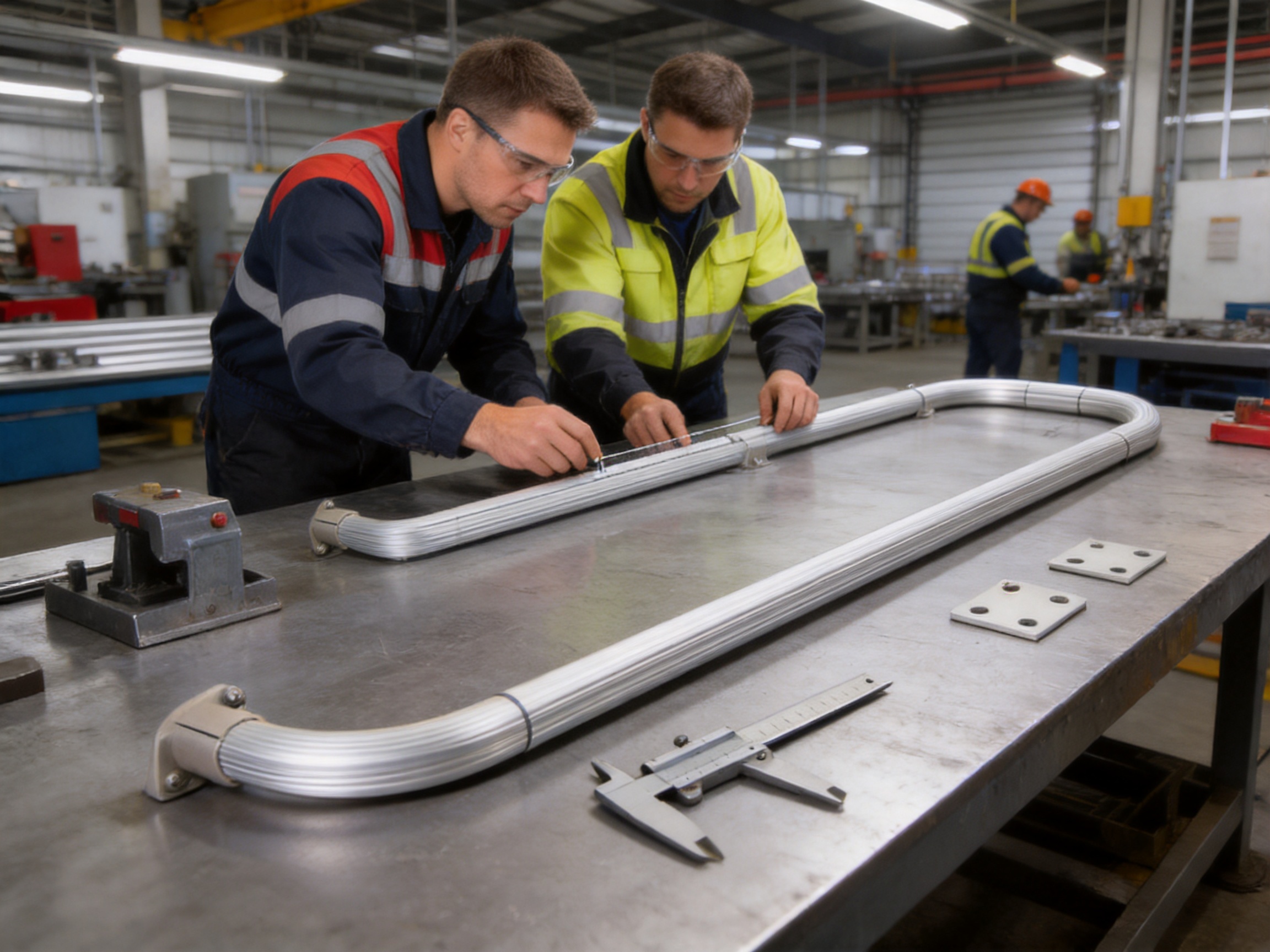
Why Choose an Experienced Fire Equipment Manufacturer?
Purchasing a handrail from a general metal fabricator may appear simple, but fire apparatus applications involve specific practical requirements. The supplier should understand vehicle integration, repeated field use, environmental exposure, access safety, and the importance of consistent dimensions.
Tianchang Jinlv Fire Equipment Co., Ltd. has focused on fire protection accessories for 15 years, based on the company information supplied for this product. Its product range includes fire truck roller shutters, storage and mounting systems, boarding ladders, ladder racks, ladder handrails, firefighting nozzles, hose cannons, demolition tools, SCBA equipment, cab doors, and plastic tool components.
This range provides a broader understanding of fire truck construction. A company that works with multiple apparatus components can consider how a handrail relates to ladder systems, storage compartments, roller shutters, and other equipment. Such experience can be useful when the customer needs more than an isolated component.
The company also states that it has a professional research and development team, advanced manufacturing facilities, a complete production process, and global technical support. Continuous research and development can help the supplier respond to changing vehicle designs, new customer requirements, and different application environments.
Its OEM/ODM service model is intended for customers requiring customized products, private-label supply, or coordinated equipment solutions. Dedicated customer service and technical communication can help guide a project from initial inquiry through design confirmation, manufacturing, inspection, and delivery.
Purchasing Guidance for Fleet Managers and Vehicle Builders
Before requesting a quotation, the buyer should prepare basic information about the intended application. Useful information may include the vehicle model, ladder type, ladder height, step arrangement, required number of handrails, preferred material, mounting location, available drawings, photographs, delivery quantity, and destination.
It is also helpful to identify whether the requirement is for a new vehicle, replacement part, fleet standardization program, or one-time repair. A new vehicle project may require drawings and prototypes, while a replacement order may depend more heavily on accurate measurements and photographs of the existing installation.
Buyers should ask how the supplier manages dimensional confirmation, sample approval, quality inspection, packaging, and revision control. These questions can help avoid misunderstandings and provide a clearer basis for comparing suppliers.
Price is an important factor, but the lowest initial price may not represent the lowest total cost. A handrail that fits correctly, resists environmental exposure, remains visually consistent, and requires minimal adjustment during installation may deliver better value over the vehicle’s service life.
Frequently Asked Questions
What is the primary purpose of a fire truck ladder handrail?
The primary purpose is to provide a secure handhold beside a rear or boarding ladder. It supports firefighters as they climb onto or descend from the vehicle and helps them maintain balance while carrying equipment or working at elevated positions.
Why is aluminum suitable for this application?
Aluminum provides lightweight construction, resistance to rust as described for this product, and an attractive appearance. These characteristics make it suitable for fire apparatus where weight management, environmental resistance, and professional presentation are important.
Can the handrail be made for different fire truck models?
Yes. The product can be customized in length and curvature according to the fire truck’s length, height, ladder step position, and available installation space. Customers should provide drawings, dimensions, or photographs for technical review.
Can the handrail be installed on both sides of a ladder?
Yes. The product is described as a safety protection device installed on both sides of a rear ladder or boarding ladder. The final arrangement should be confirmed according to the vehicle design and customer requirements.
Is this product suitable for OEM projects?
Yes. The supplier provides OEM/ODM customization and can support projects requiring specific lengths, curves, mounting arrangements, and production quantities. Sample approval and technical confirmation are recommended for new vehicle models.
Can it be used as a replacement part?
Yes. A customized aluminum handrail may be used for replacement, refurbishment, or access-system upgrades. Accurate measurements and information about the original mounting points are important for ensuring compatibility.
What information should be provided when requesting a quotation?
The buyer should provide the vehicle type, ladder dimensions, desired handrail length, curvature, mounting position, quantity, surface requirements, delivery location, and any available drawings or photographs. More complete information generally allows faster technical evaluation.
How should the handrail be maintained?
It should be cleaned regularly and inspected for loose fasteners, deformation, damaged surfaces, sharp edges, or unusual movement. The rail should also be checked after impacts, collisions, or abnormal loading events. Cleaning products and methods should be suitable for aluminum.
Does aluminum mean the component requires no inspection?
No. Aluminum resists rust, but the complete assembly still needs regular inspection. Mechanical damage, bracket failure, fastener loosening, galvanic interaction, or structural movement can occur even when the rail itself remains visually clean.
How does customization improve usability?
Customization allows the rail to follow the ladder geometry and vehicle layout. A correctly shaped and positioned handrail can provide better reach, adequate clearance, smoother hand movement, and fewer conflicts with doors, compartments, lights, and other equipment.
What quality system supports production?
The company states that it has passed GB/T 19001-2016 quality certification and controls production from raw material procurement through final delivery. It also describes advanced facilities, a complete production process, and a professional research and development team.
Can the supplier provide other fire truck equipment?
Yes. The supplied company information lists roller shutters, equipment stowage and mounting systems, boarding ladders, ladder racks, ladder handrails, firefighting nozzles, hose cannons, demolition tools, SCBA equipment, cab doors, and plastic tool components among its product categories.
Conclusion
A fire truck aluminum ladder handrail is a compact but important component of apparatus safety and operational efficiency. By giving firefighters a dependable gripping surface, it supports controlled access to rear ladders, boarding ladders, vehicle decks, and elevated working areas. Its aluminum alloy construction provides a lightweight solution with resistance to rust and a professional appearance.
The ability to customize both length and curvature is a major advantage over generic fixed-size alternatives. It allows the handrail to match the fire truck’s height, ladder step position, body layout, and available clearance. This flexibility is valuable for municipal fire engines, rescue trucks, airport firefighting vehicles, industrial apparatus, OEM production, and refurbishment projects.
Successful integration depends on accurate measurement, suitable mounting, careful quality control, and regular inspection. A capable manufacturer should be able to support the complete process, from technical review and sample development to controlled production, final inspection, packaging, and after-sales communication.
With experience in fire protection accessories since 2010, advanced production facilities, GB/T 19001-2016 quality certification, research and development capabilities, and OEM/ODM support, Tianchang Jinlv Fire Equipment Co., Ltd. is positioned to supply customized ladder handrails and related fire truck equipment for customers seeking dependable vehicle access solutions.
For project inquiries, customers may contact the company through its sales representative, Amy, using the supplied email address, telephone number, or WhatsApp contact. Providing complete vehicle and ladder information will help the technical team evaluate the requirement and recommend an appropriate customized configuration.
References
1. Tianchang Jinlv Fire Equipment Co., Ltd. Product Information: Fire Truck Aluminum Ladder Handrail.
2. Tianchang Jinlv Fire Equipment Co., Ltd. Company Information and Fire Protection Accessories Overview.
3. GB/T 19001-2016, Quality Management Systems Requirements.
4. General engineering principles for fire apparatus access systems, vehicle equipment integration, and occupational safety.
5. General material engineering references concerning aluminum alloy construction, corrosion resistance, and specialty vehicle applications.
Product: Fire Truck Aluminum Ladder Handrail
News
-
-
Quick Answer The right fire truck boarding ladder is a fixed, upward-folding, or rotating step assembly mounted at the rear or side of the apparatus that gives firefighters a stable, non-slip surface ...
READ MORE -
Fire truck ladder racks are roof-mounted storage and deployment systems that hold ground ladders securely in transit and let firefighters lower them to the side or rear of the apparatus in seconds. ...
READ MORE -
Specification meetings usually park the ladder rack near the bottom of the option sheet, a few lines above the license plate bracket. That is also why ladder racks become the complaint in year three:...
READ MORE -
Two minutes into a working fire, a crew stands in front of a locked steel security door with a crowbar that is too short to pull with both hands. Nothing about the tool is broken. It was simply speci...
READ MORE -
Key Takeaway The right fire truck boarding ladder comes down to matching the mounting style, ground clearance, and material to your truck class: fixed ladders suit trucks with no clearance limits, f...
READ MORE
Hey! Interested in staying in the loop? Sign up for our updates.
WE WON'T SPAM YOU, PINKY PROMISE.

Tianchang Jinlv Fire Equipment Co., Ltd.
Copyright © Tianchang Jinlv Fire Equipment Co., Ltd. All rights reserved. Custom Fire Truck Equipment Supplier Fire Apparatus Parts Factory
