

 en
 English
 русский
 Español
 عربى

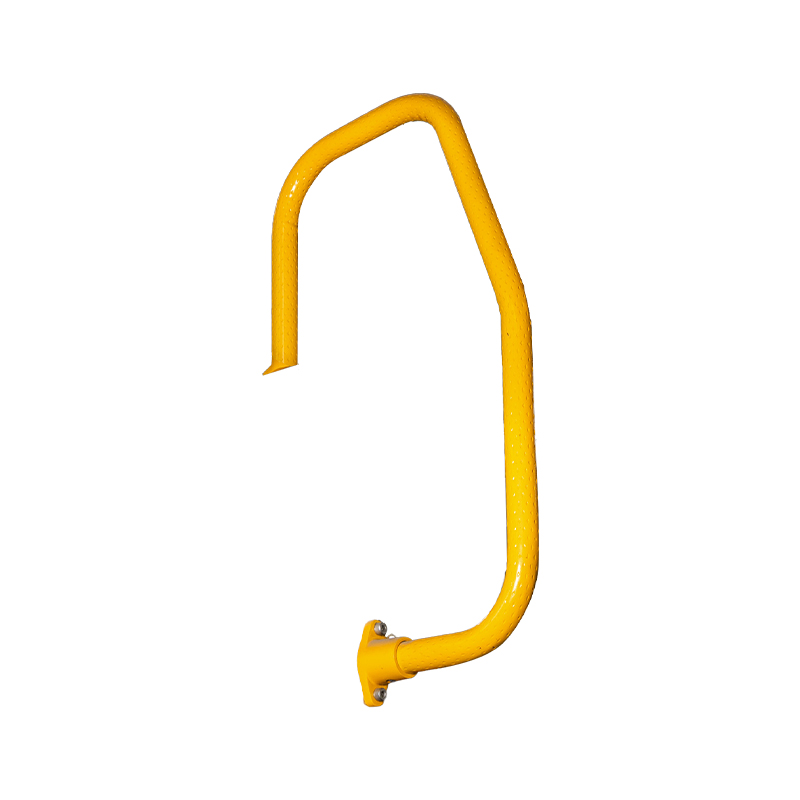
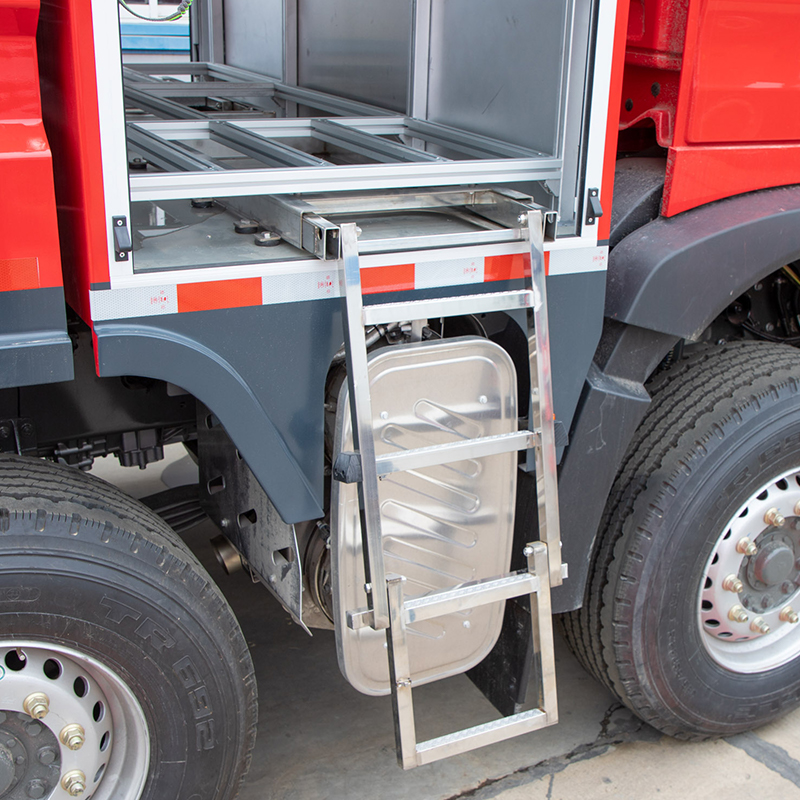
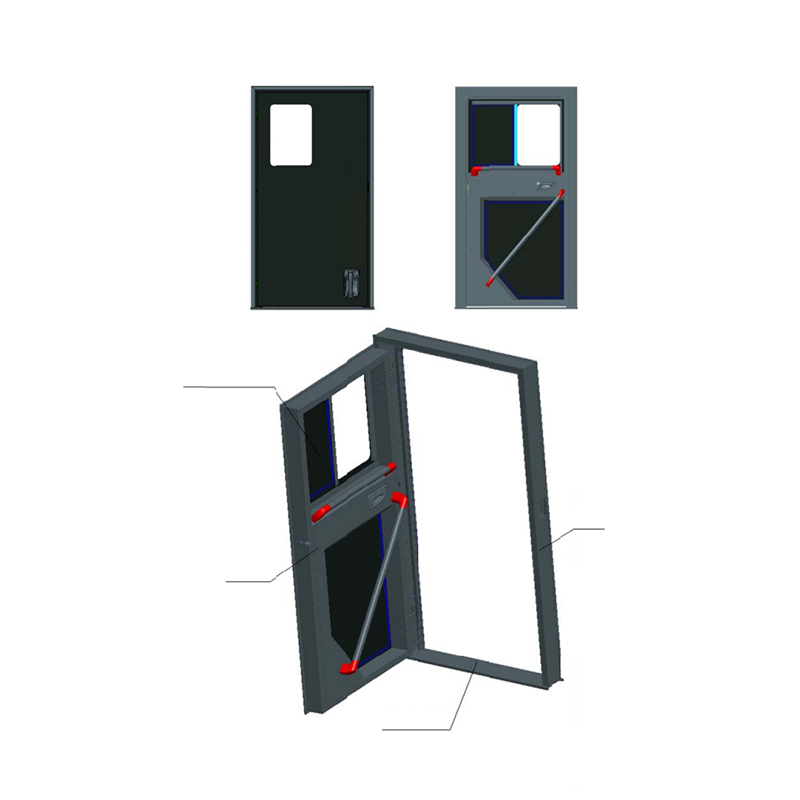
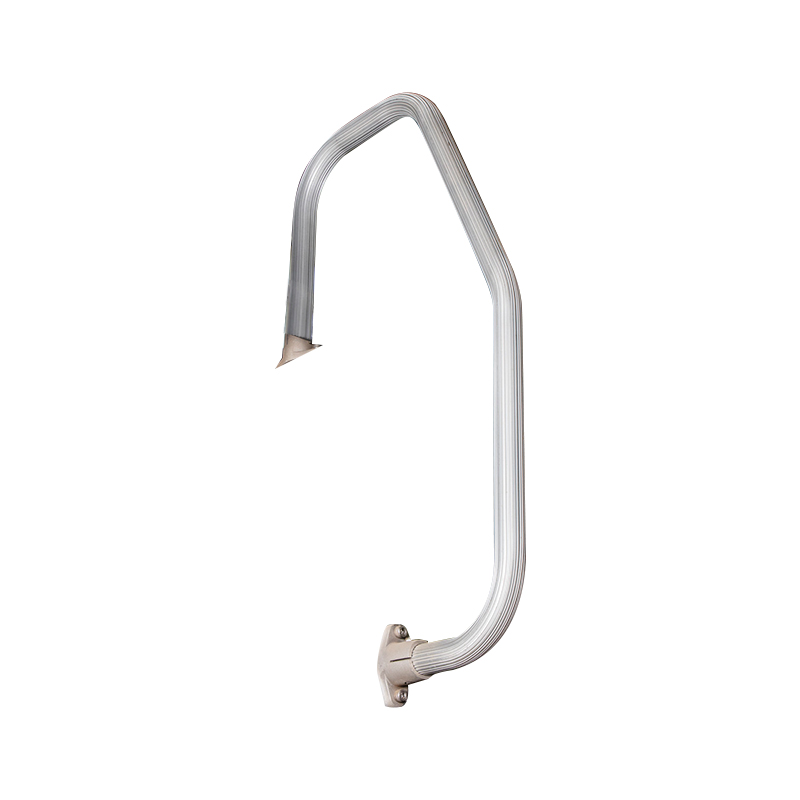
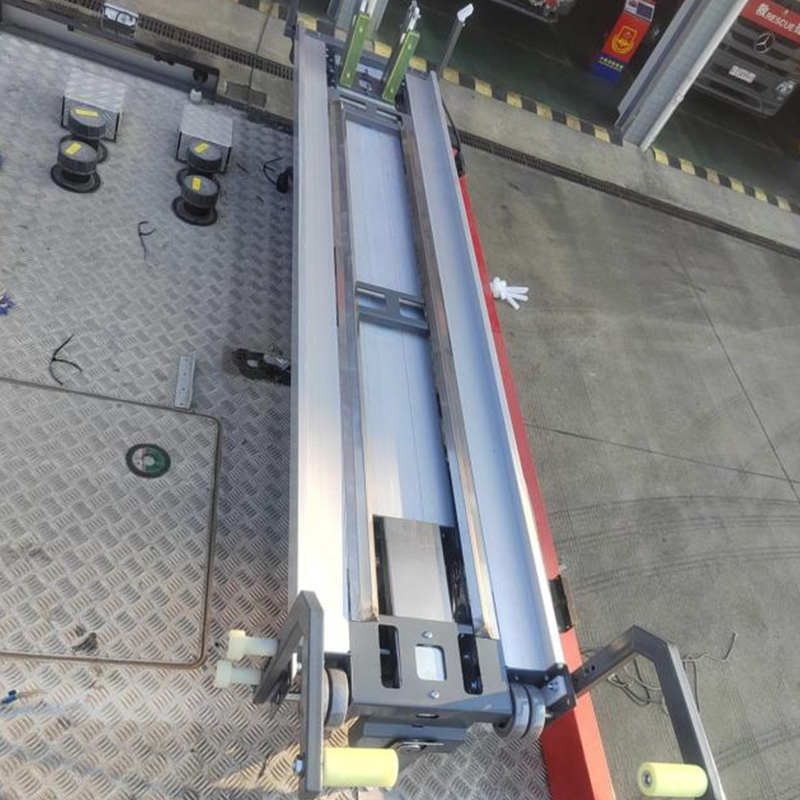
Specification meetings usually park the ladder rack near the bottom of the option sheet, a few lines above the license plate bracket. That is also why ladder racks become the complaint in year three:...
READ MORE
Manual Fire Truck Ladder Racks: Compact, Reliable Access Equipment for Modern Emergency Vehicles
2026.10.27
Content
- 1 1. The Role of Ladder Storage in Fire and Rescue Vehicles
- 2 2. Product Overview
- 3 3. Compact Design for Limited Roof Space
- 4 4. Controlled Lifting and Lowering
- 5 5. Adjustable Limiter for Position Control
- 6 6. Self-Lubricating Lifting Rails
- 7 7. Advantages Compared with Basic or Fixed Ladder Supports
- 8 8. Customization for OEM and ODM Projects
- 9 9. Manufacturing Strength and Quality Management
- 10 10. Installation and Integration Principles
- 11 11. Operation and Maintenance
- 12 12. Safety Considerations
- 13 13. Value for Fire Departments and Vehicle Manufacturers
- 14 14. Selecting the Correct Configuration
- 15 15. Why a Specialized Fire Equipment Manufacturer Matters
- 16 16. Practical Limitations and Responsible Use
- 17 17. Frequently Asked Questions
- 17.1 17.1 What is a manual fire truck ladder rack?
- 17.2 17.2 Does the rack require electrical or hydraulic power?
- 17.3 17.3 Can the rack be used on different fire truck models?
- 17.4 17.4 What do H, L, L1, and W represent?
- 17.5 17.5 What is the purpose of the adjustable limiter?
- 17.6 17.6 What does self-lubricating lifting rail mean?
- 17.7 17.7 Can the rack carry equipment other than a ladder?
- 17.8 17.8 Is the rack suitable for OEM and ODM orders?
- 17.9 17.9 How should the rack be maintained?
- 17.10 17.10 What information should be sent for a quotation?
- 17.11 17.11 Is a manual rack less reliable than a powered rack?
- 17.12 17.12 Who can provide further product information?
- 18 18. Conclusion
- 19 References
- 20 Product: Manual Fire Truck Ladder Racks
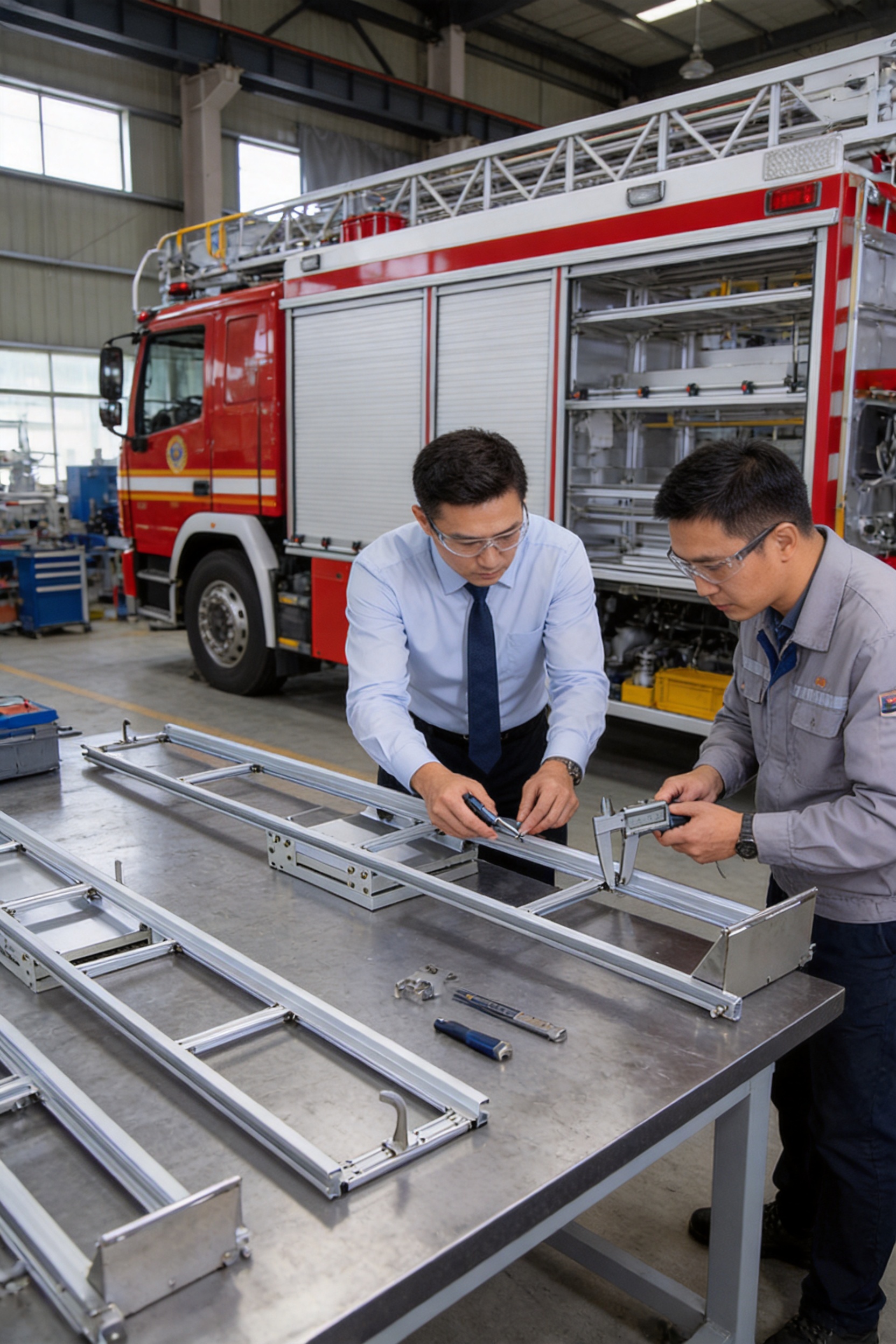
Fire and rescue vehicles must carry a large amount of equipment while remaining fast, balanced, accessible, and ready for immediate deployment. Ladders are among the most important items on a response vehicle, yet they can also be difficult to store and handle. A ladder mounted directly on the roof may consume valuable space, increase the physical effort required for deployment, and create safety concerns when firefighters need to work quickly in demanding conditions. A well-designed manual fire truck ladder rack addresses these challenges by providing a controlled, practical, and efficient method for lifting, lowering, storing, and accessing ladders.
The manual fire truck ladder rack described in this article is designed for various types of fire and rescue vehicles. Its purpose is to provide a fast and effective ladder lifting and lowering solution while keeping the vehicle roof organized and usable. The compact structure is intended to preserve limited roof space, and the lifting rails support smooth movement during operation. A manually adjustable limiter controls the lowering point, allowing the rack to be configured according to vehicle layout, ladder position, and operator preference.
More than a simple support frame, this product is a coordinated access and storage system. It combines compact engineering, controlled movement, adjustable positioning, self-lubricating rails, and customizable dimensions. These features make it suitable for fire departments, rescue organizations, municipal fleets, vehicle integrators, emergency equipment distributors, and manufacturers seeking OEM or ODM solutions.
1. The Role of Ladder Storage in Fire and Rescue Vehicles
Fire trucks are mobile work platforms. Every piece of equipment must be stored securely during travel and made accessible when the vehicle arrives at an emergency scene. A ladder rack therefore has two responsibilities that must work together. First, it must retain the ladder safely during transportation. Second, it must help operators deploy or retrieve the ladder without unnecessary delay or excessive physical strain.
Traditional roof-mounted ladder supports can perform the first responsibility but may not always offer the most convenient method for the second. When a ladder is positioned high above the ground, personnel may need to reach upward, climb onto a vehicle step, or coordinate with another operator to lift it down. In bad weather, low visibility, uneven terrain, or high-pressure emergency situations, these additional actions can reduce efficiency and increase handling risk.
A lifting rack creates a more controlled path between the stored and lowered positions. Instead of requiring the full ladder weight to be moved manually from a high roof position, the operator can use the rack’s movement system to guide the ladder downward. The rack can also return the ladder to the roof after use, supporting orderly equipment management and reducing the chance that the ladder will be placed in an unsafe or unsuitable location.
Because emergency vehicles differ in roof height, body design, equipment arrangement, and ladder dimensions, a universal fixed-size solution may not be appropriate for every application. Customizable dimensions allow the rack to be adapted to the available installation area and to the specific ladder or rescue equipment being carried. This flexibility is especially valuable for vehicle manufacturers and fleet operators with multiple truck configurations.
2. Product Overview
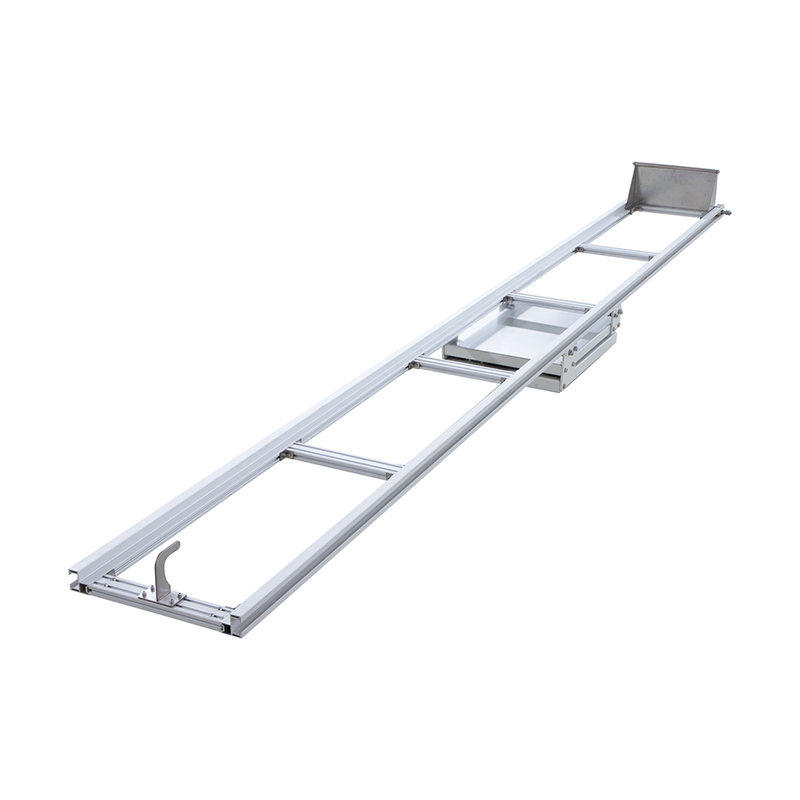
The manual fire truck ladder rack is a mechanical lifting and lowering system for fire and rescue vehicles. It is designed to help users stow and deploy a roof-mounted ladder or other compatible rescue equipment. The operating concept is straightforward: the equipment is secured to the rack, the rack guides it between its transport and access positions, and the adjustable limiter determines how far the rack lowers.
The product is characterized by a compact design, adjustable stopping position, self-lubricating lifting rails, and dimensions that can be customized according to customer requirements. These characteristics support practical installation on emergency vehicles where roof space, operating access, and maintenance time are limited.
The system can be considered for several applications, including fire truck extension ladders, access ladders, rescue ladders, and selected types of top-mounted emergency equipment. Suitability depends on the weight, dimensions, mounting method, center of gravity, and operating requirements of the equipment. A technical review should be completed before production so that the rack configuration matches the vehicle and intended load.
| Feature | Function | Operational Benefit |
|---|---|---|
| Manual lifting and lowering mechanism | Guides the ladder between storage and access positions | Provides a practical solution without requiring a powered lifting system |
| Compact structure | Reduces the space occupied on the vehicle roof | Leaves more room for other equipment and helps maintain a clean roof layout |
| Adjustable limiter | Controls the lowering point | Allows the stopping position to match operator habits and vehicle geometry |
| Self-lubricating lifting rails | Supports smooth rail movement with reduced routine lubrication needs | Simplifies maintenance and helps support operation in demanding environments |
| Customizable dimensions | Adapts height, length, width, and related dimensions to the installation | Supports OEM, ODM, and vehicle-specific integration |
The available product information identifies the main dimensional parameters as H, L, L1, and W. These dimensions are customizable. Their final values should be confirmed through drawings, vehicle measurements, ladder specifications, and installation requirements. Customization is not limited to a marketing option; it is an important part of ensuring that a rack operates correctly within the physical constraints of a specific emergency vehicle.
3. Compact Design for Limited Roof Space
Roof space on a fire truck is valuable. It may be needed for ladders, hose bridges, warning systems, lighting equipment, communication devices, ventilation components, rescue tools, and access walkways. A rack that occupies more space than necessary can make other equipment difficult to arrange and can complicate maintenance or inspection.
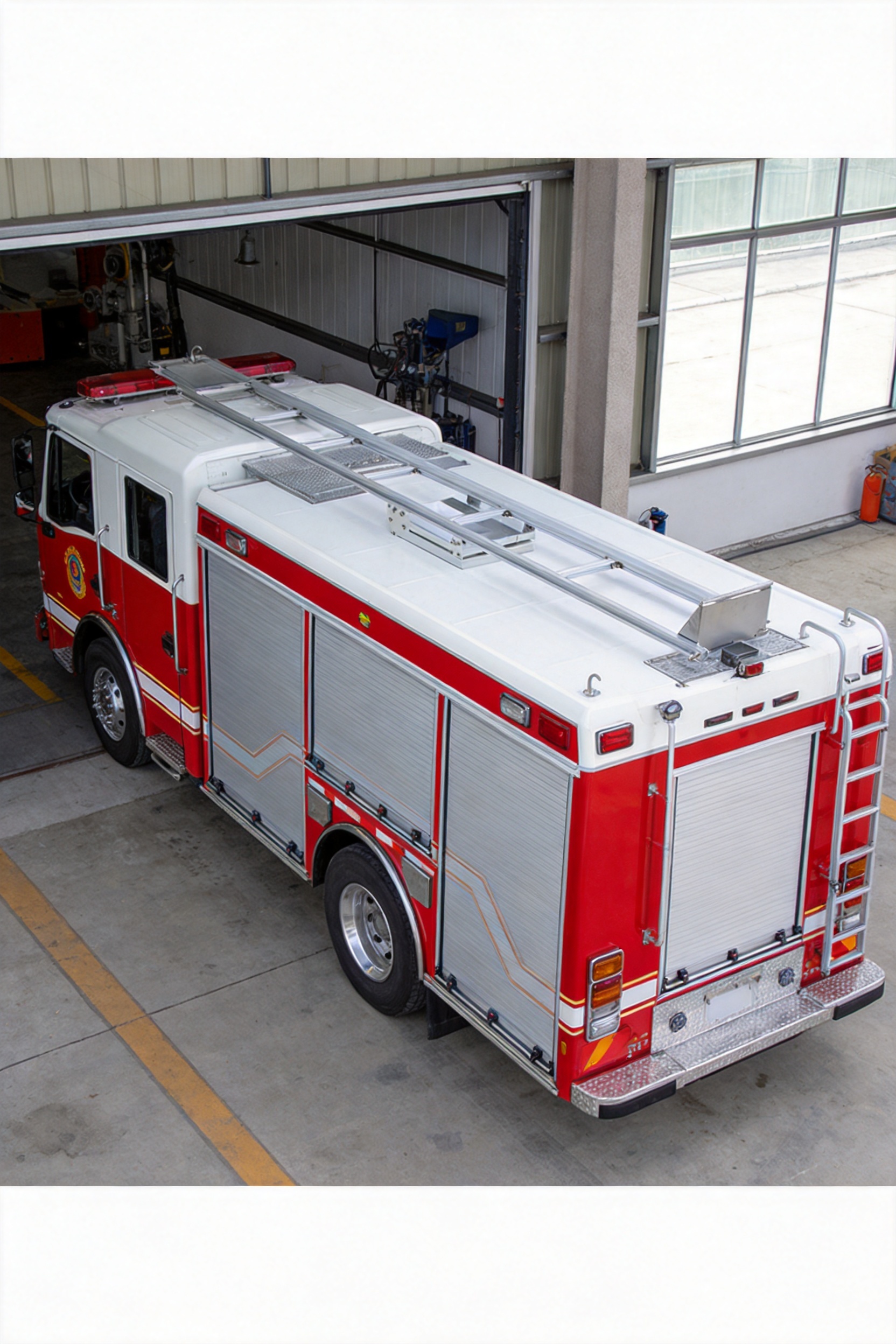
The compact structure of this manual ladder rack is intended to reduce that problem. By organizing the ladder in a defined lifting path, the rack helps avoid unnecessary projections and supports a more efficient roof layout. A compact arrangement may also help vehicle designers manage the overall appearance and profile of the truck, although the final roof height depends on the ladder, mounting position, and customized rack dimensions.
Compactness must not mean insufficient support. The rack still needs to provide stable mounting, controlled movement, and appropriate retention during transportation. Effective compact design therefore requires attention to the relationship between the support points, lifting rails, ladder center of gravity, and vehicle mounting surface. During the design stage, the customer and manufacturer can review the available roof area and establish the required movement envelope.
For vehicle integrators, a compact rack can provide several practical advantages. It may help preserve access to adjacent compartments, reduce interference with other roof-mounted equipment, and make the final body arrangement easier to standardize. For fleet operators, an organized rack can make visual inspections more straightforward because the ladder remains in a predictable position instead of being supported by improvised brackets or inconsistent restraints.
Compact equipment is also valuable when a fire department operates vehicles in narrow streets, industrial areas, forests, tunnels, or other locations where vehicle clearance is important. The rack itself does not determine the complete vehicle envelope, but its design can contribute to a more controlled and integrated roof arrangement.
Manual Fire Truck Ladder Racks
4. Controlled Lifting and Lowering
The primary benefit of a ladder rack is the ability to move equipment in a controlled way. Fire ladders may be long, heavy, and awkward to handle. Their length can make them difficult for one person to control, particularly when the ladder is stored above shoulder height. A guided manual rack helps create a repeatable movement process rather than relying entirely on free lifting.
During deployment, the operator can initiate the lowering movement and guide the ladder through the rack’s rails. The mechanism supports the movement path and helps bring the ladder to its configured access position. During stowing, the reverse movement returns the ladder to the roof storage position. A consistent path can reduce uncertainty and make the procedure easier to teach to new operators.
The product is manual, which means it does not depend on an electric motor, hydraulic power unit, or vehicle control system for its basic operation. This can be advantageous for fire and rescue vehicles because it avoids adding a separate power source and reduces the number of electrical or hydraulic components that need to be integrated into the vehicle. A manual design can also be easier to inspect and repair in locations where specialized service equipment is not available.
Manual operation should not be interpreted as a lack of engineering. The value of the rack lies in using mechanical guidance, balanced movement, and an adjustable stopping position to make manual handling more manageable. Correct operating procedures remain important. Users should follow the recommended sequence, verify that the ladder is properly retained during travel, and keep personnel clear of moving components.
The rack may also be considered for other top-mounted rescue equipment when the dimensions, weight, mounting interface, and movement requirements are compatible. However, a ladder rack should not automatically be used for unrelated equipment without technical confirmation. Each application needs an assessment of load distribution, movement clearance, structural support, and retention during vehicle travel.
5. Adjustable Limiter for Position Control
One of the product’s important features is the adjustable limiter. The limiter controls the point at which the rack stops during lowering. Because fire trucks have different body heights and roof arrangements, a single fixed stopping point may not provide the best access position for every vehicle or every operator.
The adjustable design allows the lowering point to be configured according to user habits and installation requirements. For example, a fleet may prefer a position that places the ladder within a comfortable reach from a designated access step. Another vehicle may require a different position because of a roof compartment, handrail, warning light, or other mounted component. The limiter helps accommodate these differences without changing the entire rack structure.
Position control also supports repeatability. When the rack is lowered to a defined point, operators can expect the ladder to arrive at approximately the same location each time. This can improve workflow and reduce the need for manual correction at the end of the movement. A repeatable position is particularly useful when a vehicle has a standardized operating procedure or when multiple crews use the same apparatus.
The limiter should be adjusted during installation and verified through operational testing. The correct setting depends on the vehicle’s roof height, ladder length, rack geometry, access steps, surrounding equipment, and safe clearance requirements. After adjustment, the locking or retention method should be checked to ensure that the setting remains stable during normal use.
The limiter is also an example of how a relatively simple mechanical feature can create a meaningful operational advantage. Competitor products with fixed travel positions may require more compromises during installation or may need additional modifications to suit different vehicle layouts. An adjustable limiter provides greater configuration flexibility while maintaining a mechanically straightforward design.
6. Self-Lubricating Lifting Rails
The lifting rails are designed with a self-lubricating function. In practical terms, this design reduces the need for frequent manual lubrication during normal operation and helps the moving parts maintain smoother motion. This is useful for fire and rescue vehicles because they may operate in rain, dust, smoke residue, road grime, cold conditions, and other demanding environments.
Reduced lubrication requirements can simplify routine maintenance. Fire departments often manage many vehicle systems at the same time, including pumps, hoses, valves, warning devices, compartments, ladders, communications equipment, and chassis components. A rack that needs less frequent lubrication can reduce the number of small maintenance tasks that must be scheduled and recorded.
Self-lubricating rails do not eliminate inspection. Operators should still check the rails for contamination, physical damage, abnormal resistance, corrosion, loose fasteners, and signs of uneven movement. If the vehicle is exposed to mud, salt, chemicals, or unusual debris, cleaning and additional maintenance may be required. The self-lubricating design supports maintenance efficiency, but it does not replace responsible inspection.
The rail design is also relevant to operating consistency. Excessive friction can make a manual rack difficult to move, while uneven movement can place additional stress on the ladder or mounting points. Smooth rail action helps the operator maintain better control and supports a more predictable lowering and lifting process.
Compared with basic fixed brackets or poorly protected sliding arrangements, a purpose-designed rail system can offer a more organized approach to movement. The result is a better balance between accessibility and retention. The ladder remains supported when stored but can be moved through a controlled path when needed.
7. Advantages Compared with Basic or Fixed Ladder Supports
Fire truck ladder racks vary widely in design. Some are simple fixed supports, while others use powered mechanisms or specialized deployment systems. The manual rack described here occupies a practical position between these options. It provides guided movement and adjustable positioning without the complexity of a powered lifting system.
Compared with a fixed roof bracket, the manual rack offers a more convenient method of bringing the ladder down to an accessible position. A fixed bracket may be simple and inexpensive, but it can require greater lifting effort and more awkward body movement. The manual rack is designed to make the ladder’s travel path more controlled and repeatable.
Compared with a powered rack, the manual system has fewer operating dependencies. It does not require an electrical motor, hydraulic pump, control switch, battery connection, or dedicated power circuit for its basic movement. This can reduce integration complexity, simplify troubleshooting, and help control total system cost. It may also be more suitable for vehicles that need a robust mechanical solution with minimal electronic content.
Compared with a non-adjustable lifting system, the adjustable limiter offers greater flexibility. A fixed system may work well on one vehicle but require modification when installed on another model. Customizable dimensions combined with an adjustable stopping point allow the rack to be adapted more effectively to customer-specific requirements.
| Comparison Area | Basic Fixed Support | Manual Adjustable Ladder Rack | Powered Lifting System |
|---|---|---|---|
| Ladder access | May require more direct lifting from the roof | Guided lowering and lifting movement | Powered movement with control system |
| Power requirement | None | None for basic operation | Usually requires electrical or hydraulic integration |
| Position flexibility | Usually fixed | Adjustable limiter and customizable dimensions | Depends on system design and control settings |
| Maintenance complexity | Simple but may offer limited movement control | Mechanical inspection with self-lubricating rail design | Includes mechanical and powered components |
| Vehicle integration | Basic installation | Suitable for customized vehicle layouts | May require additional power, controls, and protection |
| Operational suitability | Best for simple retention needs | Useful where controlled manual access is required | Useful where powered deployment is specifically needed |
The correct choice depends on the vehicle, ladder, budget, operating environment, and customer expectations. The manual rack is not intended to replace every other ladder system. Its advantage is that it combines controlled movement, compactness, adjustment, and maintenance simplicity in a balanced mechanical package.
8. Customization for OEM and ODM Projects
Fire truck manufacturers and rescue vehicle integrators often require components that fit a specific body design rather than a generic aftermarket product. The dimensions identified for this rack, including H, L, L1, and W, can be customized according to customer requirements. This supports cooperation during new vehicle development, fleet refurbishment, special-purpose vehicle production, and replacement equipment programs.
Customization begins with information collection. The customer may provide vehicle drawings, roof measurements, ladder dimensions, available mounting points, equipment weight, operating height, and clearance requirements. The manufacturer can then evaluate the suitable rack dimensions and establish the intended storage and lowering positions.
Important design information may include the overall ladder length, folded or stored dimensions, weight distribution, support locations, surrounding roof equipment, vehicle access points, and desired operator position. The final design should also consider whether the ladder will be used alone or alongside other rescue tools carried on the roof.
OEM projects may require consistent dimensions across a production series. ODM projects may involve adapting the rack to a new vehicle platform or developing a special configuration for a particular market. A manufacturer with a professional research and development team can support these projects by reviewing customer requirements and translating them into a production-ready design.
Customization also helps solve regional and operational differences. Fire vehicles used in urban areas may have different roof arrangements from those used in industrial plants, airports, forests, ports, or remote regions. Different vehicle chassis, body builders, and emergency response procedures can influence the most suitable rack layout.
The goal of customization is not simply to change measurements. It is to produce a rack that fits the vehicle, moves correctly, remains accessible, and supports safe equipment retention. A professional technical review is therefore essential before final approval.
9. Manufacturing Strength and Quality Management
The product is manufactured by Tianchang Jinlv Fire Equipment Co., Ltd., a company established in 2010 and focused on fire protection accessories. Its product scope includes fire truck roller shutters, equipment stowage and mounting systems, ladders, handrails, nozzles, hose cannons, demolition tools, SCBA-related equipment, cab doors, and plastic tool components.
This product range is relevant to ladder rack manufacturing because emergency vehicle components must often work together as part of a complete vehicle body system. Experience with roller shutters, storage systems, ladders, and mounting components can help a manufacturer understand the space, access, retention, and durability requirements found on fire apparatus.
The company states that it has advanced production facilities and a complete production process. A complete process is important for components such as manual ladder racks because quality is influenced by more than the visible final assembly. Material selection, component preparation, dimensional control, assembly, movement testing, surface condition, packaging, and delivery inspection can all affect field performance.
The company has passed GB/T 19001-2016 quality certification. A quality management system provides a structured framework for controlling production activities, documenting procedures, managing customer requirements, and supporting continuous improvement. Certification alone does not replace product inspection, but it indicates that quality management is treated as an organized business process rather than an informal final check.
The company describes strict control from raw material procurement to final product delivery. For a ladder rack, this approach can help ensure that the design specification is carried through the production chain. When the dimensions, rail function, limiter position, mounting points, and finish are reviewed systematically, the risk of inconsistencies between the approved design and delivered product can be reduced.
Manufacturing capability is especially important for customized products. A supplier may produce a standard rack successfully but struggle with multiple dimensions, special mounting interfaces, or vehicle-specific requests. A complete production process and experienced technical team support more reliable customization by connecting design review with manufacturing execution.
9.1 Research and Development Capability
The company has a professional research and development team with industry experience. It follows market trends, invests in research and development, introduces advanced technologies, and develops fire protection equipment for different application scenarios. For a manual ladder rack, R&D capability can support improvements in compactness, movement control, material selection, rail design, limiter adjustment, and installation convenience.
Fire and rescue equipment must respond to real working conditions. A design that appears suitable in a workshop may need adjustment after considering vehicle access, operator reach, roof interference, weather exposure, and maintenance practices. R&D activity allows the manufacturer to evaluate these factors and improve the product rather than treating the initial design as final.
Customer feedback is also valuable. Fleet operators and vehicle builders can identify difficulties that are not always visible during initial product development. Feedback about installation time, access height, movement resistance, cleaning, storage security, or integration with other equipment can guide future improvements.
9.2 Production Process Considerations
Although the specific internal production steps may vary by configuration, an effective manufacturing process for a customized manual ladder rack generally includes requirement confirmation, technical drawing review, material and component preparation, dimensional processing, rail and limiter assembly, functional inspection, surface and appearance review, and final packaging.
Requirement confirmation ensures that the correct vehicle and ladder information is used. Technical drawing review helps identify interference risks and confirms dimensions such as H, L, L1, and W. Component preparation supports consistency in the parts used for each order. Assembly and movement inspection are important because a rack must not only look correct but also operate smoothly through its intended path.
Functional inspection should consider the lifting and lowering movement, limiter adjustment, rail action, mounting alignment, and retention condition. Customized products should be checked against the customer-approved requirements rather than only against a general standard configuration.
Packaging is also part of quality protection. Fire truck components may travel long distances before installation. Proper packaging helps protect rails, mounting surfaces, adjustment parts, and finished surfaces from impact, contamination, and handling damage during transportation and storage.
10. Installation and Integration Principles
Installation should be performed by qualified personnel familiar with fire apparatus construction and the relevant vehicle manufacturer’s requirements. The rack must be attached to a suitable structural area capable of supporting the equipment and the forces created during travel and operation. The installation surface should be checked for flatness, strength, access, and compatibility with the proposed fasteners or mounting method.
Before drilling or permanently attaching the rack, the installer should confirm the complete movement envelope. The ladder must be able to move between the stored and lowered positions without contacting roof compartments, warning lights, handrails, antennas, hose assemblies, vents, or other equipment. Clearance should be checked in both directions and throughout the full operating path.
The rack should be positioned so that the lowered ladder is accessible without forcing operators into unsafe postures. At the same time, the stored ladder should remain within the intended vehicle profile and should not obstruct emergency equipment or service access. The adjustable limiter can then be configured to provide the desired lowering point.
After installation, the system should be operated repeatedly under controlled conditions. The installer should confirm that movement is smooth, the ladder remains stable, the limiter stops the rack at the intended position, and all mounting points remain secure. Any unusual resistance, noise, skewing, or interference should be corrected before the vehicle enters service.
Vehicle builders should also consider the relationship between the ladder rack and the vehicle’s center of gravity. The rack is only one part of the roof load. The ladder and other equipment should be distributed in accordance with the vehicle manufacturer’s guidance and applicable regulations. Correct installation supports both rack performance and overall vehicle stability.
11. Operation and Maintenance
Operators should receive clear training before using the manual ladder rack. Training should cover the purpose of the rack, the normal lifting and lowering sequence, the limiter setting, equipment retention, pinch-point awareness, and post-use inspection. The procedure should be simple enough to follow under pressure but specific enough to avoid misuse.
Before travel, the ladder should be confirmed to be fully stowed and properly retained. The rack should not be left partially lowered or unsecured. Before deployment, the operator should check that the movement path is clear and that no person or loose equipment is within the travel area.
Routine inspection should include the rails, mounting fasteners, limiter, support points, retaining components, and visible surfaces. Operators should look for cracks, deformation, looseness, corrosion, contamination, unusual wear, and changes in movement resistance. Any abnormal condition should be reported and evaluated before continued use.
The self-lubricating rail design reduces routine lubrication requirements, but cleaning remains important. Dust, mud, road salt, soot, and other contaminants can accumulate on exposed components. Cleaning methods should be compatible with the materials and finishes used on the rack. Harsh chemicals or abrasive tools should not be used unless specifically approved.
Maintenance records can help fleet managers identify changes over time. A simple record may include inspection dates, limiter adjustments, repairs, cleaning, replacement parts, and observations from operators. Consistent records make it easier to plan preventive maintenance and demonstrate that equipment has been managed responsibly.
12. Safety Considerations
Fire and rescue equipment is used in environments where time pressure and physical hazards are common. The ladder rack should therefore be treated as a safety-related vehicle component. Operators should avoid standing beneath a moving ladder and should keep hands away from rail interfaces, joints, stops, and other potential pinch points.
The ladder should never be used as a handhold or access point while the rack is moving unless the operating procedure specifically permits it and the design has been evaluated for that use. Personnel should use designated vehicle steps and handrails. The rack should not be overloaded with equipment beyond the approved application.
Any modification to the rack, ladder, mounting structure, or limiter should be reviewed by a competent technical person. Unapproved modifications may change the load path, reduce clearance, interfere with movement, or affect retention during travel. If a different ladder or rescue tool is to be carried, compatibility should be confirmed before use.
Operating instructions should take weather and contamination into account. Ice, heavy rain, mud, and debris may influence movement. If the rack does not move normally, the operator should stop and inspect it instead of applying excessive force. A controlled manual system depends on the operator recognizing abnormal conditions early.
Safety also depends on the complete vehicle system. The rack, ladder, mounting hardware, roof structure, access steps, handrails, and surrounding equipment should be considered together. A good rack cannot compensate for an unsuitable installation or poor operating procedure.
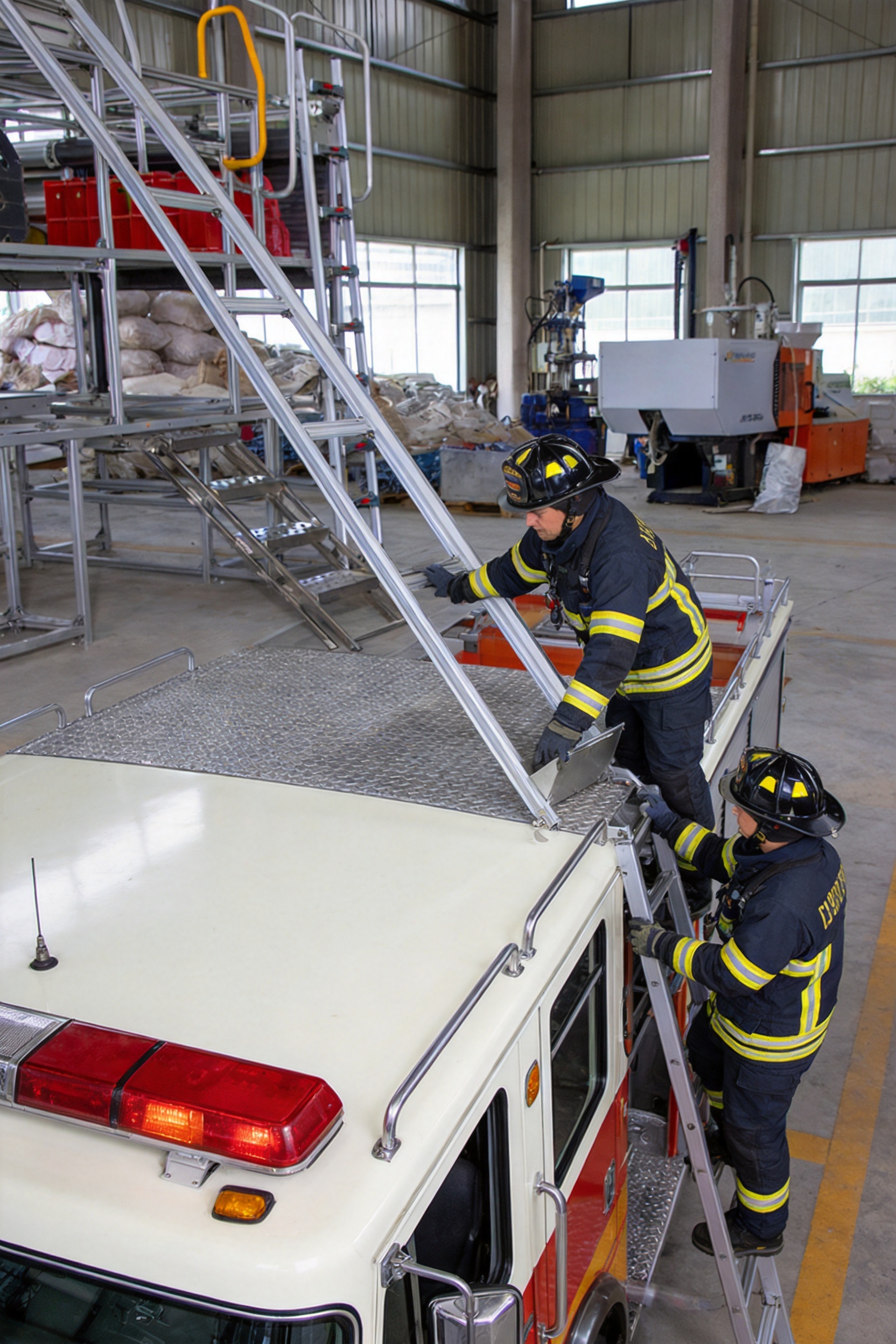
13. Value for Fire Departments and Vehicle Manufacturers
For fire departments, the manual ladder rack can provide a practical balance between accessibility and simplicity. The rack helps bring the ladder down from the roof, but it does not require a dedicated powered system. This may make it suitable for fleets that value straightforward mechanical equipment, predictable maintenance, and ease of field service.
For vehicle manufacturers, the compact layout and customizable dimensions can simplify integration into different body designs. The ability to configure H, L, L1, and W supports a more flexible approach than a single fixed-size product. The adjustable limiter further improves the ability to match the rack to the vehicle’s access arrangement.
For distributors and emergency equipment suppliers, the product can complement a broader fire truck equipment portfolio. It may be offered as part of a roof equipment package or as a replacement component for fleets seeking to improve ladder handling. The manufacturer’s wider product range also creates opportunities for coordinated sourcing of roller shutters, storage components, ladders, mounting systems, and related accessories.
For international customers, OEM and ODM support can be an important consideration. A supplier able to review drawings, confirm dimensions, manufacture customized components, and provide technical communication can reduce the number of separate vendors involved in a vehicle project. This may support better coordination between the rack and the rest of the fire apparatus.
Cost should be evaluated over the product life cycle rather than only by purchase price. A compact manual rack may reduce installation complexity compared with a powered system, while self-lubricating rails may reduce routine maintenance effort. Reliable movement and adjustable positioning may also improve usability over the service life of the vehicle.
14. Selecting the Correct Configuration
Customers considering a manual fire truck ladder rack should provide detailed technical information at the inquiry stage. This helps the manufacturer recommend a suitable configuration and prevents avoidable changes later in the project.
| Information Required | Reason It Matters |
|---|---|
| Vehicle model and body layout | Determines available mounting space and possible interference |
| Ladder type and dimensions | Defines the required support arrangement and movement envelope |
| Ladder weight and center of gravity | Supports appropriate structural and operational evaluation |
| Roof height and access steps | Helps establish a comfortable and practical lowering point |
| Nearby roof equipment | Prevents contact with lights, handrails, compartments, antennas, and other components |
| Desired H, L, L1, and W dimensions | Provides the basis for customized manufacturing |
| Operating environment | Supports consideration of weather, dust, salt, chemicals, and maintenance needs |
| Quantity and delivery schedule | Helps coordinate production planning and project support |
Customers should also clarify whether the rack is for a new vehicle, a replacement, a fleet upgrade, or a special rescue platform. The application context may influence the preferred mounting design, finish, operating position, and documentation requirements.
15. Why a Specialized Fire Equipment Manufacturer Matters
A ladder rack is not an isolated general-purpose hardware item. It is installed on a vehicle that may carry personnel and life-saving equipment into hazardous locations. Working with a manufacturer focused on fire protection accessories can provide practical advantages because the supplier understands the broader requirements of emergency apparatus.
A specialized manufacturer is more likely to be familiar with the need for compact storage, quick access, corrosion resistance, controlled movement, vehicle integration, and reliable service. Experience across related product categories can also help identify potential conflicts between the rack and adjacent equipment.
Tianchang Jinlv Fire Equipment Co., Ltd. has been dedicated to fire protection accessories since 2010. The company’s stated philosophy is based on honesty, innovation, quality, and gratitude. It provides fire truck equipment and related accessories, OEM and ODM customization, global technical support, and customer service.
The company’s production and R&D capabilities support a customer-oriented approach. Rather than limiting customers to one standard configuration, the manufacturer can review individual vehicle requirements and develop dimensions suitable for the intended installation. This is particularly useful for fire truck builders that operate several chassis platforms or produce small and medium customized vehicle batches.
Quality control, technical communication, and after-sales support are important parts of a successful equipment project. The product must arrive with the correct dimensions and operating characteristics, but the customer may also need installation guidance, adjustment information, replacement components, or technical clarification. A supplier that supports the project beyond shipment can contribute to a smoother result.
16. Practical Limitations and Responsible Use
No mechanical product is suitable for every application without evaluation. The manual ladder rack is designed for controlled manual lifting and lowering, but it may not be the best choice where the equipment is exceptionally heavy, the operator cannot safely reach the mechanism, or the customer specifically requires powered deployment.
The rack’s suitability must be confirmed for the intended ladder or rescue equipment. Weight, dimensions, mounting points, travel distance, vehicle speed, roof structure, and environmental conditions all matter. The customizable design helps address differences, but customization must be based on accurate technical information.
Customers should avoid selecting a rack solely by appearance or nominal dimensions. A visually compact product may still require sufficient surrounding clearance for operation. Likewise, a rack that fits the ladder length may not fit the vehicle roof or may place the lowered ladder in an inconvenient position. Technical drawings and installation checks are essential.
Responsible use also includes following applicable vehicle regulations, workplace safety requirements, and fleet maintenance procedures. The manufacturer can provide product-related information, but the vehicle builder and end user remain responsible for ensuring that the completed apparatus complies with the requirements applicable to its operating region.
17. Frequently Asked Questions
17.1 What is a manual fire truck ladder rack?
It is a mechanical vehicle-mounted system designed to lift, lower, support, and store a fire truck ladder or compatible rescue equipment. It uses guided movement rather than requiring the operator to lift the entire ladder directly from the roof.
17.2 Does the rack require electrical or hydraulic power?
The product is manually operated and is designed to provide its basic lifting and lowering function without a dedicated electric or hydraulic power system. This can simplify vehicle integration and maintenance.
17.3 Can the rack be used on different fire truck models?
Yes, the dimensions can be customized according to customer requirements. The vehicle layout, ladder dimensions, mounting points, and operating clearance should be reviewed before production to determine the appropriate configuration.
17.4 What do H, L, L1, and W represent?
They are the main dimensional references shown in the product information. Their exact interpretation should be confirmed against the approved technical drawing for the selected configuration. All four parameters are identified as customizable.
17.5 What is the purpose of the adjustable limiter?
The limiter controls the rack’s lowering point. It can be adjusted to suit the vehicle layout, access height, surrounding equipment, and operator preferences, allowing the ladder to stop at a practical and repeatable position.
17.6 What does self-lubricating lifting rail mean?
It means the rail design is intended to support smooth movement while reducing the need for frequent routine lubrication. Regular inspection and cleaning are still necessary, especially when the vehicle operates in dusty, muddy, salty, or contaminated environments.
17.7 Can the rack carry equipment other than a ladder?
It may be suitable for certain other top-mounted rescue equipment, but this must be confirmed through a technical review. The equipment’s dimensions, weight, center of gravity, mounting method, and movement requirements must be compatible with the rack.
17.8 Is the rack suitable for OEM and ODM orders?
Yes. The manufacturer provides OEM and ODM customization and can review customer requirements for vehicle-specific dimensions and configurations.
17.9 How should the rack be maintained?
Maintenance should include regular inspection of the rails, limiter, mounting fasteners, support points, retaining components, and visible surfaces. The rails should be kept clean, and any unusual resistance, looseness, corrosion, deformation, or damage should be addressed before continued operation.
17.10 What information should be sent for a quotation?
Useful information includes the vehicle model, roof layout, ladder dimensions, ladder weight, mounting area, desired operating position, available drawings, required quantities, and target delivery schedule. Photographs and dimensional sketches can also help clarify the application.
17.11 Is a manual rack less reliable than a powered rack?
Reliability depends on design, manufacturing quality, installation, maintenance, and correct use. A manual rack has fewer powered components, which can simplify operation and troubleshooting. A powered rack may be preferable for applications requiring automated movement. The correct choice depends on the vehicle and operating requirements.
17.12 Who can provide further product information?
Product inquiries can be directed to Tianchang Jinlv Fire Equipment Co., Ltd. through its sales and technical support channels. The listed contact is Amy. The company can review customization requirements and discuss OEM or ODM cooperation.
18. Conclusion
The manual fire truck ladder rack is a practical solution for emergency vehicles that need safer, more organized, and more accessible roof-mounted ladder storage. Its compact design helps preserve limited roof space, while the guided lifting rails provide a controlled path for manual deployment and stowing. The adjustable limiter allows the lowering position to be matched to the vehicle and operator, and the self-lubricating rail design helps simplify routine maintenance.
Its strongest advantage is the balance between capability and simplicity. The rack provides more controlled access than a basic fixed bracket without requiring the additional electrical or hydraulic integration associated with a powered system. Customizable H, L, L1, and W dimensions further support integration across different vehicle models and rescue equipment layouts.
Manufacturing strength is equally important. Tianchang Jinlv Fire Equipment Co., Ltd. brings experience in fire protection accessories, a complete production process, GB/T 19001-2016 quality certification, a professional R&D team, OEM and ODM capabilities, and technical support for customers in different application scenarios. These strengths support the development of customized ladder rack solutions for fire departments, rescue organizations, vehicle builders, distributors, and international equipment buyers.
When correctly selected, installed, adjusted, and maintained, the manual ladder rack can contribute to a more efficient emergency vehicle. It supports quick equipment access, orderly roof storage, practical maintenance, and adaptable vehicle integration. For customers seeking a compact and dependable ladder handling system, it offers a strong combination of mechanical functionality, customization, and manufacturing support.
References
1. Product information for Manual Fire Truck Ladder Racks, including product features, customization options, and dimensional parameters supplied for this article.
2. Company information for Tianchang Jinlv Fire Equipment Co., Ltd., including company history, manufacturing capabilities, research and development activities, quality management, and OEM/ODM services.
3. GB/T 19001-2016, Quality Management Systems — Requirements.
4. General principles of fire apparatus equipment integration, inspection, maintenance, and operator safety.
5. General engineering practices for mechanical lifting mechanisms, guided rails, adjustable stops, vehicle mounting systems, and emergency equipment storage.
Product: Manual Fire Truck Ladder Racks
News
-
-
Fire truck ladder racks are roof-mounted storage and deployment systems that hold ground ladders securely in transit and let firefighters lower them to the side or rear of the apparatus in seconds. ...
READ MORE -
01 Choosing the right fire truck equipment comes down to three things: matching gear to your call volume, verifying it meets NFPA and GB fire apparatus standards, and working with a fire truck equip...
READ MORE -
Quick Answer The right fire truck boarding ladder is a fixed, upward-folding, or rotating step assembly mounted at the rear or side of the apparatus that gives firefighters a stable, non-slip surface ...
READ MORE -
Two minutes into a working fire, a crew stands in front of a locked steel security door with a crowbar that is too short to pull with both hands. Nothing about the tool is broken. It was simply speci...
READ MORE -
Three rungs up the rear of a pumper, a firefighter in wet gloves misses the grab and catches the handrail instead. Whether that rail holds was decided months earlier, at the bench: by tube wall thick...
READ MORE
Hey! Interested in staying in the loop? Sign up for our updates.
WE WON'T SPAM YOU, PINKY PROMISE.

Tianchang Jinlv Fire Equipment Co., Ltd.
Copyright © Tianchang Jinlv Fire Equipment Co., Ltd. All rights reserved. Custom Fire Truck Equipment Supplier Fire Apparatus Parts Factory
